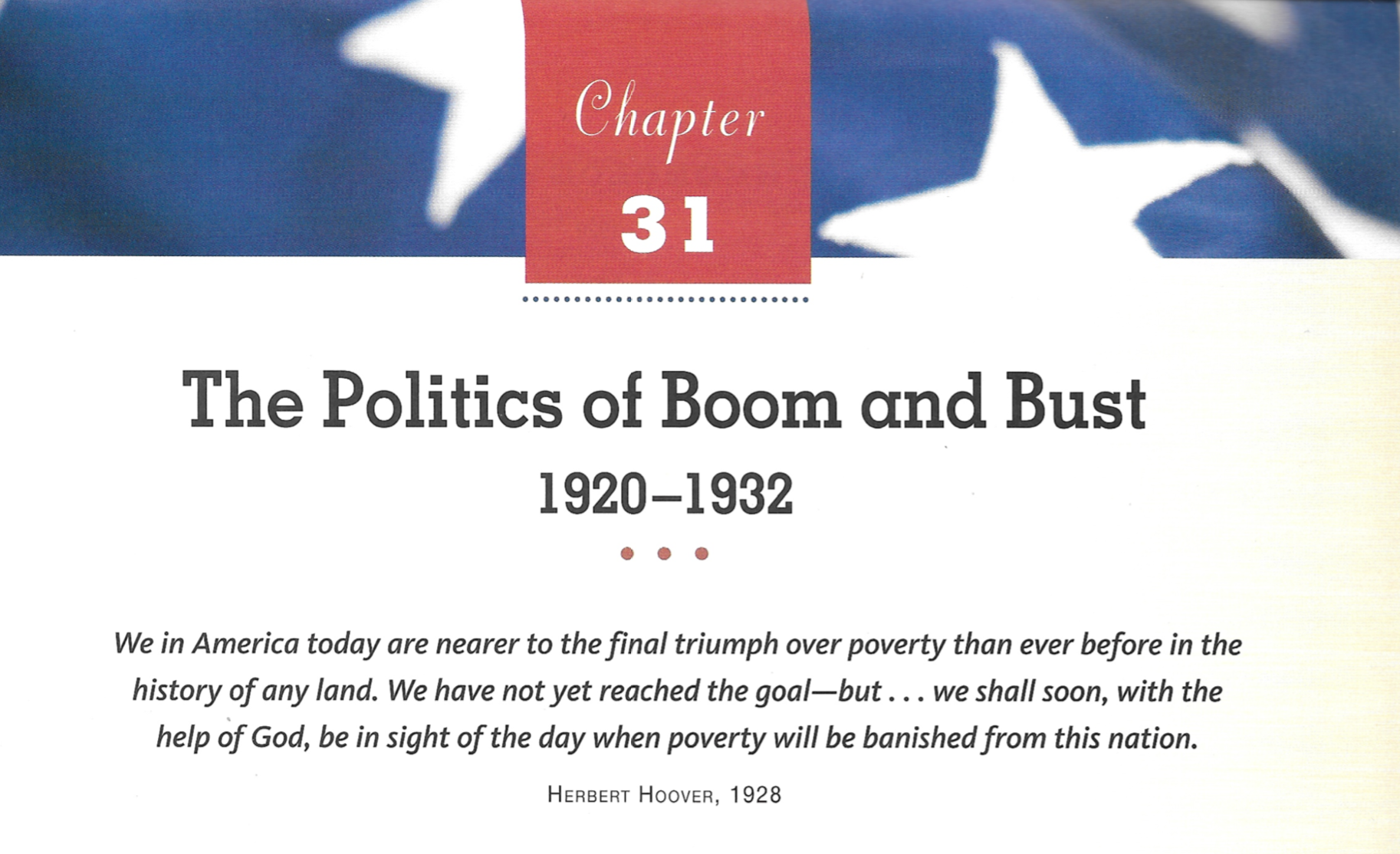
APUSH Chapter 31 - The Politics of Boom and Bust (1920-1932)
star
star
star
star
star
Last updated about 2 years ago
13 Nsɛmmisa
1
1
IITE.01
1
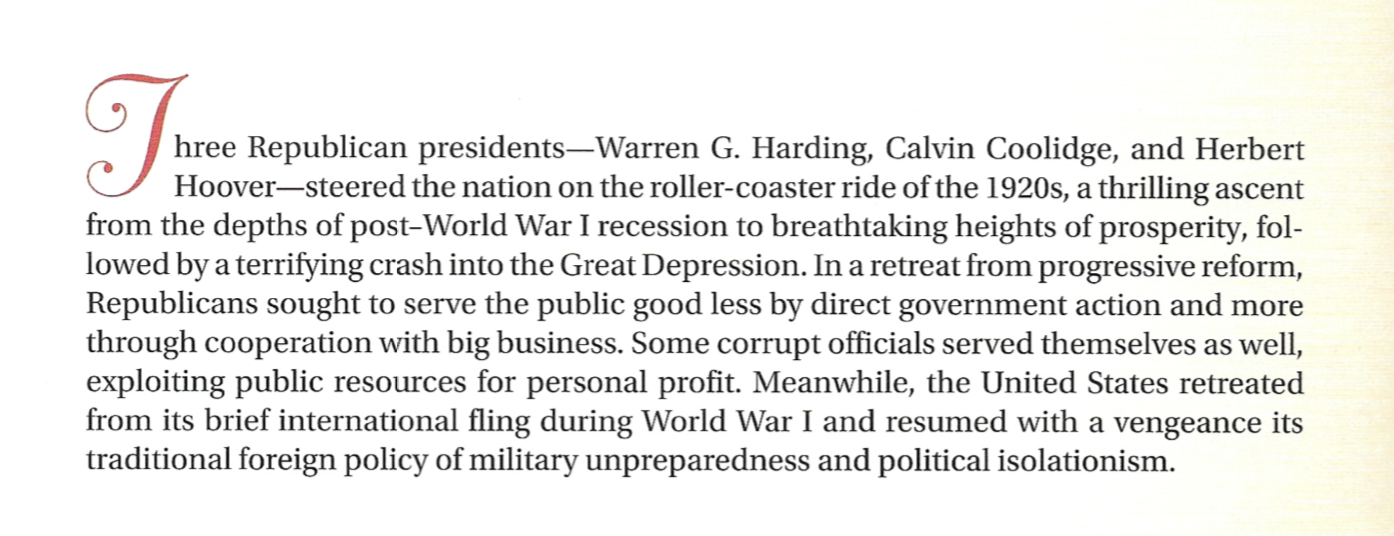
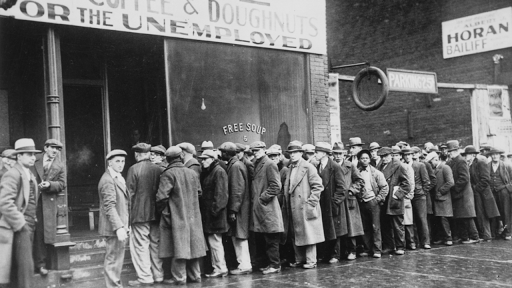
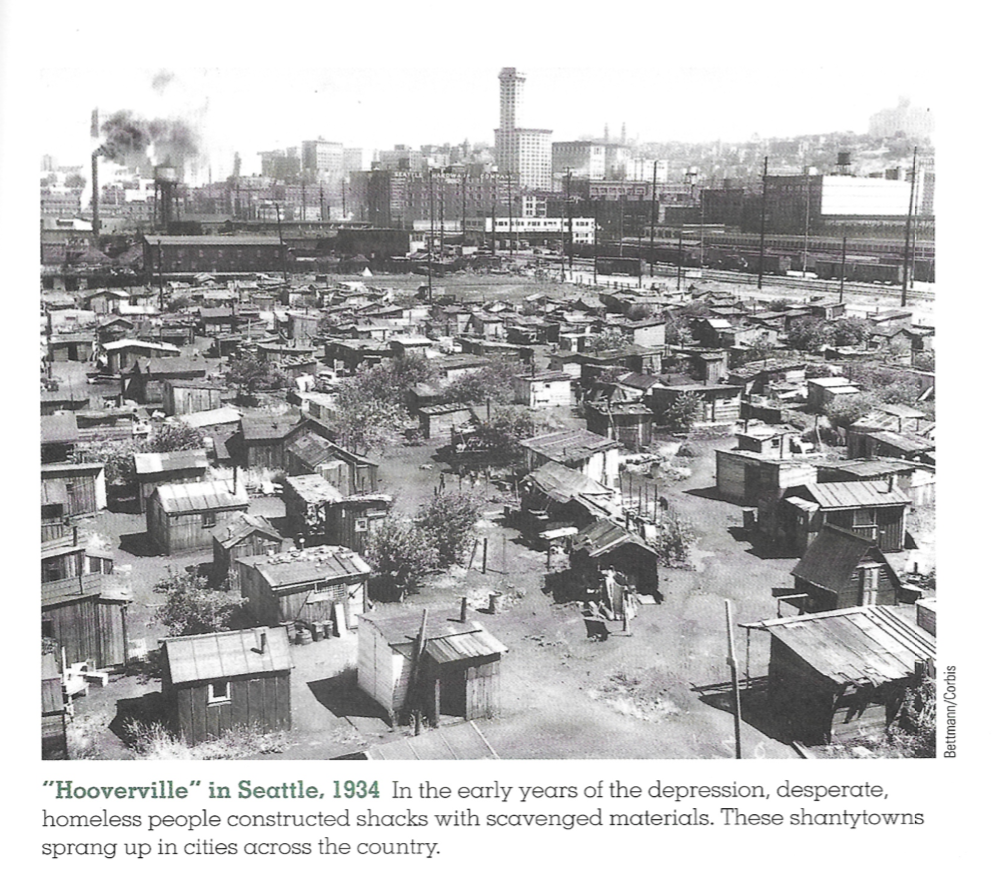
What do you already know about the Great Depression?
If you do not know anything about the Great Depression, what is one question you would want answered by the end of this learning cycle?
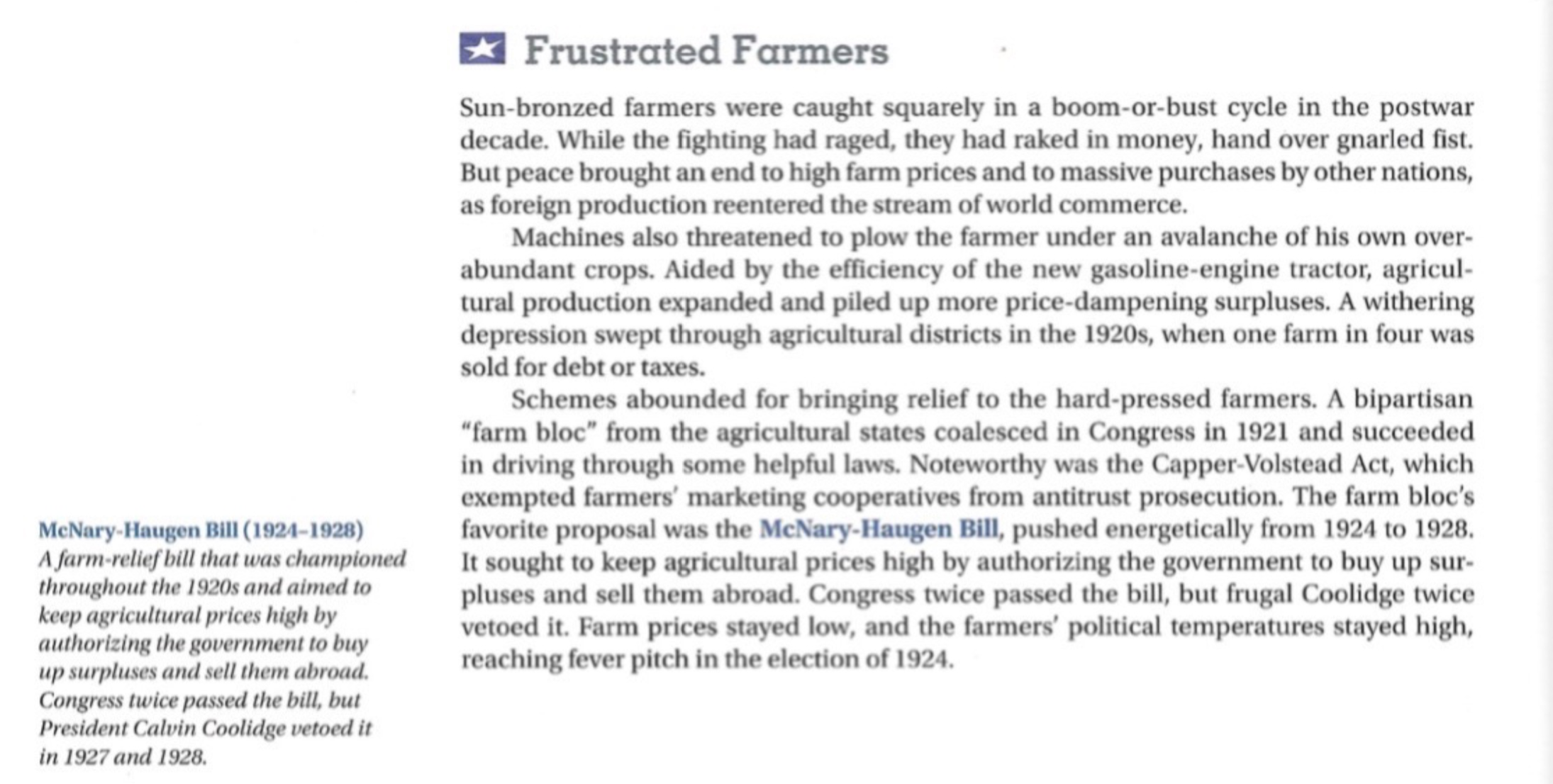
The central problem that farmers faced in the 1920s was
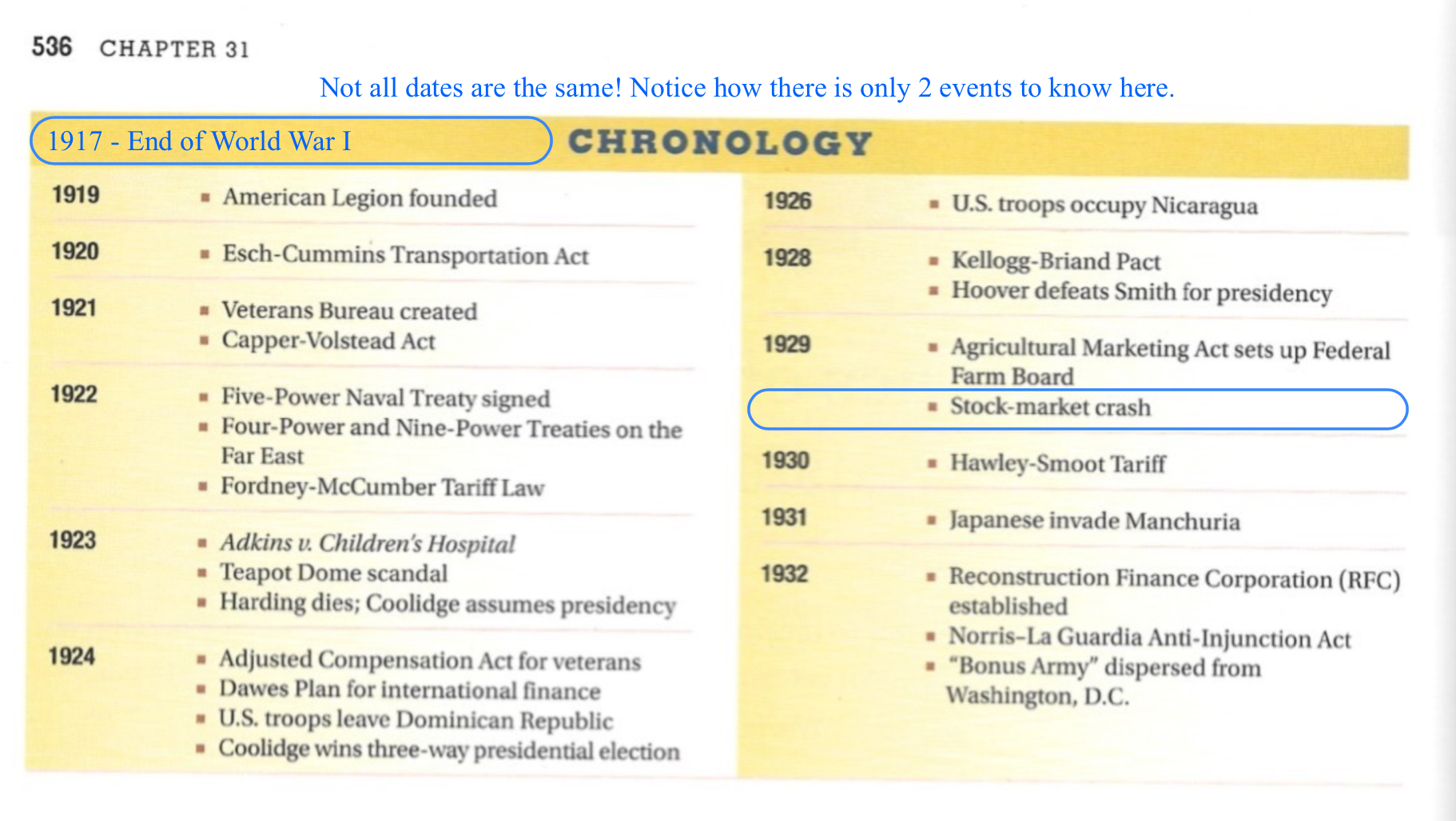
This next section is about the effects of World War I, which we skipped in the interest of time. Remember:
Allied Powers: Won
Great Britain, the United States, France
Axis Powers: Lost
Germany, Austria-Hungary, and the Ottoman Empire (which no longer exists)
Here is a quick video about the terms of the post-WWI negotiations in case you need a refresher from World History.
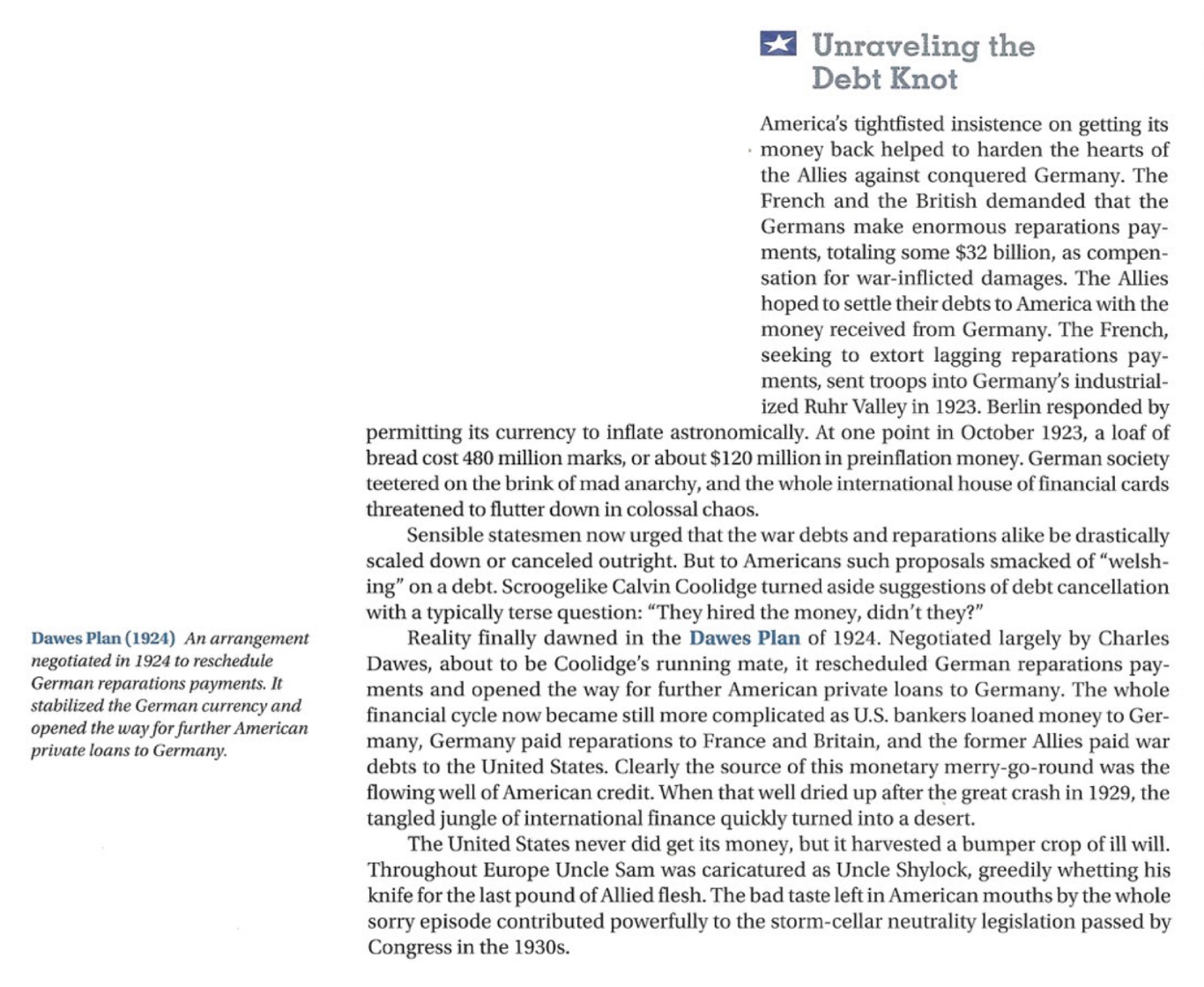
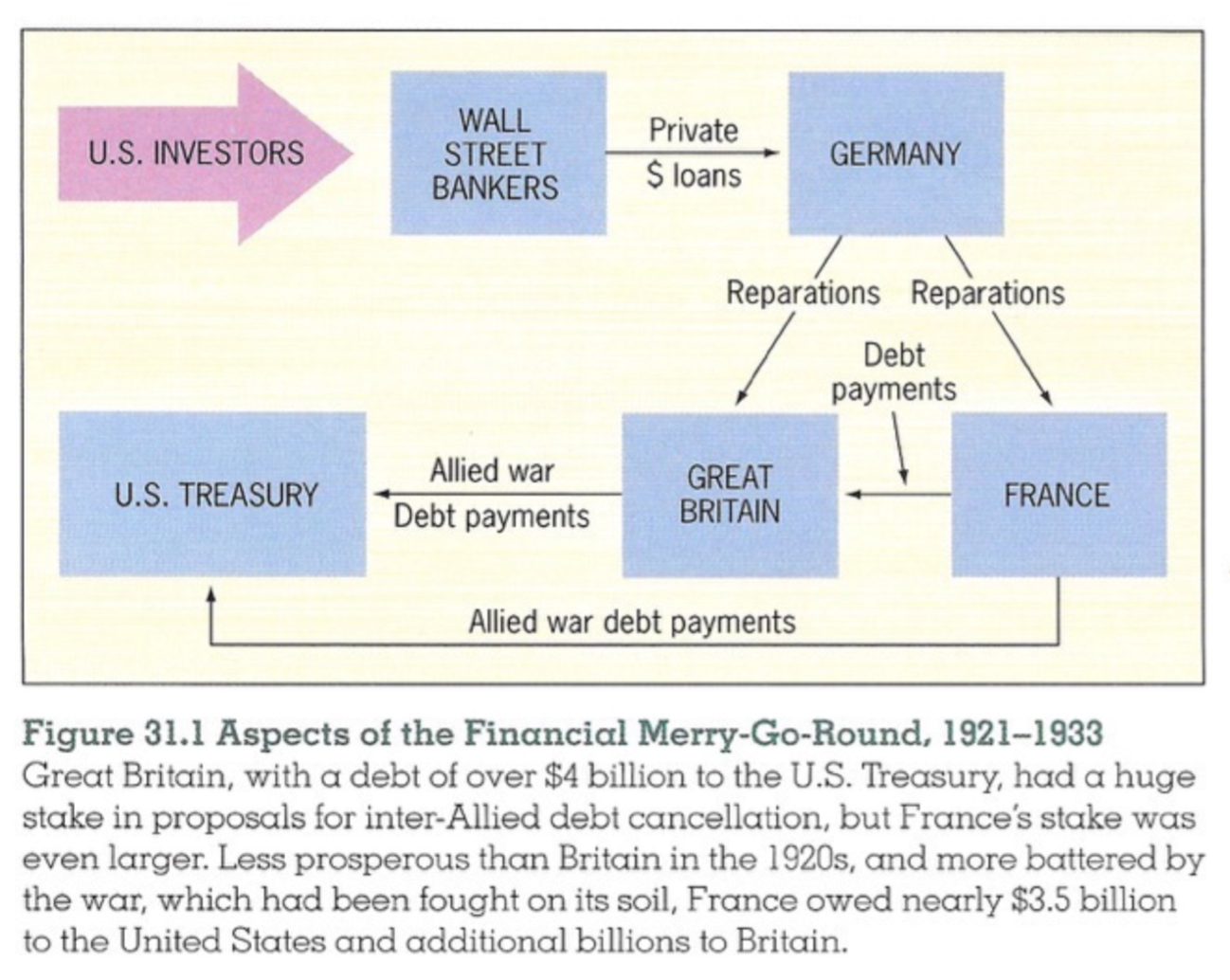
According to the passage, America's insistence that all Allied debts from World War I be repaid directly resulted in
Which choice provides the best evidence for the answer to the previous question?
Which statement is best supported by the graph and the information in the passage?
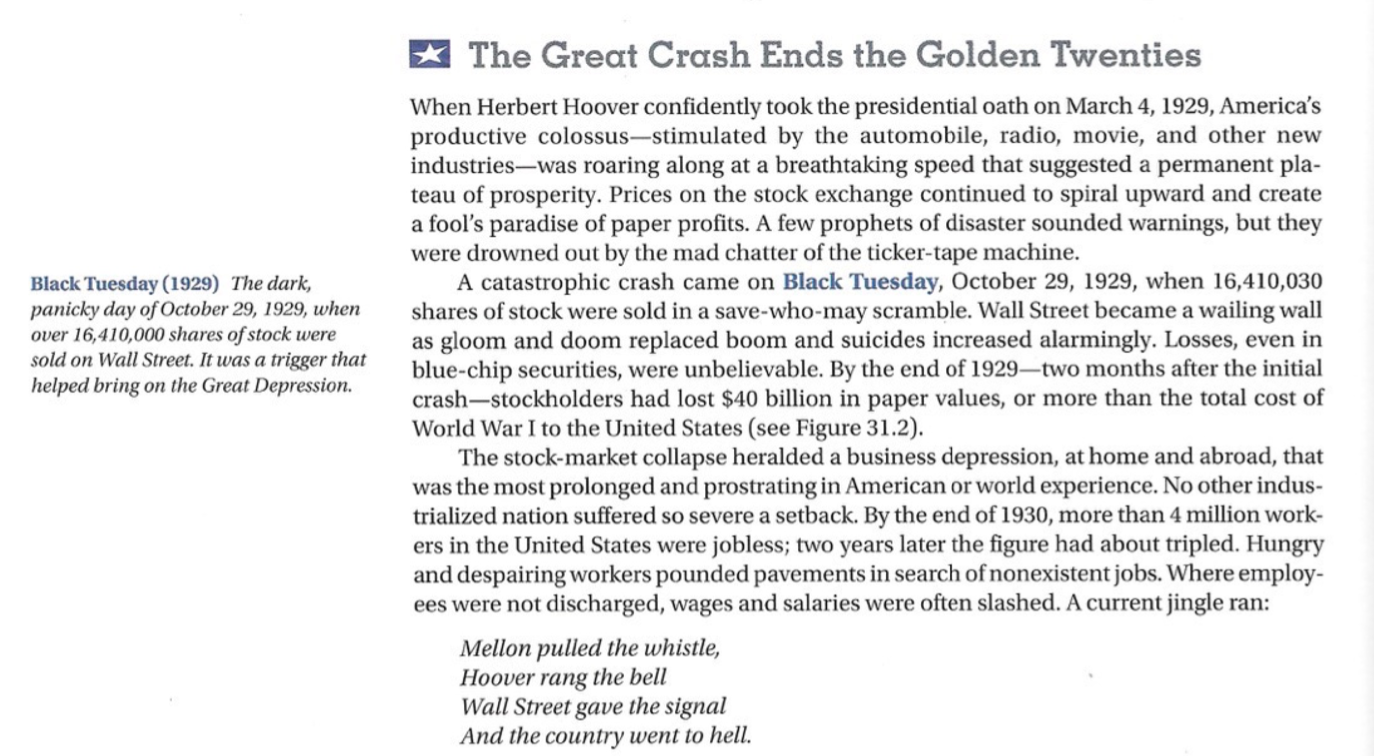
The economic mood of Americans just before the stock market crashed in 1929 could best be described as
Which choice provides the best evidence for the answer to the previous question?
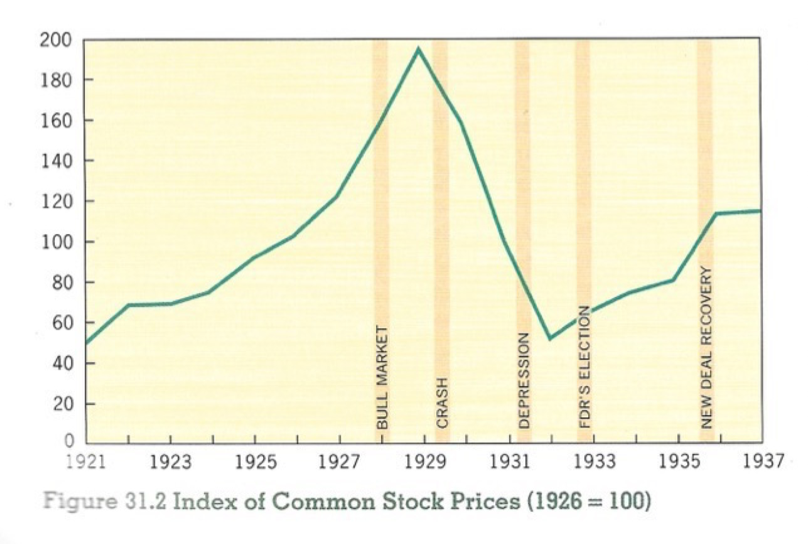
In the graph, which range of years displays a decrease in Common Stock Prices?
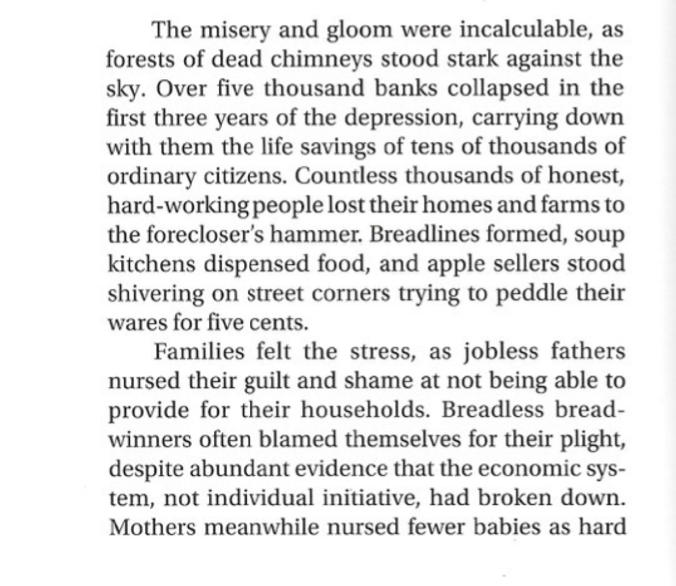
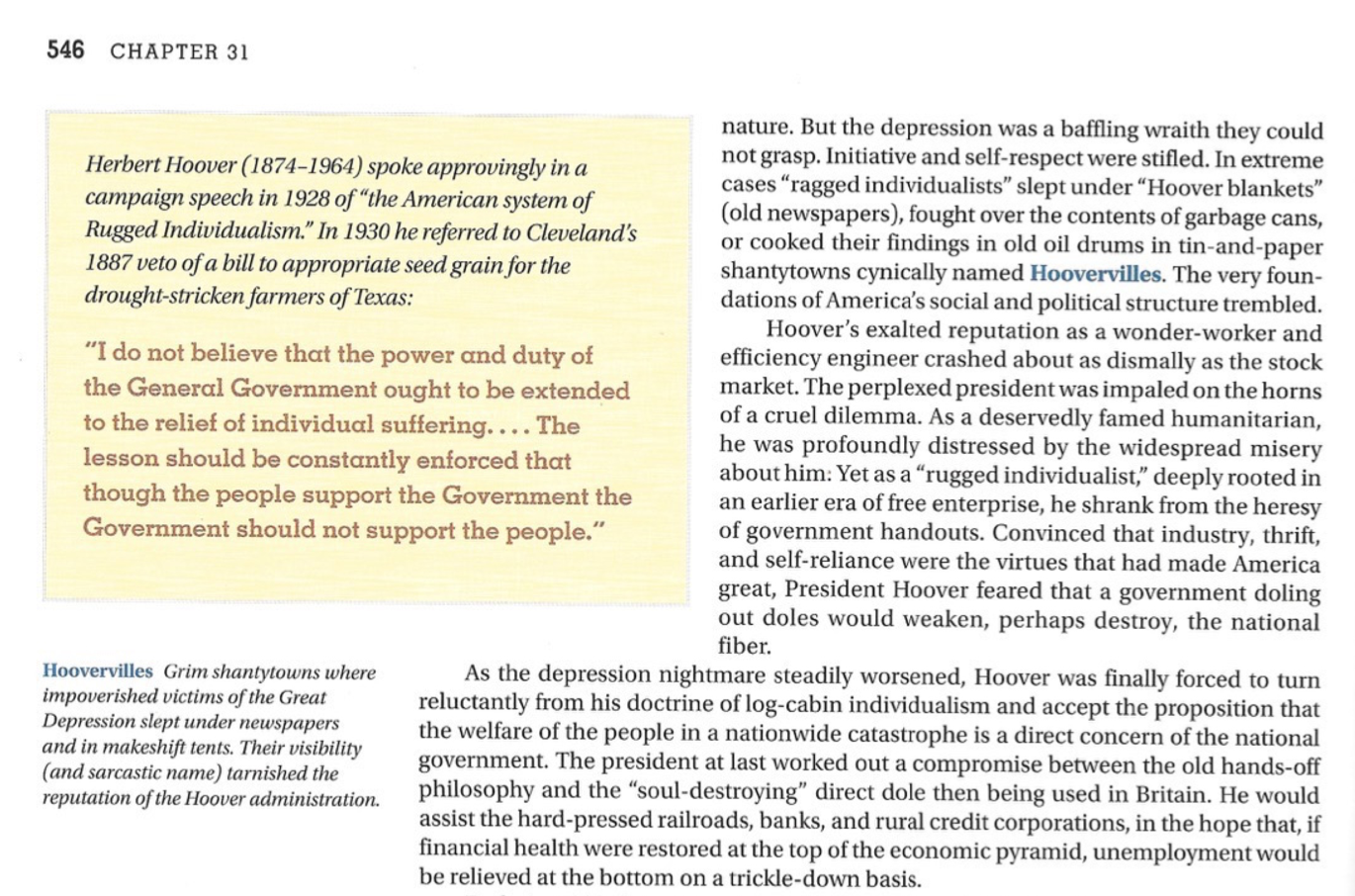
As used in line 3, "collapsed" most nearly means
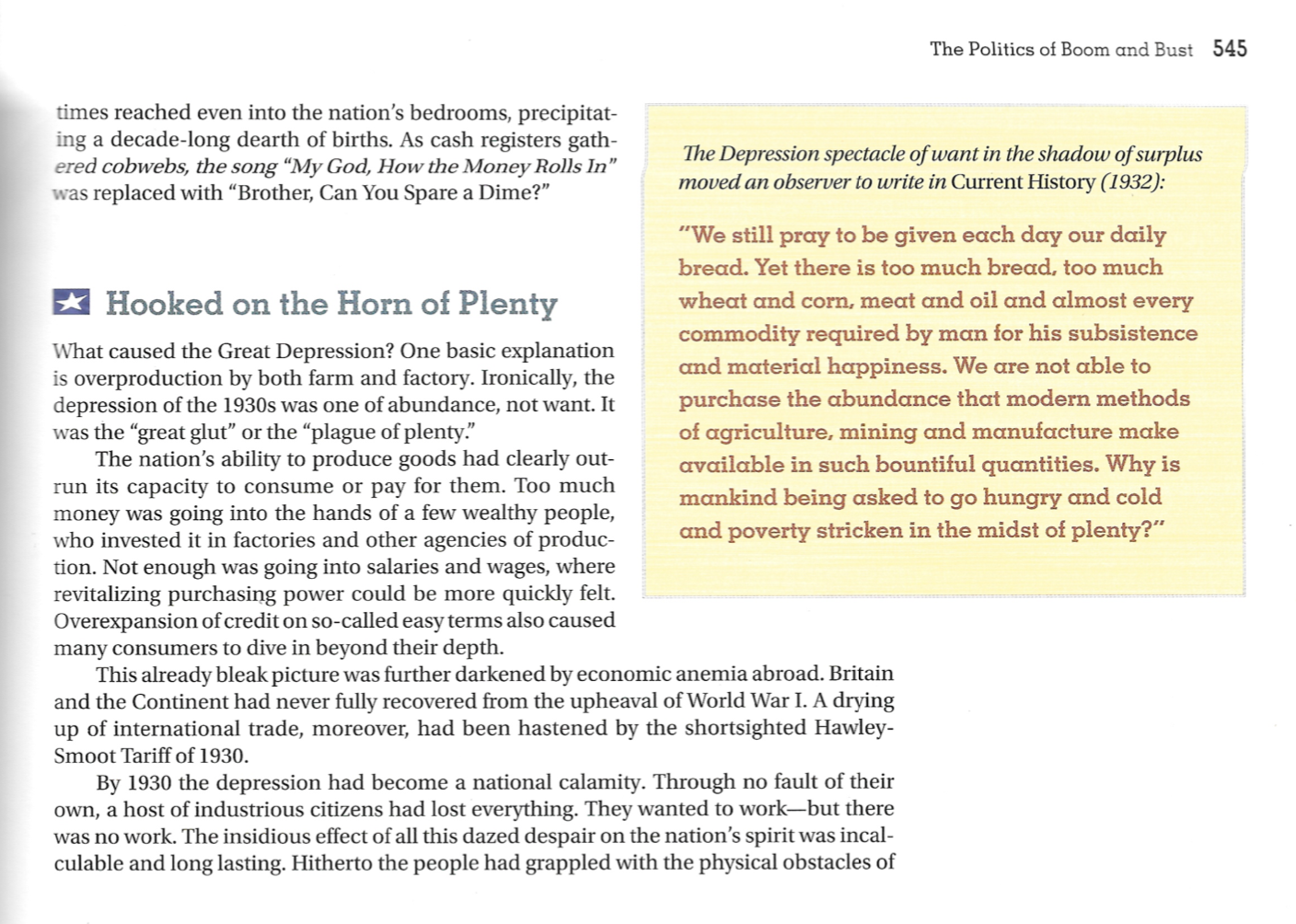
In explaining the causes of the Great Depression, your textbook asserts, "Ironically, the depression of the 1930s was one of abundance, not want. It was the 'great glut' or 'plague of plenty" (Kennedy and Cohen, 545).
Explain the meaning of this quote using complete sentences.
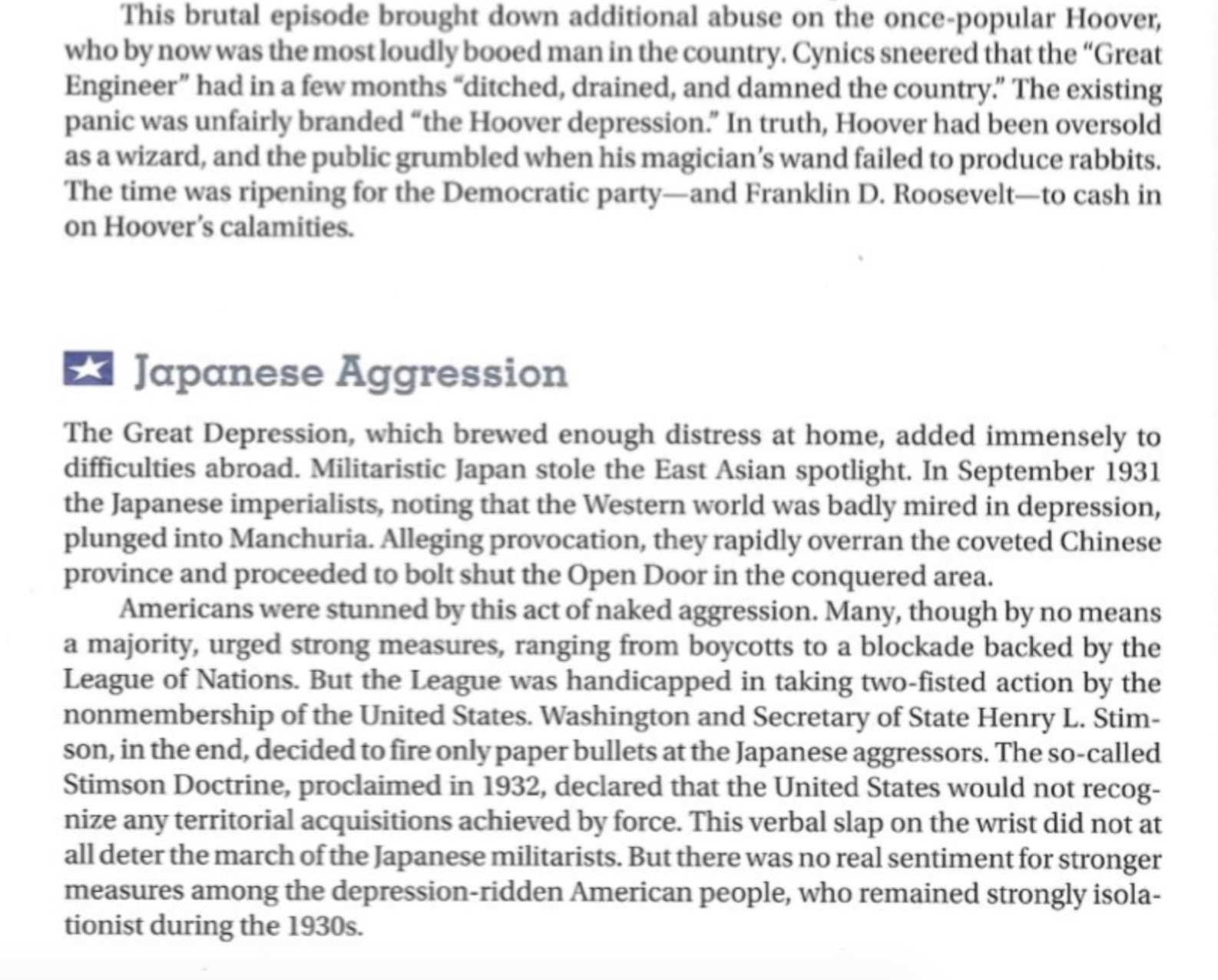
As used in line 1, "brewed" most nearly means
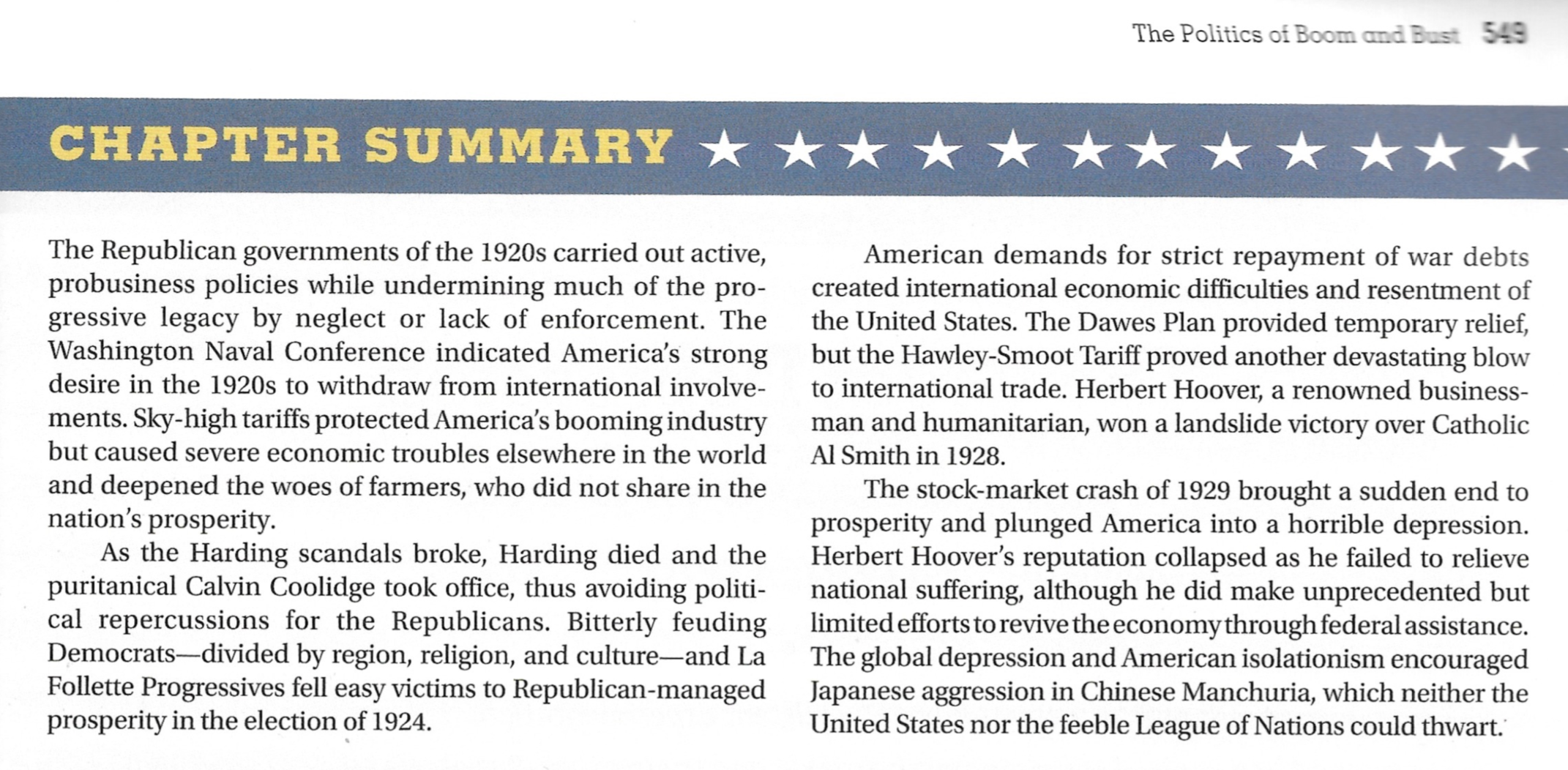
Excellent reading! Close out this Chapter by reviewing the "Chapter Summary" and using the "rectangle" tool to box the 5 most important key terms in the space provided.
Do you have any feedback or questions about the Formative reading or comprehension questions that you want to go over in class?