10 - Mystery of the Missing Tusks: Part 2 - The Selection of Elephants video
star
star
star
star
star
Last updated over 5 years ago
13 Nsɛmmisa
1
1
1
1
1
1
1
1
1
1
1
1
1
Why are so many elephants being illegally killed? And how is this poaching affecting elephant populations?
In Mystery of the Missing Tusks: Part 1, you started to explore these two questions by examining data from several studies in Part One of "Mystery of the Missing Tusks".
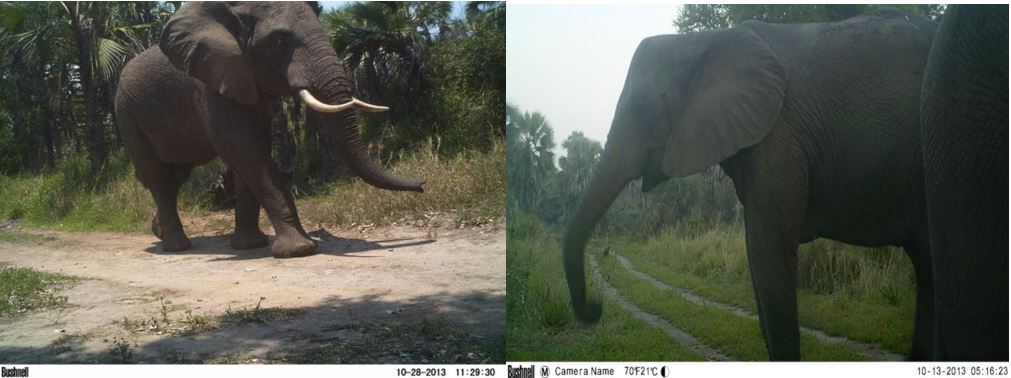
You will now, Mystery of the Missing Tusks: Part 2, watch video clips about elephants living in Gorongosa National Park in Mozambique.
What did Dr. Joyce Poole observe about the elephant population in Gorongosa National Park in Mozambique?
What happened in Mozambique from 1977 to 1992?
How were the elephants in Gorongosa National Park affected by this event?
Select all the descriptions that apply to the trait of “tusklessness.”
Dr. Poole says that there is strong selective pressure for male elephants to have tusks. Explain what that means.
Resume watching the video until time 4:29, right after you reach the graph below.
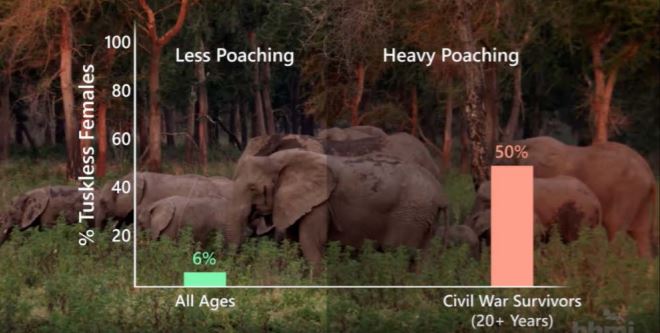
Describe what the bar on the left is showing.
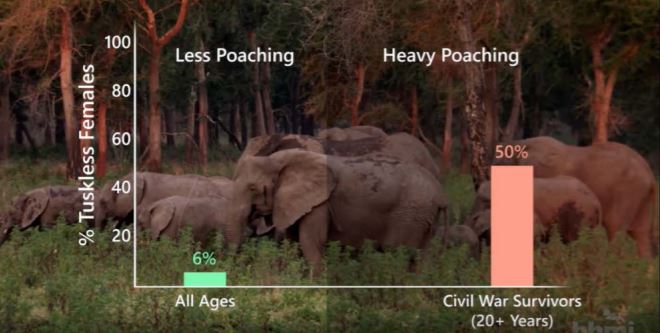
Describe what the bar on the right is showing.
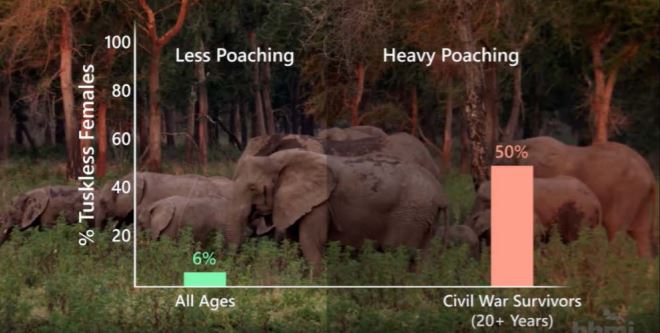
Explain why the bar on the right is much higher than the bar on the left.
The civil war in Mozambique ended in 1992. Based on the data above, predict whether the percentage of tuskless females born after the civil war was:
a. more or less than the percentage of tuskless females that were civil war survivors (bar on the right)
b. more or less than the percentage of tuskless females in populations with less poaching (bar on the left)
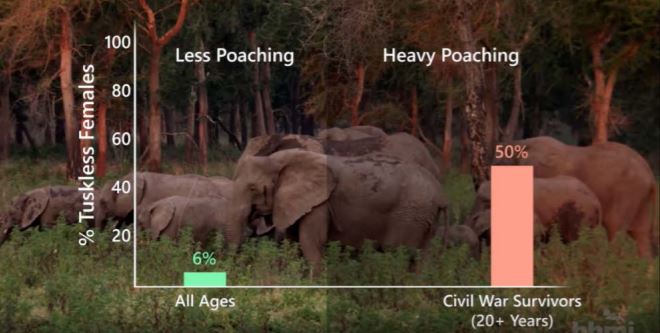
Explain your reasoning for the answers above.
Continue watching the video until time 4:56, soon after you reach the graph below.
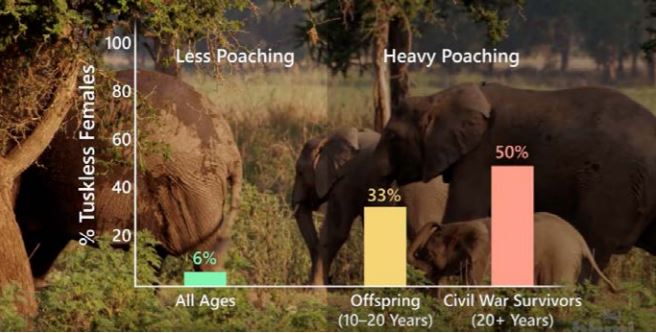
You made a prediction in about tuskless female elephants born after the civil war ended. These elephants would be 10–20 years of age when Dr. Poole collected her data. Does the data in the graph above support your prediction? Explain why or why not.
Why might tusklessness be less common in 10- to 20-year-old elephants than in elephants over 20 years of age?
Finish watching the video and answer the question that follow.
Dr. Poole noticed a high proportion of tuskless female elephants in Gorongosa. What was the selective pressure that increased the proportion of tuskless females?