Log in
Sign up for FREE
arrow_back
Library

Unit 9 MCQ Exam

star
star
star
star
star
Last updated 12 months ago
25 questions
1
1
1
1
1
1
1
1
1
1
1
1
1
1
1
1
1
1
1
1
1
1
1
1
1
Question 1
1.

Question 2
2.

Question 3
3.

Question 4
4.

Question 5
5.

Question 6
6.

Question 7
7.

Question 8
8.

Question 9
9.

Question 10
10.

Question 11
11.

Question 12
12.

Question 13
13.

Question 14
14.

Question 15
15.

Question 16
16.

Question 17
17.

Question 18
18.

Question 19
19.

Question 20
20.

Question 21
21.

Question 22
22.

Question 23
23.

Question 24
24.

Question 25
25.

Permafrost thickness increases → methane decreases → global temperature increases → permafrost thickness decreases
Global temperature increases → permafrost thickness decreases → methane increases → global temperature increases
Methane increases → permafrost thickness increases → global temperature increases → methane decreases
Global temperature increases → methane decreases → permafrost thickness increases → global temperature increases
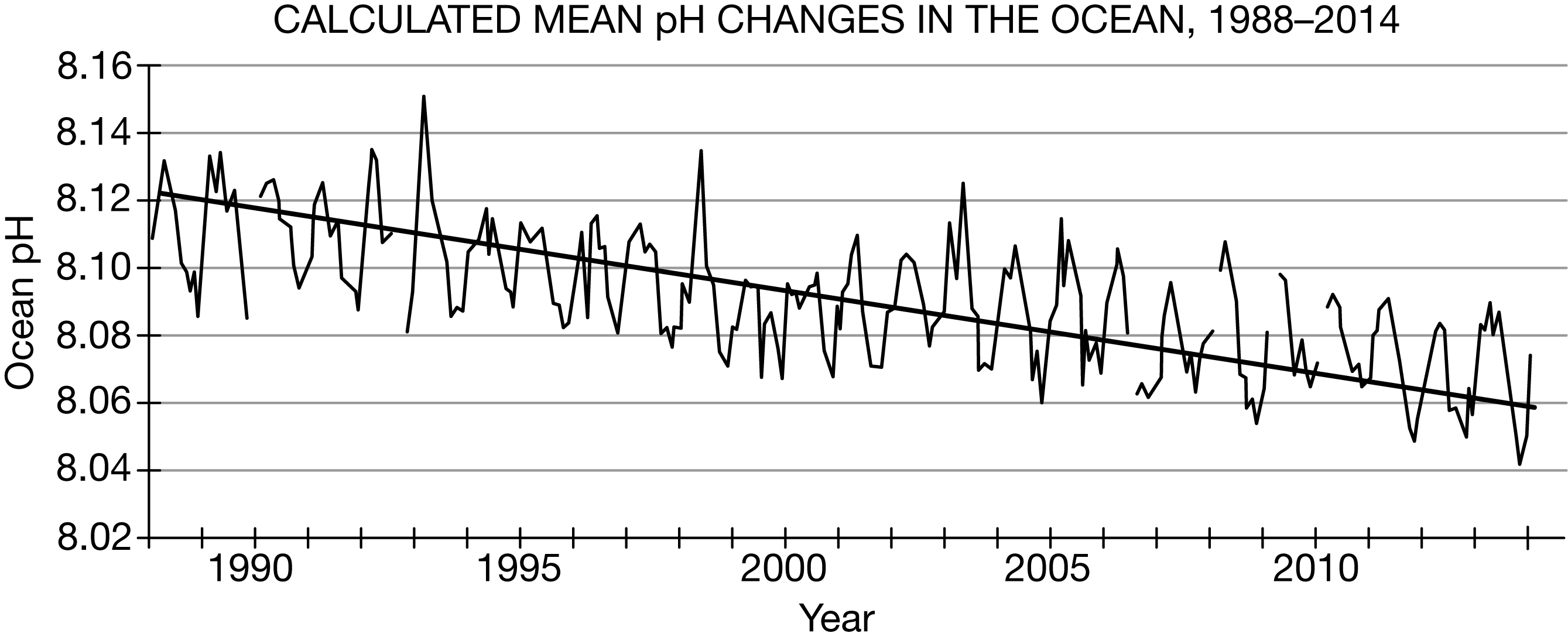
It will decrease the availability of carbonate ions in ocean water, decreasing the ability of coral to form shells
It will increase the solubility of oxygen, increasing gas exchange in marine organisms
It will increase the ocean pH outside of the tolerance range of most fish
It will decrease the temperature of the ocean water, decreasing the rate of photosynthesis in phytoplankton
They are tolerant of a wide range of environmental conditions
They are often eaten by native wasps and birds
They have only a few surviving offspring each year
They reach maturity slowly


60 mm per year
10 mm per year
7 mm per year
3 mm per year
Polar regions are warming more quickly than other regions because more carbon dioxide can dissolve in colder water
Polar regions are warming more quickly than other regions because warming decreases the coverage of high-albedo ground cover like ice and snow
Polar regions are warming more slowly than other regions because the ice and snow keep the air cool
Polar regions are warming more slowly than other regions because atmospheric circulation wind patterns trap cold air at the poles


Roads and electric power lines subdivided the landscape into smaller pieces and decreased the amount of available habitat
Native species were replanted in the areas, which led to fewer niches
The increased edge-to-interior ratio resulted in habitat fragmentation and the formation of smaller, more manageable parcels of land
Habitat corridors were built to allow individuals between populations to mate, which helped to prevent inbreeding and reduce the genetic diversity often found in isolated populations


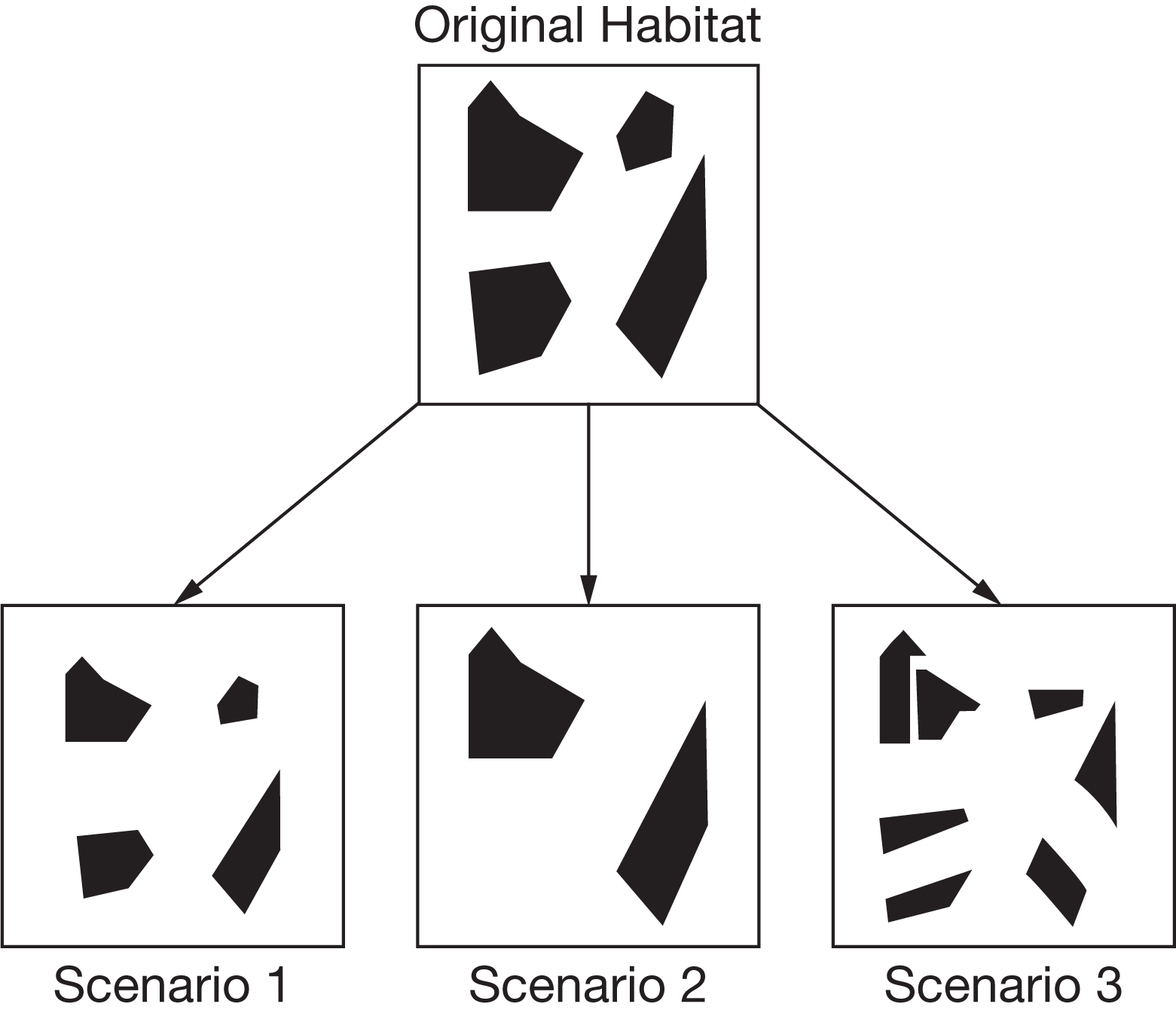
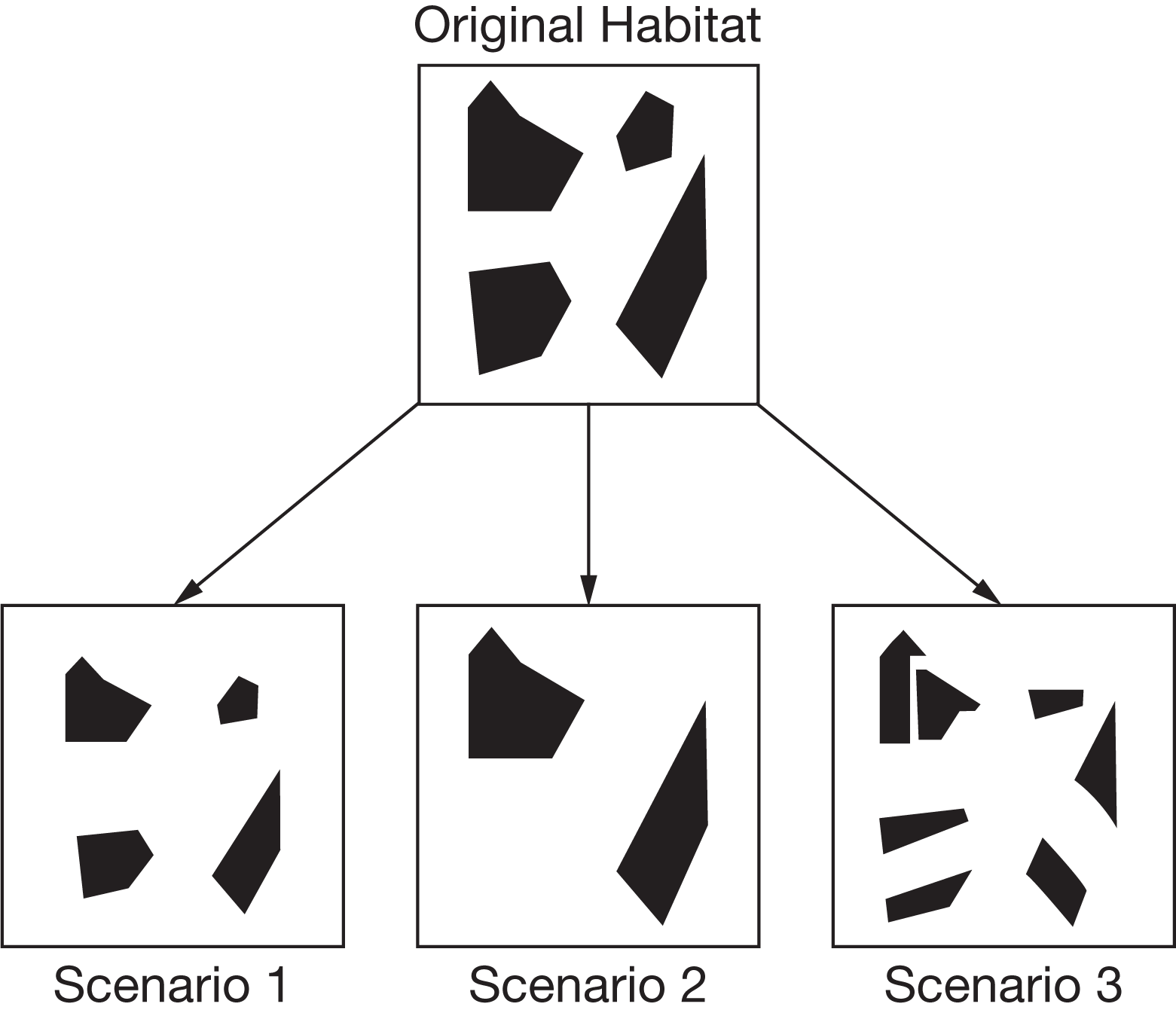
All scenarios experienced habitat loss, but only Scenario 3 experienced habitat fragmentation
All scenarios experienced habitat fragmentation, but only Scenario 2 experienced habitat loss.
Scenario 1 experienced habitat fragmentation, while Scenarios 2 and 3 experienced habitat loss only
Scenarios 1 and 2 experienced habitat loss, while Scenarios 3 experienced habitat fragmentation only


Increased carbon dioxide availability spurs plant growth, which would increase habitat size
Decreased temperatures would cause unsuitable abiotic conditions
Decreased precipitation would eliminate habitat patches
Increased sea level would reduce the size of the habitat patches
Silver carp became an invasive species in the United States because their numbers were not being controlled by natural predators
Silver carp became a keystone species and created more biodiversity in lakes and rivers in the southeastern United States
Silver carp populations in the United States are likely to become endangered as a result of limited prey resources in the new environment
Silver carp decreased the amount of algae and aquatic vegetation in ponds and lagoons in the southern United States


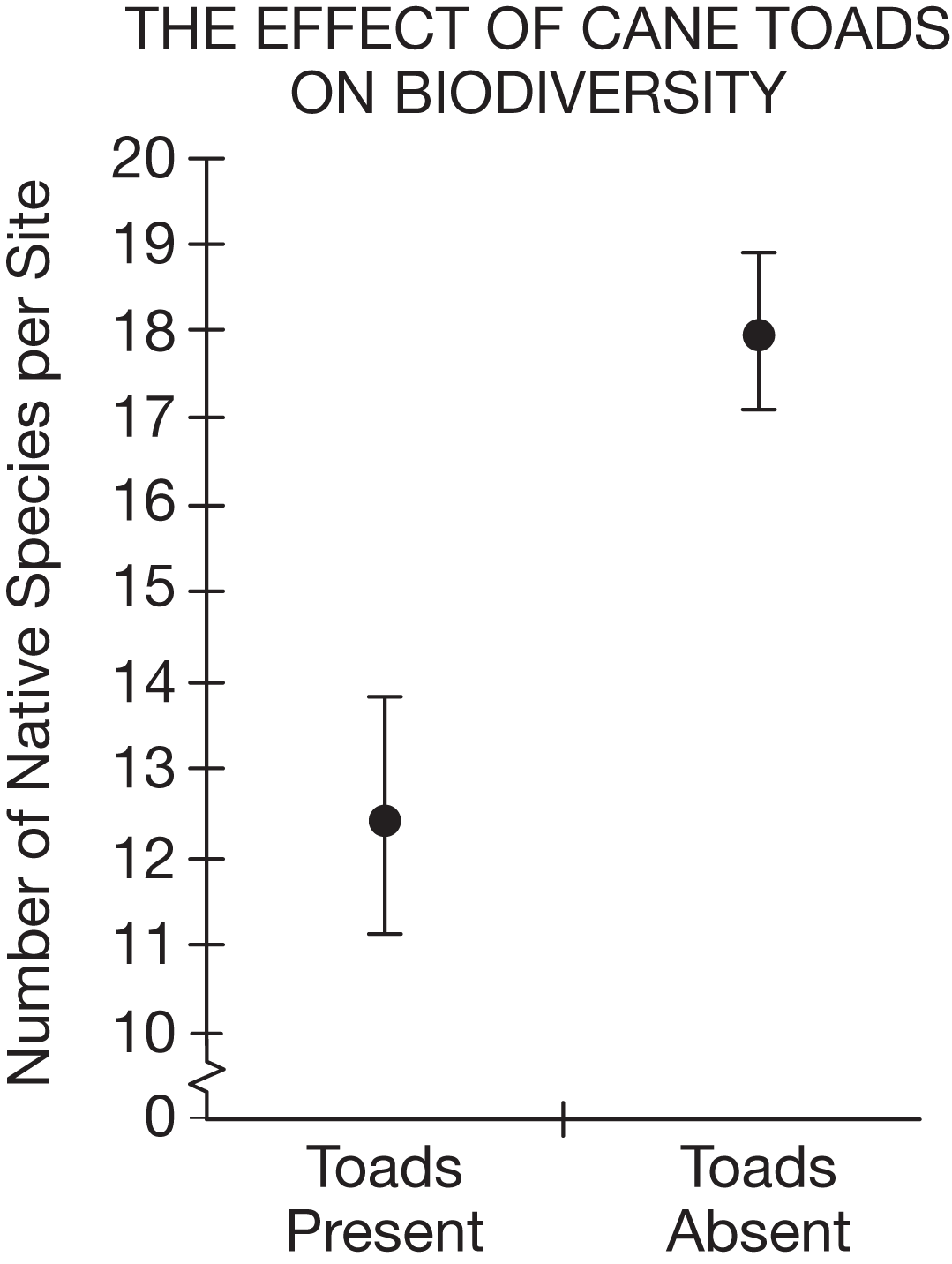
The results support the researchers’ hypothesis because there is a greater biodiversity at sites without cane toads
The results support the researchers’ hypothesis because there is a greater biodiversity at sites with cane toads
The results do not support the researchers’ hypothesis because there is less biodiversity at sites without cane toads.
The results do not support the researchers’ hypothesis because there is less biodiversity at sites with cane toads

The Montreal Protocol led to a dramatic reduction in CFC production globally after 1987, which greatly reduced the concentration of chlorinated hydrocarbons present in the stratosphere and decreased the breakdown of stratospheric ozone. Based on the graph, the annual production of CFCs decreased significantly in the late 1980s to almost 0 tons by 2000

The Montreal Protocol monitored the production and sale of CFCs and HCFCs in the late 1990s to decrease tropospheric ozone pollution and photochemical smog. Based on the graph, CFCs and HCFCs leveled off at 100,000 tons produced in 2000.
The Montreal Protocol was passed in 1970 to increase the production of HCFCs, which led to decreased reliance on CFCs. Based on the graph, HCFC-22 production increased steadily from 1980 to 1990 and HCFC-141b increased from 1990 to 2000
The Montreal Protocol reduced stratospheric ozone depletion by increasing the reliance on CFCs in industrial processes. Based on the graph, the increase in global CFC production from 1960 to 1970 demonstrates the success of the protocol by substituting ozone-depleting substances with CFCs


The ban on CFCs in aerosols in the United States was not effective on a global scale because it led to an increase in reports of skin cancer and cataracts in patients in the Southern Hemisphere from 1970 to 2000

The ban on CFCs in aerosols led to an increase in CFC-113 production for use in refrigerants and air conditioners in the United States, which led to a 10% overall increase in global CFC production between 1970 and 1980
The ban on CFCs led to a decrease of CFC-11 and CFC-12 production by more than 15% between 1978 and 1980, which supports the ban as an effective solution to reduce global CFC production
The ban on CFCs also led to a decrease in HCFC production beginning in 1980, reducing the reliance on chlorinated chemicals used in industrial processes and greatly reducing stratospheric ozone depletion


1.6 times greater
2.3 times greater
250 times greater
400 times greater


There is an inverse relationship between CO2 concentration and Antarctic temperature, but causality cannot be determined
There is a direct relationship between CO2 concentration and Antarctic temperature, but causality cannot be determined
A decrease in CO2 concentration preceded an increase in Antarctic temperature
An increase in Antarctic temperature preceded a decrease in CO2 concentration


CO2 concentrations and Antarctic temperatures have steadily decreased from 800,000 years ago, and present-day values for both variables are the lowest they have been in 800,000 years

CO2 concentrations and Antarctic temperatures have steadily increased from 800,000 years ago, and the present-day value for CO2 concentration is the lowest it has been in 800,000 years

CO2 concentrations and Antarctic temperatures have cycled approximately every 50,000 years, and present-day values for both variables are the highest they have been in 800,000 years
CO2 concentrations and Antarctic temperatures have cycled approximately every 50,000 years, and the present-day value for CO2 concentration is the highest it has been in 800,000 years
There will be a greater percentage of fish larvae that survive than mature fish that survive
The increasing carbon dioxide concentrations will increase the density of adult fish skeletons
The decreasing temperature of the ocean water will increase the survivorship of fish larvae
The decreasing pH of the ocean water will decrease the survivorship of fish

Increased atmospheric CO2 concentrations from volcanic eruptions and cellular respiration are contributing to coral bleaching
Increased atmospheric NOx concentrations from decomposition in landfills are contributing to eutrophication.
Increased atmospheric CO2 concentrations from the burning of fossil fuels and vehicle emissions are contributing to ocean acidification
Increased atmospheric NOx concentrations from fertilizers and livestock operations are contributing to a decrease in acid deposition in the ocean
6CO2+6H2O →C6H12O2+6O2
CO2+H2O→2H++CO32−
CH4+2O2→CO2+2H2O
CO2+Ca++CO32−→CaCO3
Nitrates (NO3− )
Chlorofluorocarbons (CFCs)
Carbon dioxide (CO2)
Nitrogen oxides (NOx)
Increased global temperatures lead to decreased sea ice coverage and decreased albedo, which further increases global temperatures
Increased precipitation increases the size of high albedo snowpack in polar regions, which leads to increased habitat for Arctic organisms such as polar bears.
Increased evaporation and cloud formation decreases the amount of solar energy reaching the surface of Earth, which leads to cooler temperatures at the surface and decreased evaporation and cloud formation
Increased melting of permafrost increases Earth’s ability to absorb methane gas, which decreases greenhouse warming and decreases the melting of permafrost

Calanus are moving south to warmer waters where the North Atlantic right whale is not able to travel
The new pattern of North Atlantic right whale migration is primarily from decreased food availability and warming waters
The increase in the abundance of Calanus has increased the number of new competitors for the North Atlantic right whale in the Gulf of Maine.
North Atlantic right whales are currently being overhunted and are therefore at an increased risk of extinction

Decrease evaporation rates in the deep waters in the Gulf of Maine to artificially cool down the water
Put nets in the Gulf of Maine to stop Calanus from entering the waters
Restock Calanus in the habitat areas that have been set aside as right whale conservation areas
Expand the range of conservation areas meant to protect the right whale

There has been an increased number of North Atlantic right whales feeding in the Gulf of Maine
The deep-water temperature in the Gulf of Maine has increased by approximately 9°F since 2004
Calanus are getting caught in fishing nets from large-scale commercial fishing vessels
The North Atlantic right whales are now feasting year-round in preparation for autumn mating season
Anaerobic breakdown of organic material
Aerobic respiration from animals
The reaction between nitrogen and oxygen
Evapotranspiration from plants
Use of foams and packing materials that contain chlorofluorocarbons
Transporting products from one continent to another on a cargo ship
Generating electricity at a nuclear power plant
Growing fast-growing crops in open fields