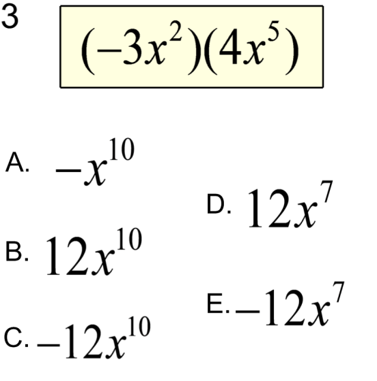
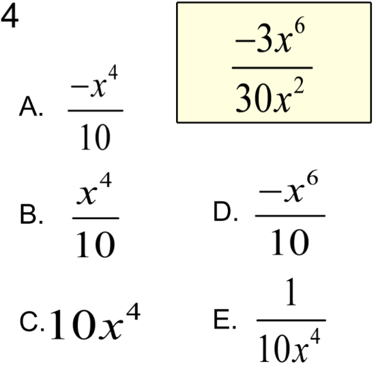
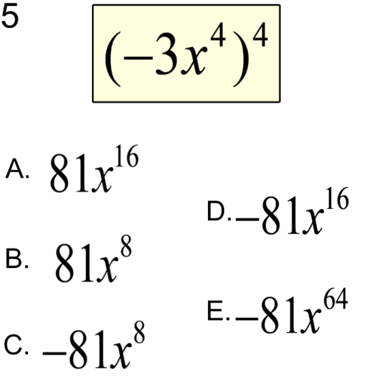
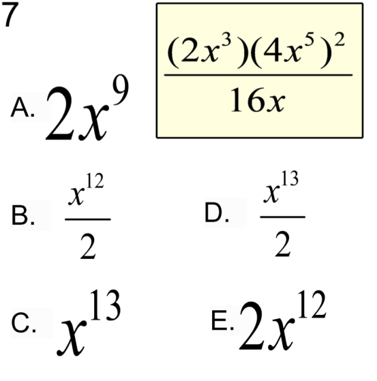
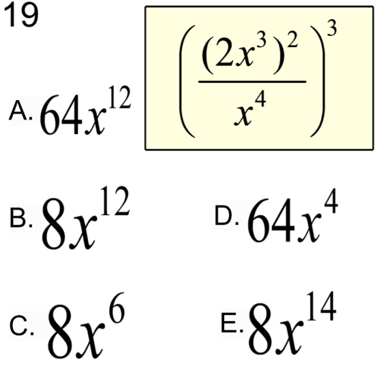
Use the properties of exponents and the order of operations to simplify the expression.
![]()
Use the properties of exponents and the order of operations to simplify the expression.
![]()
Use the properties of exponents and the order of operations to simplify the expression.
![]()
Use the properties of exponents and the order of operations to simplify the expression.
![]()
Use the properties of exponents and the order of operations to simplify the expression.
![]()
Write the polynomial in standard form.
State the degree of the polynomial in question #6.
Classify the polynomial in question #6 by the number of terms.
Find the difference of the polynomials.
Show your work to find the product of
Write the product to question #10
Show your work to find the product of
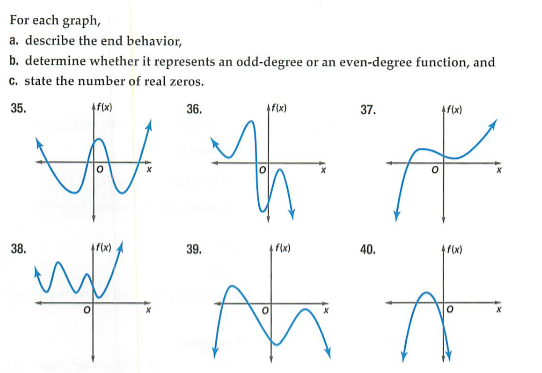
#35 END BEHAVIOR
35
#36 END BEHAVIOR
36
#37 END BEHAVIOR
37
#38 END BEHAVIOR
38
#39 END BEHAVIOR
39
#40 END BEHAVIOR
40
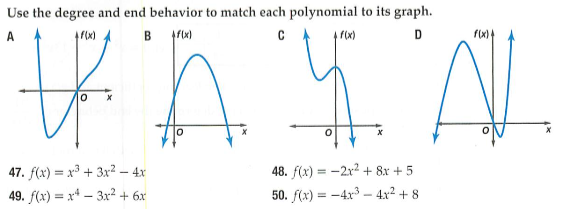
47
48
49
50
Use synthetic division to divide
Use long division to divide
Find the real solutions of the equation
Who is correct?
What mistake did the other person make?
Divde
Divide

Answer?
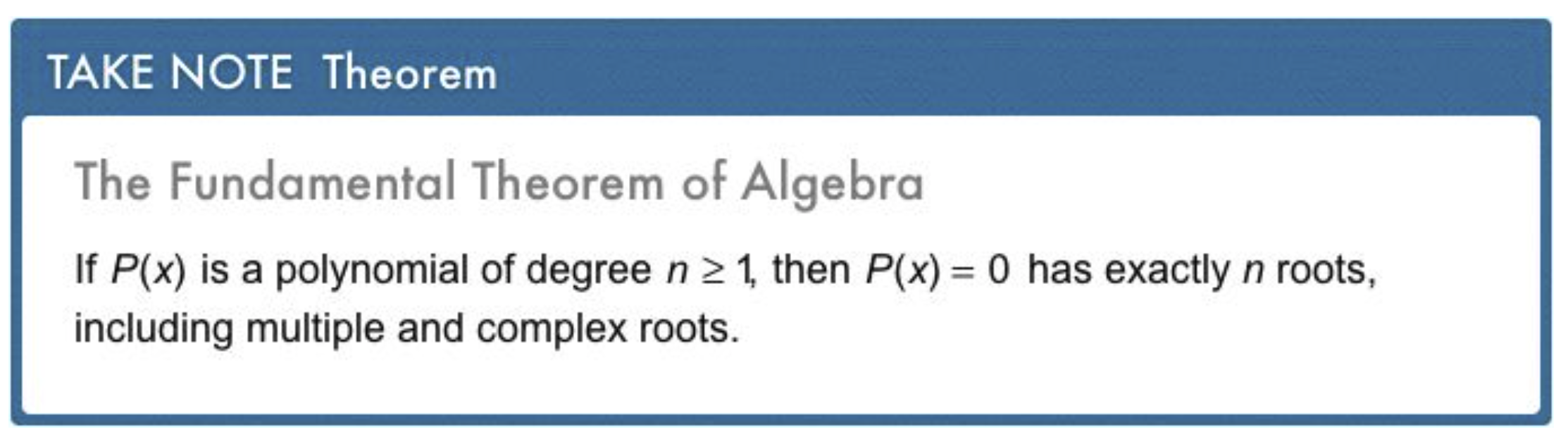
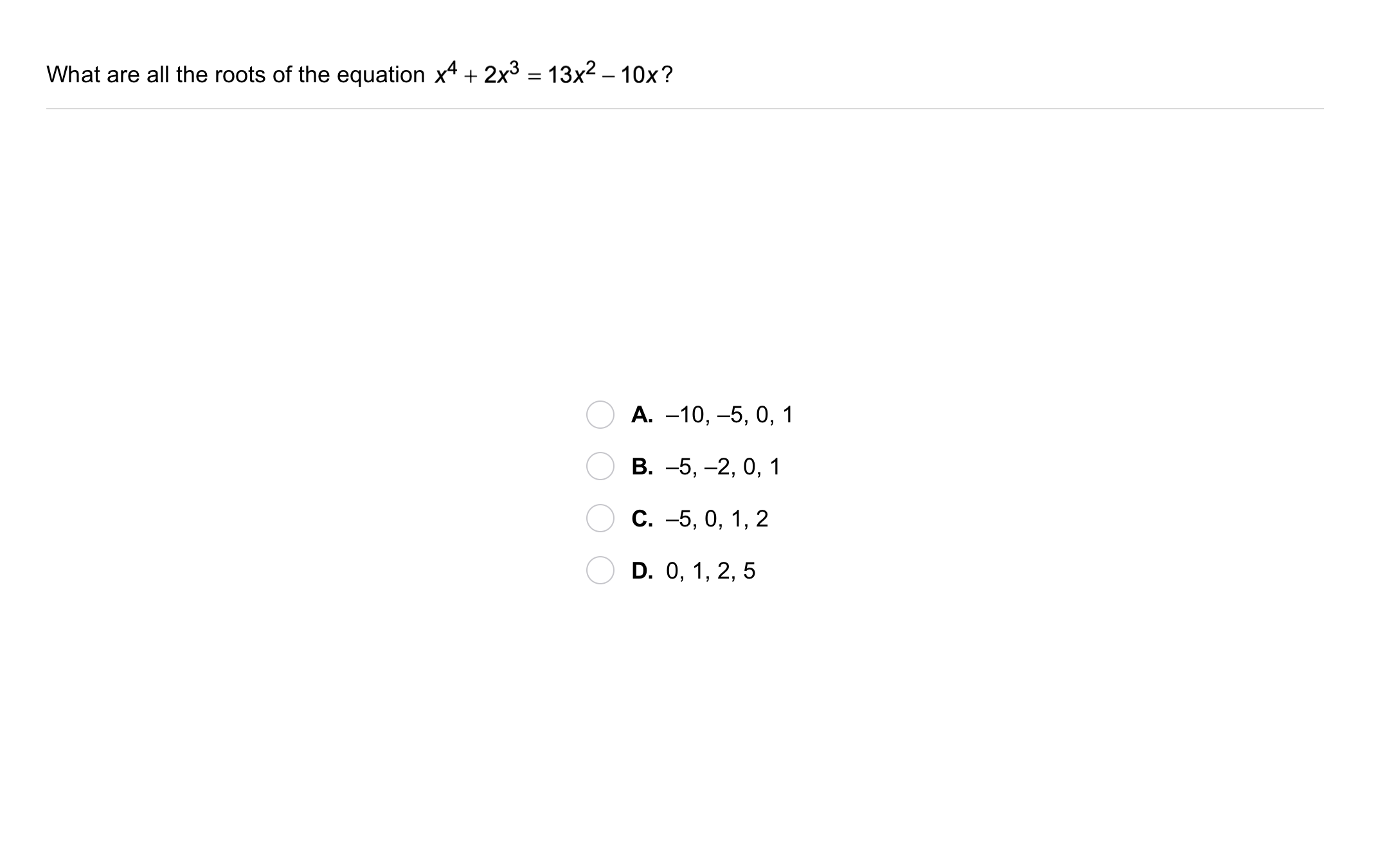
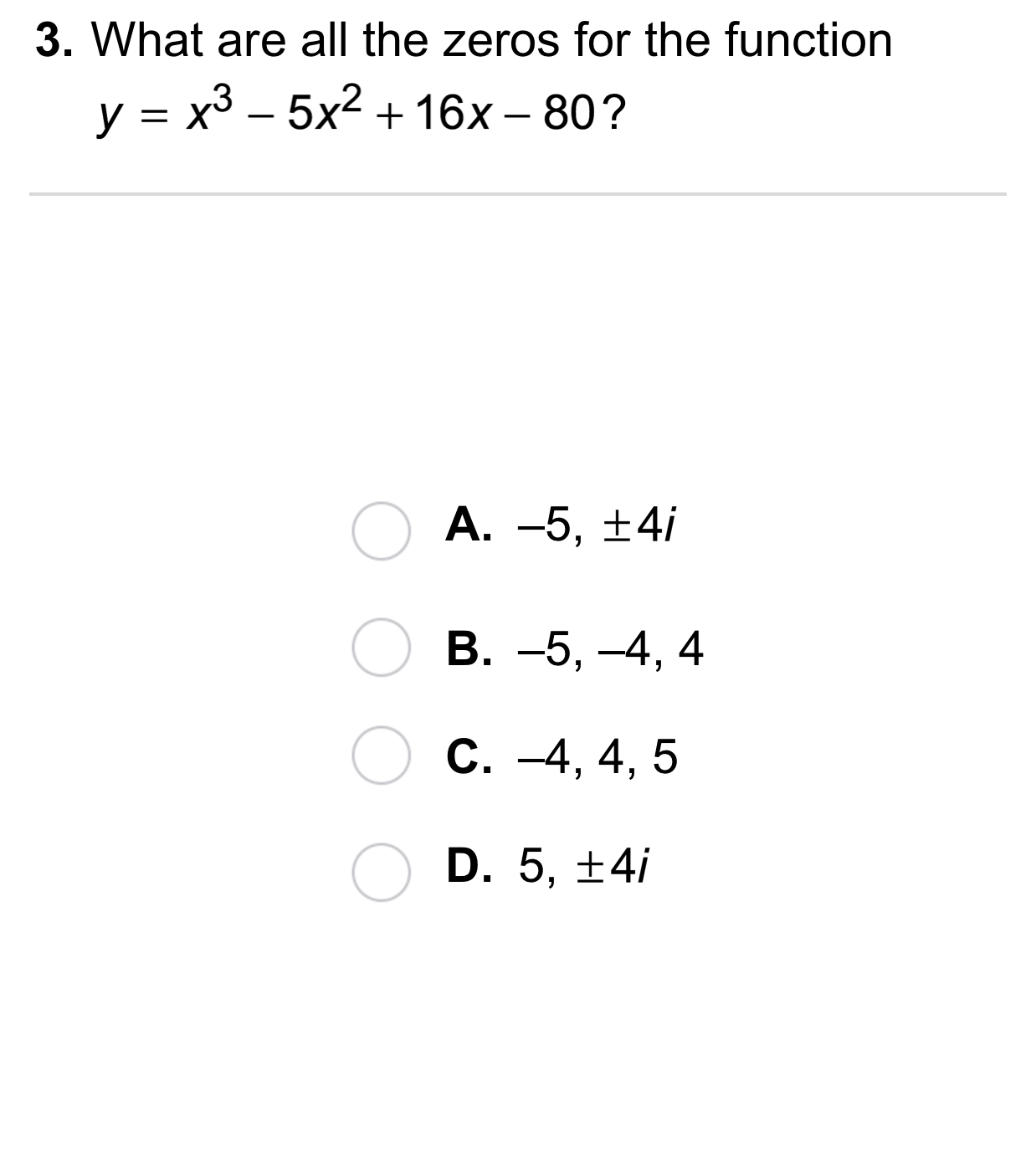
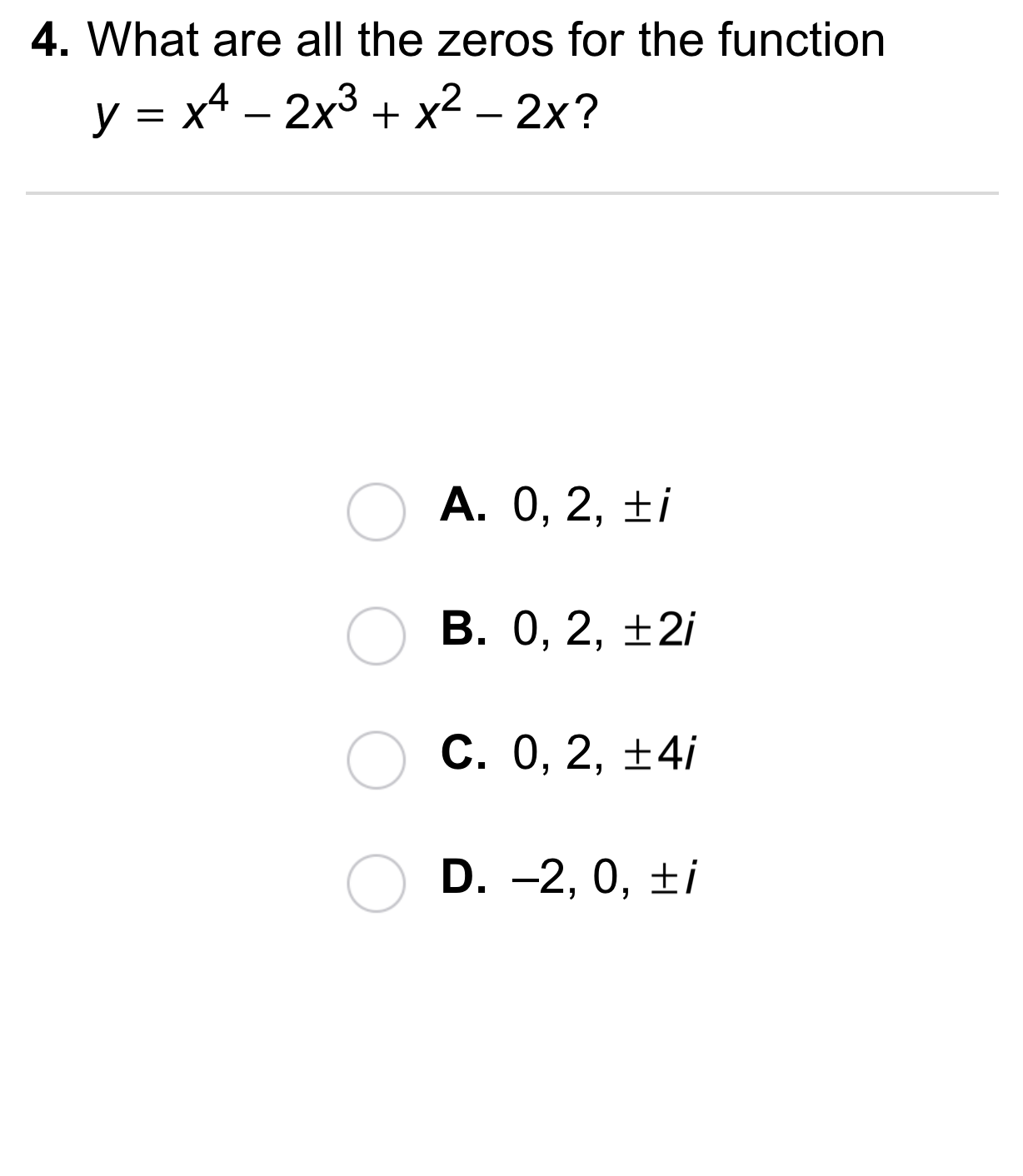
What are all the zeros of the function?
Select all that apply.

Answer?

Answer?

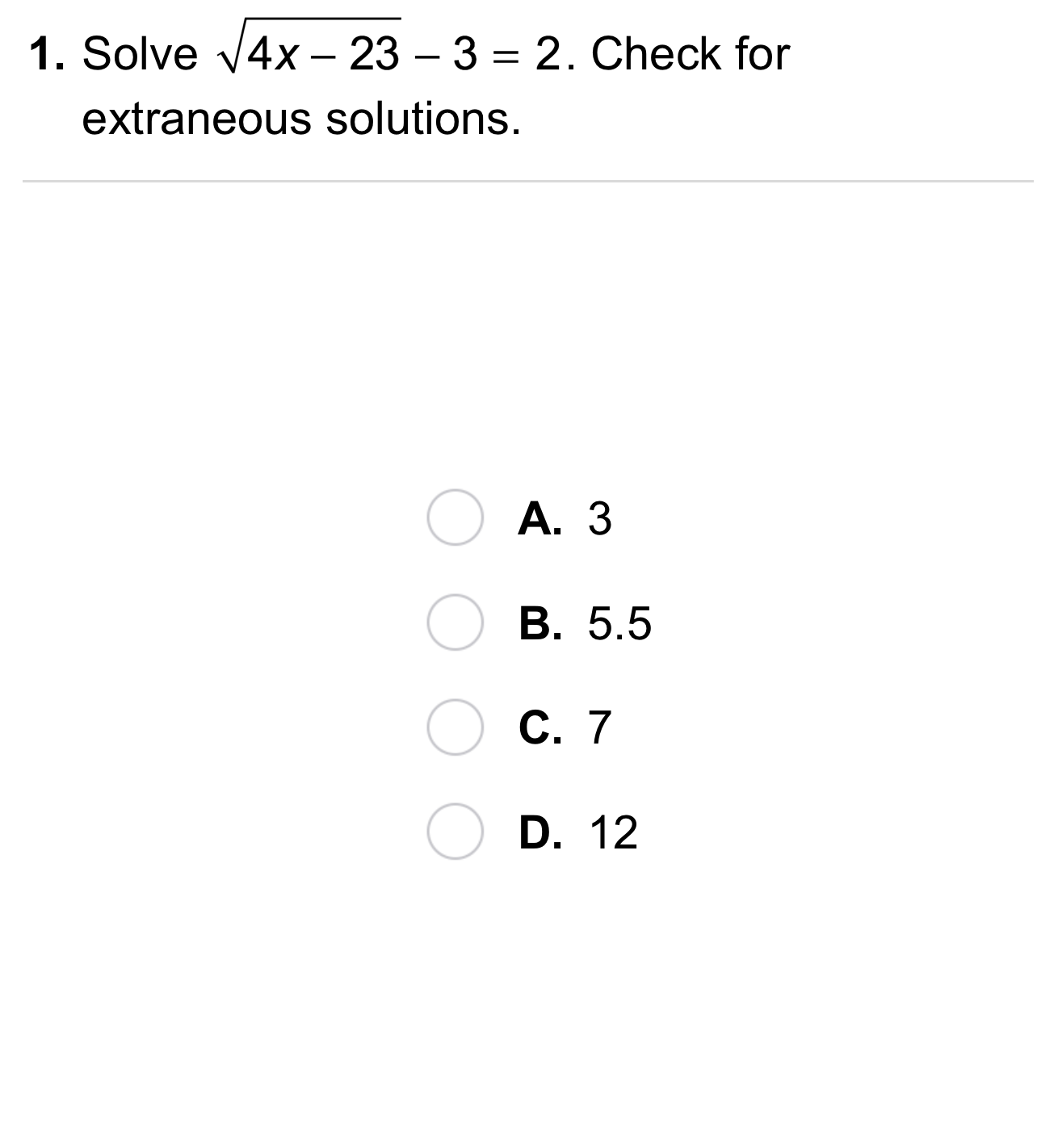
Answer?

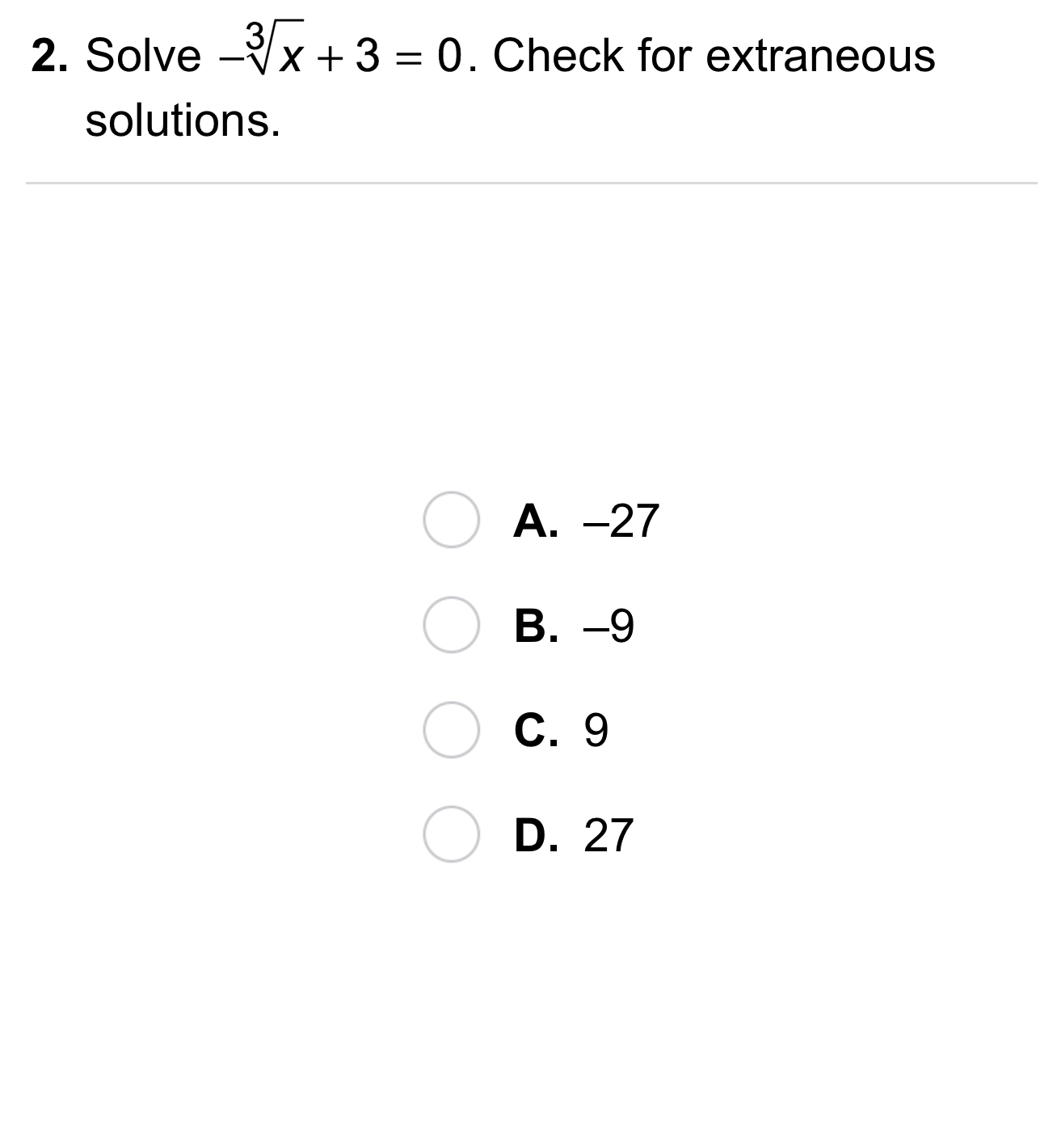
Answer?
Quadratic Regression (Think City of Equations Project!)
1. Create a table and plot the points.
2. Create and graph a quadratic regression model for the data.
Recall Desmos' quadratic regression notation: y1~ax1^2+bx1+c
3. Determine whether the quadratic regression model is appropriate for the data.
4. If the quadratic regression model is not appropriate, remove it. Otherwise, leave it on your graph.
5. Zoom and pan your graph to establish an appropriate viewing window.
Graph y=
Graph y=
Is f(x) a polynomial function? If not, why not.
What is the degree of
What is the leading coefficient of
What is the y-intercept of
Use synthetic substitution to evaluate
when
Post your answer in #50 when finished.
From #49, place your answer here.
What is the end behavior of
as
Simplify
Simplify
Simplify
Expand the product
Factor the polynomial completely.
Factor the polynomial completely
Simplify (Answer is in simpliest radical form. NO DECIMALS!)
Simplify.
Simplify.
Simplify.
Simplify.
Rewrite in exponential form.
Rewrite in radical form.
Rationalize each denominator, then simplify.
Simplify the following expression.
Simplifying the following expression:
Simplify the following expression:
Hint: Use exponent rules to help you simplify!
Simplify the following expression:
Hint: Use exponent rules to help you simplify!
Simplify the following expression:
Hint: Use exponent rules to help you simplify!
Match each expression to their equivalent expression
| Stavka koja se može prevući | arrow_right_alt | Odgovarajuća stavka |
|---|---|---|
| arrow_right_alt | ||
| arrow_right_alt | ||
| arrow_right_alt |
Simplify:
Simplify and show all of your work:

Answer?

Answer?

Answer?

Answer?

Answer?
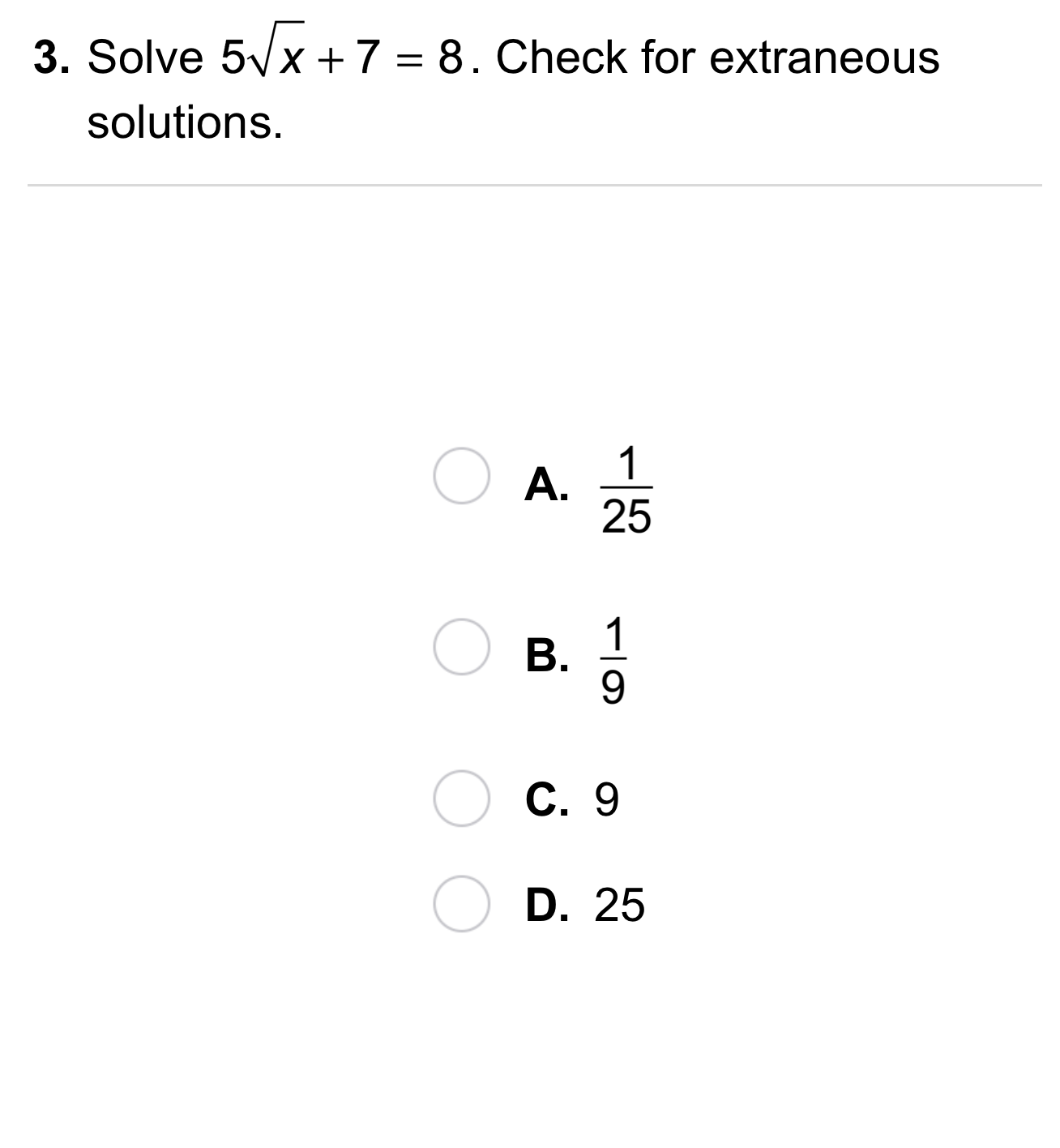
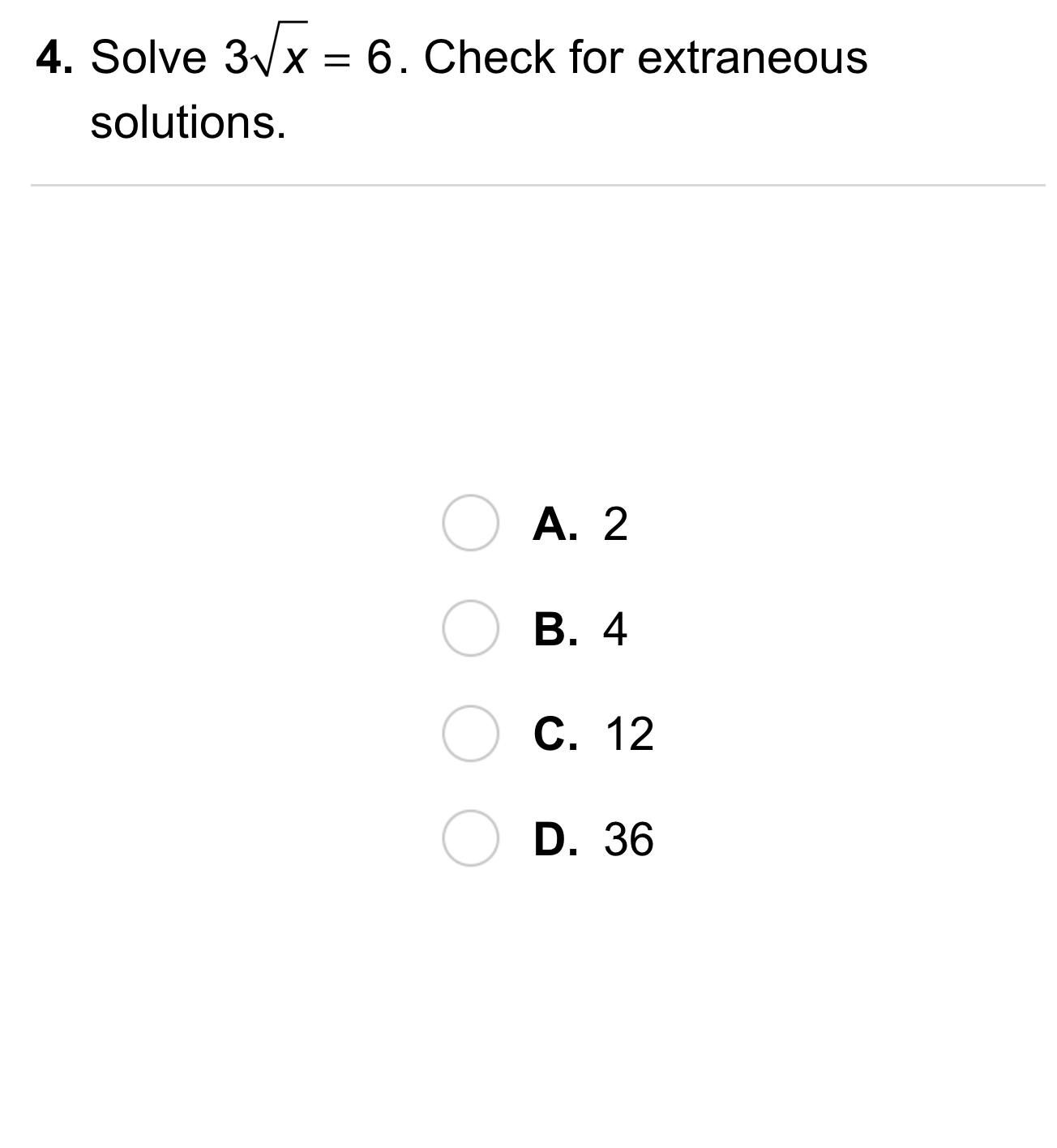
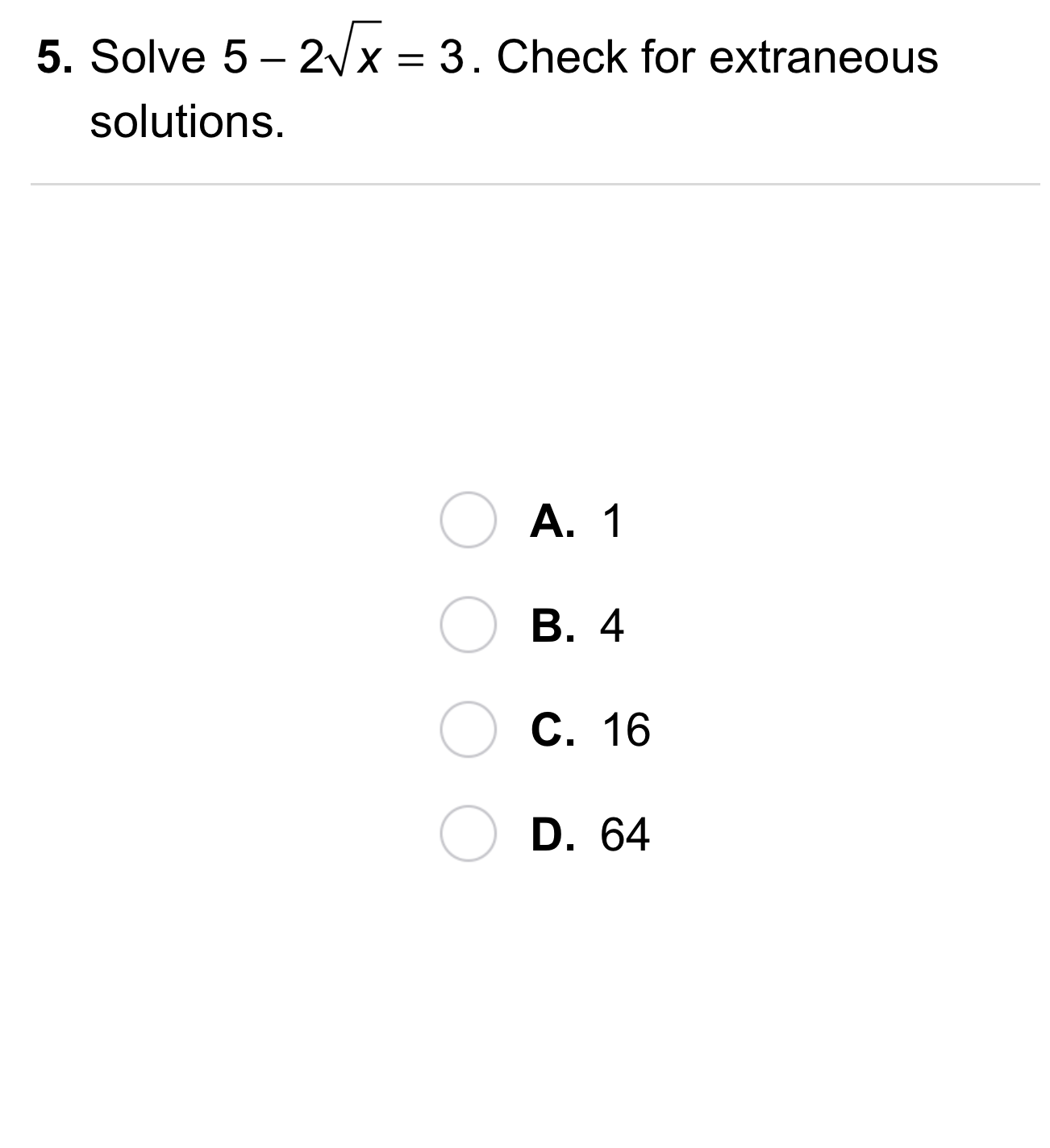
Solve the equation. Then identify any extraneous solutions.
Solve the equation. Show all of your work.


DOMAIN
RANGE
DOMAIN
RANGE
DOMAIN
RANGE
round to the nearest tenth