APUSH Chapter 33 - FDR and the Shadow of War (1933-1941)
star
star
star
star
star
Last updated over 1 year ago
12 questions
1
IITE.01
1
IITE.01
0
Welcome to your Chapter 33 reading! As you read, you should consider the following essential question:
How did the U.S. foreign policy shift from isolationism to interventionism as World War II escalated?
As always, "Focus Questions" should guide your reading and notes, but you do not necessarily have to explicitly answer them.
1
Question 1
1.
What do you already know about World War II?
If you do not know anything about World War II, what is one question you would want answered by the end of this learning cycle?
1
IICI.01
1
Question 3
3.
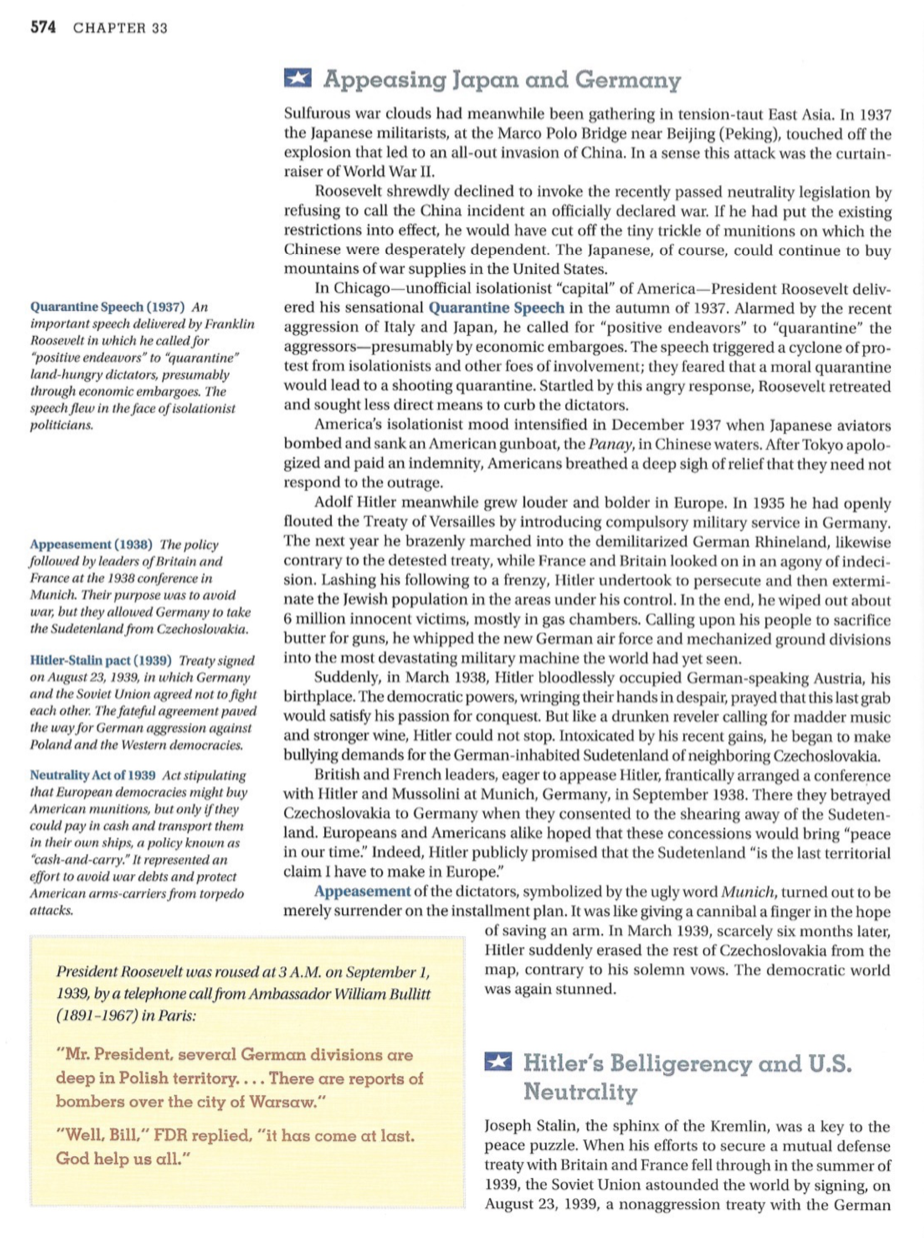
The passage indicates that the American people responded to the aggressive actions of Germany, Italy, and Japan by
IIRC.02
Question 4
4.
Which choice provides the best evidence for the answer to the previous question?
1
Question 5
5.
IIWD.01
1
Question 6
6.
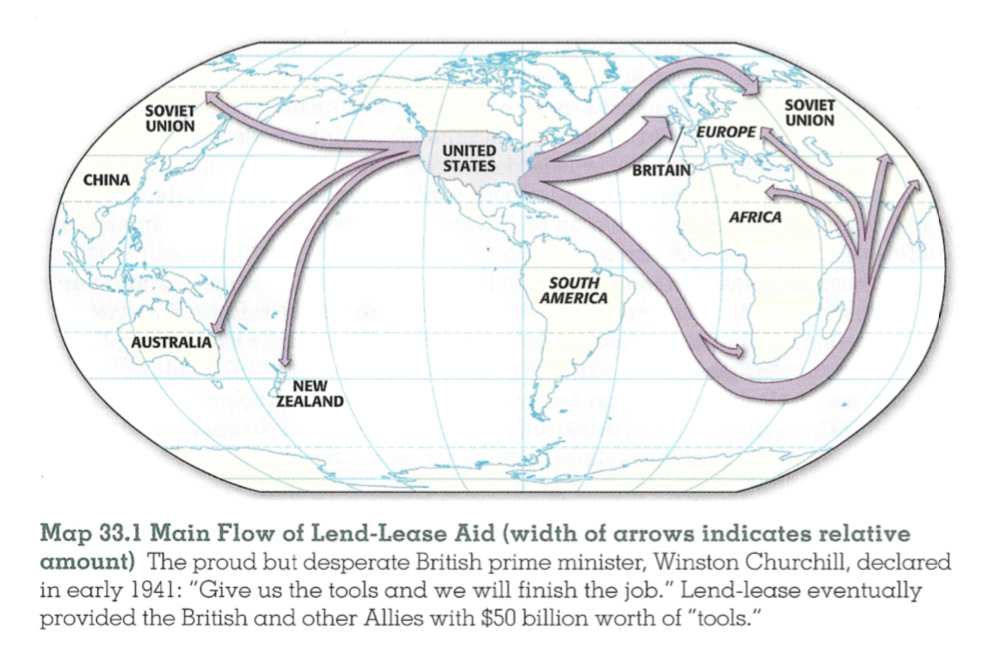
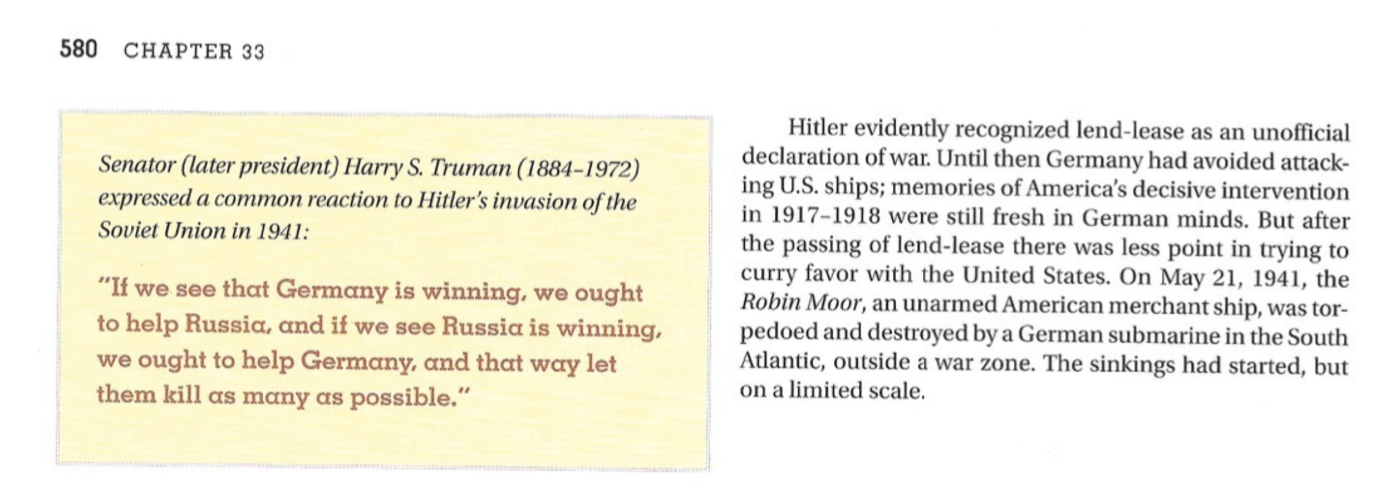
The passage indicates that the 1941 Lend-Lease Act was
IIRC.01
Question 7
7.
Which choice provides the best evidence for the answer to the previous question?
1
Question 8
8.
As used in line 1, "evidently" most nearly means
IIWD.01
1
Question 9
9.
IIRC.02
1
Question 10
10.
RPV.01
1
Question 11
11.
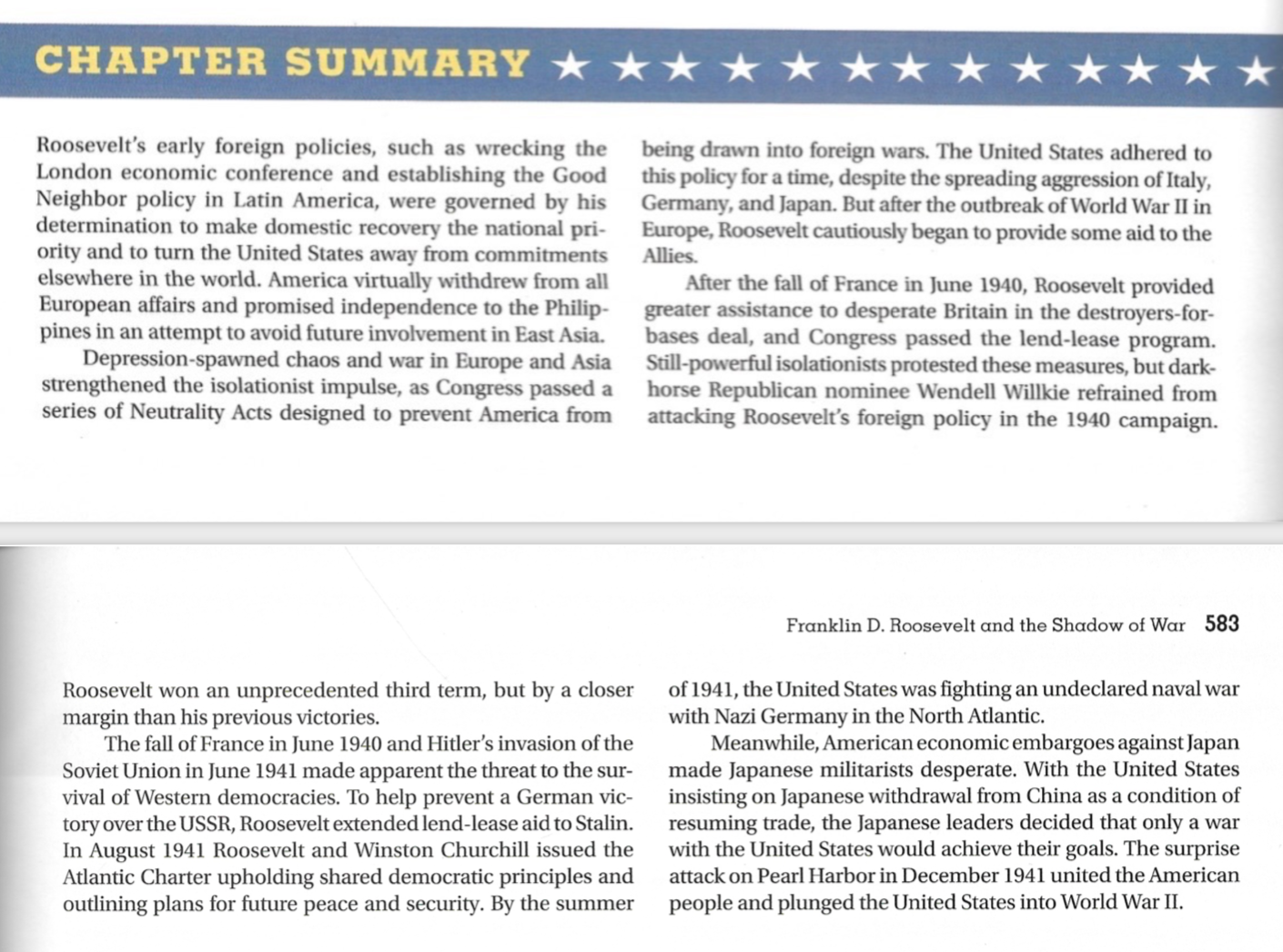
Excellent reading! Close out this Chapter by reviewing the "Chapter Summary" and using the "rectangle" tool to box the 5 most important key terms in the space provided.
Question 12
12.
Do you have any feedback or questions about the Formative reading or comprehension questions that you want to go over in class?
Question 2
2.
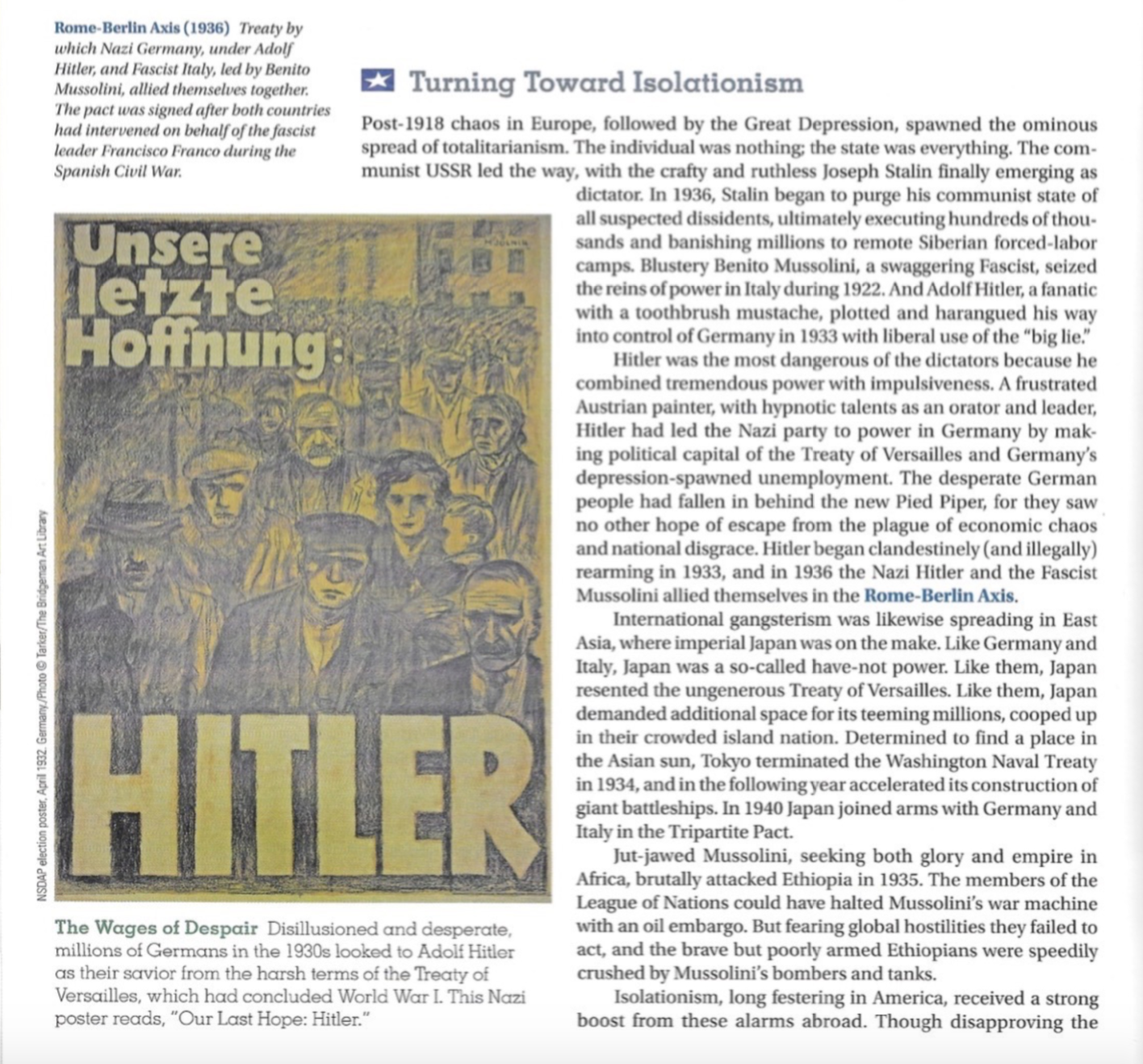
The main idea of totalitarianism is
giving humanitarian assistance to the targets of aggression.
promoting economic embargoes against aggressor nations.
providing military aid to those nations under attack.
Line 18-20 ("Through its... innocent victims")
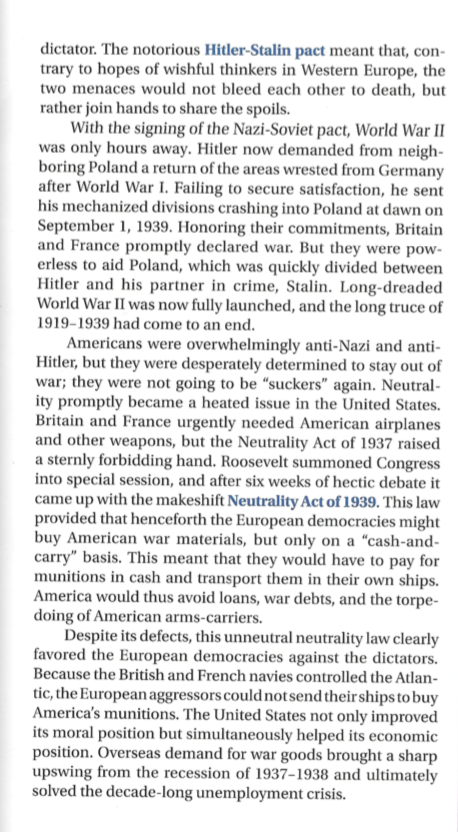
As used in line 1, "appease" most nearly means
ignore
criticize
placate
elevate
an executive deal negotiated between Franklin Roosevelt and Winston Churchill.
was a relatively inconsequential challenge to Joseph Stalin.
the point when all pretense of American neutrality was abandoned.
Line 22-23 ("By its... of neutrality")
vaguely
angrily
clearly
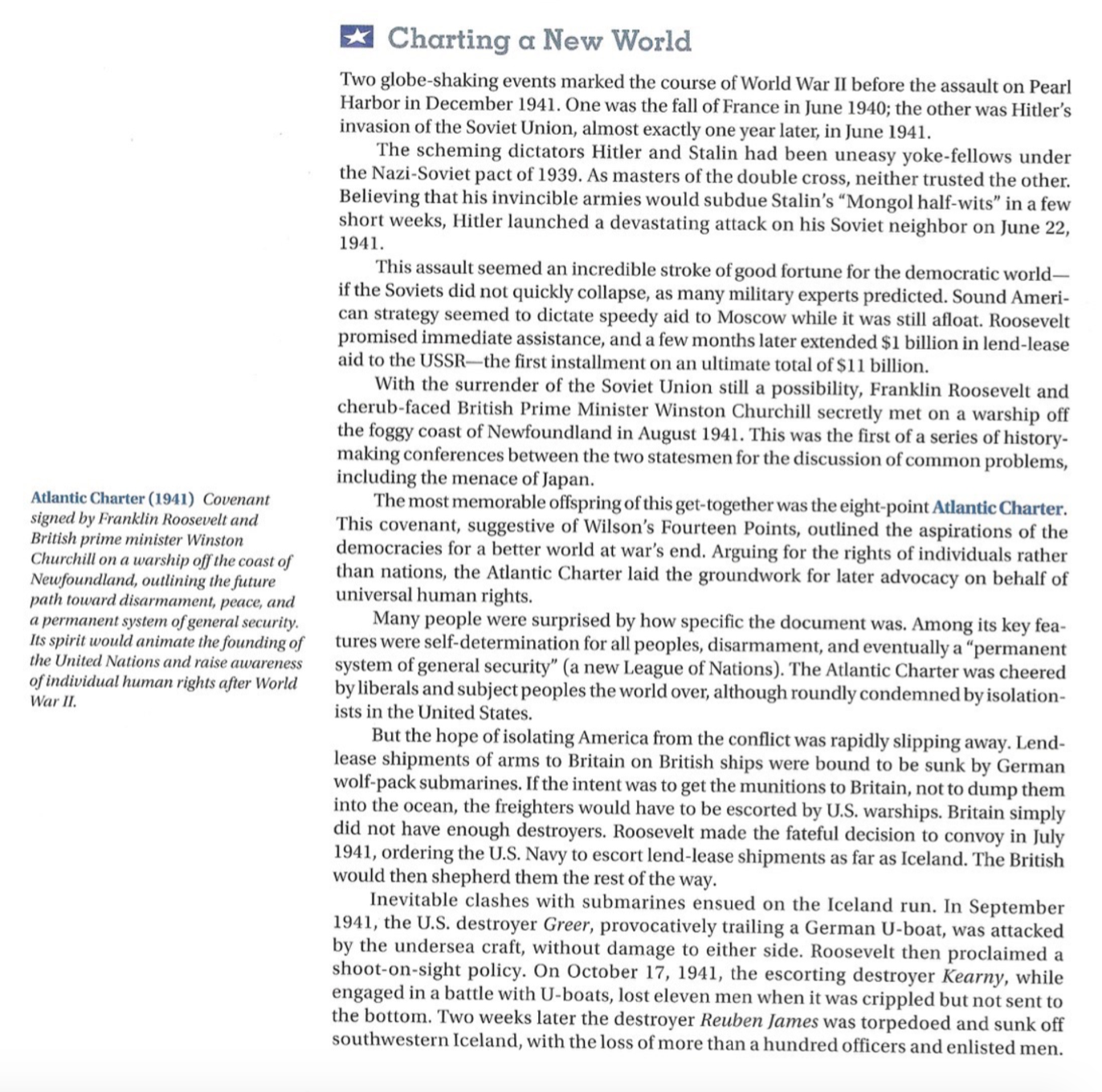
The Atlantic Charter signed by the United States and Britain in August 1941 called for
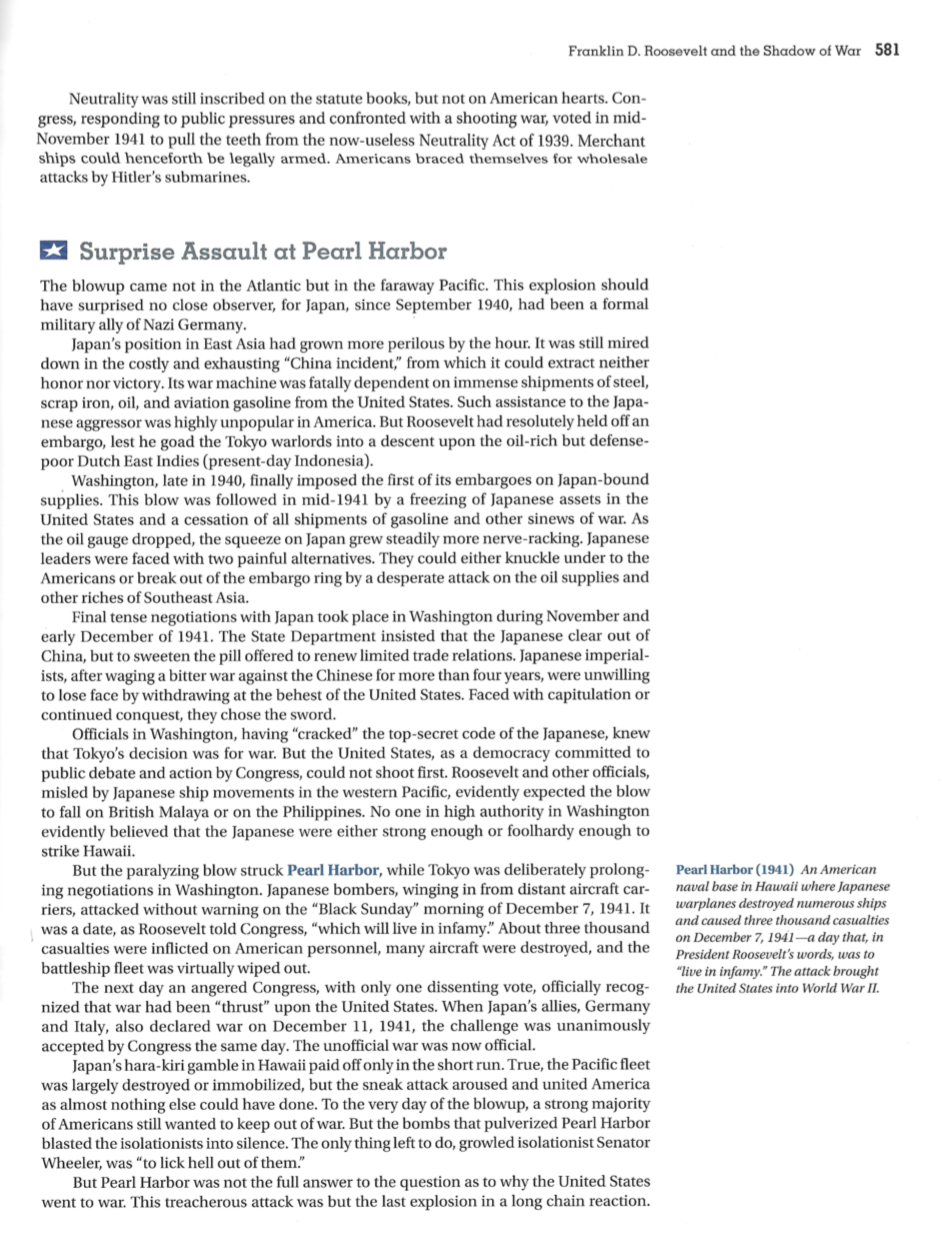
national self-determination and a new League of Nations.
the United States to enter World War II by December 1941.
an end to the British and French colonial empires.
an American-British military alliance.
Which choice best reflects the perspective of the Japanese government regarding Pearl Harbor?
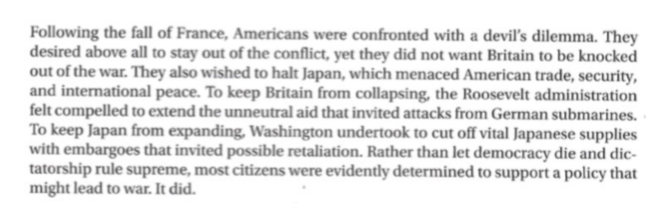
President Franklin Roosevelt was too committed to helping Britain and Holland retain their colonial assets in the Dutch West Indies.
Japan had no alternative but to bomb the U.S. after FDR froze Japanese assetts and blocked all shipments necessary for war.
British Prime Minister Winston Churchill should have demanded that American renew its trade with Japan.
The United States government had broken its treaty of nonaggression first by attacking Germany.
a belief in the historic destiny of the working class.
the doctrine of white racial superiority.
the glorification of the state and disregard for the individual and his rights.