Crickets Part I
star
star
star
star
star
Last updated about 5 years ago
14 Nsɛmmisa
1
1
1
1
1
1
1
1
1
1
1
1
1
1
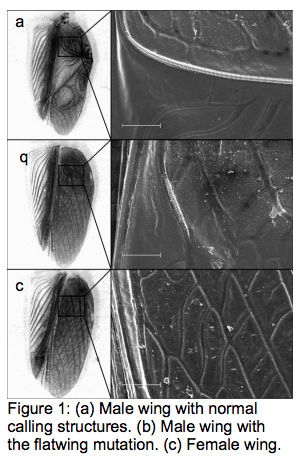
Research Background: Some of the most vibrant and elaborate traits in the animal kingdom are signals used to attract mates. These mating signals include the bright feathers and loud calls of birds or the swimming dances performed by fish. Most of the time the males of the species perform the mating signals, and females use those signals to choose a mate. While mating signals help attract females, they may also attract unwanted attention from other species, like predators. Robin is a scientist who studies the mating signals of Pacific field crickets. These crickets live on several of the Hawaiian Islands. Male field crickets make a loud, long-distance song to help females find them and then switch to a quiet courtship song once a female comes in close. Males use specialized structures on the wings to produce songs (Figure 1a).
One summer, Robin noticed that the crickets on one of the islands, Kauai, were unusually quiet. Only a couple of years before, Kauai had been a very loud place to work; however, that year Robin heard no males singing! After taking the crickets back to the lab, she noticed that there was something different about the males’ wings on Kauai. Most (95%) of males were missing all of the structures that are used to produce the calling and courtship songs (Figure 1b)—they had completely lost the ability to produce song! She decided to call this new type of male a flatwing male. But why did these males have flat wings?
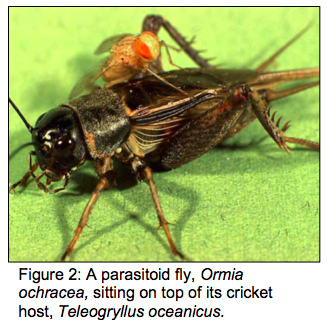
On Kauai, songs of the male crickets attract female crickets, but they are also overheard by a deadly parasitoid fly (Figure 2). The fly sprays its larvae on the backs of the crickets. The larvae then burrow into the crickets’ body cavity and eat them from the inside out! Robin thought that maybe the flat wings and lack of a song helped the male. To test this idea, Robin dissected the males to look for fly larvae. She compared infection levels for 67 normal males— collected before the flatwing mutation appeared in the population—to 122 flatwing males that she collected after the flatwing mutation appeared. She expected fewer males to be infected by the parasitoid fly after the appearance of the flatwing mutation in the cricket population.
Scientific Questions: Why do most male crickets on Kauai have flat wings? Could parasitoid flies have contributed to the loss of song for male crickets?
What is the hypothesis? Find the hypothesis in the text and type it below. A hypothesis is a proposed explanation for an observation, which can then be tested with experimentation or other types of studies.
Use the whiteboard below to complete calculations, then answer the question: Are more males parasitized in the population of males before or after the flatwing mutation came into existance?
You need to graph the data above to answer the scientific questions listed:
Scientific Questions: Why do most male crickets on Kauai have flat wings? Could parasitoid flies have contributed to the loss of song for male crickets?
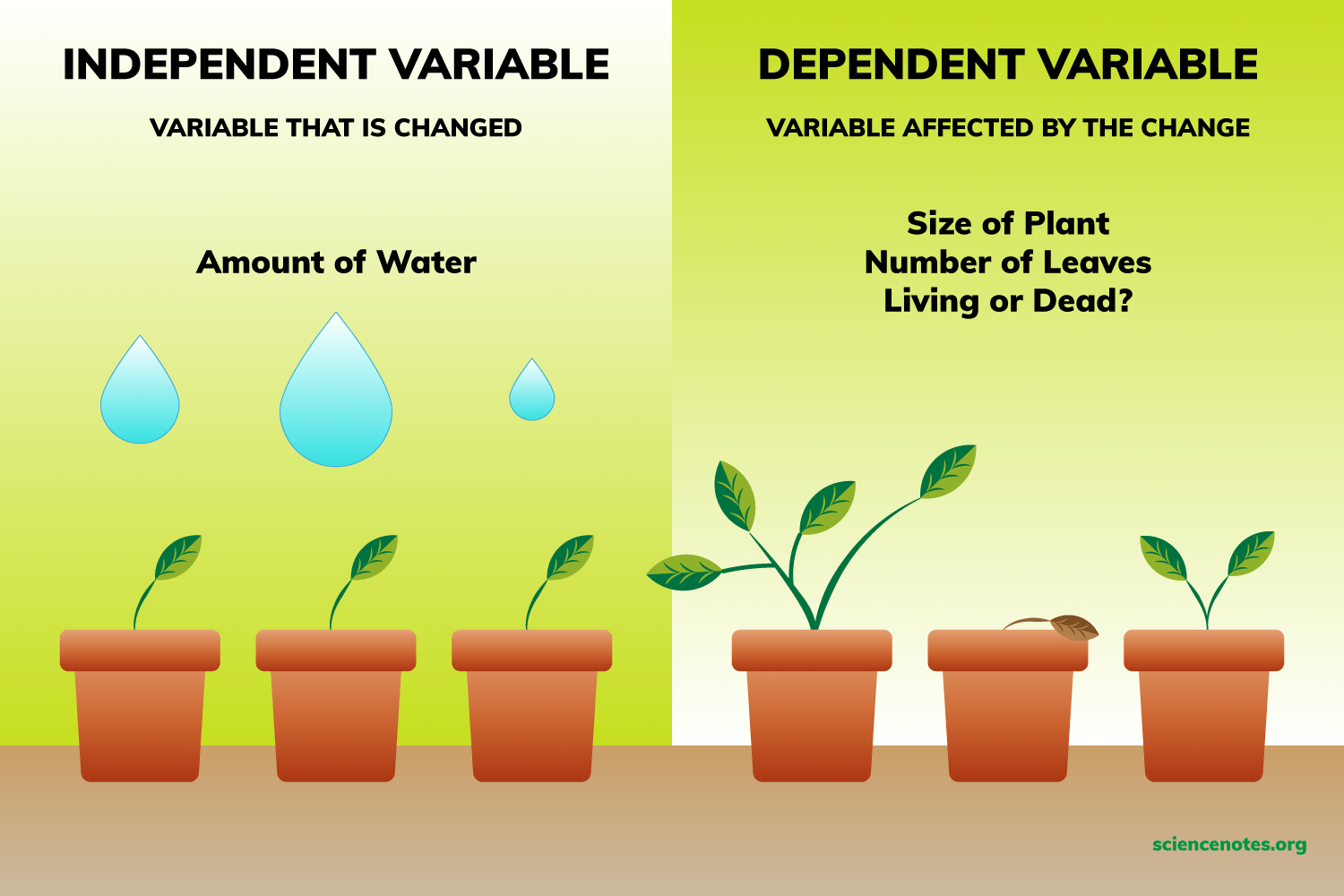
What would be the independent variable on your graph? Use the image below to help you:
You need to graph the data above to answer the scientific questions listed:
Scientific Questions: Why do most male crickets on Kauai have flat wings? Could parasitoid flies have contributed to the loss of song for male crickets?
What would be the dependent variable on your graph? Use the image below to help you:
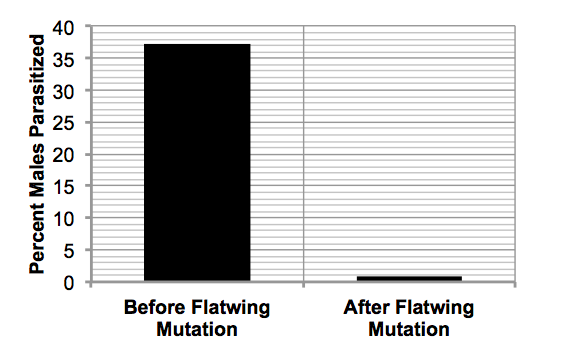
In one sentence, describe a pattern you notice in the graph.
Make a claim (a confident statement) answering the scientific question: "Why do most male crickets on Kauai have flat wings?"
What evidence was used to write your claim? Reference specific parts of the table or graph. (sentence starter: as shown in the table/graph.....) Remember- evidence is not an explanation- just the data you would use to support an explanation for your claim.
Explain your reasoning and why the evidence supports your claim. Connect the data back to what you learned about the flatwing mutation and the parasitoid flies. (this is where you restate your claim and in sentences explain how the evidence supports it).
Did the data support Robin’s hypothesis? Use evidence to explain why or why not. If you feel the data were inconclusive, explain why
Your next steps as a scientist: Science is an ongoing process. What new question(s) should be investigated to build on Robin’s research? What future data should be collected to answer your question(s)?
Natural selection- organisms with traits more fit for the environment will survive and reproduce to pass on their traits
Adaptation- A widespread anatomical, behavioral, or physiological trait that makes a population suited to survive and reproduce in a specific environment.
In terms of natural selection, which crickets are more fit on islands with parasitoid flies?
Natural selection- organisms with traits more fit for the environment will survive and reproduce to pass on their traits
Adaptation- A widespread anatomical, behavioral, or physiological trait that makes a population suited to survive and reproduce in a specific environment.
In terms of natural selection, which crickets are more fit on islands without parasitoid flies?
Natural selection- organisms with traits more fit for the environment will survive and reproduce to pass on their traits
Adaptation- A widespread anatomical, behavioral, or physiological trait that makes a population suited to survive and reproduce in a specific environment.
In terms of adaptations, what would you say is the adaptation that arose as a result of natural selection in the crickets studied here in Kaui?
What caused the flatwings trait to appear in this population of crickets?