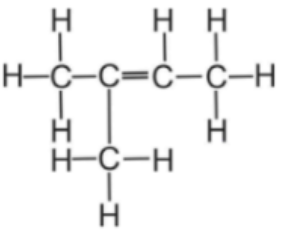
Organic chemistry open practice
star
star
star
star
star
Last updated 10 months ago
54 questions
2
Which of the following descriptions most accurately explains what a hydrocarbon is?
2
An organic molecule with the prefix "pent-", consists of ....
2
Which of the following is NOT a homologous series?
2
Which one of the following describes a structural formula?
2
A carboxyl group is an example of a .....
2
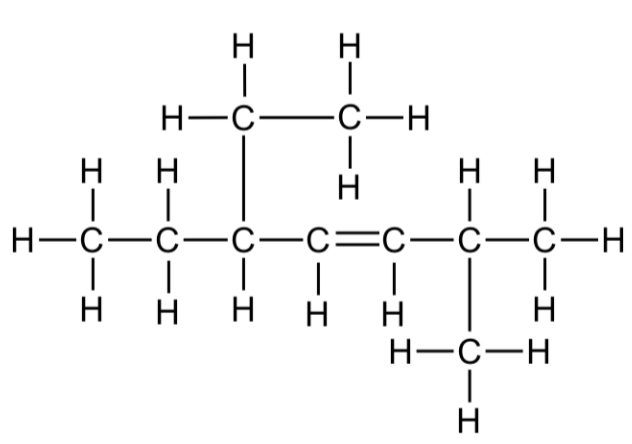
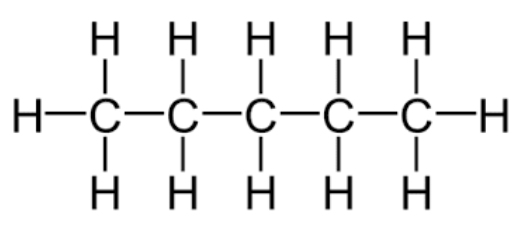
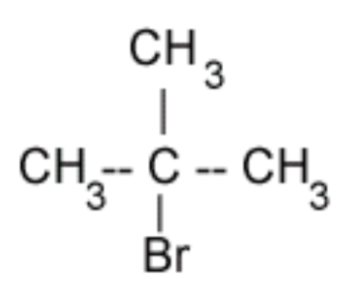
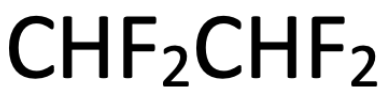
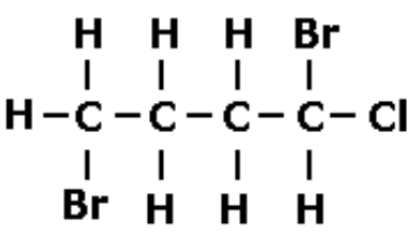
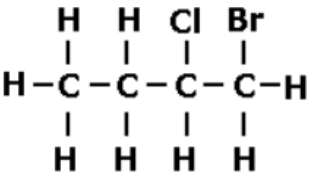
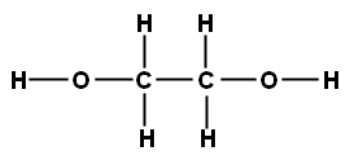
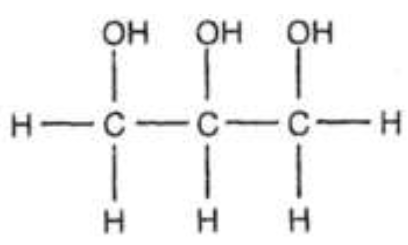
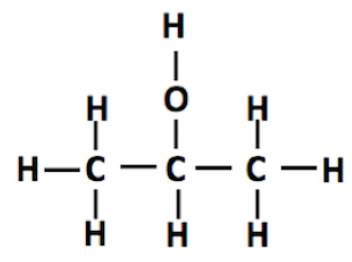
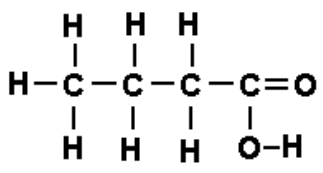
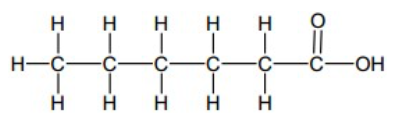
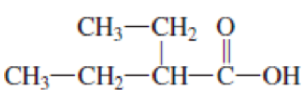
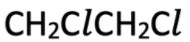
Provide the IUPAC name of the following molecule:
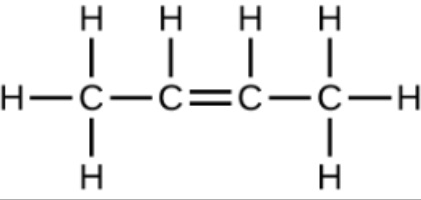
2
Provide the IUPAC name of the following molecule:
2
Provide the IUPAC name of the following molecule:
2
Provide the IUPAC name of the following molecule:
2
Select the terms which identifies a functional group.
2
Chloroform was used as an anaesthetic in surgery many years ago. Today it's a popular choice for kidnappers 😳. Its IUPAC name is trichloromethane.
Write its molecular formula using the MATHS keyboard (click on the keyboard icon in the answer line) to subscript the numbers.
Chloroform was used as an anaesthetic in surgery many years ago. Today it's a popular choice for kidnappers 😳. Its IUPAC name is trichloromethane.
Write its molecular formula using the MATHS keyboard (click on the keyboard icon in the answer line) to subscript the numbers.
2
Provide the IUPAC name of the following molecule:
2
Provide the IUPAC name of the following molecule. Please check spelling!
2
Provide the IUPAC name of the following molecule:
2
Provide the IUPAC name of the following molecule:
2
Which of the following is 3-methylpentan-2-ol?
2
Which of the following is 2,2-dimethylpropan-1-ol?
2
Provide the IUPAC name of the following molecule.
2
Provide the IUPAC name of the following molecule:
2
To which homologous series does this compound belong?
2
The molecule drawn below is a chain isomer of which one of the following molecules?
2
Write the molecular formula of this compound using the MATHS keyboard to subscript the numbers.
2
What is the IUPAC name for the following compound?
2
A carboxyl group is a combination of which TWO functional groups?
2
Write the condensed structural formula for the following organic molecule using the maths keyboard to subscript the numbers.
2
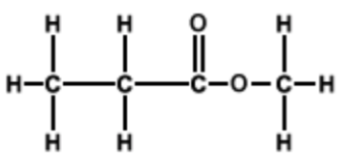
Which one of the following molecules is an ester?
2
Provide the IUPAC name of the following molecule:
2
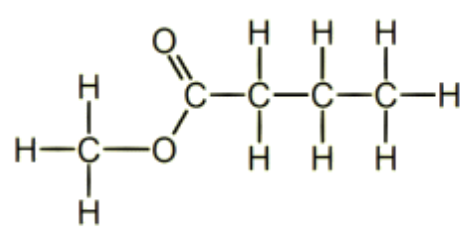
Provide the name of the alcohol that was used to make the following ester:
2
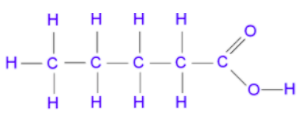
Provide the name of the carboxylic acid that was used to make the following ester:
2
Which molecule is a structural isomer of this molecule?
2
Which of the following statements would apply to organic compounds that belong to the same homologous series?
I They have the same boiling points II They have the same funtional group III They have the same molecular formula
Which of the following statements would apply to organic compounds that belong to the same homologous series?
I They have the same boiling points
II They have the same funtional group
III They have the same molecular formula
2
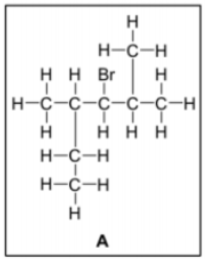
Provide the IUPAC name of compound A:
2
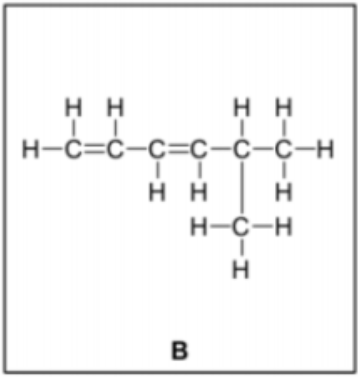
Name the homologous series to which compound B belongs:
2
Provide the IUPAC name of compound B:
2
Provide the IUPAC name of an UNBRANCHED ISOMER of compound B.
1
Name the functional group in this molecule:
pentan-2-ol
Name the functional group in this molecule:
pentan-2-ol
2
Write the IUPAC name of a POSITIONAL ISOMER of this molecule:
pentan-2-ol
Write the IUPAC name of a POSITIONAL ISOMER of this molecule:
pentan-2-ol
2
Write the IUPAC name of this molecule:
CH2CHCH2CH2CH3
Write the IUPAC name of this molecule:
CH2CHCH2CH2CH3
1
Is this molecule saturated or unsaturated?
CH2CHCH2CH2CH3
Is this molecule saturated or unsaturated?
CH2CHCH2CH2CH3
2
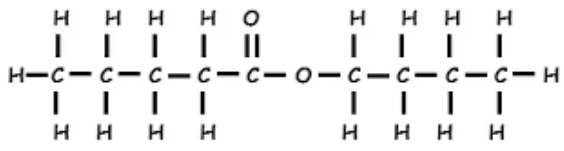
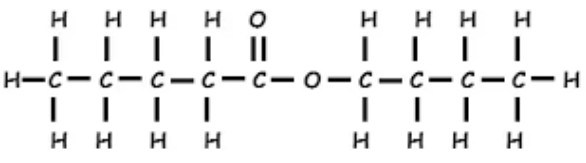
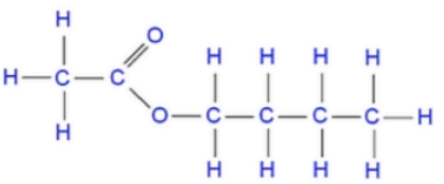
The structural formula of an organic compound found in pears, raspberries and pineapples is given below: Provide its IUPAC name.
The structural formula of an organic compound found in pears, raspberries and pineapples is given below:
Provide its IUPAC name.
1
The structural formula of an organic compound found in pears, raspberries and pineapples is given below: Provide the homologous series
The structural formula of an organic compound found in pears, raspberries and pineapples is given below:
Provide the homologous series
2
The structural formula of an organic compound found in pears, raspberries and pineapples is given below: Provide the IUPAC name of the organic acid used to make this compound.
The structural formula of an organic compound found in pears, raspberries and pineapples is given below:
Provide the IUPAC name of the organic acid used to make this compound.
2
The structural formula of an organic compound found in pears, raspberries and pineapples is given below: Provide the IUPAC name of a POSITIONAL ISOMER of this compound.
The structural formula of an organic compound found in pears, raspberries and pineapples is given below:
Provide the IUPAC name of a POSITIONAL ISOMER of this compound.
2
The structural formula of an organic compound found in pears, raspberries and pineapples is given below: Provide the IUPAC name of a FUNCTIONAL ISOMER of this compound.
The structural formula of an organic compound found in pears, raspberries and pineapples is given below:
Provide the IUPAC name of a FUNCTIONAL ISOMER of this compound.
2
Write the IUPAC name of the following compound:
CH2CH3 |CH3 - C - CH3 | CH3
Write the IUPAC name of the following compound:
CH2CH3
|
CH3 - C - CH3
|
CH3
1
What is an atom or group of atoms that forms the centre of chemical reactivity in an organic compound called?
2
Write the IUPAC name of the following compound:
1
Name the homologous series to which this compound belongs:
1
Which of these compounds is a saturated hydrocarbon?
1
Which of these compounds is an alcohol?
1
Which of these compounds is an ester?
2
Write the general formula of the homologous series to which ethane belongs. Use the maths keyboard to subscript.
2
Write the IUPAC name of this compound:
2
Write the condensed structural formula for this compound, using the maths keyboard to subscript.