EH: 3.3 (3/11) Version B
star
star
star
star
star
Last updated about 3 years ago
4 Nsɛmmisa


3
1
1
1
Considering Body Structures of Whales and Wolves
If they are helpful to you, examine the images below while you are sorting cards about whales and wolves in Table 1: Sorting Information About Whales and Wolves. When your teacher asks you to, answer the question below.
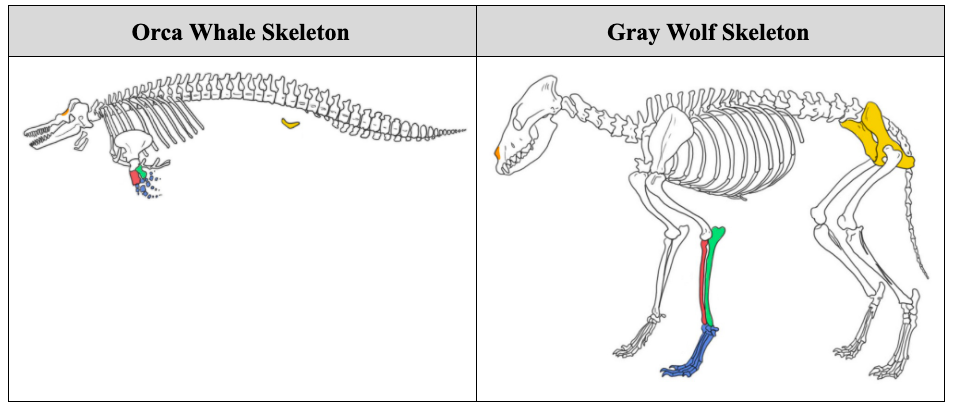
Examining Diagnostic Structures
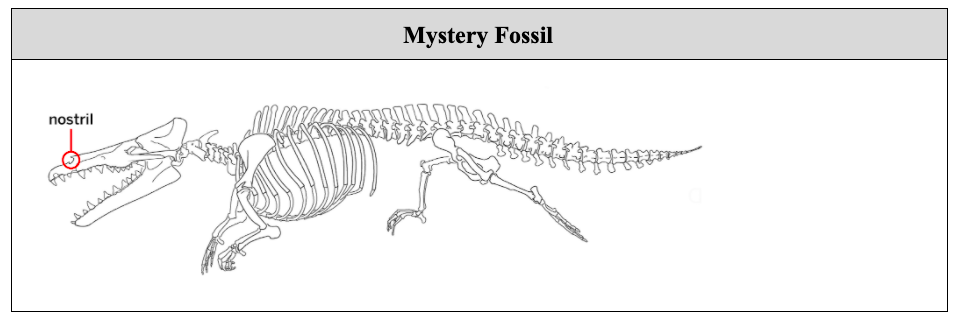
Carefully examine the image below to help you fill out evidence cards about some of the structures that the Mystery Fossil shares with either whales or wolves. Then, sort the cards in Table 2: Sorting Shared Structures Among the Mystery Fossil, Whales, and Wolves. When you have completed the entire activity, answer the question below.
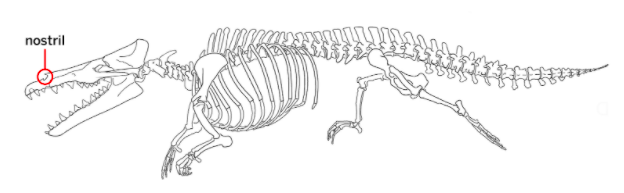
Claim 1: The Mystery Fossil belongs with the whales, in the Whale (Cetacea) exhibit.
Claim 2: The Mystery Fossil belongs with the wolves, in the Carnivore (Carnivora) exhibit.
Table 2: Sorting shared structures among the mystery fossil, whales, and wolves
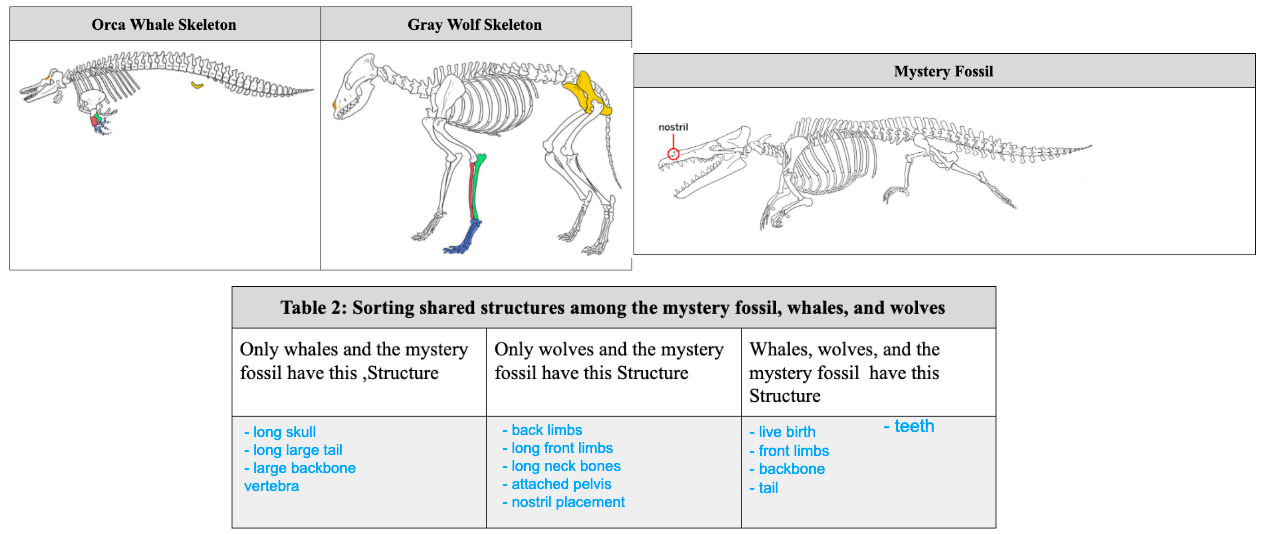
Do you think the Mystery Fossil shares a more recent common ancestor with whales or with wolves?
CFS:
Student accurately identifes the correct fossil relationship based on anotomical similarities and differences
student accurately identifies anatomical (body structures) similarities and differences in the identified fossil species
Student accurately describes how common anotomical (body structures) structures are used to identify chronological relationship between animal fossils
"I think that the Mystery Fossil shares a more recent common ancestor with (whales or with wolves).
I think this because they share ... (name structures they have in common).
Due to the fact that the Mystery Fossil and Mystery Fossil share common structure they (are/aren't related)
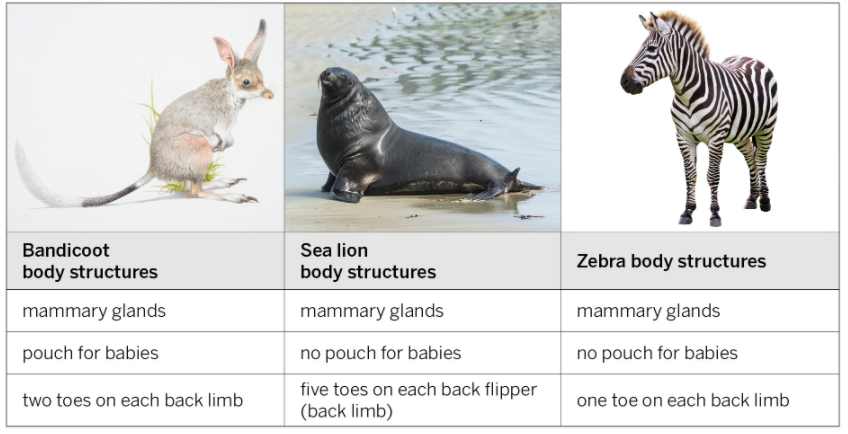
This bandicoot, this sea lion, and this zebra have similarities and differences in their body structures. What does the information about these structures tell you about the ancestors of these species?
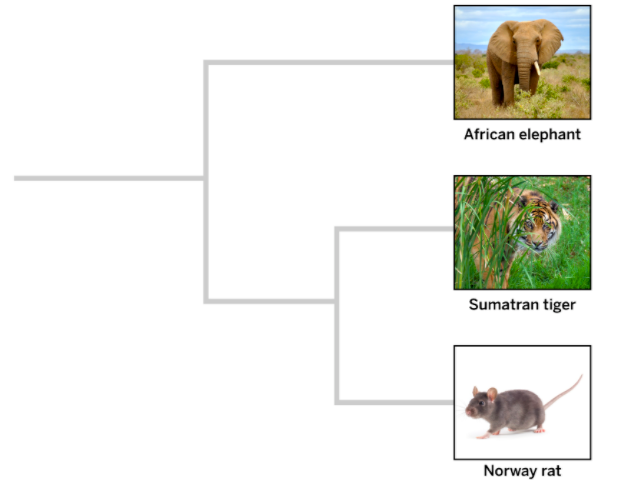
What does this diagram show?
The body structures for a population of green herons (a species of bird that lives near water) were stable for a long time. Then, their body structures changed to make the green herons taller. Why did this happen?