WARM-UP: Mark the parts of the wave
Who's the Discussion Leader?
*Starts discussions
*Notes who participates
*Asks others to share ideas
*Keeps the Conversation on track
Who's the Screen-sharer?
*Needs a strong internet signal
*Shares screen for all to see
*Types agreed-upon answers/notes for all to see/copy
Who's the Time Manager & Reporter?
*Keeps track of time
*Monitors time left for each activity
*Warns group when time is almost out
*Shares the requirements for the activity with the group
*Calls teacher for help if needed
*Shares out to the main group

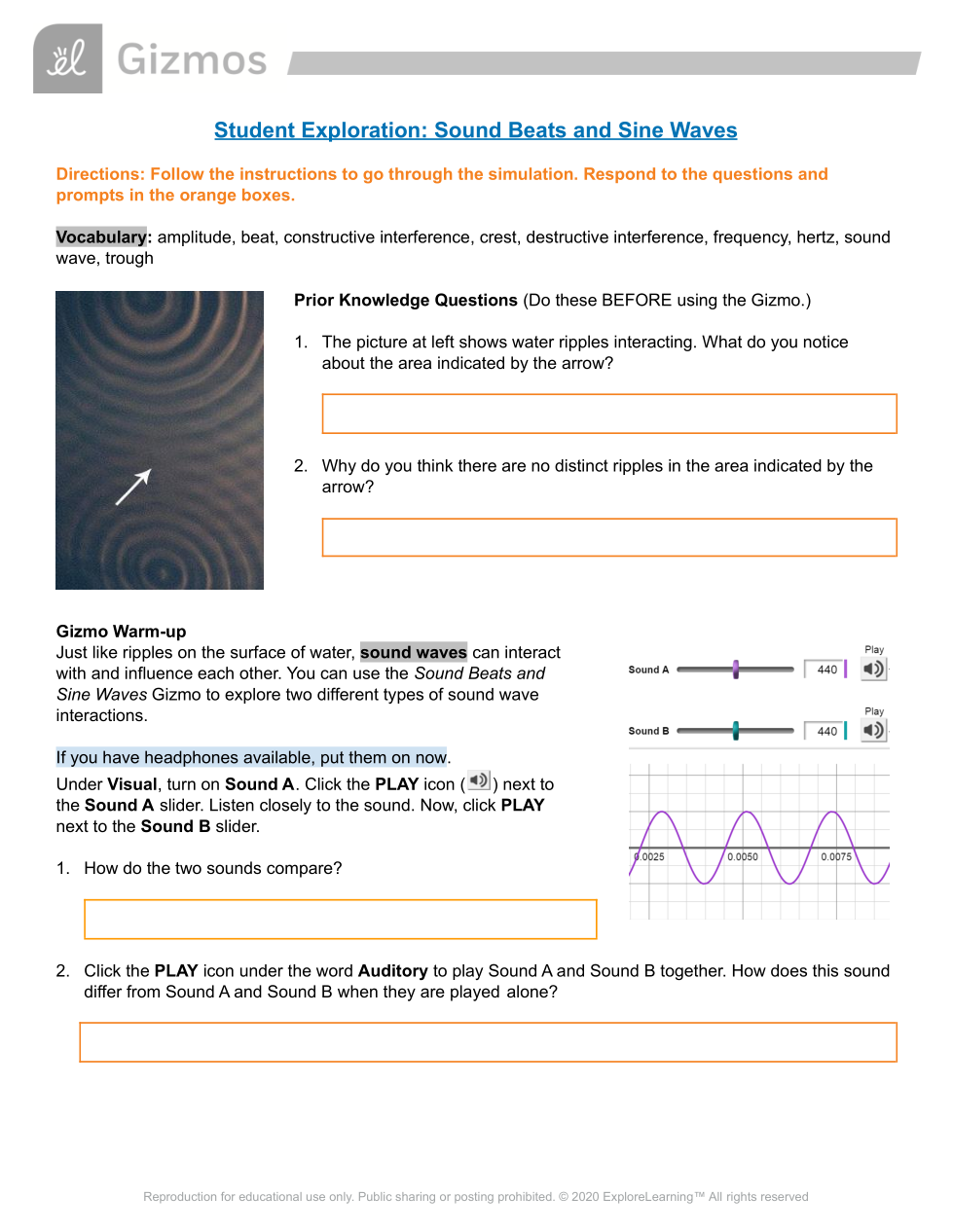
What do you notice about the area indicated by the arrow?
Why do you think there are no distinct ripples in the area indicated by the arrow?
How do the two sounds compare?
How does this sound differ from Sound A and Sound B when they are played alone?
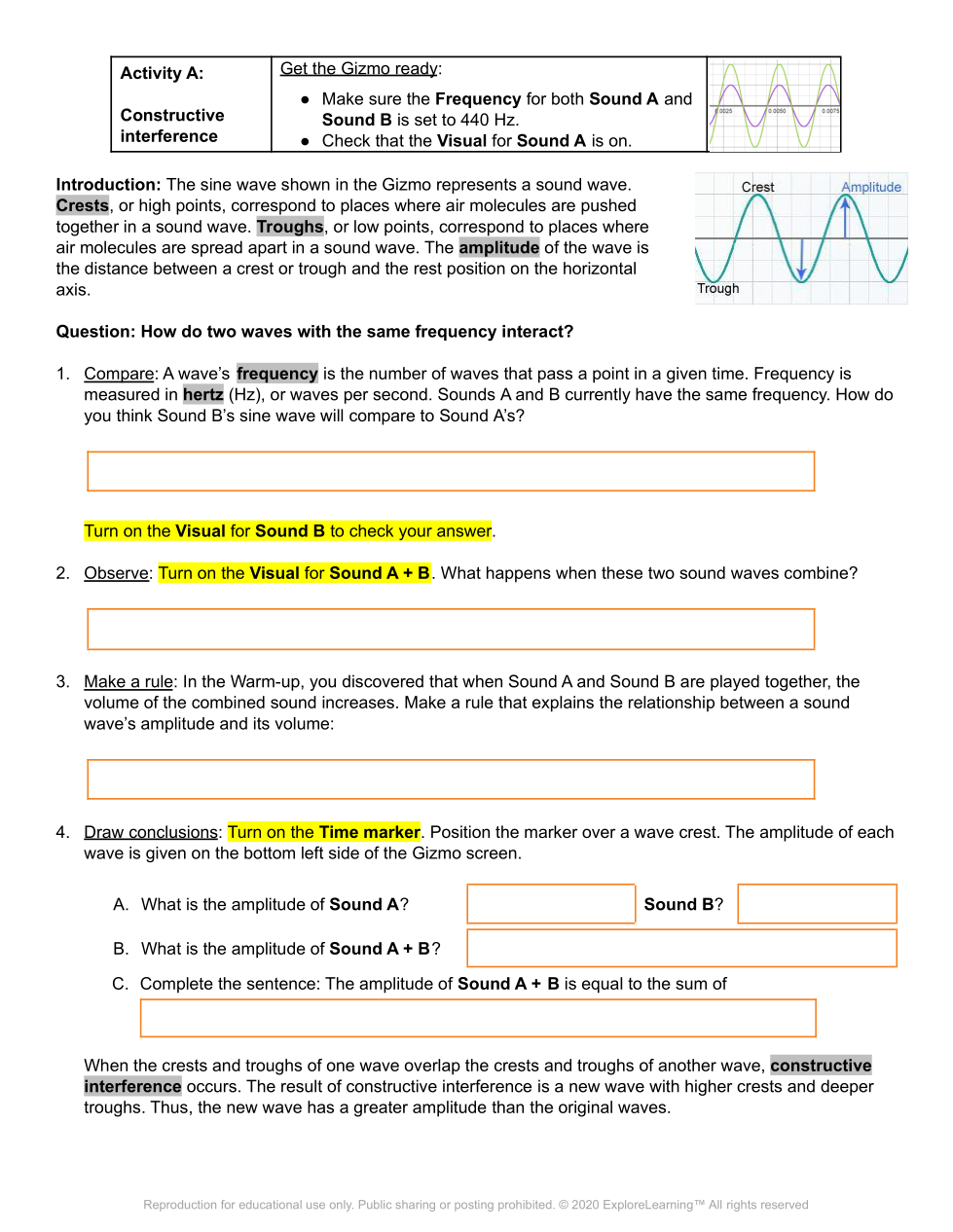
How do you think Sound B's sine wave will compare to Sound A's?
What do you see?
What happens w hen these two sound waves combine?
Make a rule that explains the relationship between a sound wave's amplitude and its volume.
What's the amplitude of Sound A?
What's the amplitude of Sound B?
What's the amplitude of Sound A + B?
Complete the sentence: The amplitude of Sound A + B is equal to the sum of.....
Can you hear any difference in the two sounds?
If so, describe how the two sounds are different. If not, state that you didn't hear a difference.
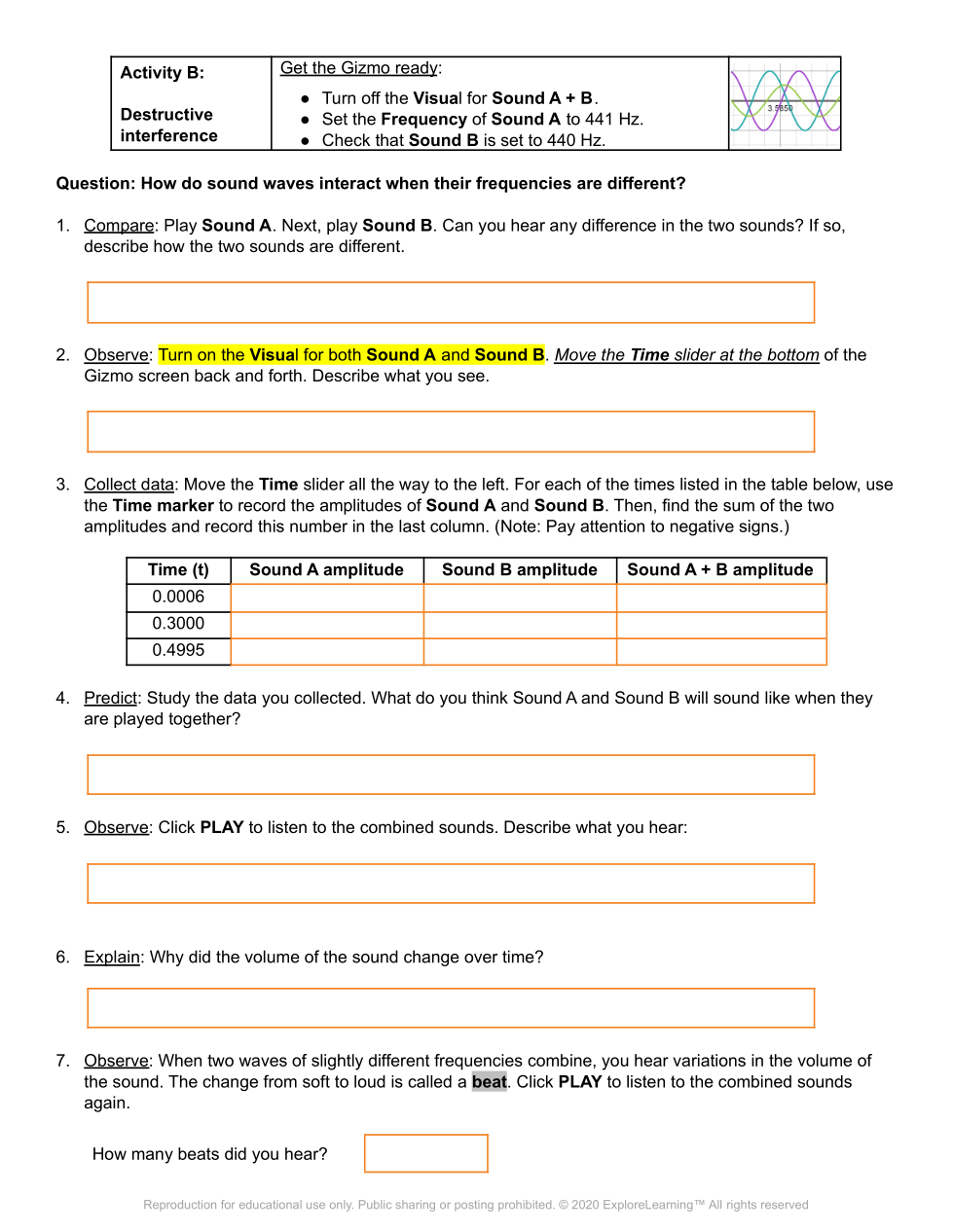
Describe what you see.
What do you think Sound A and Sound B will sound like when they are played together?
Describe what you hear.
Why did the volume of the sound change over time?
How many beats did you hear?
For each of the following times determine whether it is constructive or destructive interference:
For each of the following times determine whether it is constructive or destructive interference:
For each of the following times determine whether it is constructive or destructive interference:
For each of the following times determine whether it is constructive or destructive interference:
How do you think this relates to the numer of beats you counted?
How does the sound relate to the graph's green wave?