Cold War: The Marshall Plan
star
star
star
star
star
Last updated over 4 years ago
4 Nsɛmmisa
Hyɛ no nsow a efi ɔkyerɛwfo no hɔ:
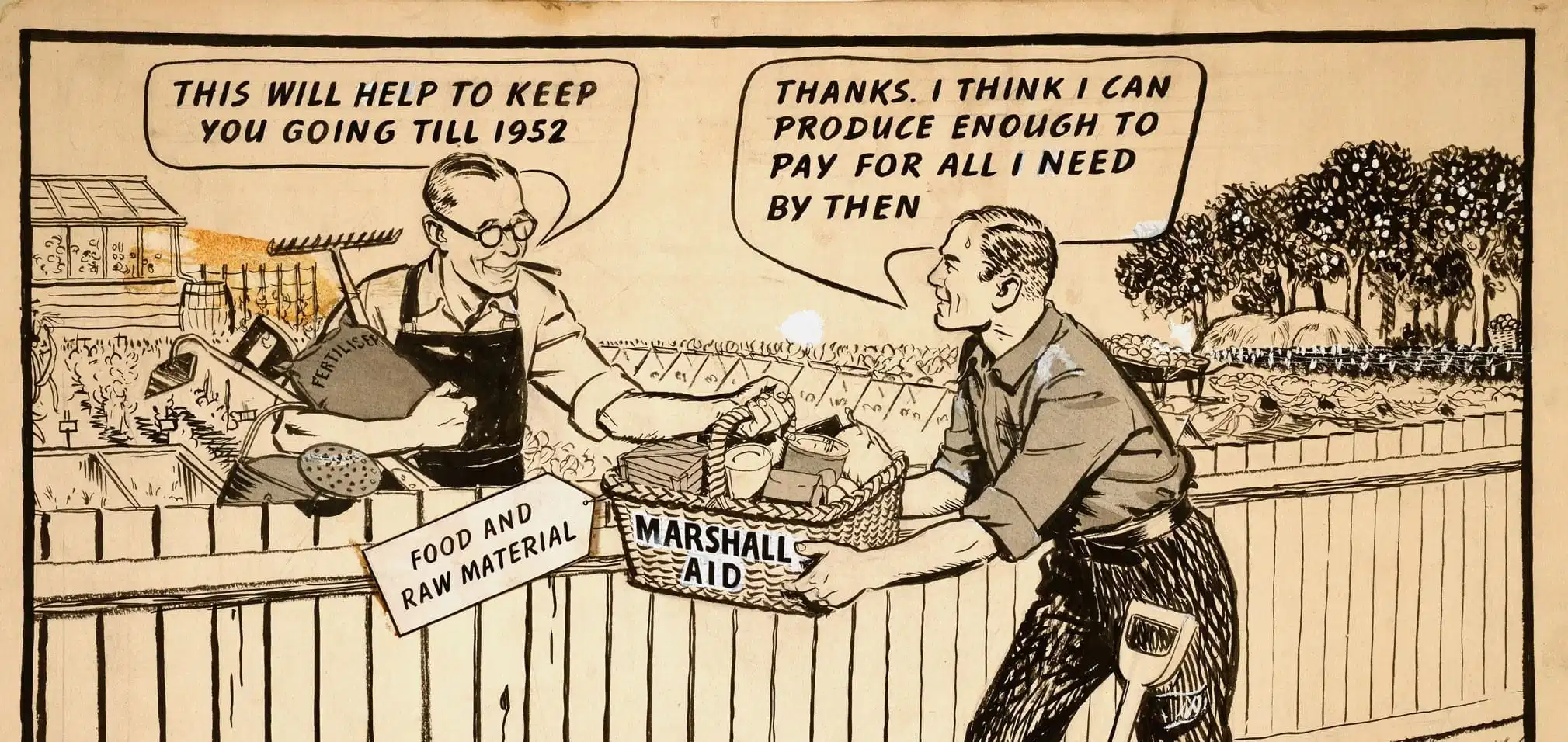
Inquiry activity on the Marshall Plan as part of the Cold War Unit 10.
1
1
1
1
Inquiry activity on the Marshall Plan as part of the Cold War Unit 10.
What do you do?
Write THREE reasons for your decision.
Stalin: Rejected the Plan
Initially, the Soviet Union showed some interest in the Marshall Plan, participating in the first round of talks about a European response. But Stalin was suspicious about the Marshall Plan from the beginning. In the end he rejected it and cajoled his allies into doing the same. His decision was signaled in a Pravda article denouncing the European Recovery Program as "a plan for interference in other countries."
To counter the Marshall Plan, the Soviet Union established the Cominform, a Moscow-directed international communist propaganda bureau, and the Comecon, an economic assistance program for Eastern bloc countries.
Stalin's reaction to the Marshall Plan -- and some say the Marshall Plan itself -- contributed to the growing chasm between East and West in postwar Europe. Many historians cite these developments as a major escalation of the Cold War.

One of a number of posters created to promote the Marshall Plan in Europe.
Note the pivotal position of the American flag.
What is this artist saying?

What countries accepted American aid through the Marshall Plan?