Uneven Distribution of Resources
star
star
star
star
star
Last updated over 2 years ago
46 Nsɛmmisa
1
0
0
0
1
1
1
1
1
1
1
1
1
1
1
1
1
1
1
1
1
1
1
1
1
1
1
1
1
1
1
1
1
1
1
1
1
1
1
1
0
0
0
Overview: "Humans depend on Earth's land, ocean, atmosphere, and biosphere for many different resources. Minerals, freshwater, and biosphere resources are limited, and many are not renewable or replaceable over human lifetimes. These resources are distributed unevenly around the planet as a result of past geologic processes."
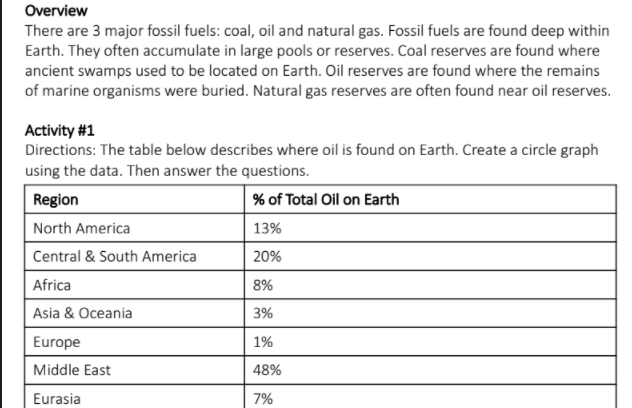
Where is the majority of crude oil found in the world?
How does distribution of oil impact regions of the world where it is abundant?
What do you think Earth was like in the past in the region of the world where oil is most abundant?
Can you predict where natural gas reserves might be abundant on Earth, based on the data above? Explain.
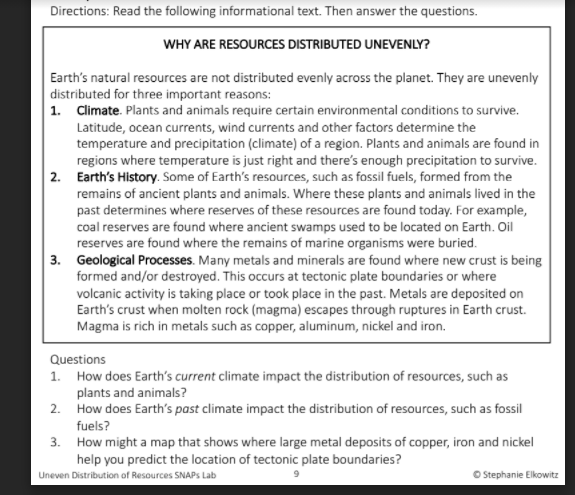
How does Earth's current climate impact the distribution of resources, such as plants and animals?
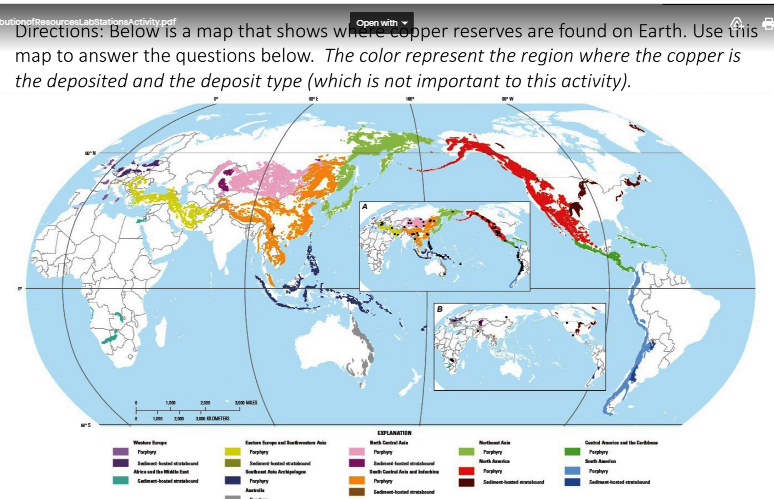
Copper has been used by humans for at least 10,000 years. It is mined and extracted from Earth for many reasons. It is used for electrical wiring, roofing, plumbing, and industrial machinery. It is also used to make jewelry, coins, and alloys such as brass and bronze.
According to the USGS, most Copper is found in igneous rock in Earth's crust. Igneous rock forms when molten rock (magma) escapes through ruptures in Earth's crust, cools, and solidifies. Copper is also deposited near deep-sea hydrothermal vents where gas and other substances escape from Earth in fissures near tectonic plate boundaries.
Describe where Copper reserves are found on Earth? (make sure you read the text box above the map, look at the map, and/or refer to your handout!)
DO NOT PAY ATTENTION TO THE DIFFERENT COLORS, ONLY WHERE COLOR IS FOUND. THE AREAS WITH ANY COLOR PRESENT ARE AREAS WHERE COPPER IS FOUND.
What can you infer about volcanic activity based on the location of copper deposits? (make sure you read the text box above the map, or refer to your handout!)
What type of rock is copper found in? (make sure you read the text box above the map, or refer to your handout!)
How long has copper been used by humans? (make sure you read the text box above the map, or refer to your handout!)
What alloys can copper help make? (make sure you read the text box above the map, or refer to your handout!)
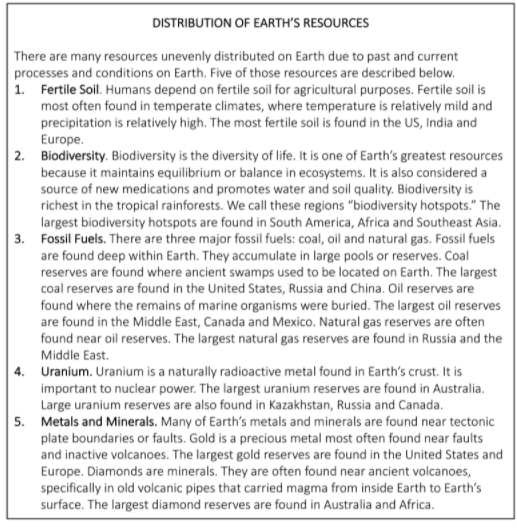
Why do humans depend on fertile soil?
In what kind of climate is fertile soil most often found?
Most fertile soil is found in these 3 places...
What does biodiversity do?
What does biodiversity promote?
Which area is biodiversity richest in?
An area where biodiversity is the richest at is referred to as ?
What are the 3 major fossil fuels?
Uranium is found where in the Earth?
Diamonds are minerals.
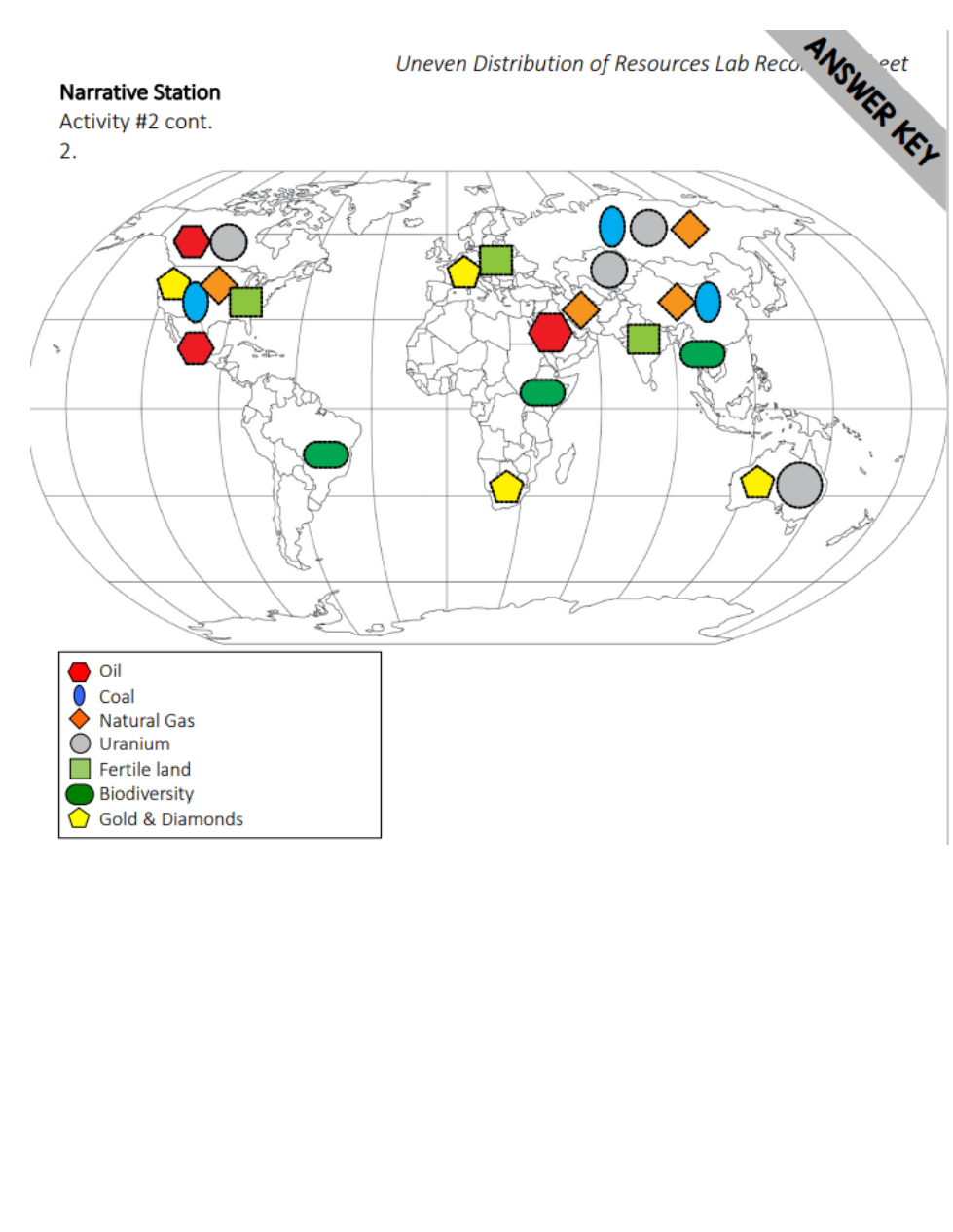
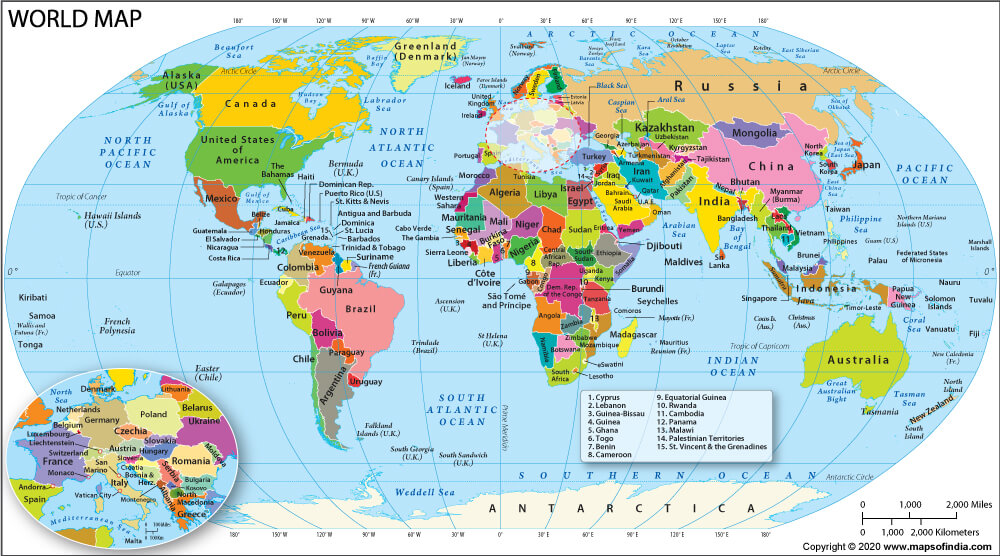
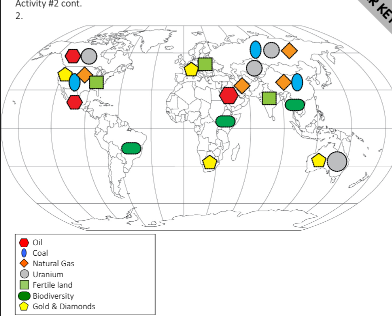
Where are the largest reserves of fertile land found? (3)
Where are the largest reserves of Biodiversity found? (3)
Where are the largest reserves of coal found? (3)
Where are the largest reserves of Oil found? (3)
Where are the largest reserves of Gold and diamonds found? (4)
Where are the largest reserves of Natural Gas found? (4)
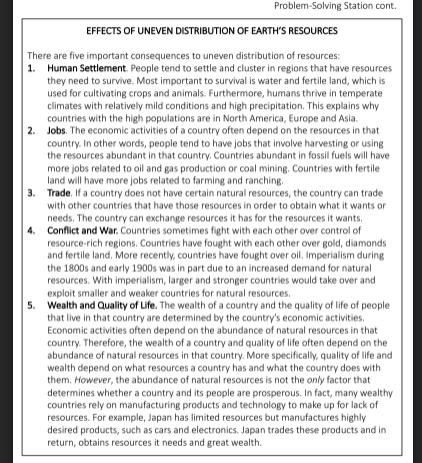
People tend to settle and cluster individually and apart from each other in order to hog the resources
What climate do most humans thrive in?
People tend to have jobs that involve harvesting or using the resources abundant in that country.
Countries abundant in fossil fuels will have more jobs related to?
Countries abundant in fertile land will have more jobs related to?
Countries sometimes fight with each other over control of______________?
The wealth of a country and the quality of life of people that live in that country are determined by the countries_________________?
The wealth of a country and quality of life depend of the abundance of Natural Resources in that country
What do many countries rely on to make up for their lack of resources?
Japan manufactures highly desired products such as___________?
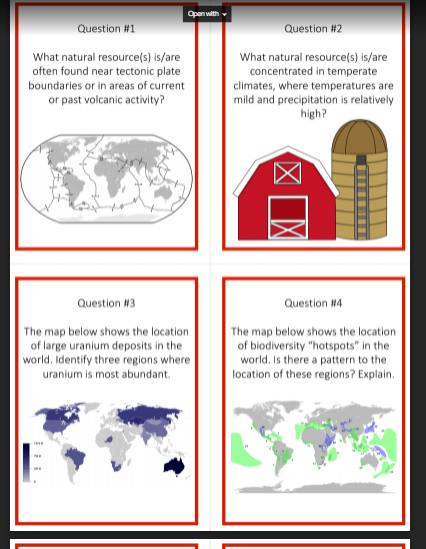
Question #1: What natural resources is/are found near tectonic plate boundaries(the lines in the question are the boundaries)
Question #2: What natural resource is concentrated in temperate climates, where temperatures are mild and precipitation is relatively high?
Question #3: This map shows areas of large uranium deposits. Which areas have large Uranium deposits. Click all that apply. (3)
Question #4: This map shows the locations of biodiversity "hotspots" in the world. Is there a pattern to these locations?
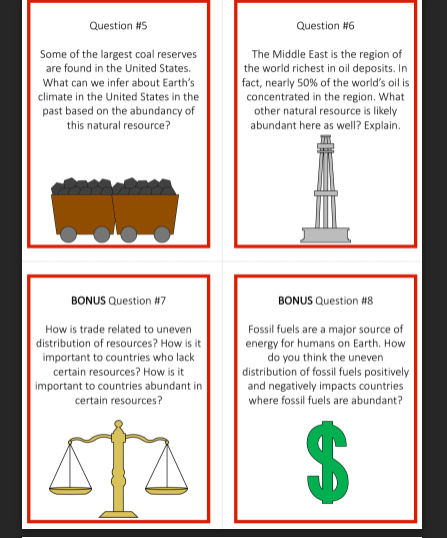
Question #5: Some of the largest coal reserves are found in the United States. What can we infer about Earth's climate in the past based on the abundancy of this natural resource? *Hint-Coal forms where swamps are found
Question #6: The Middle East is the area in the world richest in oil deposits. In fact, nearly 50% of the world's oil is concentrated in that area. What other resource is likely abundant here as well? Explain
How is trade related to uneven distribution of resources? How is it important to countries who lack certain resources? How is it important to countries abundant in certain resources?
Fossil Fuels are a major source of energy for humans on Earth. How do you think the uneven distribution of fossil fuels positively and negatively impacts countries where fossil fuels are abundant?
How does Earth's past climate impact the distribution of resources, such as fossil fuels?
How might a map that shows where large metal deposits of copper, iron, and nickel help you predict the location of tectonic plate boundaries?