Lesson 8 Characteristics of Animals
star
star
star
star
star
Last updated over 5 years ago
19 Nsɛmmisa
0
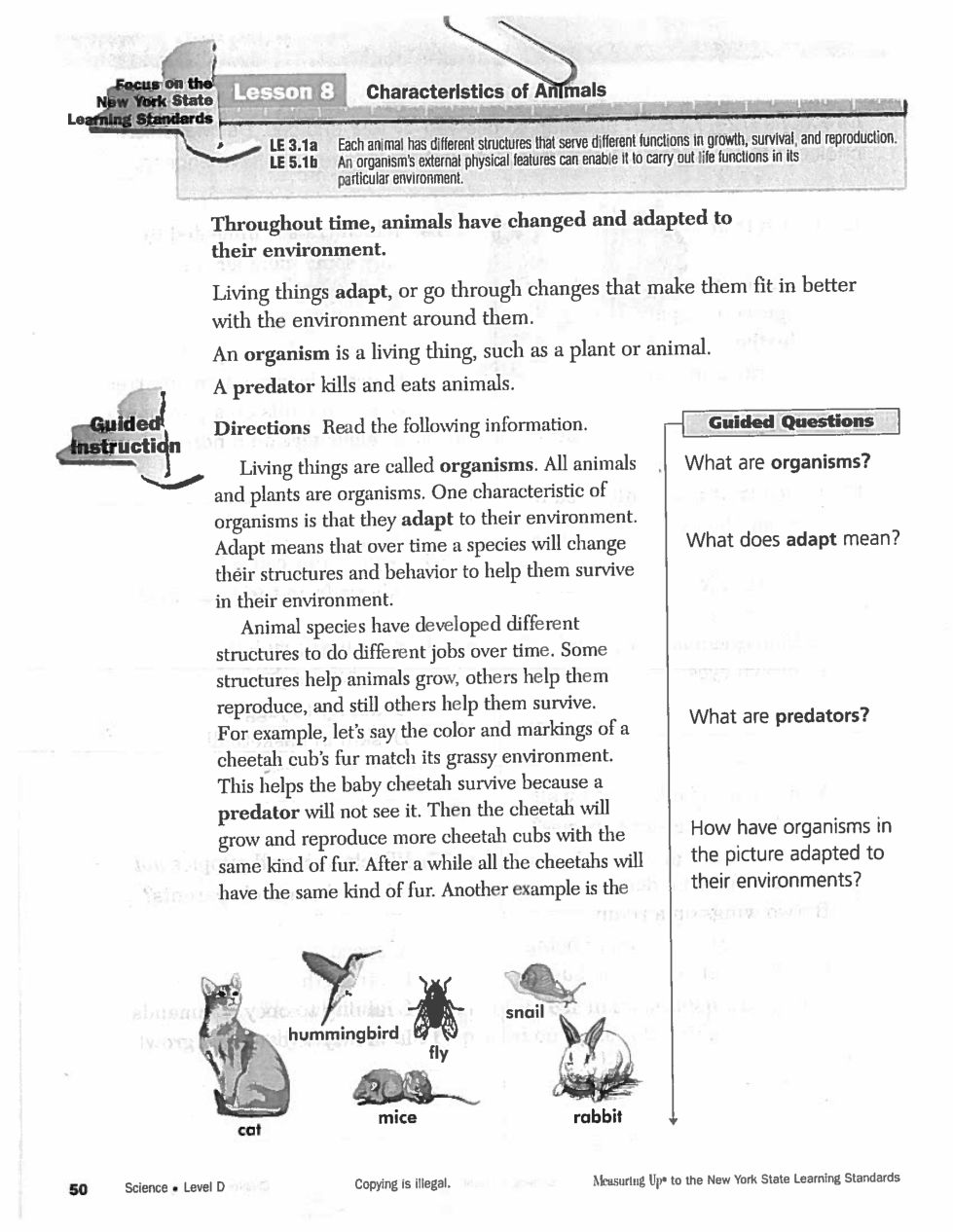
Directions: Read the following information.
Directions: Read the following information.
Directions: Read the following information.
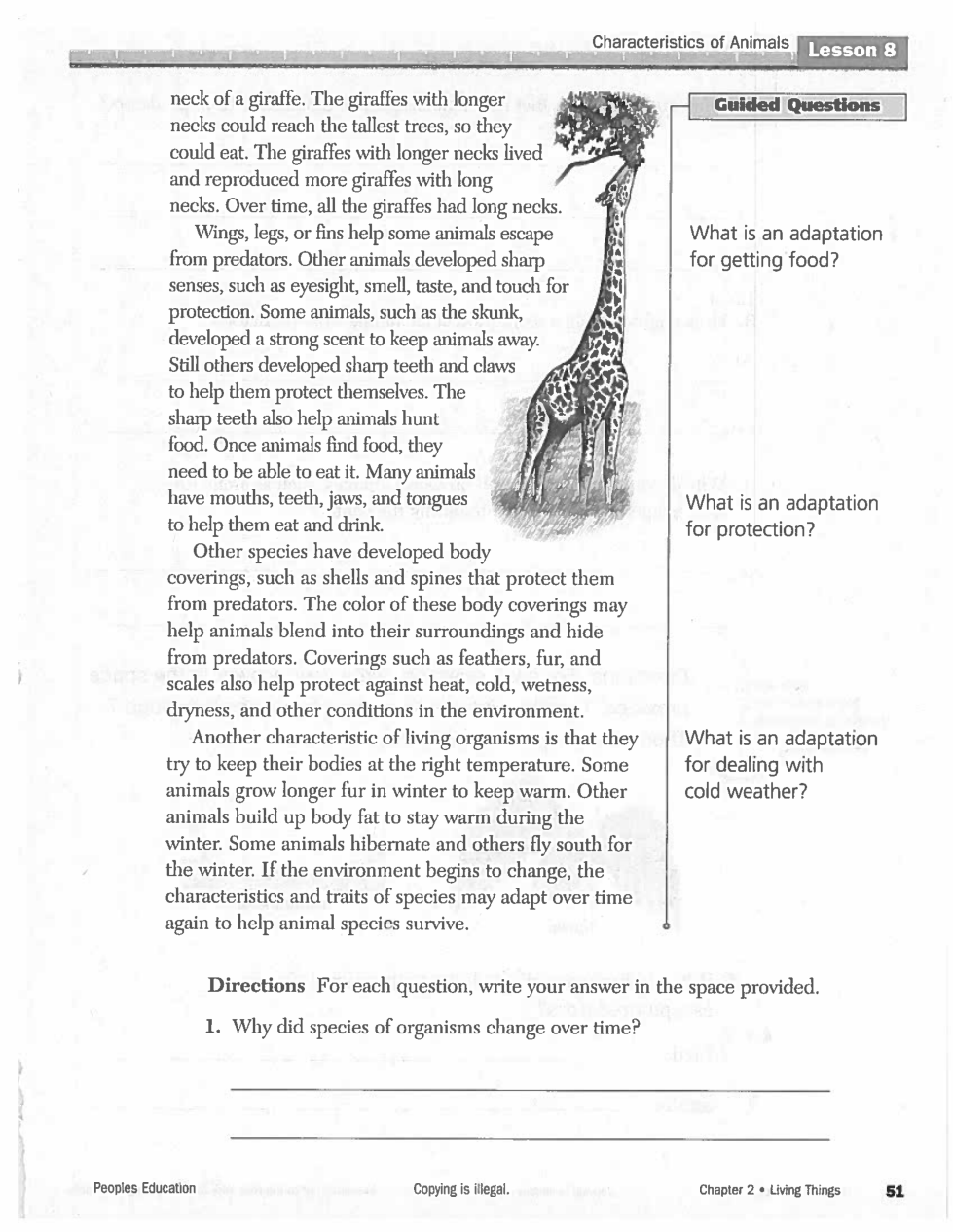
Directions: Read the following information.
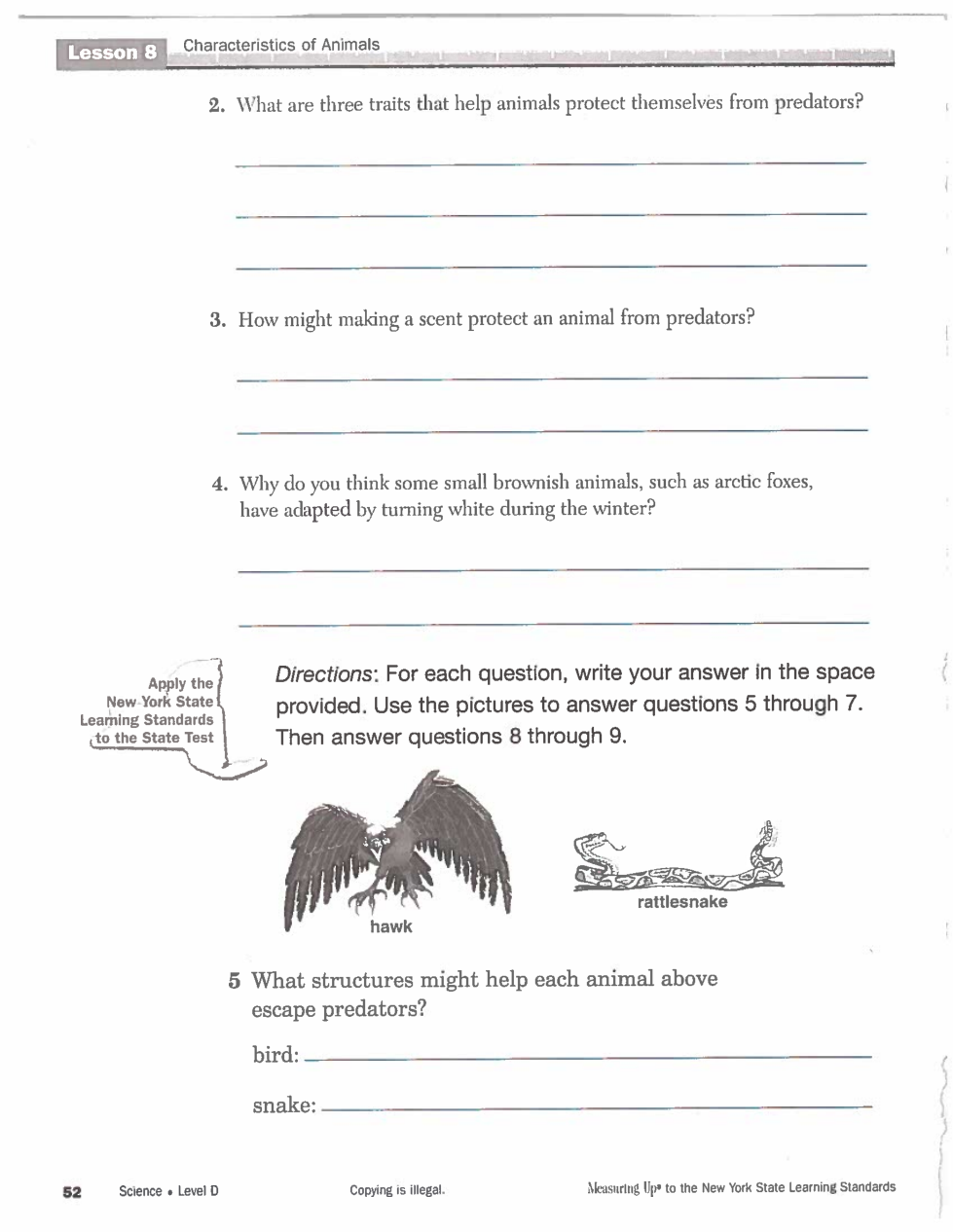
2. What are three traits that help animals protect themselves from predators?
3. How might making a scent protect an animal from predators?
4. Why do you think some small brownish animals, such as artic foxes, have adapted by turning white during the winter?
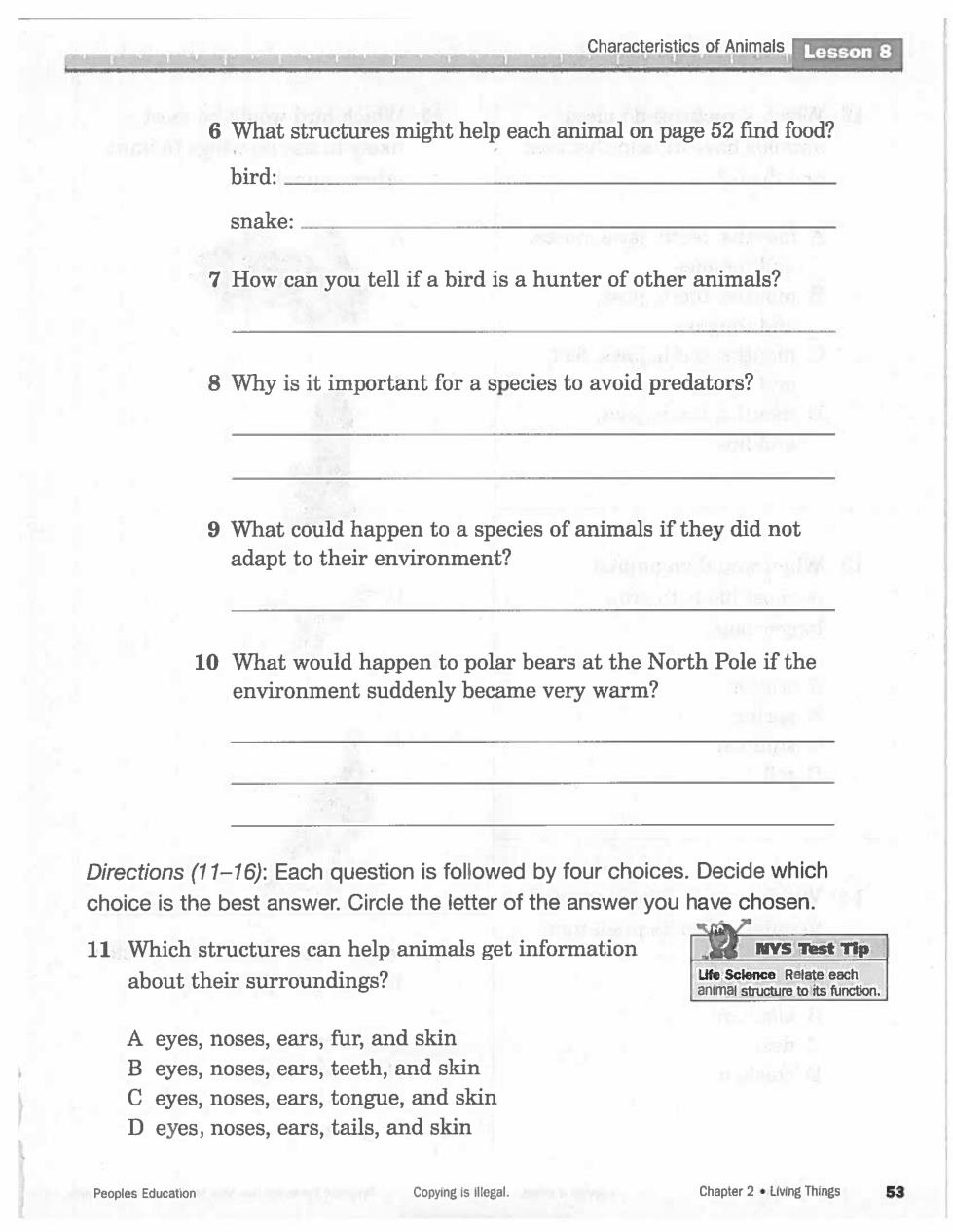
7. How can you tell if a bird is a hunter of other animals?
What structure might help each animal above escape predators?
bird: _________________________
What structure might help each animal above escape predators?
snake: _______________________
6. What structures might help each animal on page 52 find food?
bird: __________________________
6. What structures might help each animal on page 52 find food?
Snake: ________________
8. Why is it important for a species to avoid predators?
9. What could happen to a species of animals if they did not adapt to their environment?
10. What would happen to polar bears at the North Pole if the enviornment suddenly became very warm?
11. Which structure can help animals get information about their surroundings?
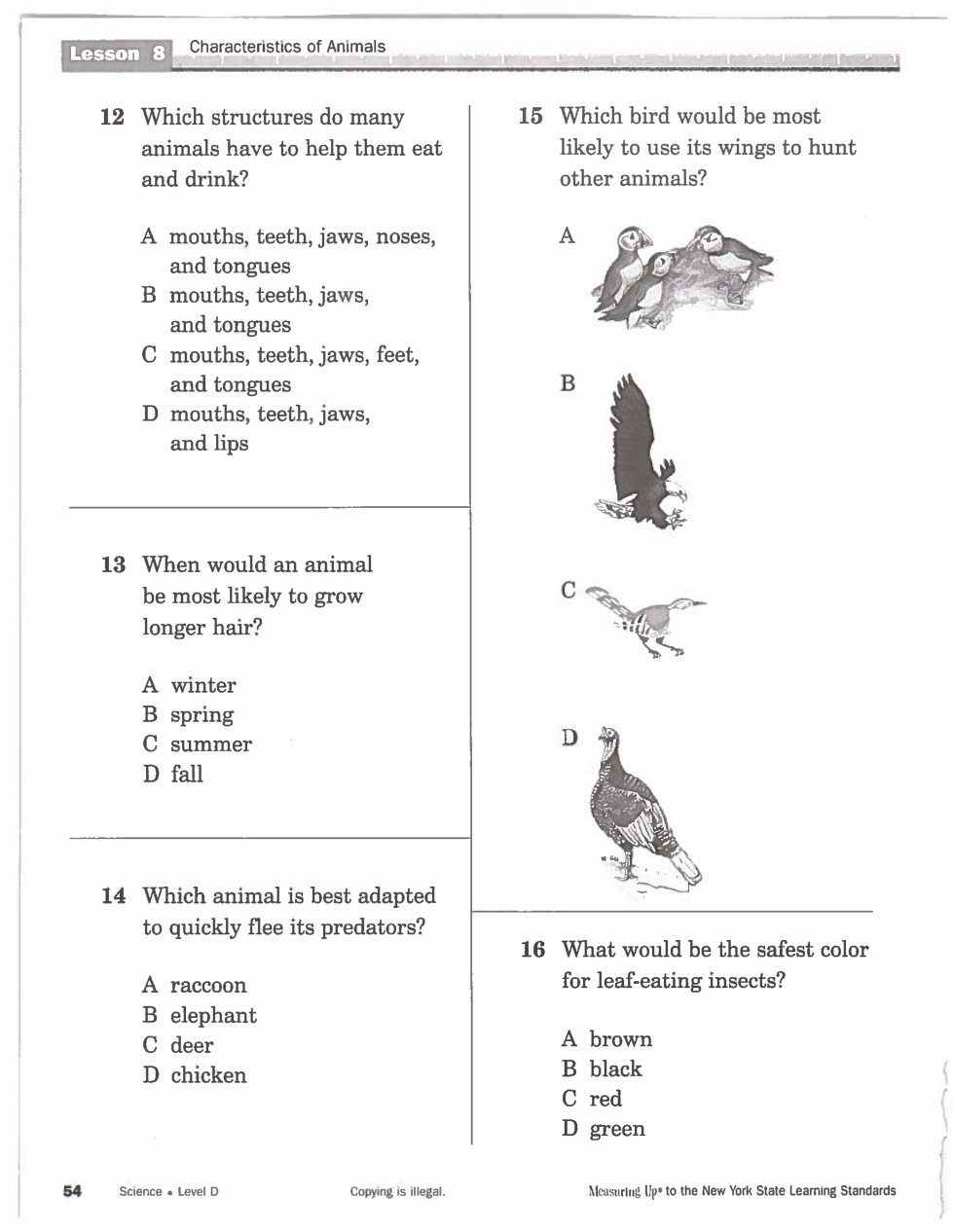
12. Which structures do many animals have to help them eat and drink?
13. When would an animal be most likely to grow longer hair?
14. Which animal is best adapted to quickly flee its preadators?
15. Which bird would be most likely to use its wings to hunt other animals?
16. What would be the safest color for leaf-eating insects?