Unit 9 Day 3 Tree Diagram Practice

Last updated over 4 years ago
25 questions

Example: Bags at an airport

An airport screens bags for forbidden items, and an alarm is supposed to be triggered when a forbidden item is detected.
  • Suppose that 5 percent of bags contain forbidden items.
  • If a bag contains a forbidden item, there is a 98 percent chance that it triggers the alarm.
  • If a bag doesn't contain a forbidden item, there is an 8 percent chance that it triggers the alarm.

Starting a tree diagram

The chance that the alarm is triggered depends on whether or not the bag contains a forbidden item, so we should first distinguish between bags that contain a forbidden item and those that don't.
"Suppose that 5 percent of bags contain forbidden items."
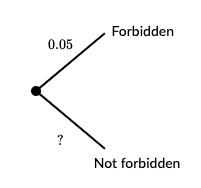

Enter all answers as the decimal form of the percent.
4

What is the probability that a randomly chosen bag does not contain a forbidden item?

Express your probability as a decimal.

Filling in the tree diagram

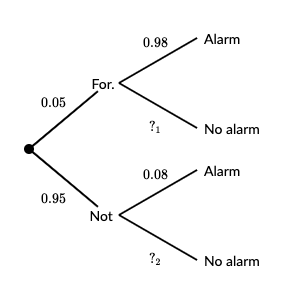
"If a bag contains a forbidden item, there is a 98 percent chance that it triggers the alarm."
"If a bag doesn't contain a forbidden item, there is an 8 percent chance that it triggers the alarm."
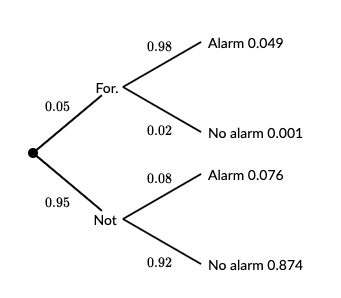
We can use these facts to fill in the next branches in the tree diagram like this:

Remember, at each 'joint' the probabilities for the branches need to add to 1.0 (Ex. 0.05 + 0.95=1.00)
4

Use the Tree Diagram above. What is the probability that a bag with a forbidden item will NOT sound the alarm?

Keep your answer as a decimal.

4

Use the Tree Diagram above. What is the probability that a bag without a forbidden item will NOT sound the alarm?

Keep your answer as a decimal.

Completing the tree diagram

We multiply the probabilities along the branches to complete the tree diagram.
Here's the completed diagram:

4

Find the probability that a randomly selected bag triggers the alarm.
Hint, there are two possible ways the alarm can be sounded.

4

Find the probability that a randomly selected bag contains a forbidden item and triggers the alarm.
Hint: this is just reading the diagram.

4

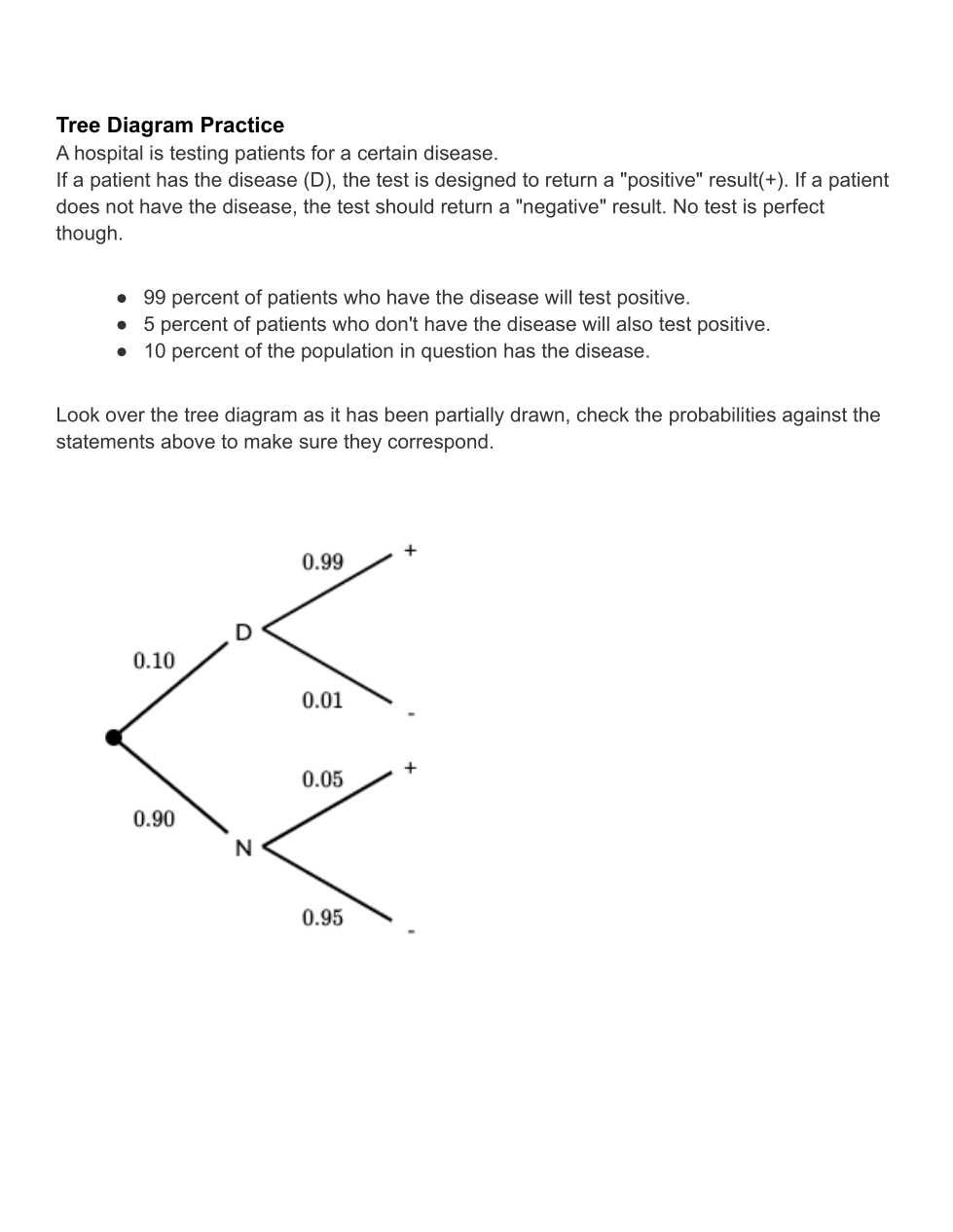
Find the probability that a patient tests positive and they have the disease:
P(Disease and Pos)=

4

Find the probability that a patient tests negative and they have the disease:
P(Disease and Negative)=

4

Find the probability that a patient tests positive and they don't have the disease:
P(No Disease and Positive)=

4

Find the probability that a patient tests negative and they don't have the disease:
P(No Disease and Negative)=

4

Using the probabilities calculated in the tree diagram, what is the probability that any patient will test positive?
P(Pos)=
Hint: there are two possibilities, they need to be added.

4

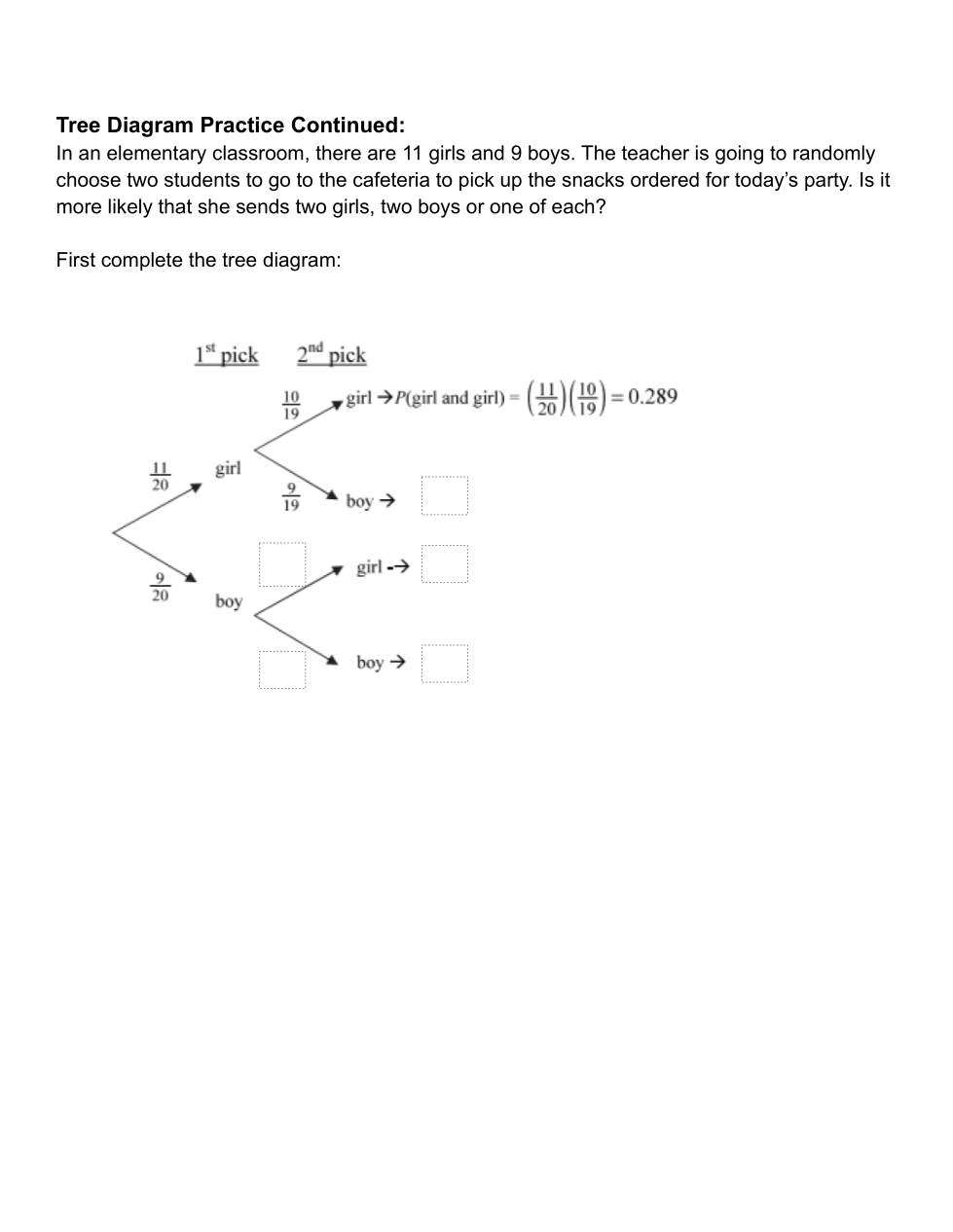
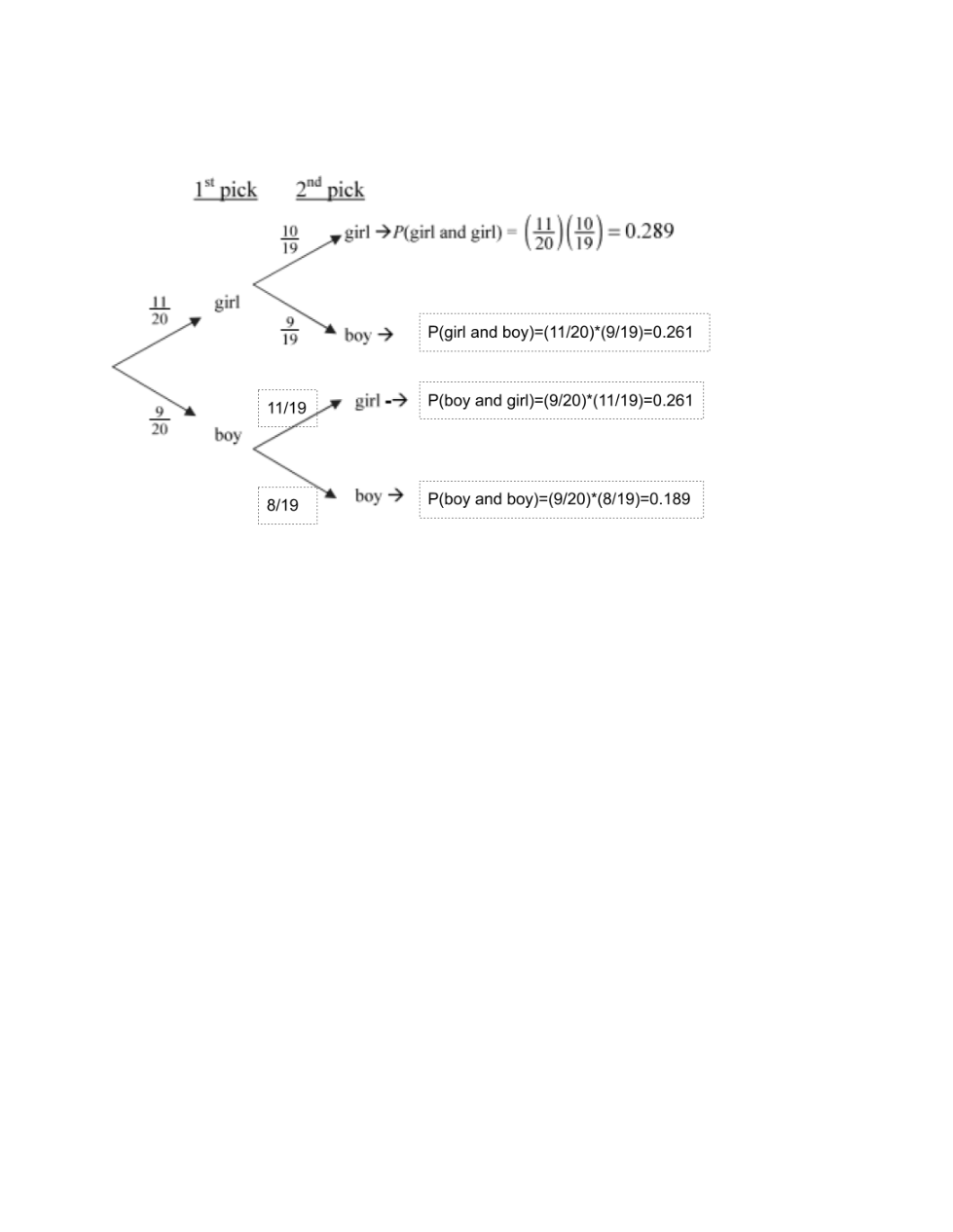
Give the probability (in fraction form) that a girl is chosen second given a boy is chosen first:
P(girl|boy chosen first )=

4

Give the probability (in fraction form) that a boy is chosen second given a boy is chosen first:
P(boy |boy chosen first)=

4

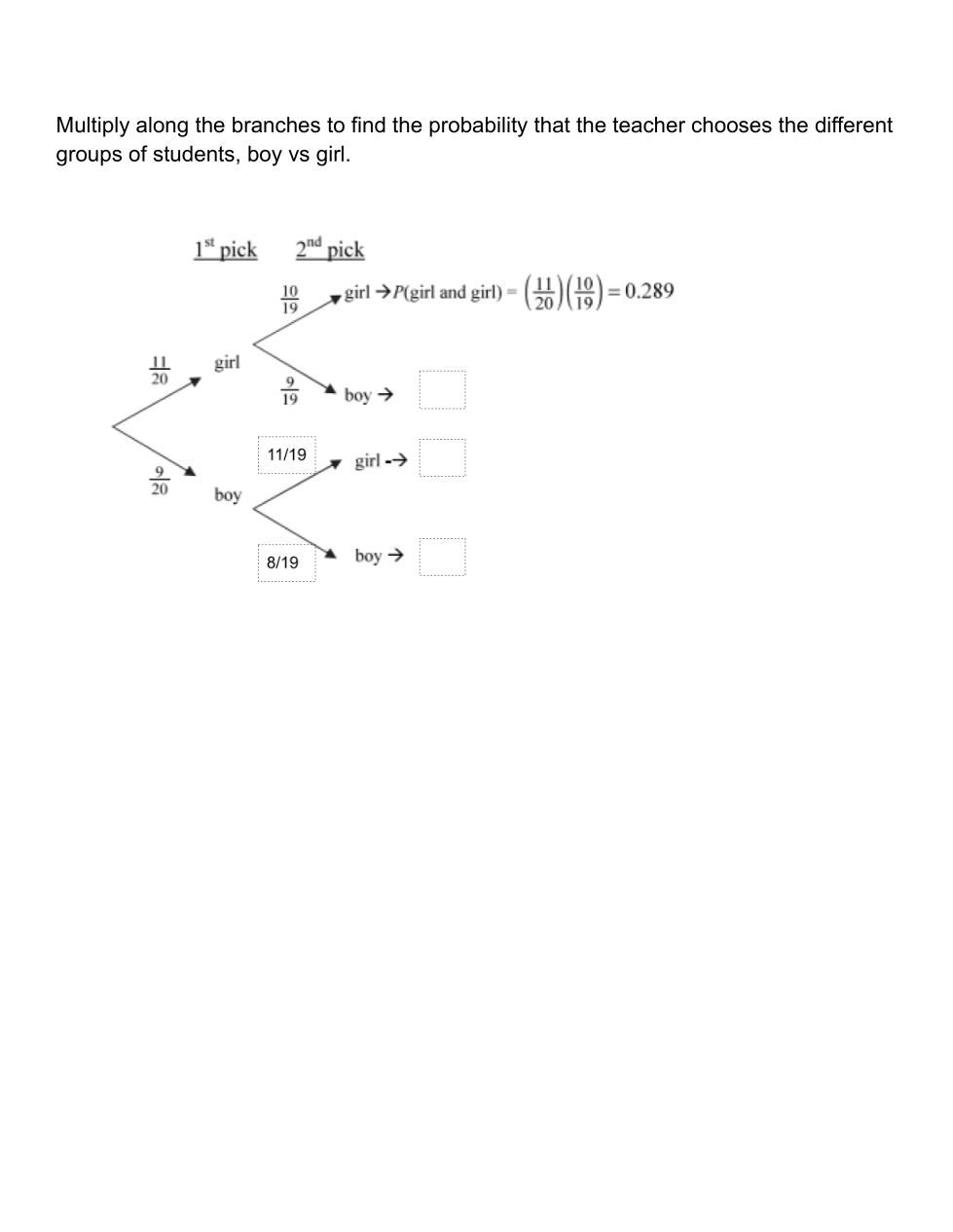
Give the probability (in decimal form rounded to three places) that a girl is chosen first and a boy is chosen second:
P(girl and boy)=

4

Give the probability (in decimal form rounded to three places) that a boy is chosen first and a girl is chosen second:
P(boy first and girl second)=

4

Give the probability (in decimal form rounded to three places) that a boy is chosen first and a boy is chosen second:
P(boy first and boy second)=

4

Using the probabilities in the tree diagram, what is the probability that the teacher sends two students of the same gender to go to the cafeteria to pick up the snacks.
P(BB or GG)=

4

Using the probabilities in the tree diagram, what is the probability that the teacher chooses a boy student first and then picks a girl student to go to the cafeteria to pick up the snacks.
P(Boy & Girl)=

4

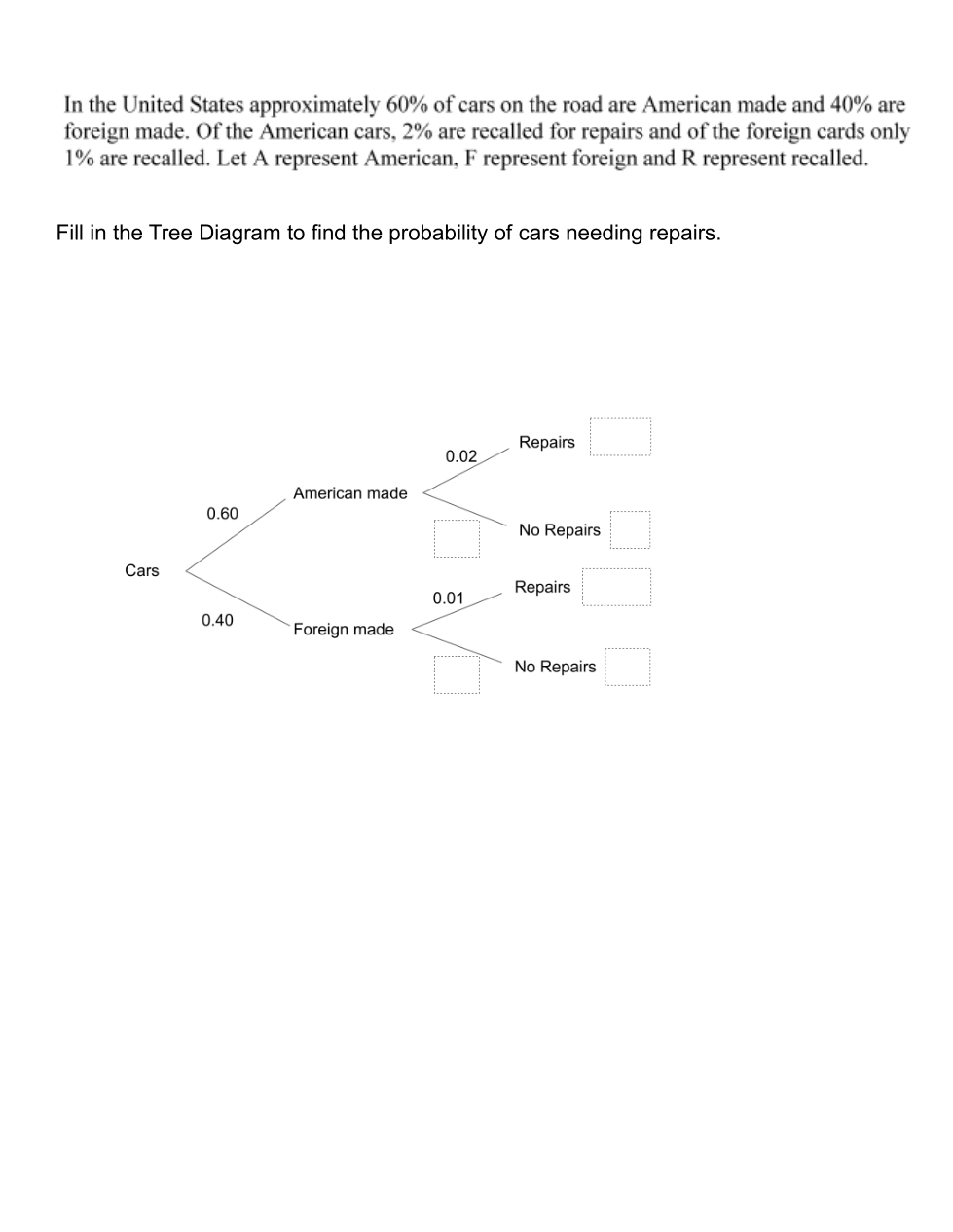
What is the probability that an American car does not need repairs?
P(No Repairs|Am)=

4

What is the probability that a Foreign made car does not need repairs?
P(No Rep|For)

4

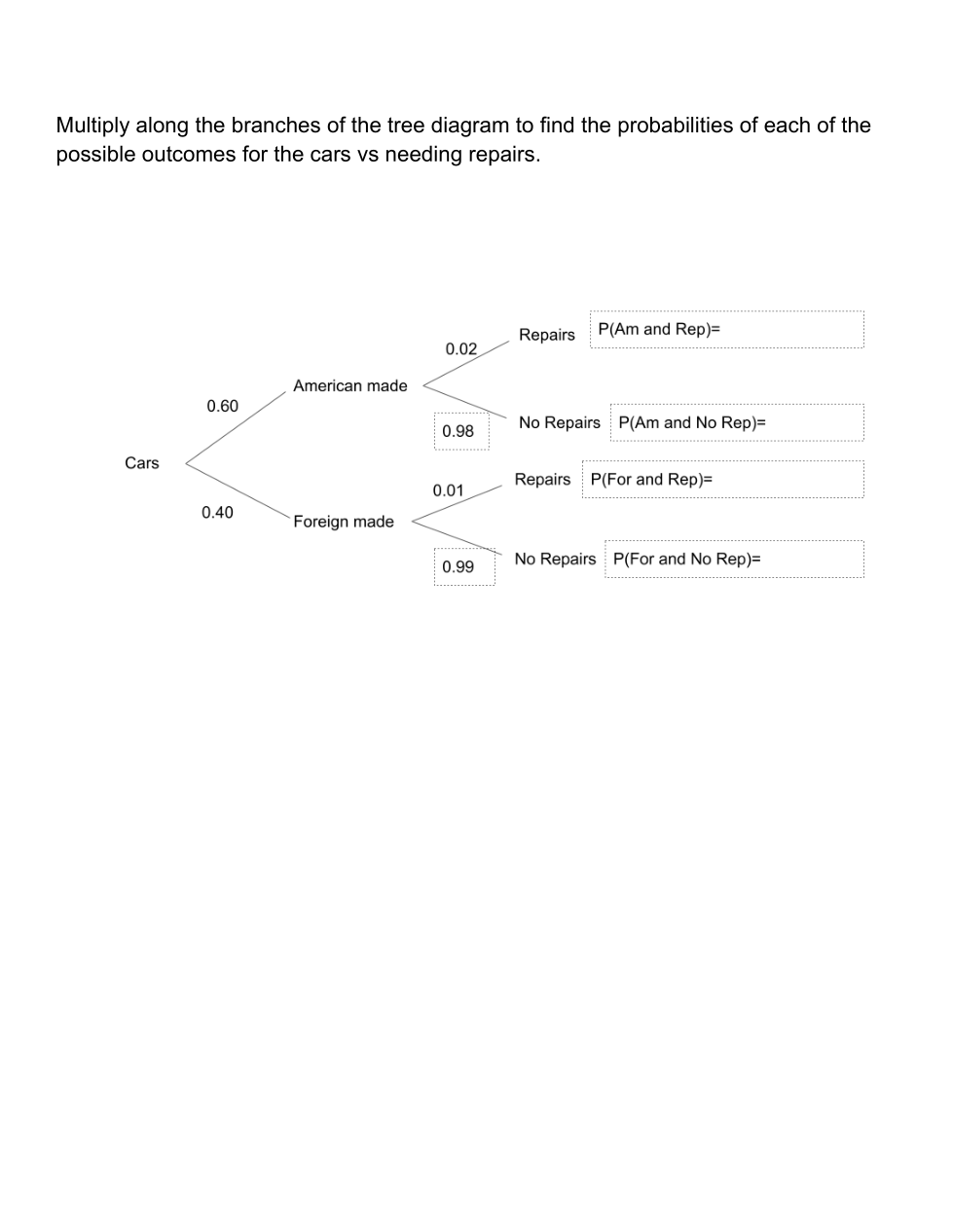
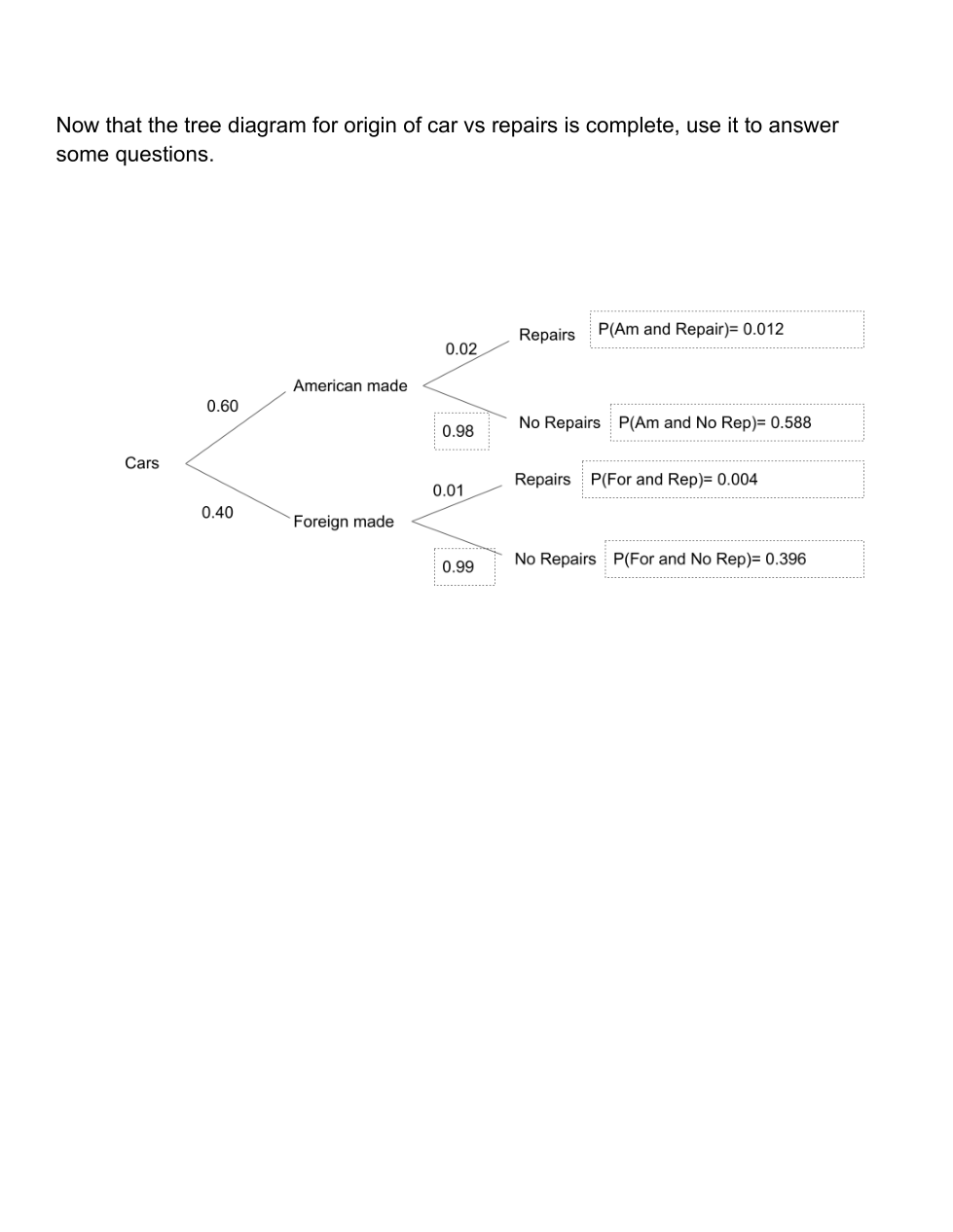
What is the probability that a car is American made and needs repairs?
P(Am and Rep)=

4

What is the probability that a car is American made and does not need repairs?
P(Am and NonRep)=

4

What is the probability that a car is Foreign made and needs repairs?
P(For and Rep)=

4

What is the probability that a car is Foreign made and does not need repairs?
P(For and NoRep)=

4

What is the probability that a randomly chosen car needs repairs?
P(Rep)=

4

What is the probability that a randomly chosen car does not need repairs?
P(NoRep)=