Car Engineering Part I: Define the Problem
star
star
star
star
star
Last updated about 5 years ago
7 Nsɛmmisa
1
1
1
1
1
1
1
Today's learning goal: I can define the criteria and constraints of a design problem with sufficient precision to ensure a successful solution.
Design challenge: you must build a rubber band or balloon-powered car out of everyday items (materials supplied in your kit or that you have at home). The car needs to be able to travel for at least three meters. Your goal is to create a car that can reliably travel fast, straight and as far as possible.
We'll work together to understand the challenge before brainstorming. Then, you'll get to see some ideas of how other engineers have solved this problem and draw your blueprint.
Take a look at the engineering design cycle. We'll be using each of these steps in order to make our cars as successful as possible.
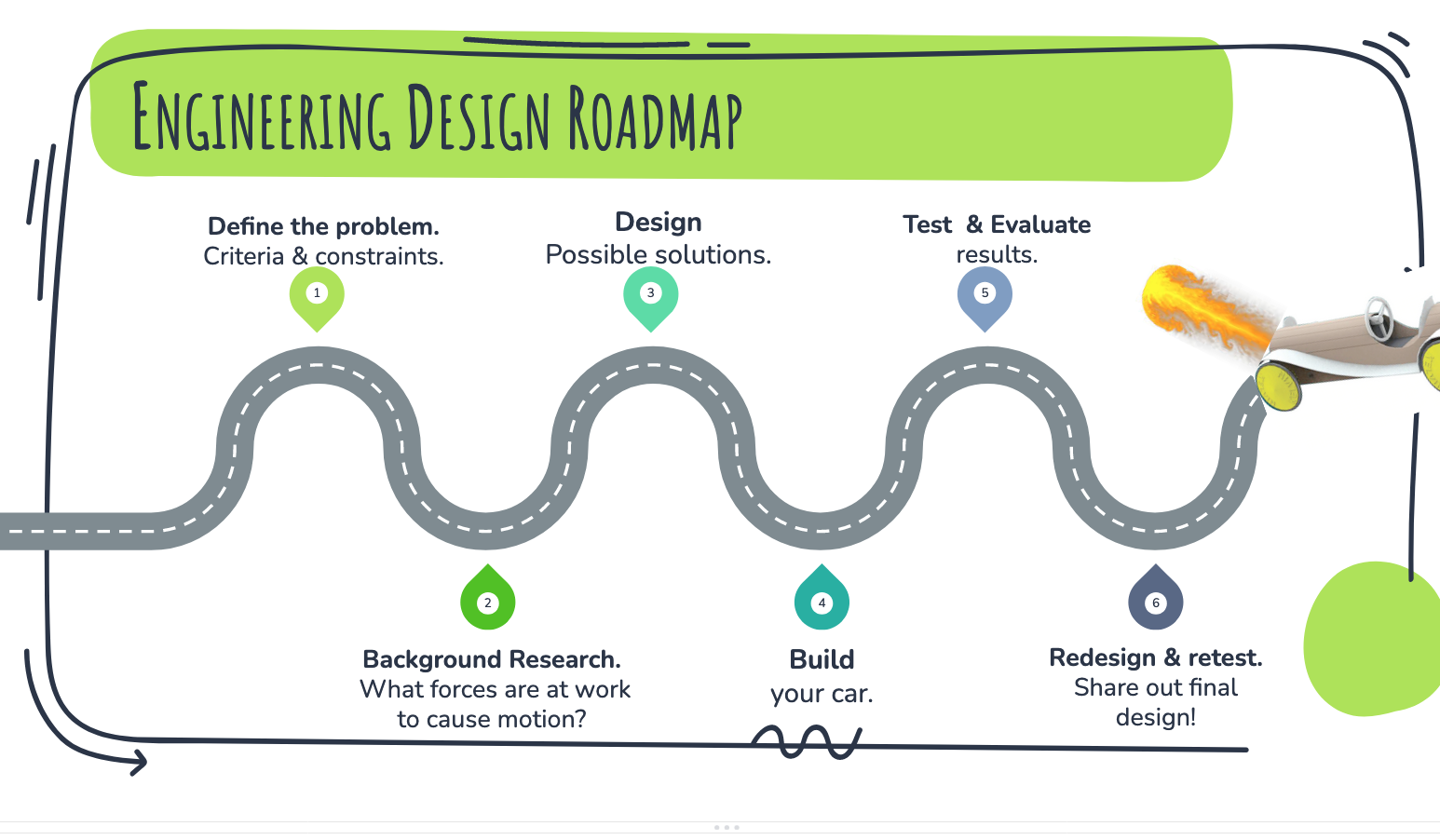
Which step above do you think will be hardest for you, and why?
Let's start with Step 1. Identify the Problem.
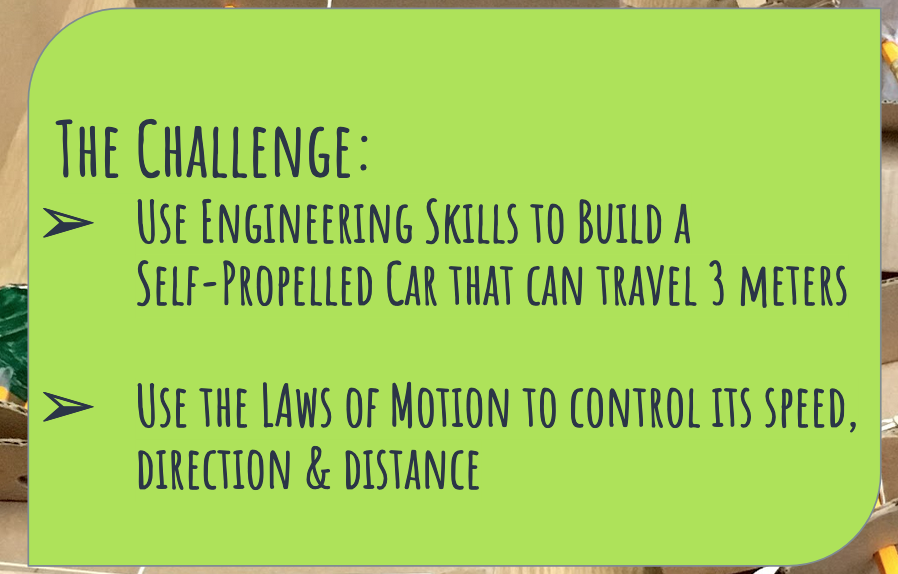
In your own words: What is the problem that we are trying to solve?
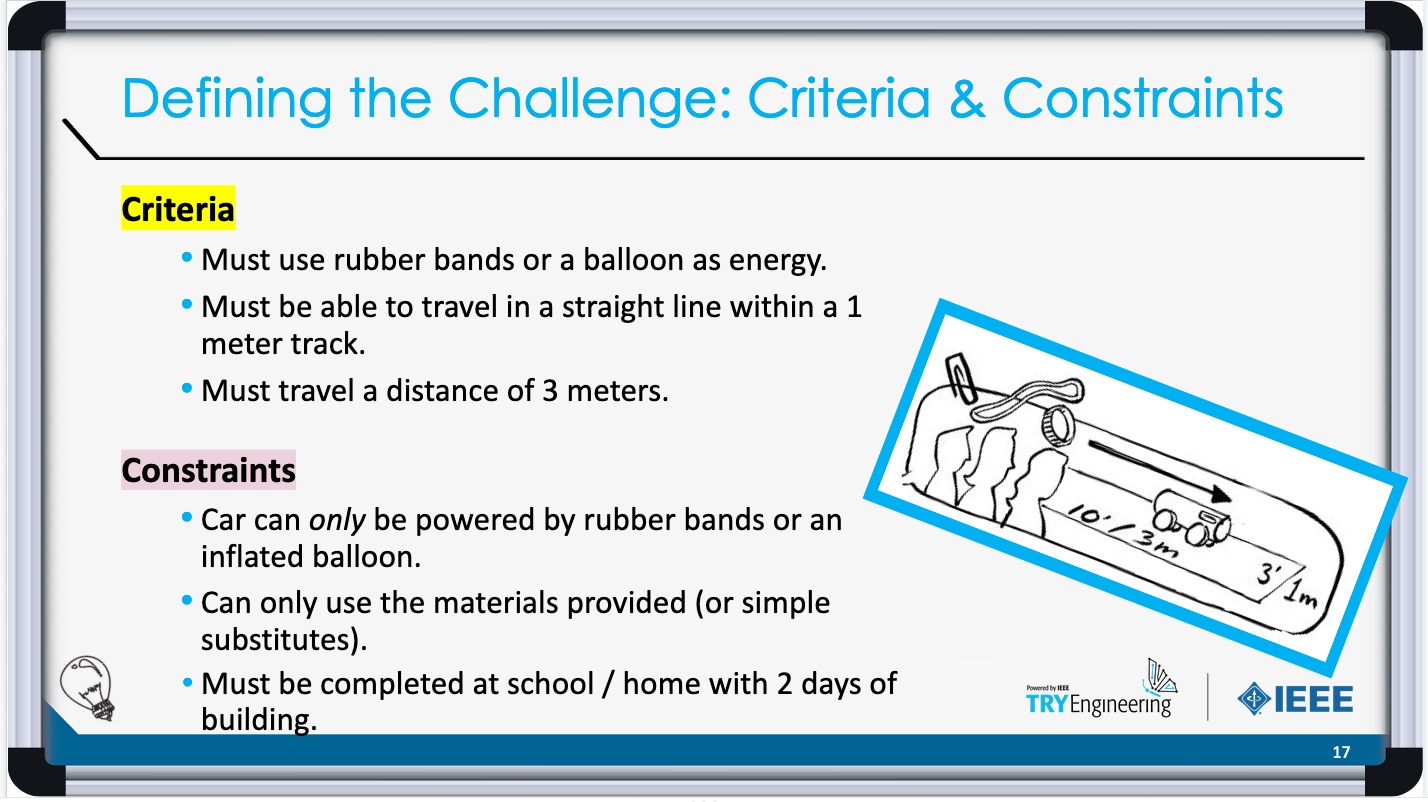
Review the criteria, or requirement for your project. Which of the criteria of this project sounds most challenging and why? (If you are in CDL, think about what might be difficult about doing this at home)
Review the constraints or the limitations on your car. Which of these constraints might be most challenging for you? (Think about what they mean for you, whether you are in CDL or in class.)
Think of one clarifying question about the criteria or constraints.
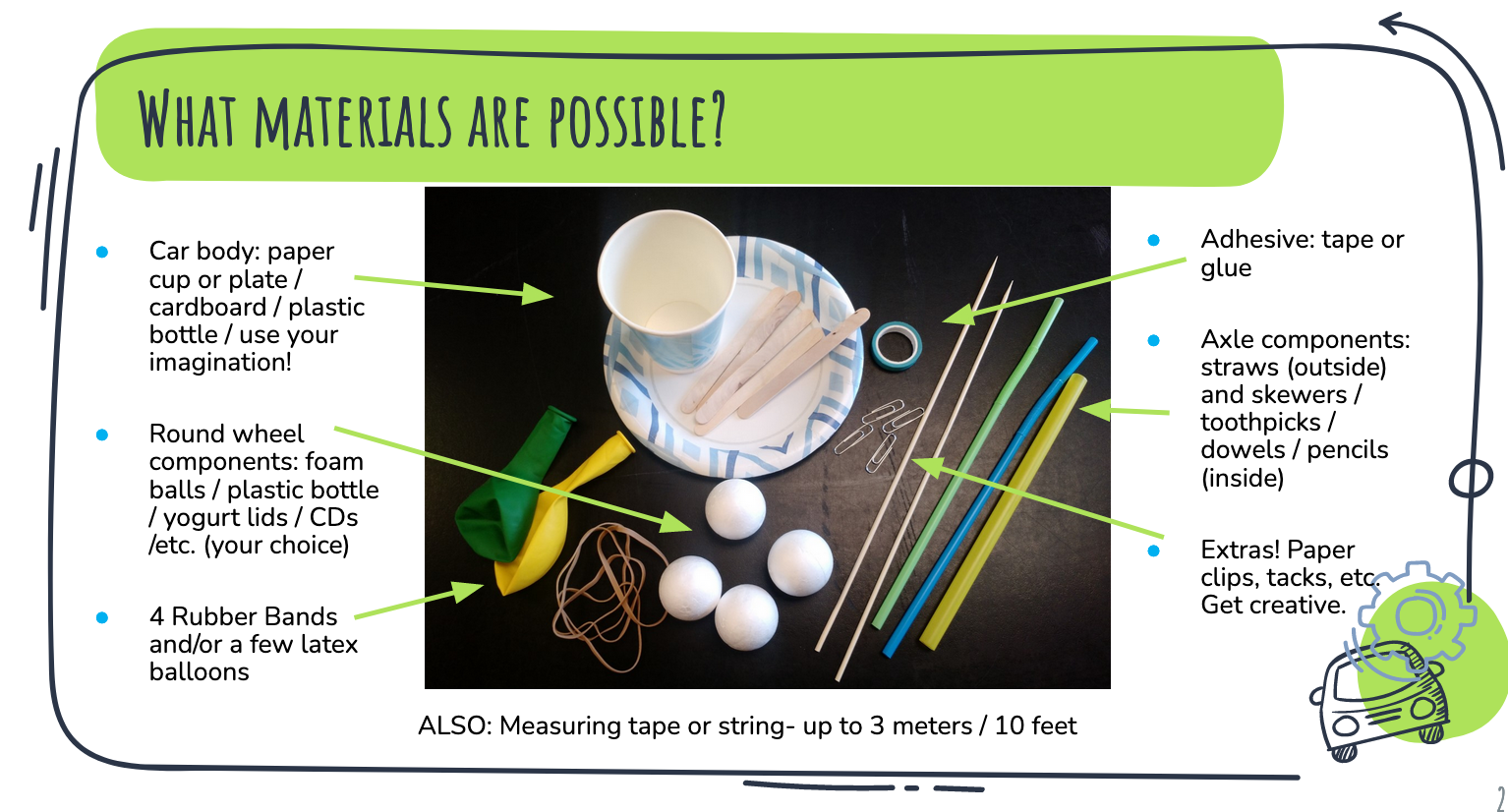
Look at the material available - how might they fit together to make a car?
Five minute brainstorm - write & draw ideas you might try.
- What will you use for the car body? The wheels? The axles?
- How might you use the rubber bands or balloons?
This is just your first idea - it can be rough and can change as you learn more! You can write ideas in words, draw them here, or draw them on paper and upload them below:
(After talking with a breakout room)... add one idea you heard from someone else that you might like to use.