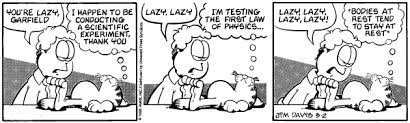
Last week, you tested you car prototypes. Some were successful and others were not. Today, let's learn about the forces might be at work. You will use this to improve your car, and explain how it works!
You'll have a graded assignment Thursday that will use this info (open note), so stay tuned today to do your best!
Learning goal: I can use physics principles to explain what made my car move and stop.
1 point
1
Question 1
1.
How is the tablecloth trick possible? Explain or guess!
1 point
1
Question 2
2.
Okay, I don't want you to break any dishes at home. But let's try a few experiments of our own using the same physics principles. Take 8 minutes to try these two experiments (questions 2-4).
Experiment #1: Plop.
1. Stack a few books on the edge of the seat of a chair. Push the chair forward, then quickly stop it. Observe.
2. Restack the books, and this time pull the chair backwards quickly, then stop it.

Describe what happened for each test. What could you do to stop the books from sliding?
1 point
1
Question 3
3.
Experiment #2: Good Catch.
1. Balance a stack of three coins on your elbow.
2. Snap your arm forward quickly and attempt to catch the coins.
3. Repeat several times. Add one more coin each time - how high can you go?
How many coins were you able to catch? Why did it work?
1 point
1
Question 4
4.
What do these three experiments all have in common? (Tablecloth, books, coins).
Newton’s Laws of Motion
Sir Isaac Newton (1642 – 1727) was a mathematician, astronomer and physicist who studied a wide variety of phenomena during his lifetime. Based on his observations he formulated Three Laws of Motion. Today, let's explore the First Law of Motion!
Newton’s First Law states
"An object at rest will remain at rest and an object in motion will remain in motion at a constant speed unless acted on by an unbalanced force." This is also known as the law of inertia.
Learn more in this video! As you watch, answer questions 6-9.
1 point
1
Question 5
5.
What is the unit scientists use to measure force? (Video time: 1:15)
1 point
1
Question 6
6.
In the spaceship, the ping pong ball only changed velocity when... (Time: 2:05)
1 point
1
Question 7
7.
Ken says it isn't cool to wear a seatbelt. Why would Newton would say he's wrong? (4:10)
1 point
1
Question 8
8.
Inertia is the tendency of an object... (2 correct answers)
1 point
1
Question 9
9.
Which forces cause our cars to accelerate? And why do the cars slow to a stop?
Explore this slideshow to learn about the main types of forces, then match each description below:
https://mocomi.com/types-of-forces/
There's one more you'll need to know:
Thrust is a force that describes how strongly an engine pushes. When a system pushes mass (air, water, etc.) in one direction, there is a thrust (force) just as large in the opposite direction. It can be used for many kinds of vehicles and engines such as rockets, motorboats, propellers, and jet engines.
Draggable item
arrow_right_alt
Corresponding Item
Friction
arrow_right_alt
The force between two objects in contact, like the rubbing between wheels and the road.
Thrust
arrow_right_alt
The force that pulls a car down towards the Earth.
Tension force
arrow_right_alt
The force exerterted by any stable object. It pushes up on a car sitting on the ground, or against a person leaning on a wall.
Gravity
arrow_right_alt
The force of a pulled rope, like in a game of tug-of-war. The more of this placed on a rubber band, the more potential energy it has.
Normal force
arrow_right_alt
The force slowing down an object in the air, like a paper airplane.
Applied force
arrow_right_alt
The force of pushing or pulling, like pushing a heavy table across the room.
Air resistance
arrow_right_alt
The force that pushes a rocket, or motorboat forward as air is pushed out the back.
How do engineers describe the forces acting on a car? Watch 5 minutes of this video, just until 5:00.
Here's a video of me going over 9-11. Watch if you missed class Thursday 5/27, or need a review!
1 point
1
Question 10
10.
Let's take all the information and map out which forces are going to be acting on an moving rubber band car.
Think: What makes it move? What makes it stop moving?
Add a labelled arrow for each force, like in the "free body diagram" described in the last video. Also label where potential energy is being stored.
1 point
1
Question 11
11.
How about this balloon car? Draw the forces that cause it to accelerate, and the forces that cause it to slow.
Also label where potential energy is stored!
1 point
1
Question 12
12.
Some of these forces will help make your car faster, while others will slow it down. As you start designing, which of the following forces are not helpful?
1 point
1
Question 13
13.
Suggest at least one specific way you could decrease the friction or drag on your car.
1 point
1
Question 14
14.
Which forces could you try to increase to make your car accelerate more?
1 point
1
Question 15
15.
Suggest one specific way to increase those forceson your car.
Finished? NIce work!
1. Complete initial tests (Design Part 3) if you haven't - questions 5-9 are required for a grade
2. Think about which of your idea(s) you can implement. You need to choose at least one for Design Part 5.