Name the type of cell division that results in four haploid daughter cells.
2 points
2
Question 2
2.
Stem cells from human embryos are used to treat some diseases in humans.
Explain why.
4 points
4
Question 3
3.
Click on 'Show your work' and label the animal cell diagram correctly. (Click on 'T' to type your text)
5 points
5
Question 4
4.
Click on 'Show your work' and write yourr answers in the blank space provided.
6 points
6
Question 5
5.
Explain the reflex action if you were to put your hand on a very hot object. Click on 'Show your work if you need to draw a diagram using the scribble feature)
2 points
2
Question 6
6.
Many organisms are adapted to avoid being eaten.
The photograph shows a gecko on a leafy branch.
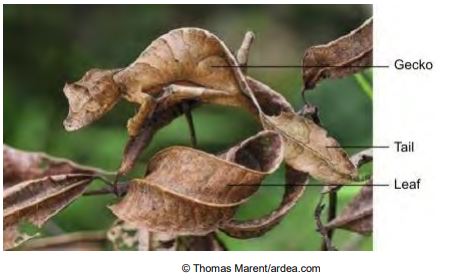
The gecko is adapted to avoid being eaten by predators.
Explain how.
2 points
2
Question 7
7.
There are many types of microorganisms. Some are useful to humans and some are harmful to humans.
Rearrange the type of microoragnisms (left column) to match its impact on humans (right column)
Draggable item
arrow_right_alt
Corresponding Item
Lactobacillus bacteria
arrow_right_alt
used in yogurt making
bacteria that rot organic material releasing methane
arrow_right_alt
used in biogas production
bacteria that produce toxins
arrow_right_alt
cause diseases such as cholera or food poisoning
fungus producing penicillin
arrow_right_alt
used in production of antibiotics
4 points
4
Question 8
8.
2 points
2
Question 9
9.
5 points
5
Question 10
10.
In an investigation a student exercises for different periods of time while counting the number of breaths she takes per minute. The table shows the average (mean) number of breaths per minute for each period of time exercising.
(i) Plot the student’s results on the grid. (4 marks)