LNM1 Chapter 10 Study Guide
star
star
star
star
star
Last updated almost 4 years ago
35 Nsɛmmisa

1
1
1
1
1
1
1
1
1
1
1
1
1
1
1
1
1
1
1
1
1
1
1
1
1
1
1
1
1
1
1
1
1
1
1
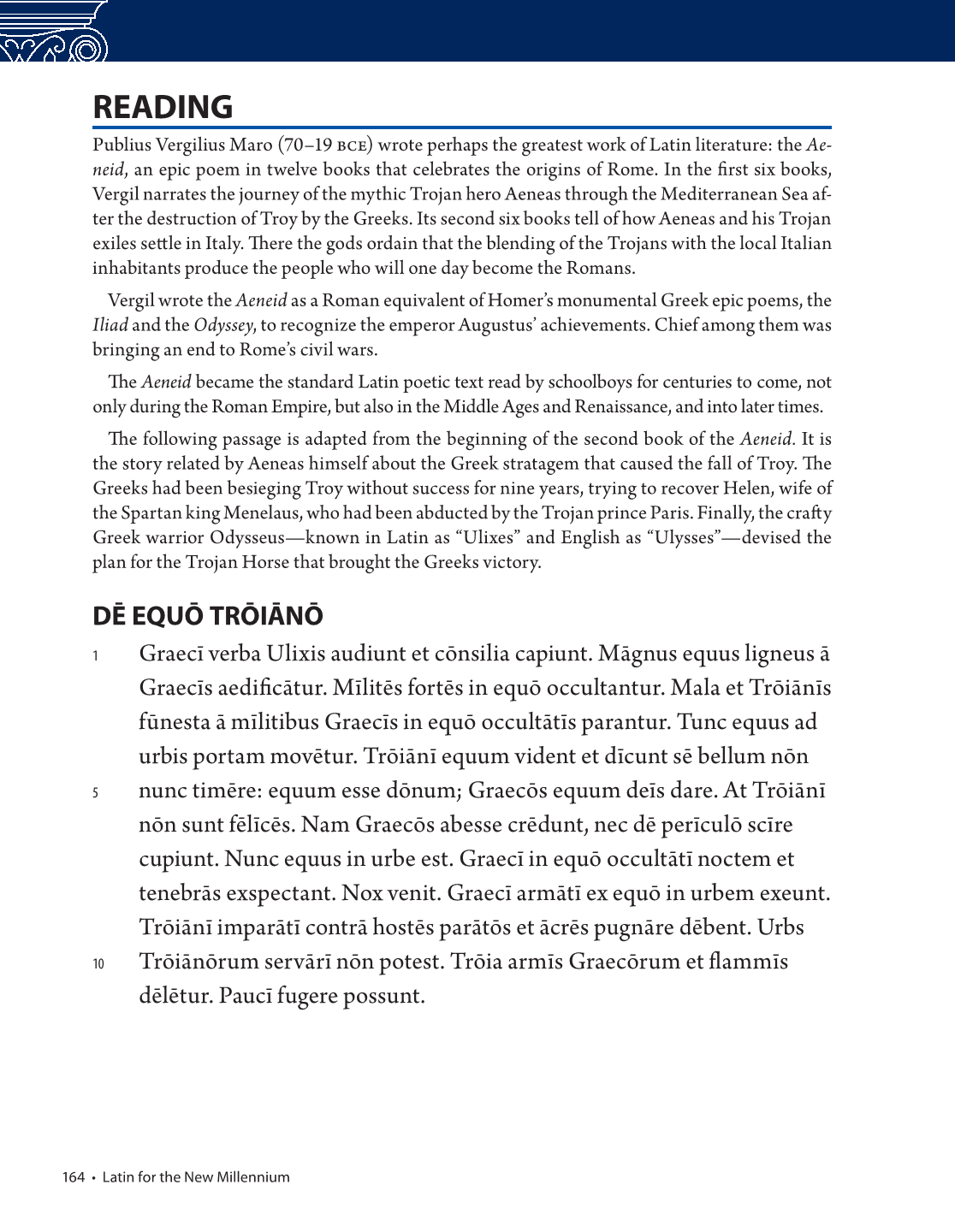
Laocoon was a Greek seer.
Vergil was a Roman playwright.
Paris was a Trojan prince.
No Trojans escaped when Troy was destroyed.
The Trojans believed that the wooden horse was a gift.
The Greeks built the wooden horse on the advice of Laocoon.
When the Trojans saw the wooden horse, there were no Greeks in sight.
The famous quotation “Timeō Danaōs et dōna ferentēs,” which remains in use to this very day, is found in the epic poem by
According to the poet, who spoke the words “Timeō Danaōs et dōna ferentēs”?
What convinced the Trojans to ignore the warning of the words “Timeō Danaōs et dōna ferentēs” and take the wooden horse into the city?
Who devised the strategy of the wooden horse?
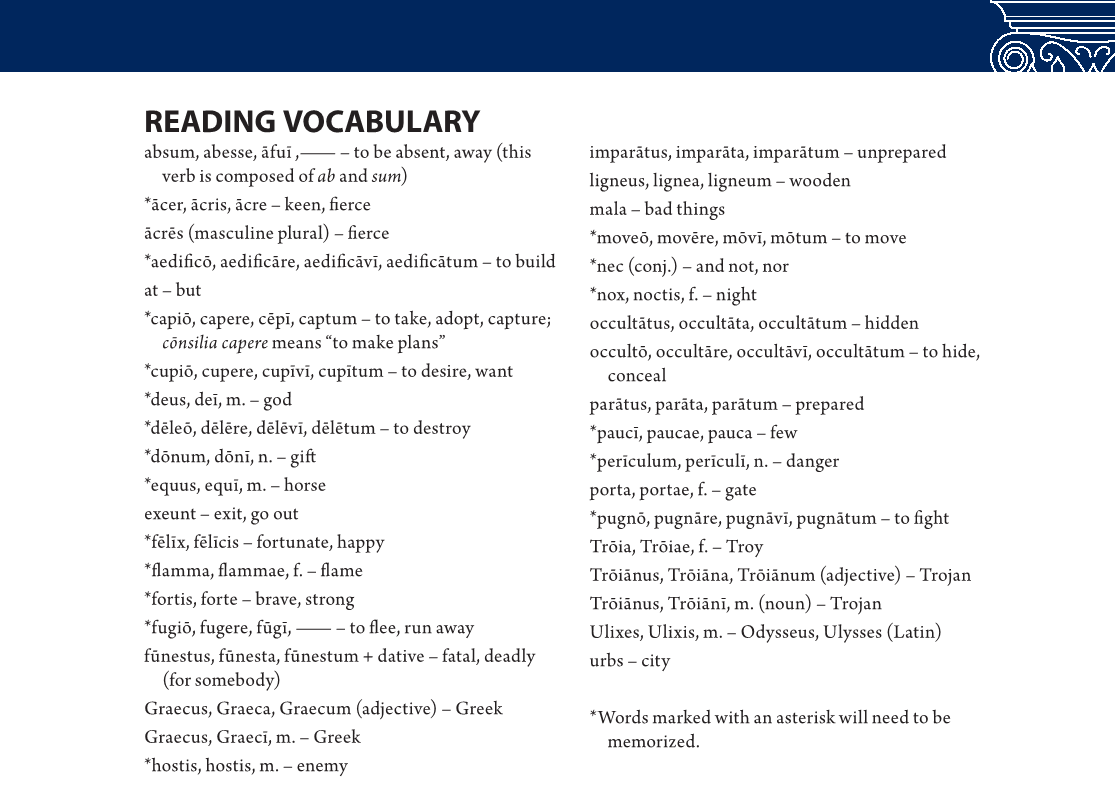
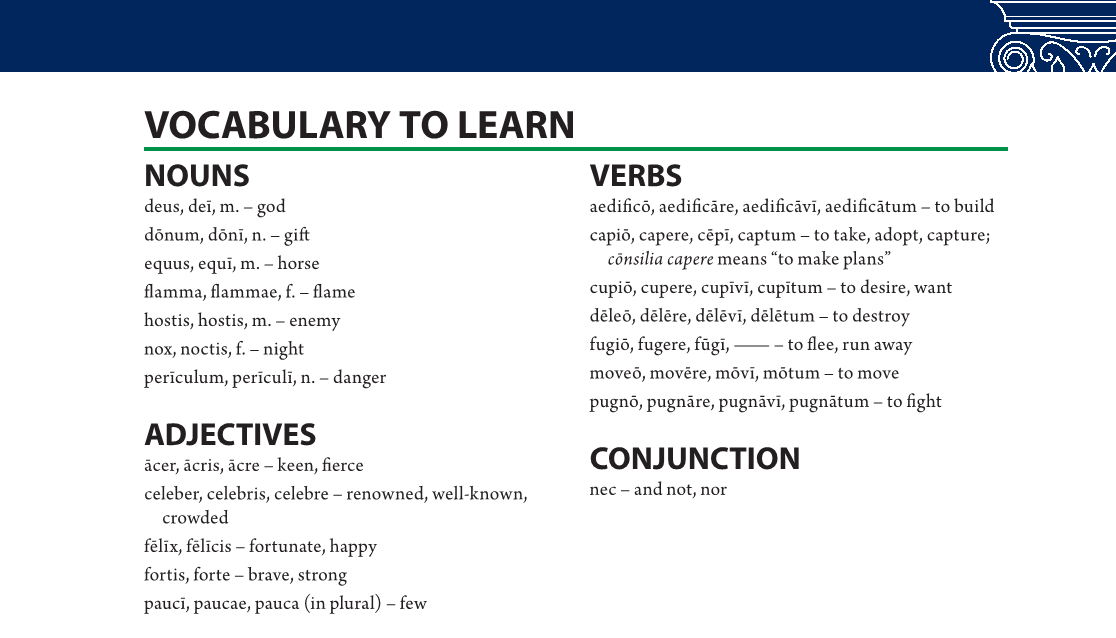
| Draggable item | arrow_right_alt | Corresponding Item |
|---|---|---|
Trōiānī | arrow_right_alt | to be desired |
quia | arrow_right_alt | the Greeks |
fortēs | arrow_right_alt | we capture cities |
Graeca | arrow_right_alt | the brave |
Danaī | arrow_right_alt | a Greek woman |
terra līberōrum | arrow_right_alt | we make plans |
cupī | arrow_right_alt | land of the free |
Trōia | arrow_right_alt | because |
urbēs capimus | arrow_right_alt | the Trojans |
cōnsilia capimus | arrow_right_alt | Troy |
Which word in the story can ONLY be found in the plural?
Which adjective best describes the Trojans in this story?
Which verb does not have a regular fourth principal part?
A pugnacious child loves to
They named their dog “Felix” because he was
Which of the following is known for its nocturnal habits?
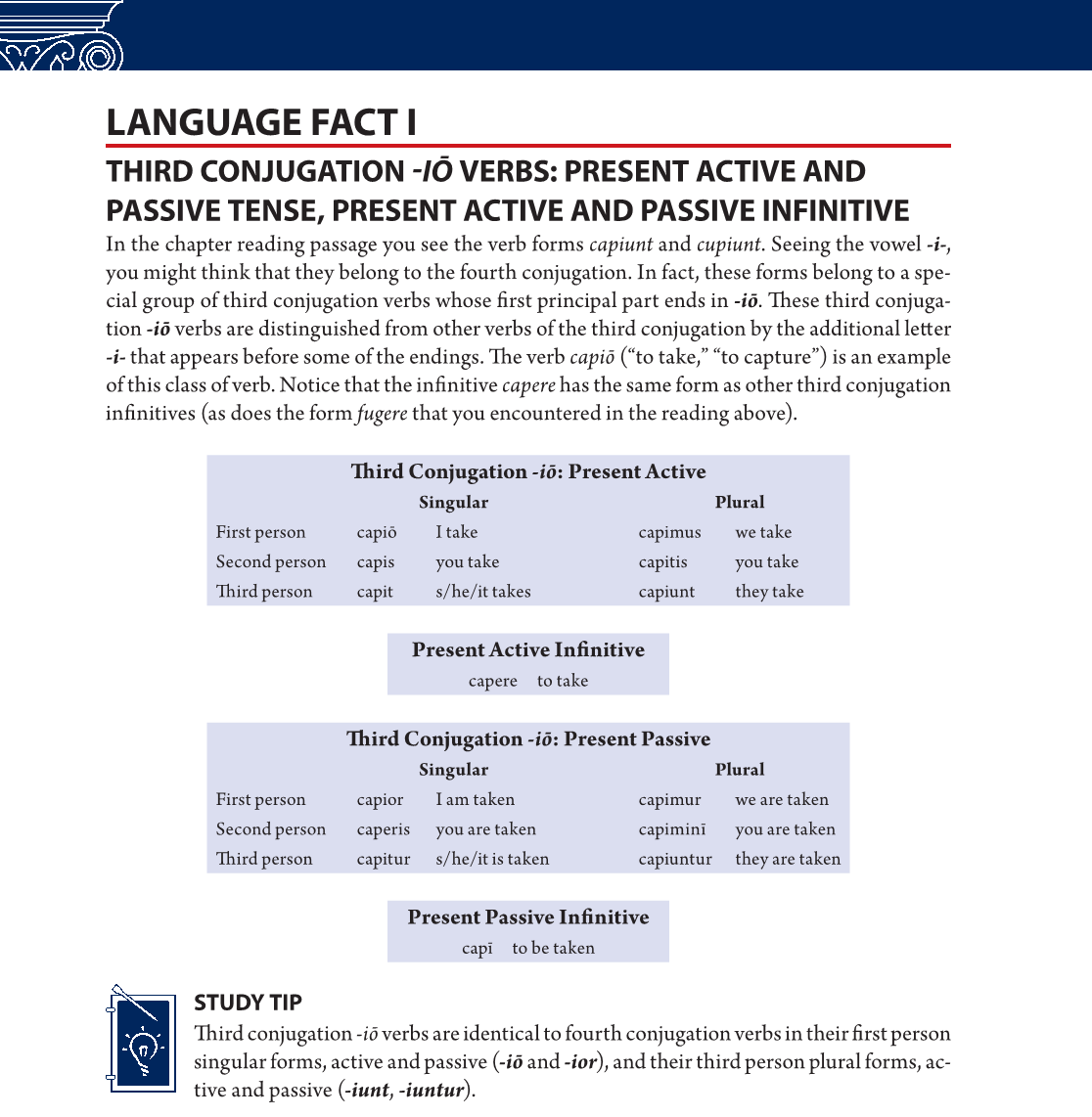
Third conjugation –iō verbs show a characteristic i before certain endings.
The forms petunt and fugiunt both belong to the third conjugation.
Which of the following does NOT belong to the same conjugation as the others?
Third conjugation –iō verbs have an i added in the active forms of the first person singular and in the
Third conjugation –iō verbs do NOT have an i in the
The present passive infinitive of an –iō third conjugation verb is formed by
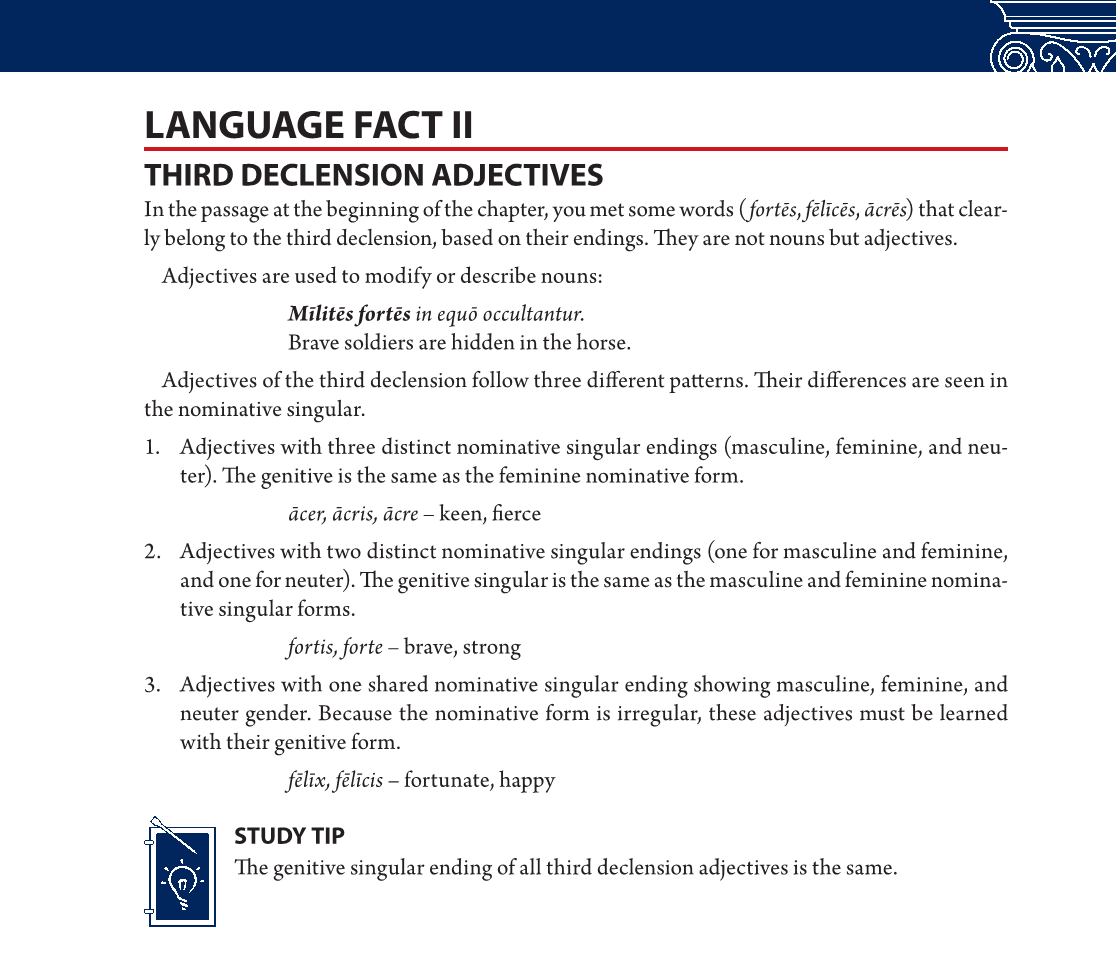
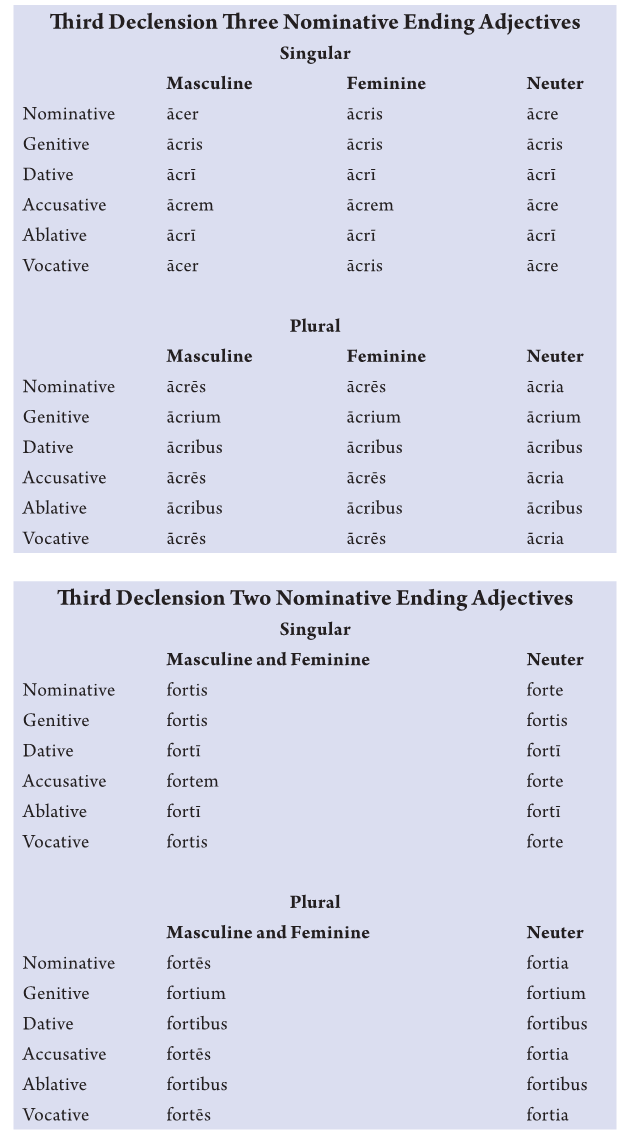
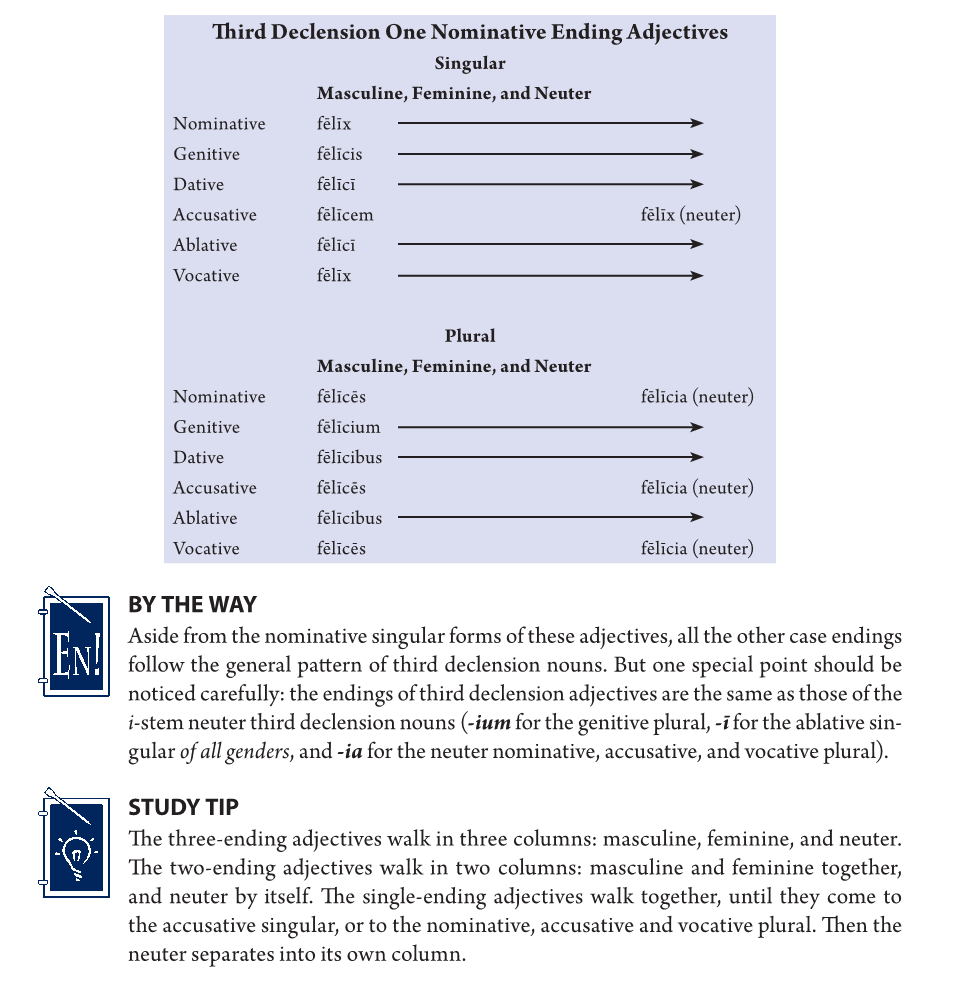
Neuter endings of third declension adjectives follow the pattern of
The masculine and feminine endings of third declension adjectives follow the pattern of urbs in all forms EXCEPT
Which of the following is NOT a nominative plural?
In the vocabulary entry for fēlīx, the word fēlīcis is the
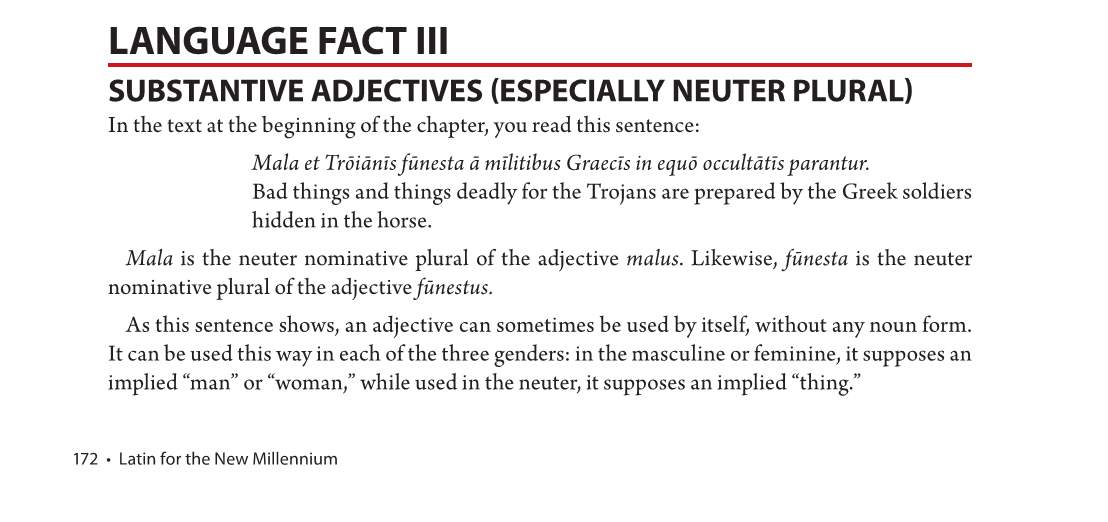
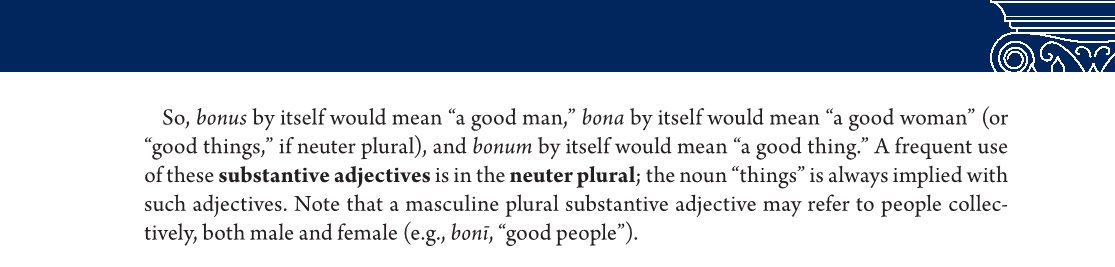
Which of the following does NOT contain a substantive?
On account of the war, citizens, your city is being attacked.
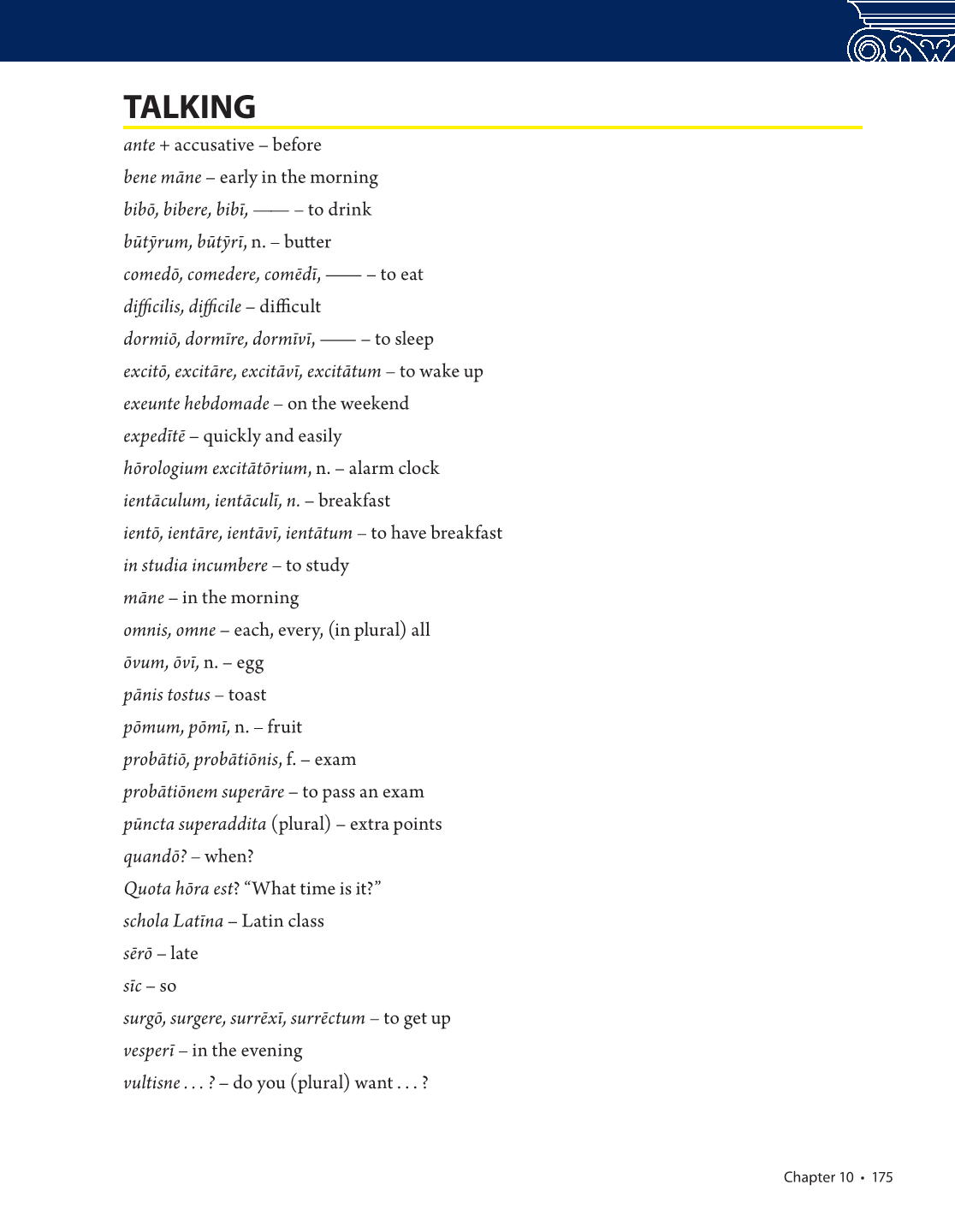
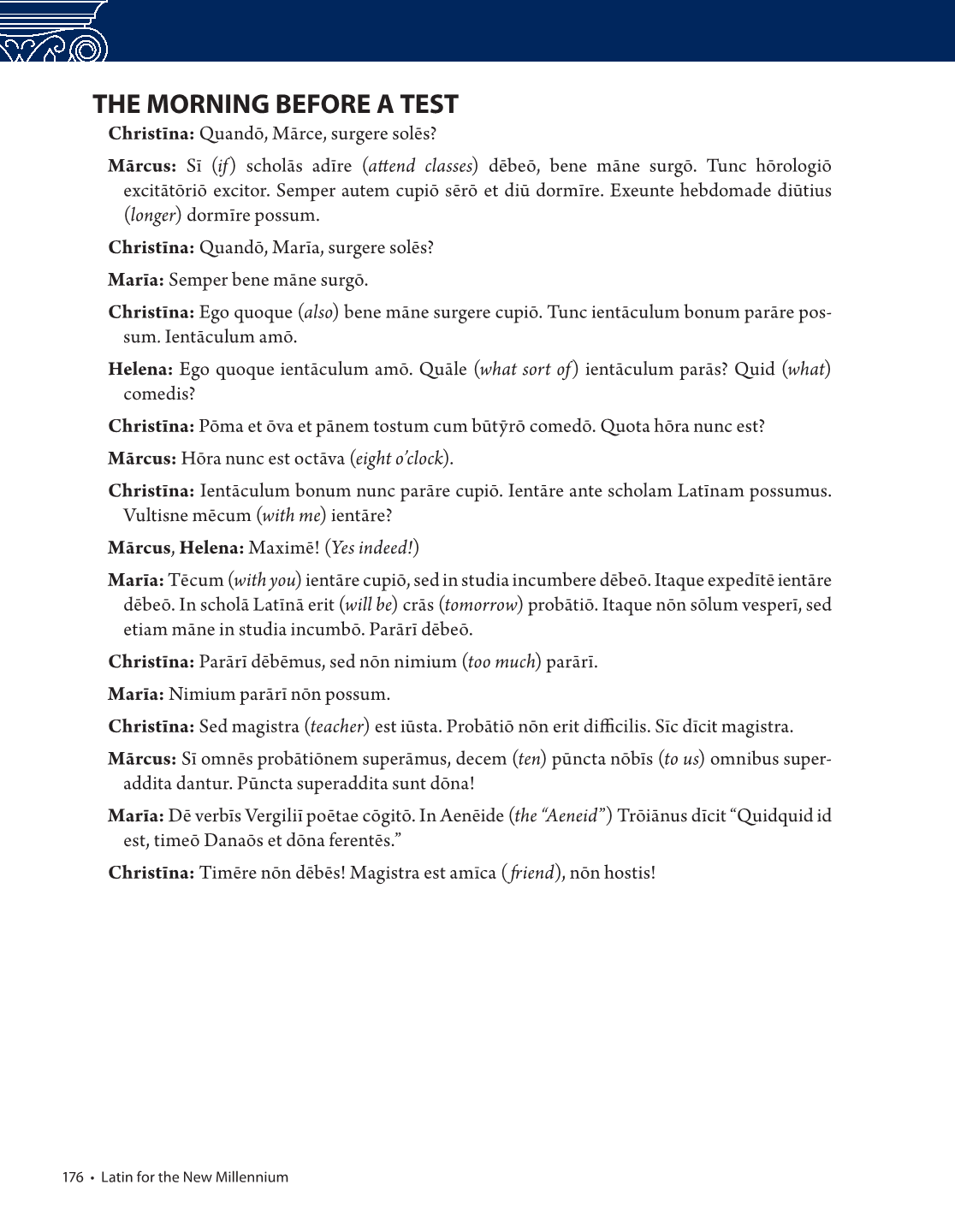
What is the ientāculum?
In the conversational passage, what do the students do first bene mane?
Who is described as amīca during the conversation by one of the students?
Which of the following is derived from the Latin word for “egg”?
The word “pomegranate” is derived from the Latin word for