Log in
Sign up for FREE
arrow_back
Library

Motion & Velocity

star
star
star
star
star
Last updated almost 5 years ago
13 questions
1
1
1
1
1
1
1
1
1
Question 1
1.

Fill in these notes to summarize our learning about motion graphs.

Question 2
2.

Draggable itemarrow_right_altCorresponding Item
arrow_right_alt
arrow_right_alt
arrow_right_alt
Question 3
3.

How fast was the snail moving from 6-9 minutes? Include units in your answer!

Question 4
4.

Question 5
5.

Question 6
6.

Draw a graph that tells this story:
A gazelle walks towards the river at a steady velocity 1m/second for 10 seconds. She stops to drink for 5 seconds, then sees an alligator. She turns around and accelerates, covering 10 meters in 5 seconds. (The graph shows the gazelle's starting position. Please add axis labels, units and a line to show her motion.)

Question 7
7.

Draggable itemarrow_right_altCorresponding Item
arrow_right_alt
arrow_right_alt
arrow_right_alt
arrow_right_alt
arrow_right_alt
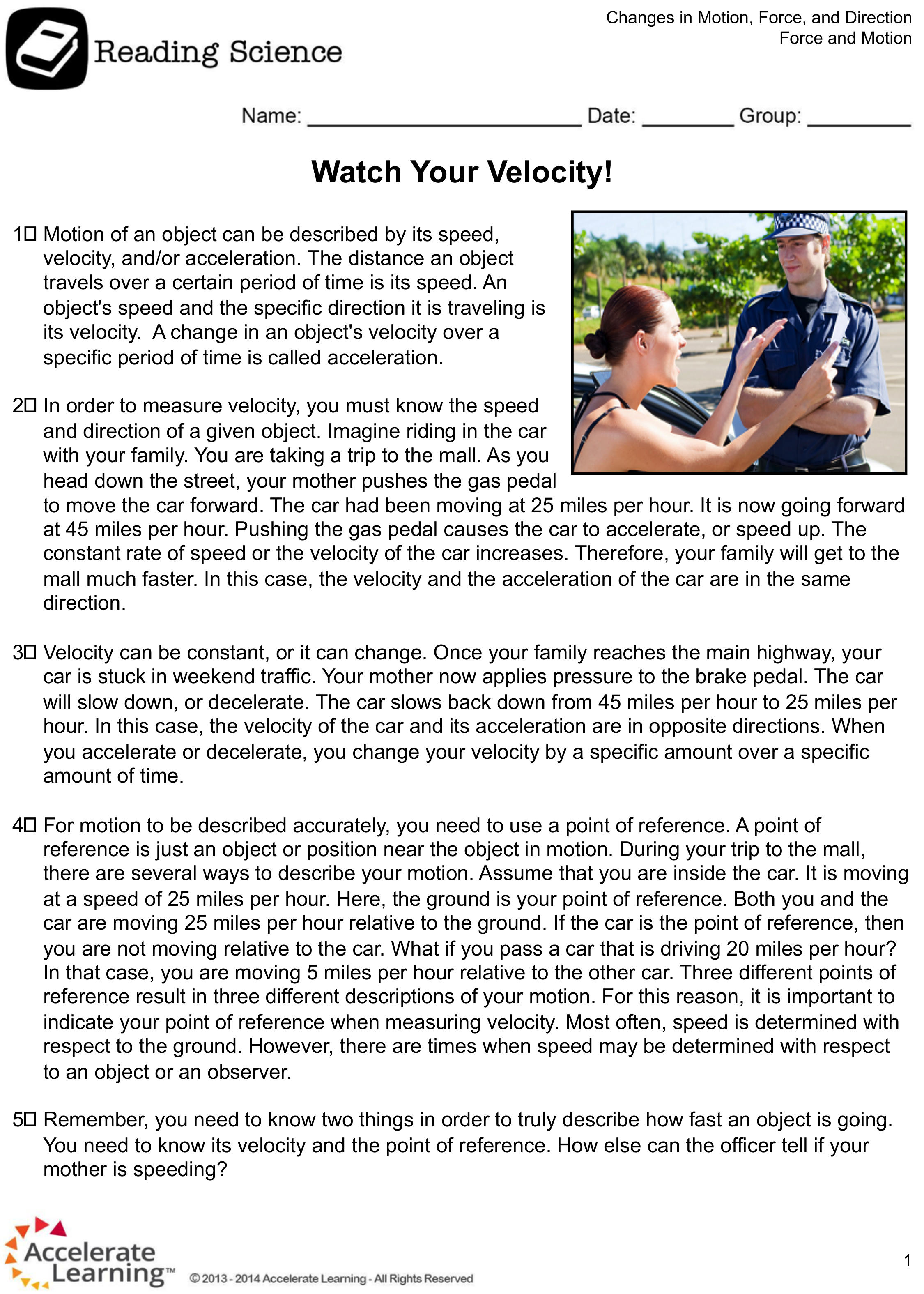
Read to review the ideas, and answer questions 1-4.
1
1
1
1
Question 11
11.

Opinion: is it ever okay to drive at a velocity higher than the posted speed limit?

Question 12
12.

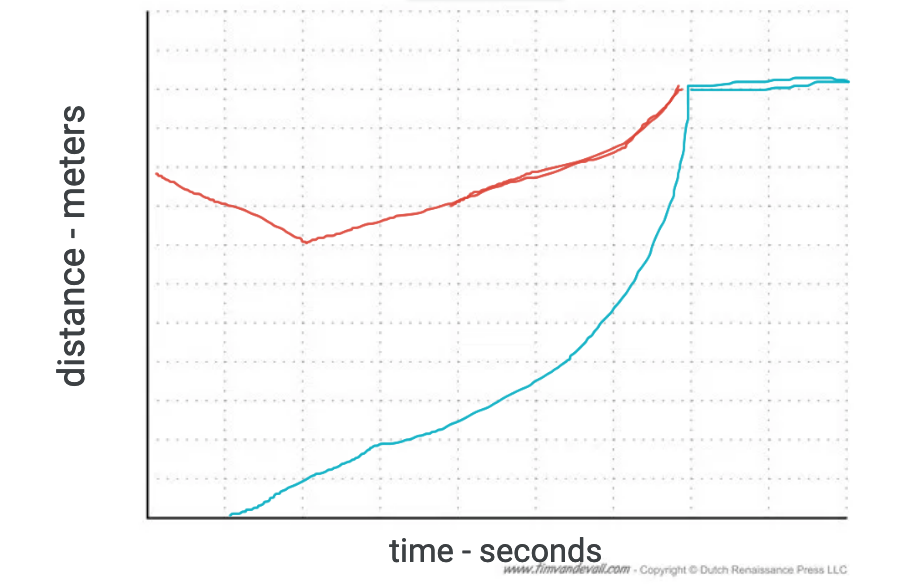
Put it all together. Here is a made-up time v. distance graph. The blue line shows one traveler and the red line a second. Explain what is taking place with as much detail as you can. Include the words "speed" "velocity" and "acceleration" in your story.

Question 13
13.

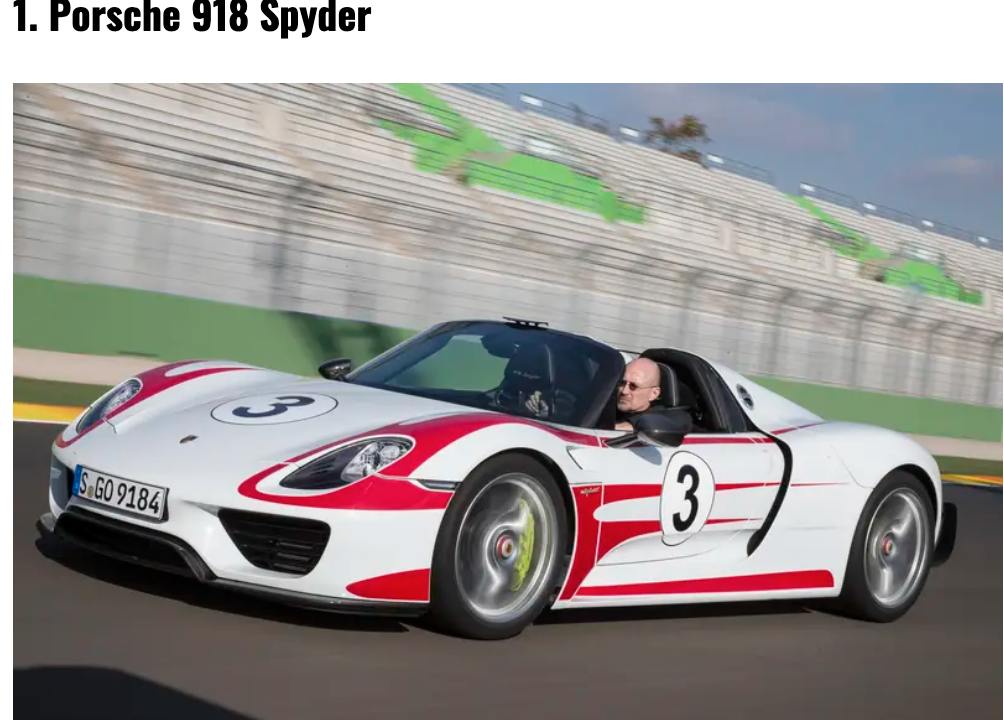
This Porsch can accelerate from 0 to 60 mph in 2.2 seconds.
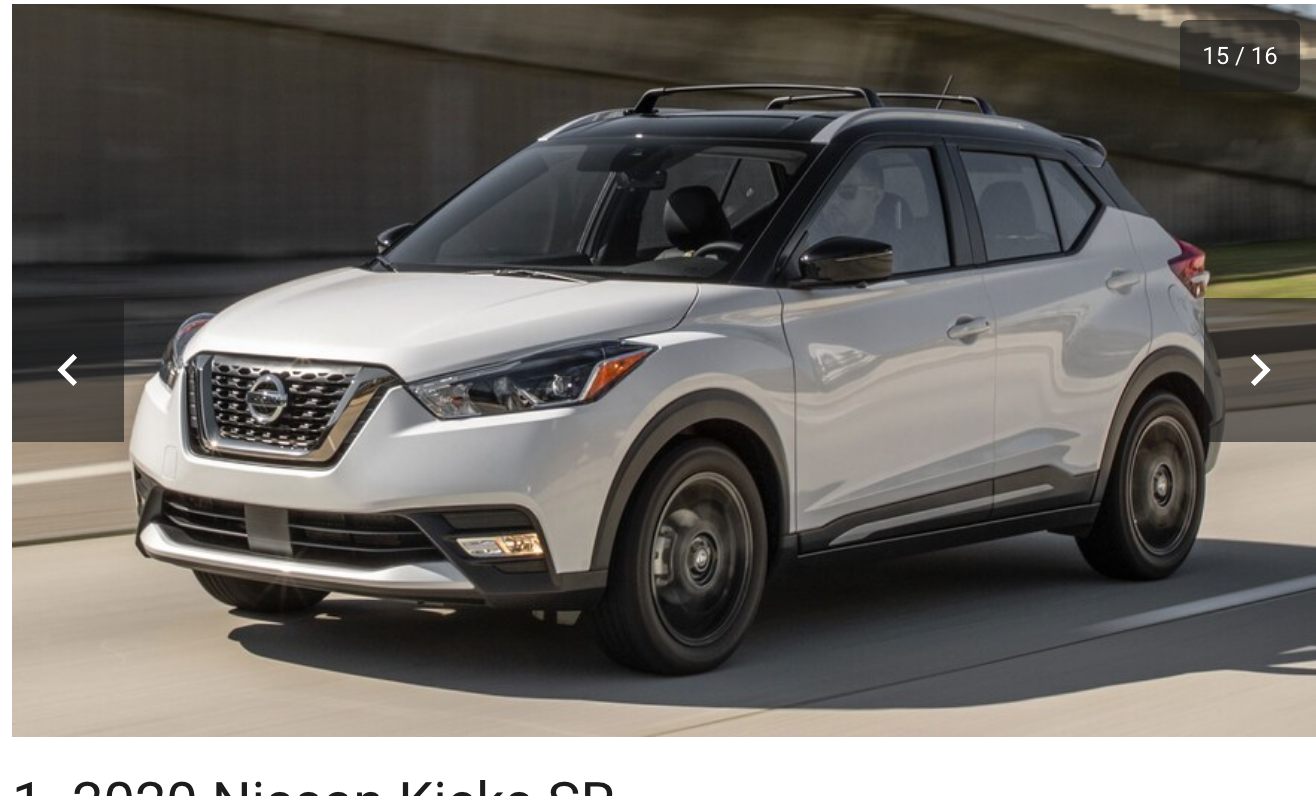
Meanwhile, this Nissan SUV takes over 10 seconds.
When we build a car for this unit, a goal will be to design a car that can move far and fast. Next week, we'll be talking about what that might involve. Below, guess three different reasons a car might be able to accelerate faster.

Submit! Here are choices when you are done:
- Play the stickman game some more.
- This challenging game is similar but involves designing ramps for a rolling ball.
- Go to Canvas "Done Do's" (from the bottom of the homepage) and choose an activity.
Practice reading the graph. The graph shows a snail's wild journey through a garden. Match the three sections of the graph above with the description of the snail's motion during that time period.
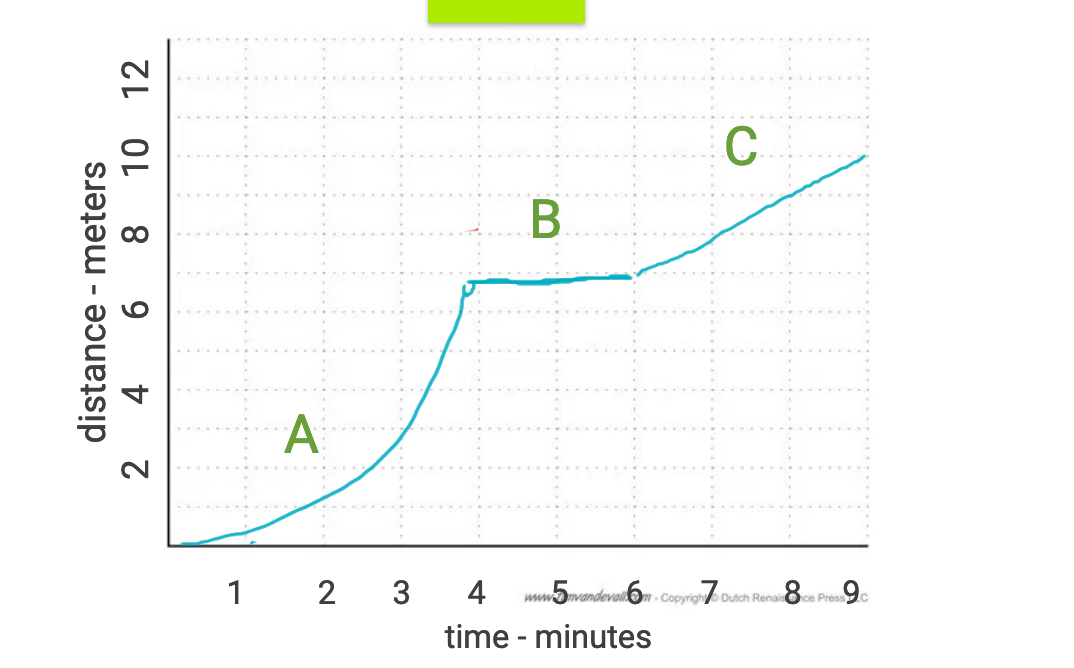
not moving / speed = 0
A
travelling at a constant speed
B
speeding up
C
Let's make sure we all understand the science vocab for these graphs. As you watch the video below, pause to match each description with the definition: Speed, Velocity or Acceleration?
The rate at which an object changes position, or distance / time.
Examples: 70mph, 5m/sec
Speed plus direction
Examples: 30mph north, 9m/sec down
The rate at which velocity changes
Often measured in m/s2
Examples: speeding up, slowing down or turning right
Speed
Velocity
Acceleration
Calculate. A bowling ball moves 18 meters every 2 seconds down the lane at a bowling alley. What is the speed?
9 meters per second squared
9 meters per second
36 meters per second forward
36 meters per second
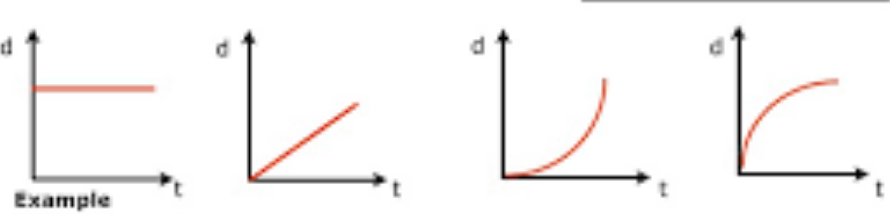
The four graphs show distance over time. Match: what car motion would create each graph?
Not shown above
Parked, still
4
Driving forward at a steady pace
2
Accelerating
1
Decelerating
3
Driving backwards
Question 8
8.

Question 9
9.

Question 10
10.

An object can have velocity without acceleration.
True
False
Pushing on the gas peddle causes: (choose all that are correct)
The car to accelerate
The car's velocity to increase
The car's speed to increase
The car's velocity to decrease
Your car's speedometer says "25mph." What "point of reference" is being used?
The driver
The road
The car in front of it