Gr. 7 Planet Earth- Section 1.0 Quiz
star
star
star
star
star
Last updated over 5 years ago
29 Nsɛmmisa
1
1
1
1
1
1
1
1
1
1
1
1
1
1
1
1
1
1
1
1
1
1
1
1
1
1
1
1
1

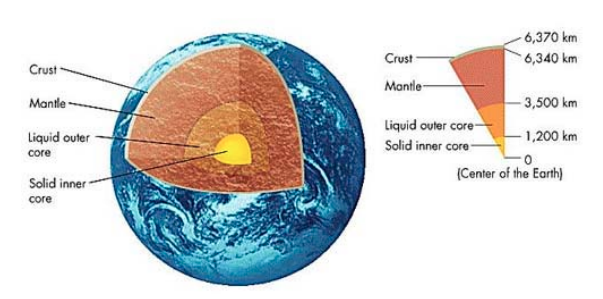
Scientists estimate the age of the Earth to be about 4.6 billion years old, using evidence and theories.
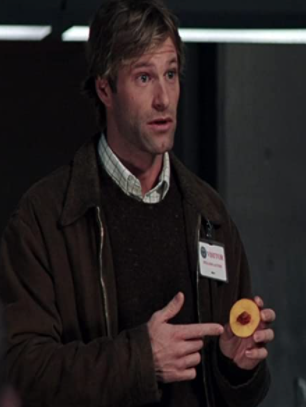
Then they construct a model of what the Earth is composed of. A model is based on what is ...
A scientist who studies the Earth is called a ....
Compared to the other layers of the Earth, the crust, at a temperature of 5oC is ...
In order for scientists to study - first hand - the composition of the core of the Earth, they would have to
travel 1700 times the depth of the deepest mine in the world. The deepest mine is in South Africa and it
reaches a depth of 3.8 kms. What is mined there?
The temperature in the deepest parts of these types of mines protects miners from cold. This is because
the deeper the mine gets the closer to the core it is. The normal temperature in these deep mines is ...
The core of the Earth is made up of two layers. The inner core, which is made up of nickel and iron
reaching temperatures of 7000oC, because of the pressure of the other layers on this inner core, it is ...
Which of the following foods would you use to model what the Earth is made of ...

The largest earthquake recorded in Canada was off the coast of British Columbia about the year 1700. It was about a ~9 in magnitude. The reason this is just an estimation is because ...
The pressure under the earth's crust can cause it to move in different ways. A fault that is caused by a
compression force is called a ...
The source of an earthquake can be determined by recording the interval time between the "p" waves and "s" waves. The first place that rocks break below the surface in an earthquake is called the ...
Scientists study the effect of an earthquake by locating this point, which is the place on the surface that is directly above where the earthquake first began, called the ...
An earthquake in Japan registers on a seismograph in Winnipeg, Manitoba. This occurs because...
Seismologists use a special "machine" that measures earthquakes. It is called the ...
In 1935 Charles Richter developed a scale that helped geologists understand about the strength or
magnitude (intensity) of an earthquake. The scale he developed starts at 0 and each increase of 1
indicates an increase of 10 times the amount of ...
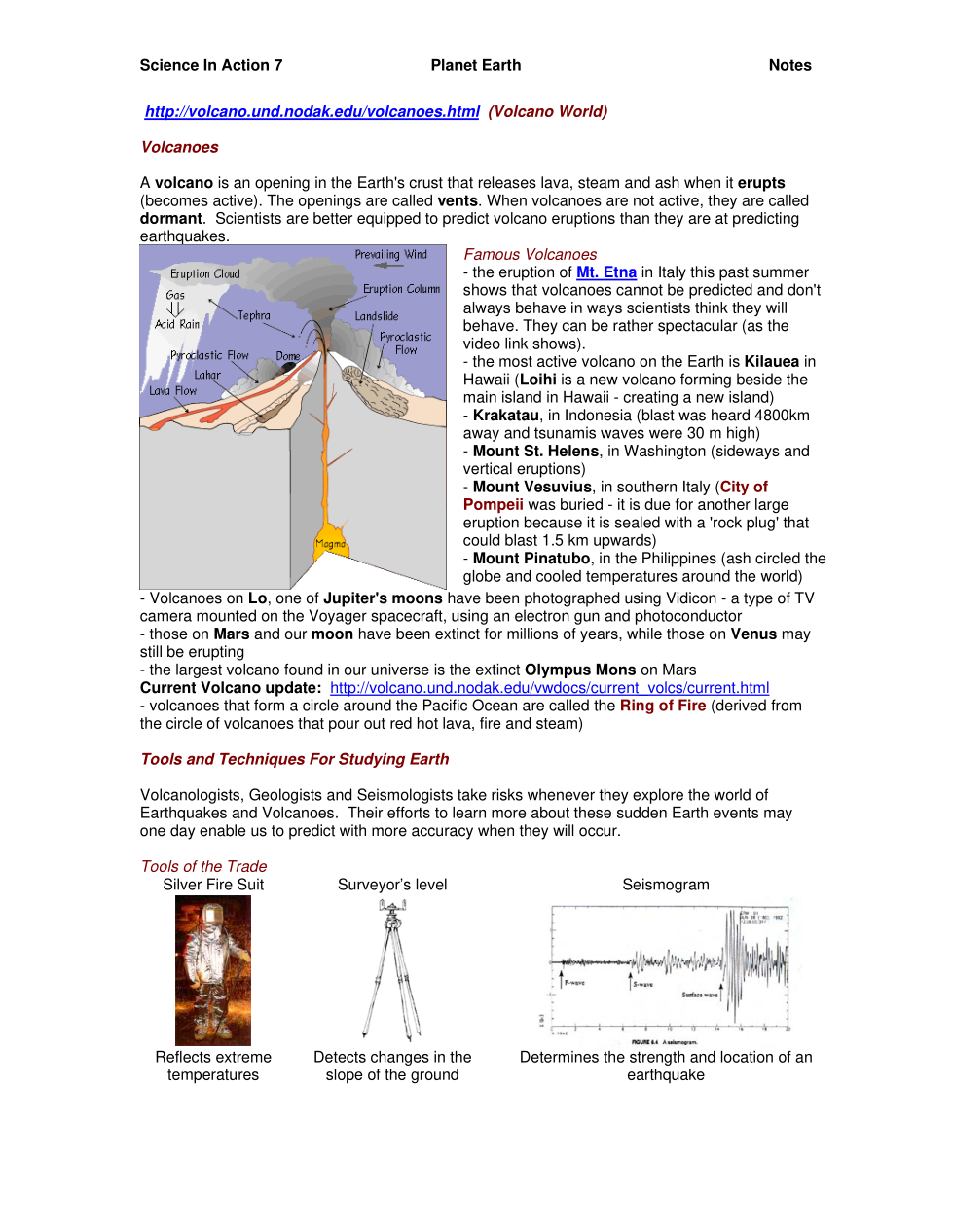
Volcanoes erupt when they become active. Until an eruption occurs, volcanoes are described as ...
There are a number of volcanoes that border the pacific ocean. These volcanoes are known as the Ring
of Fire. The name comes from the fact that these volcanoes erupt with red-hot lava, fire and steam. Most volcanoes in the Ring of fire occur at ...
One of the most dangerous side effects of an erupting volcano is a ...
Mt. St. Helens volcano in Washington was thought to be dormant, until it erupted suddenly and caused
widespread damage. After the eruption, people who lived in Ontario and Quebec had to clean this off
their cars because the prevailing wind carried it that far ...
Volcanoes can cool temperatures around the world. Despite the hot temperatures and the destruction
they can create at the source, the lowering of world temperatures following a volcanic eruption can be
caused by ...
A device that geologists use to measure minute changes in the angle of the ground’s slope is called a ...
Not very many volcanologists use this special suit to study molten lava up close, but those who do are
able to get close enough to the magma flow to make observations, take measurements, or collect gas
and lava samples. This special suit is coated with ...
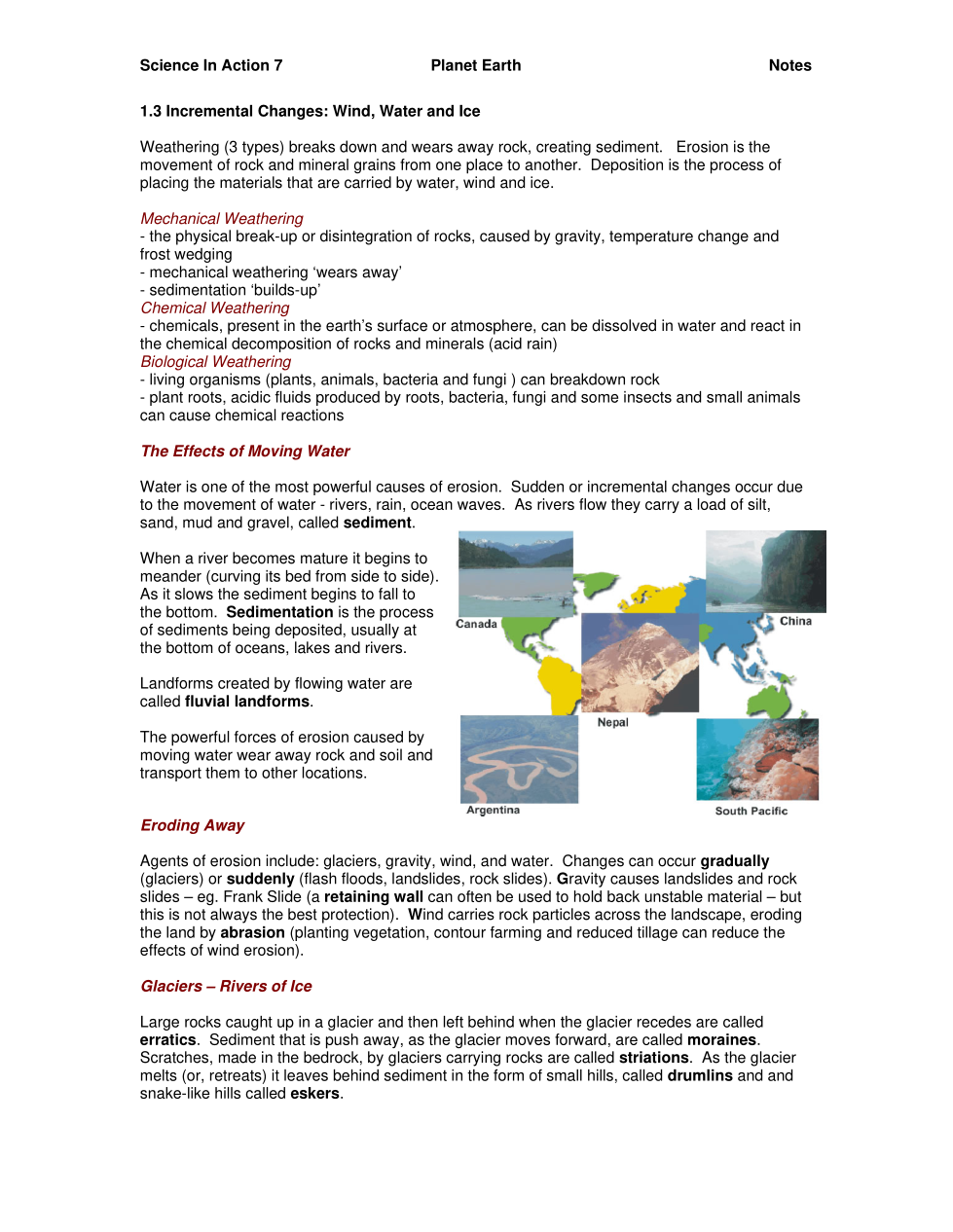
Weathering is the process by which rocks are broken down by means of water, glacial ice, wind and
waves. This process can in three ways. Which way described below is incorrect? ...
Tony found that when he poured water into a crack in a rock sample and froze it, then allowed it to thaw, the crack was actually wider. The type of weathering he investigated was classified as ...
André tested the effects of water on the natural rock samples found in his schoolyard. He tested the rock samples with pure water (pH 6.8), rainwater (pH 4.5) and tap water (pH 6.7). The type of weathering he investigated was classified as ...
On a field trip to the foothills, the class was amazed, when their teacher pointed out a tree growing in a
rock. The roots of the tree had worked their way into the cracks and split the rock in many places. The
type of weathering they observed was classified as ...
The movement of materials from place to place is called ...
Landslides and rock slides can have devastating effects on the landscape. The Frank Slide is one such
example. To study these, scientists are using new technology and sound waves. One of the major forces
besides an earthquake responsible for these types of sudden changes is ...
A science field trip included a stop at the 'Big Rock' in Okotoks. A receding glacier left behind this rock. It
is called ...
Allison and Rachel were investigating the effects of landforms that have been created by the action of
running water. They were told that the Alberta badlands are an example of this type of landform, called ...