AÂ population of panthers live in the southeastern United States. Over 50 years, the size of the panther population in the region increased. What best explains the increase in the size of the panther population?
Question 2
2.
Scientists have been studying the size of three populations along the coast of Antarctica. In this ecosystem, penguins eat sardines (a type of small fish), and sardines eat zooplankton (very small animals that live in water). The data showed that all three populations were stable. Then the penguin population decreased suddenly. What will likely happen to the size of the sardine population as a result
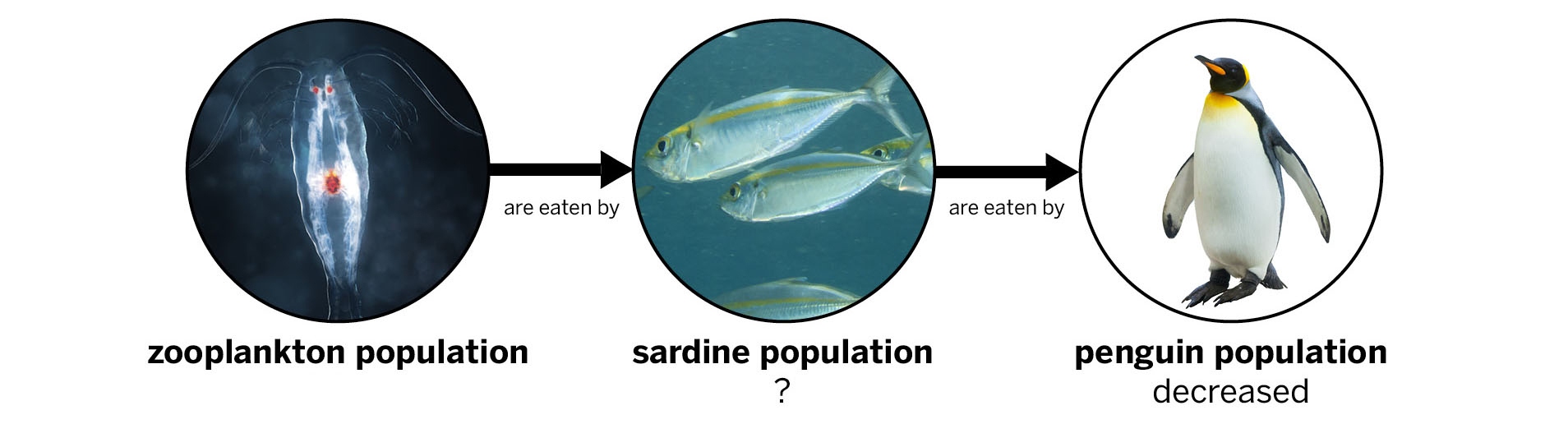
The size of the sardine population will . . .
Question 3
3.
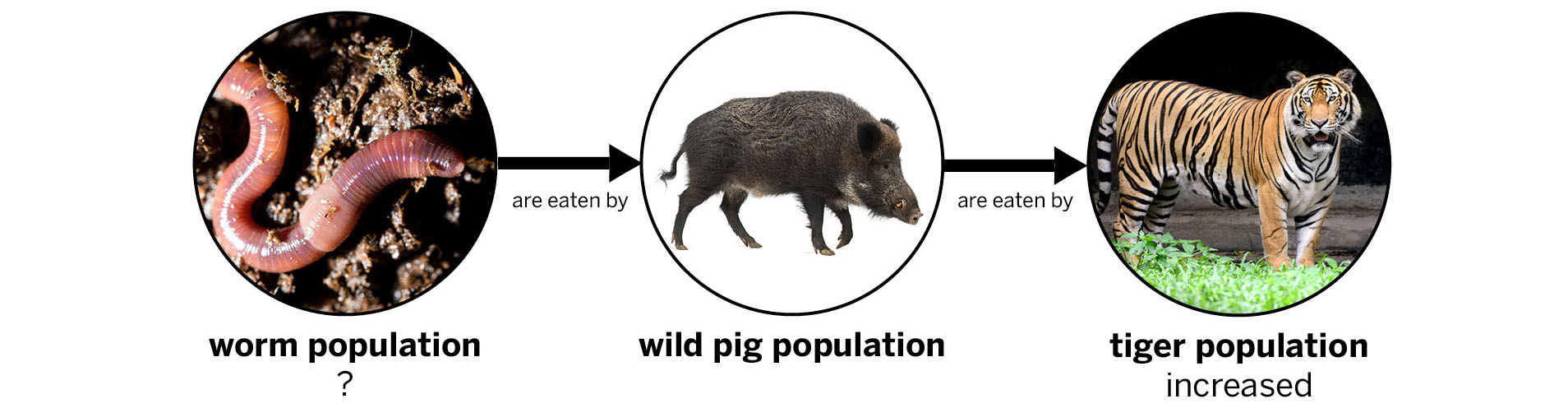
In a mountain region, tigers eat wild pigs, and wild pigs eat worms. In the last 5 years, the sizes of the populations have been stable, but recently the tiger population has increased. What will likely happen to the worm population?
The worm population will . . .
Question 4
4.
What do birds such as eagles and hawks need energy for?
Question 5
5.
AÂ population of deer lives in Canada. Over 50 years, the size of the deer population decreased. What best explains the decrease in the size of the deer population?
Question 6
6.
Scientists have been studying the size of three populations in a grassland. In this ecosystem, hawks (a type of large bird) eat sparrows (a type of small bird), and sparrows eat seeds from buckwheat. The data showed that all three populations were stable. Then the hawk population increased suddenly. What will likely happen to the size of the sparrow population as a result?
The size of the sparrow population will . . .
Question 7
7.
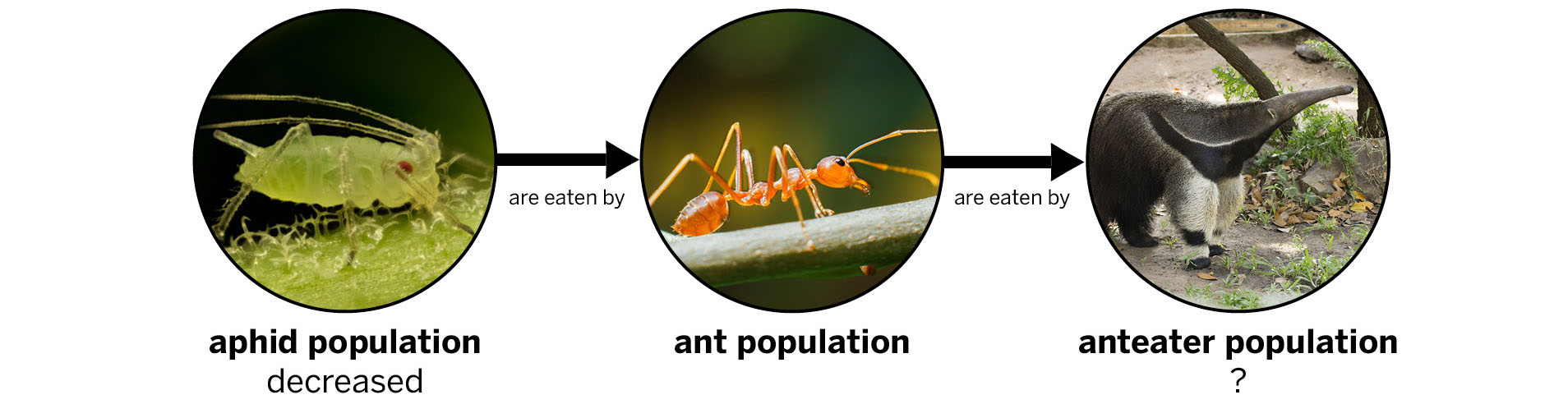
In a rainforest, anteaters eat ants, and ants eat aphids (a type of very small insect). The sizes of the populations have been stable for the last 10 years, but recently the size of the aphid population decreased. What will likely happen to the anteater population?
The size of the anteater population will ...
Question 8
8.
AÂ large population of squirrels lives in a forest. In the last 50 years, the size of the squirrel population has stayed the same. What must be true about the squirrel population during the last 50 years?
Question 9
9.
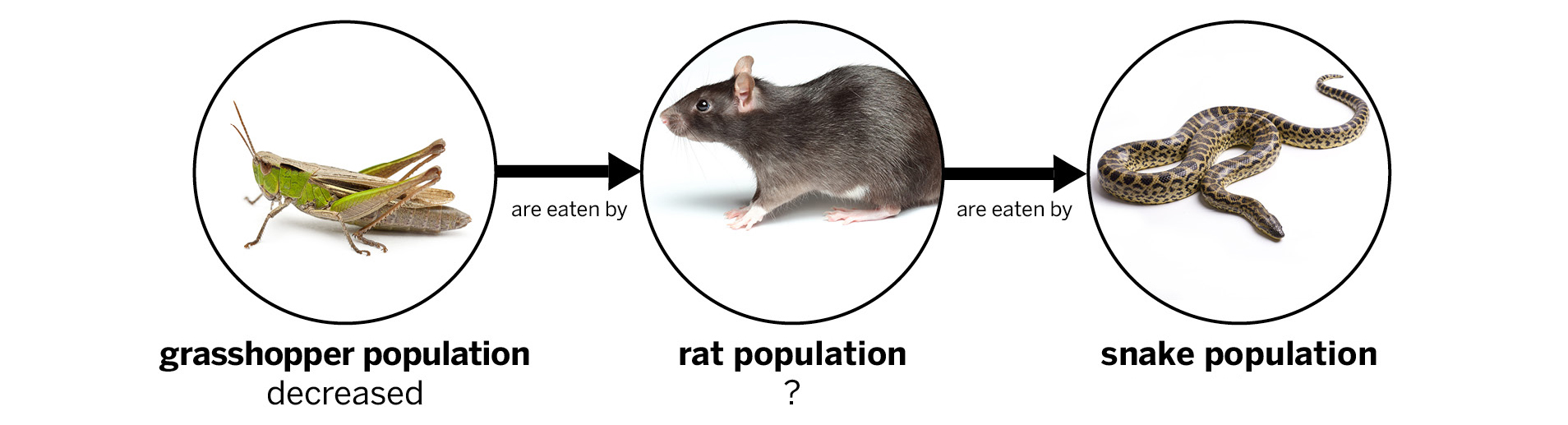
Scientists have been studying the size of three populations in a grassland. In this ecosystem, snakes eat rats, and rats eat grasshoppers. The data showed that all three populations were stable. Then the grasshopper population decreased suddenly. What will likely happen to the size of the rat population as a result?
The size of the rat population will . . .
Question 10
10.
In the northwestern United States, both coyotes and wolves eat deer. The sizes of the populations have been stable for the last 6 years, but recently the size of the wolf population increased. What will likely happen to the coyote population?
The size of the coyote population will . . .
Question 11
11.
What do mammals like tigers and zebras need energy for?
Question 12
12.
AÂ population of sharks lives in the Atlantic Ocean. Over the last 50 years, the size of the shark population increased. What best explains the increase in the size of the shark population?
Question 13
13.
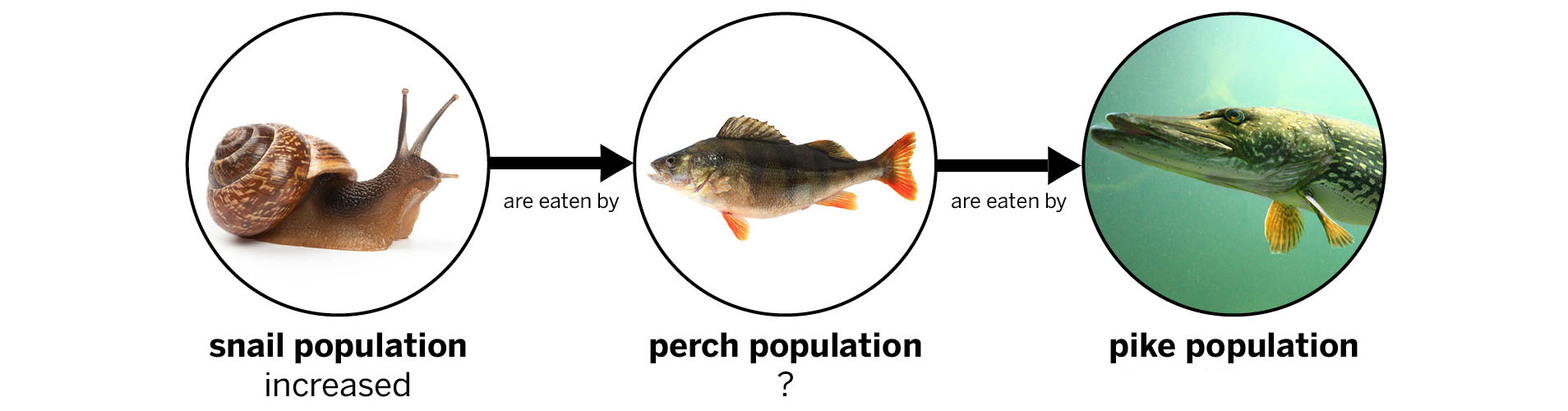
Scientists have been studying the size of three populations in a river in Ireland. In this ecosystem, pike (a type of big fish) eat perch (a type of small fish), and perch eat snails. The data showed that all three populations were stable. Then the snail population increased suddenly. What will likely happen to the size of the perch population as a result?
The size of the perch population will . . .
Question 14
14.
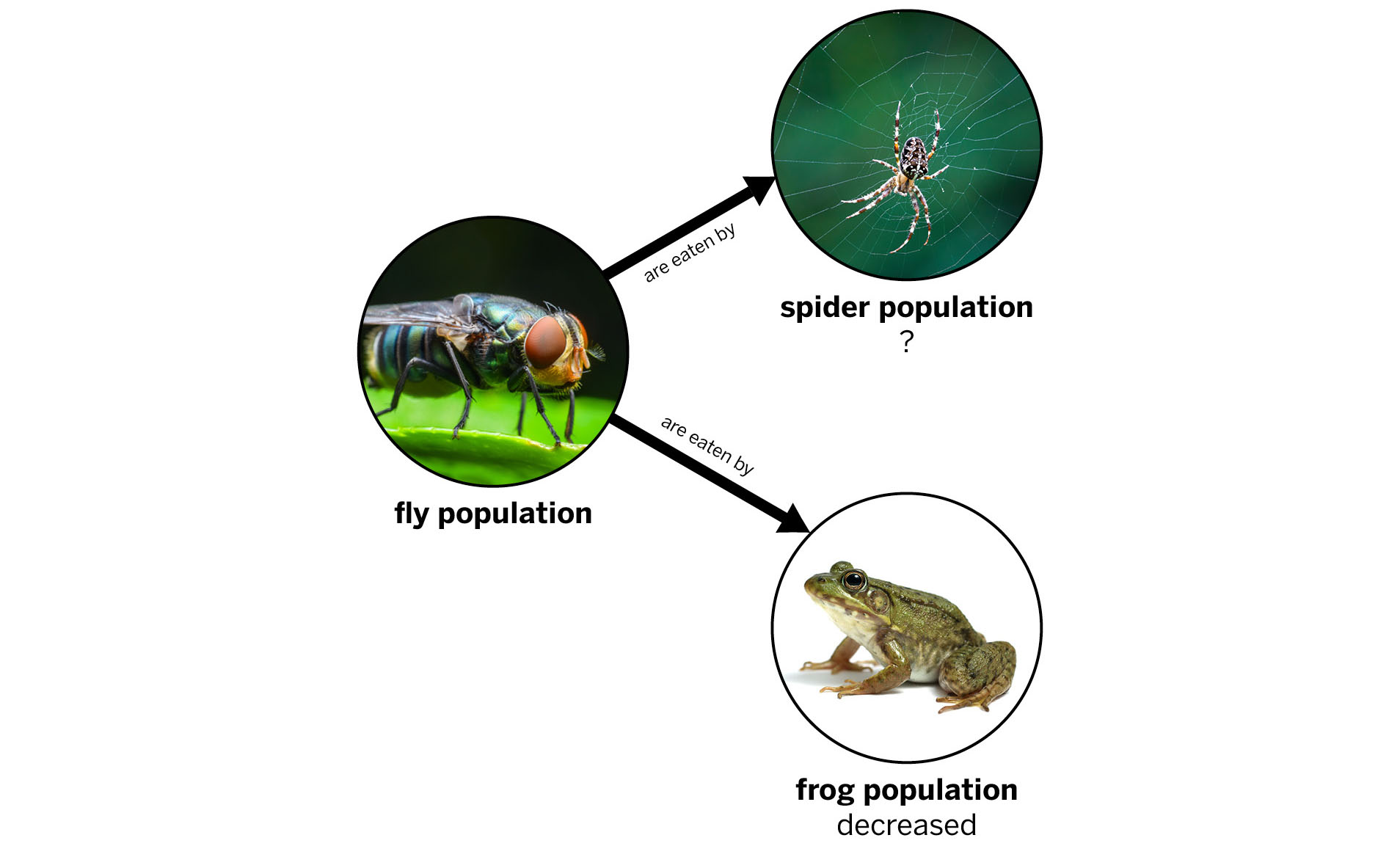
In a rainforest, both spiders and frogs eat flies. The sizes of the populations have been stable for the last 10 years, but recently the size of the frog population decreased. What will likely happen to the spider population?
The size of the spider population will . . .
Question 15
15.
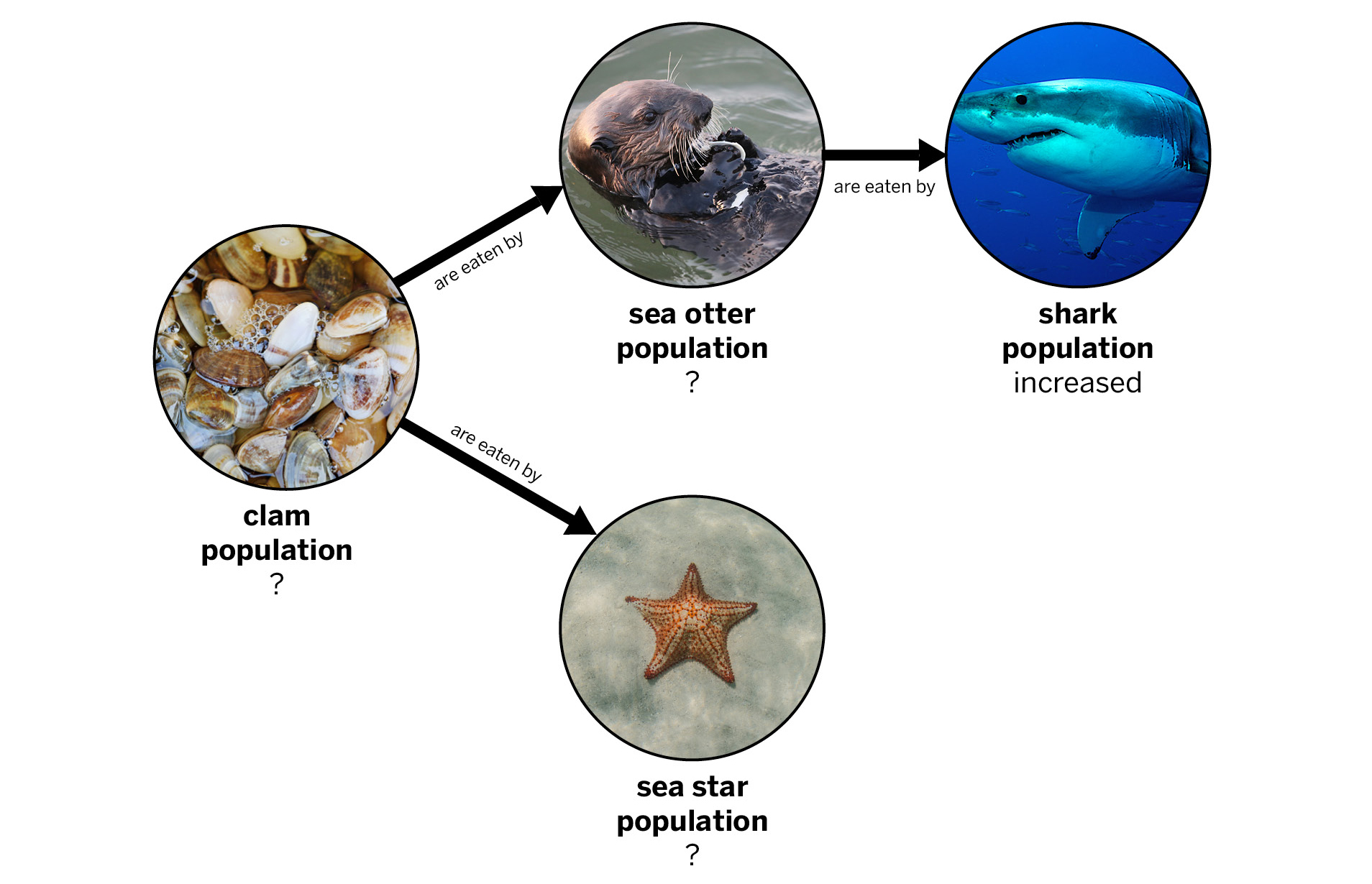
Scientists have been studying four populations in the ocean near Alaska. In the ocean, sharks eat sea otters, and both sea otters and sea stars eat clams (a type of shellfish).
The data shows that recently the shark population increased. How will the increase in the shark population affect the other populations? Be sure to explain whether the sea otter population, the sea star population, and the clam population will change, and why.
Question 16
16.
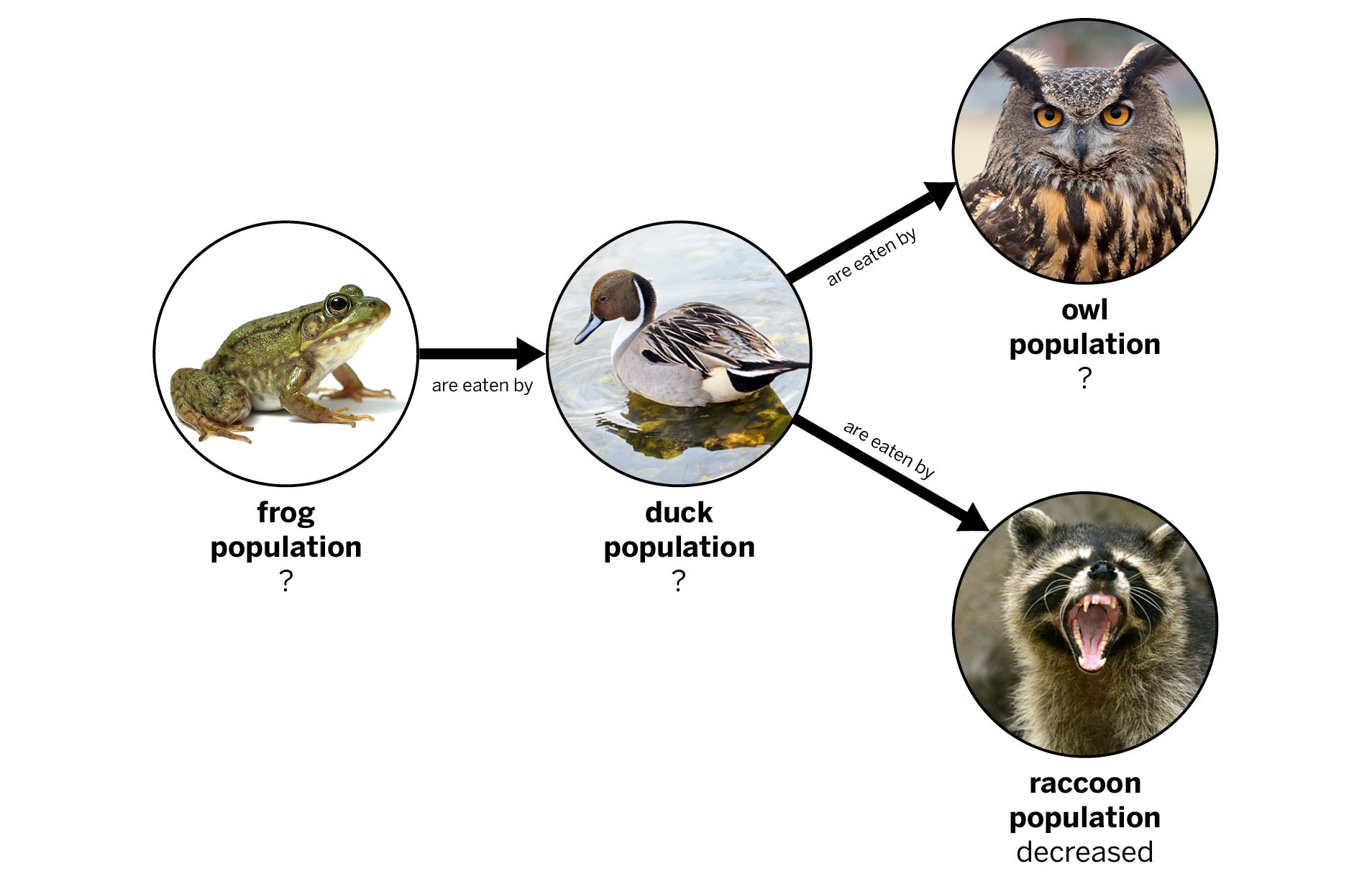
Scientists are studying animals in a large lake area. In this lake area, both owls and raccoons eat ducks, and ducks eat frogs.
The data shows that recently the size of the raccoon population decreased. How will the decrease in the raccoon population affect the other populations? Be sure to explain whether the owl population, the duck population, and the frog population will change, and why.