What trend does the NASA graph above show?
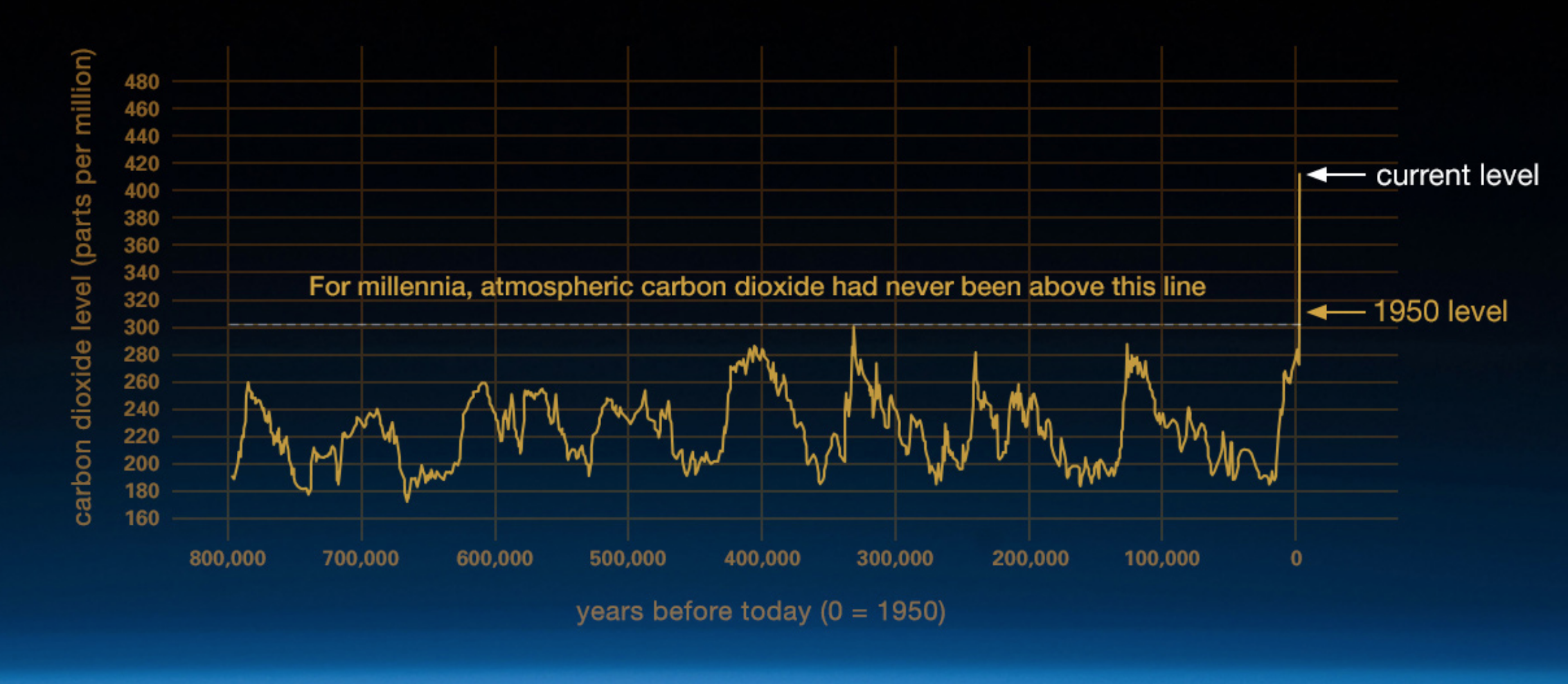
What trend does the NASA graph above show?
What trend does the NASA graph above show?
From the NASA (2020) research project: Global Temperature Change- "The planet's average surface temperature has risen about 1.62 degrees Fahrenheit (0.9 degrees Celsius) since the late 19th century, a change driven largely by increased carbon dioxide and other human-made emissions into the atmosphere. Most of the warming occurred in the past 35 years, with the five warmest years on record taking place since 2010. Not only was 2016 the warmest year on record, but eight of the 12 months that make up the year — from January through September, with the exception of June — were the warmest on record for those respective months,".
What could be potential consequences of increased global temperature?
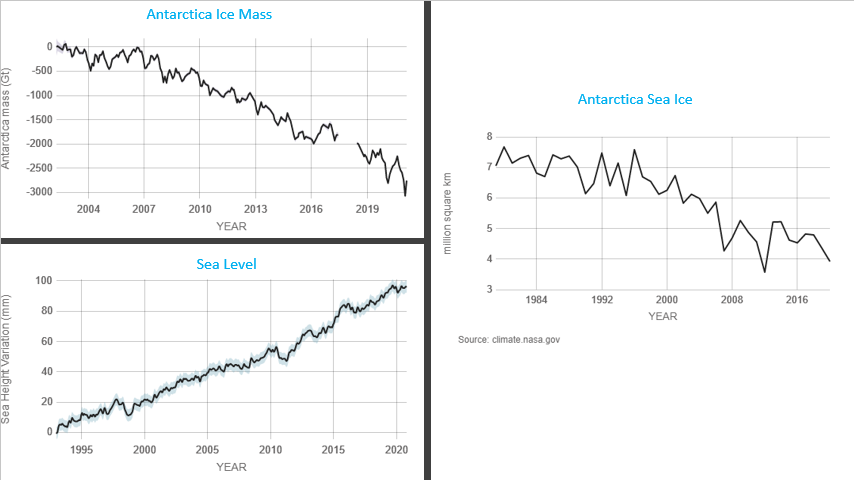
Ice Sheets Melting- "The Greenland and Antarctic ice sheets have decreased in mass. Data from NASA's Gravity Recovery and Climate Experiment show Greenland lost an average of 286 billion tons of ice per year between 1993 and 2016, while Antarctica lost about 127 billion tons of ice per year during the same time period. The rate of Antarctica ice mass loss has tripled in the last decade," (NASA, 2020).
Sea Level Rising- "Global sea level rose about 8 inches in the last century. The rate in the last two decades, however, is nearly double that of the last century and is accelerating slightly every year," (NASA, 2020).Based on the data above about ice melting and sea level increasing, it's fair to infer that melting ice sheets may be a cause of sea level rising.
Where on Earth and which season is experiencing the greatest warming?

Using your graph reading skills, watch the animation. Based on this animated graph, what factor corresponds closely to the increase in Earth's average temperature since 1880?
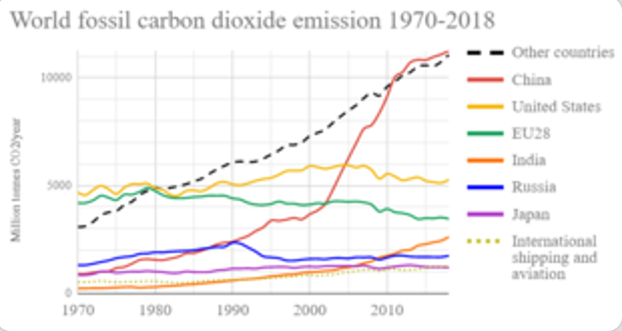
Why are China and India's carbon dioxide emissions increasing? (Select all that apply)
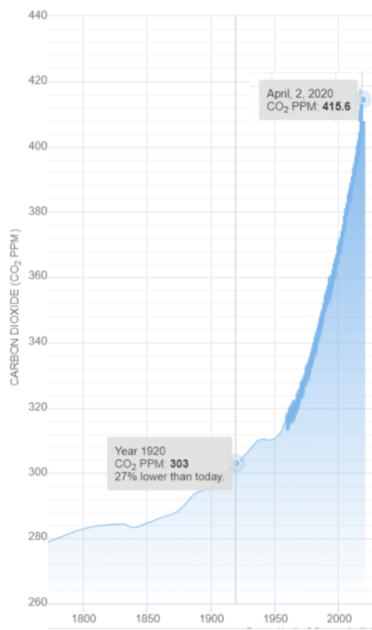
What conclusions could you develop based on the above graph?
What is one specific piece of evidence (from any one of the following charts) that the atmosphere is warming up? State which chart you are using and the answer must compare years and give an approximate numerical number.
Example: In the Antarctica Sea Ice chart one piece of evidence is that the sea ice has decreased between the year 2000 to 2016 by approximately 1.2 million square miles.
Based on the above graph, is the increase in the 11 year average of Earth's temperature since 1960 likely due to solar activity.

Which of the following are examples of climate, not weather? Select all that apply.
Without the greenhouse effect, Earth would be _________ to support life.
Which of the following might help reverse the impact of increased atmospheric CO2? Select all that apply.
Which of the following is NOT evidence of global warming? Select all that apply
Based on this graph, the Keeling Curve, recorded at the UCSD station on the Mauna Loa volcano in Hawaii, what inferences can you draw?

Which of the following is NOT a reason that scientists are worried about climate change?