Learning Goal: I can evaluate competing design solutions to determine how well they meet the criteria and constraints of the problem and then construct a prototype of my design solution .
"What if I don't know how to build a car?" you might be asking. Engineers don't start from zero when they design a new project. They study how people have solved this problem in the past as inspiration and borrow those ideas that work best for their criteria and constraints. Today we'll do just that!
Before we start, let's double check that you understand two terms: potential and kinetic energy...
(watch the video if you missed it in class)
1 point
1
Question 1
1.
After watching the video, sort the examples below: potential or kinetic energy?
Energy stored in an object
Energy of an object's motion
Roller coaster going down a hill
Roller coaster at the top of a hill
Spring being pulled or pushed
Mouse trap snapping shut
Potential Energy
Kinetic Energy
Okay, now let's look at four different examples. We'll go through the first two all together, then you'll work on the next two solo.
Example 1. Balloon Car
1 point
1
Question 2
2.
How did this car store potential energy?
1 point
1
Question 3
3.
How did this car convert the potential (stored) energy into kinetic energy (motion)? Another way to say this question: what made the car go?
2 points
2
Question 4
4.
Describe two things about this car that you think worked well.
1 point
1
Question 5
5.
One thing about this car that would not work for my project is...because... (think about the criteria and constraints).
Example #2: Rubberband Racer
1 point
1
Question 6
6.
How did this car store potential energy?
1 point
1
Question 7
7.
How did this car convert the potential energy into kinetic energy? (What made the car go?)
2 points
2
Question 8
8.
Describe two things about this car that you think worked well.
1 point
1
Question 9
9.
One thing about this car that would not work for my project is...because...
Example #3: Propeller Car
1 point
1
Question 10
10.
How did this car store energy?
1 point
1
Question 11
11.
How did this car convert stored (potential) energy into kinetic energy (motion)?
2 points
2
Question 12
12.
Describe two things about this car that you think worked well.
1 point
1
Question 13
13.
One thing about this car that would not work for my project is...because...
Example #4: CD-mobile
1 point
1
Question 14
14.
How did this car store potential energy?
1 point
1
Question 15
15.
How did this car convert stored (potential) energy into kinetic energy (motion)?
3 points
3
Question 16
16.
Describe two things about this car that you think worked well.
3 points
3
Question 17
17.
One thing about this car that would not work for my project is...because...
1 point
1
Question 18
18.
Time to come up with at least one initial blueprint idea.
1. Draw a picture on paper of what your car might look like. Are you drawing a top view, side view, or both? (You may also use the whiteboard tool).
2. Describe what materials you will use - add labels or write below.
3. Add a few measurements - about how big will the car be in cm?
4. Take a photo of your work by clicking "edit background" --> "image" --> "take photo."
Save your drawing in case you want to modify it later!
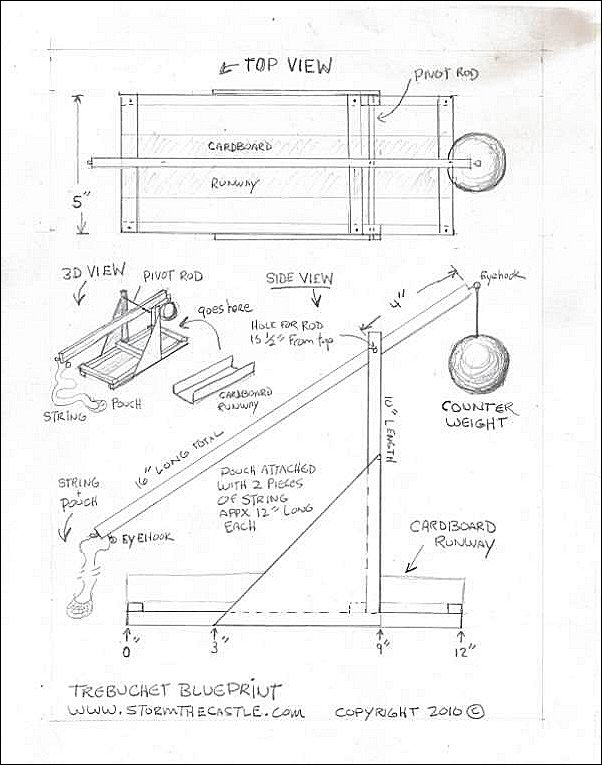
Here's a picture of a great blueprint to guide what your work might look like! (This is a trebuchet, not a car, but what details do you notice that make it clear?)
1 point
1
Question 19
19.
If you have time - draw a second idea for a car design below! What else could you try?
1 point
1
Question 20
20.
Materials to gather. We'll be learning more and building next week. So, make a list for yourself of what you'll need to make your ideas a reality. Do you really want some CDs? An empty water bottle? Scissors? Tape? Think about whether you will be at school or at home next week.