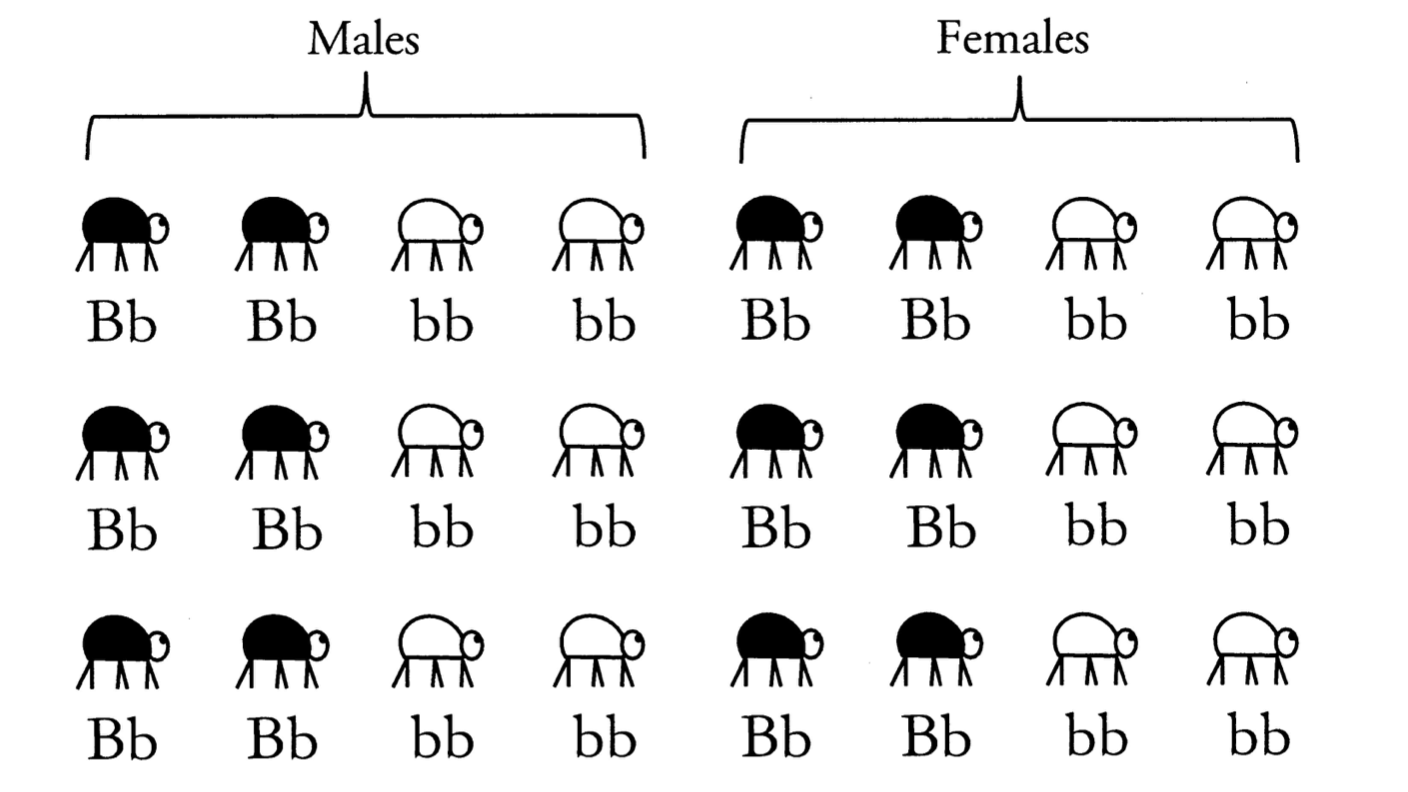
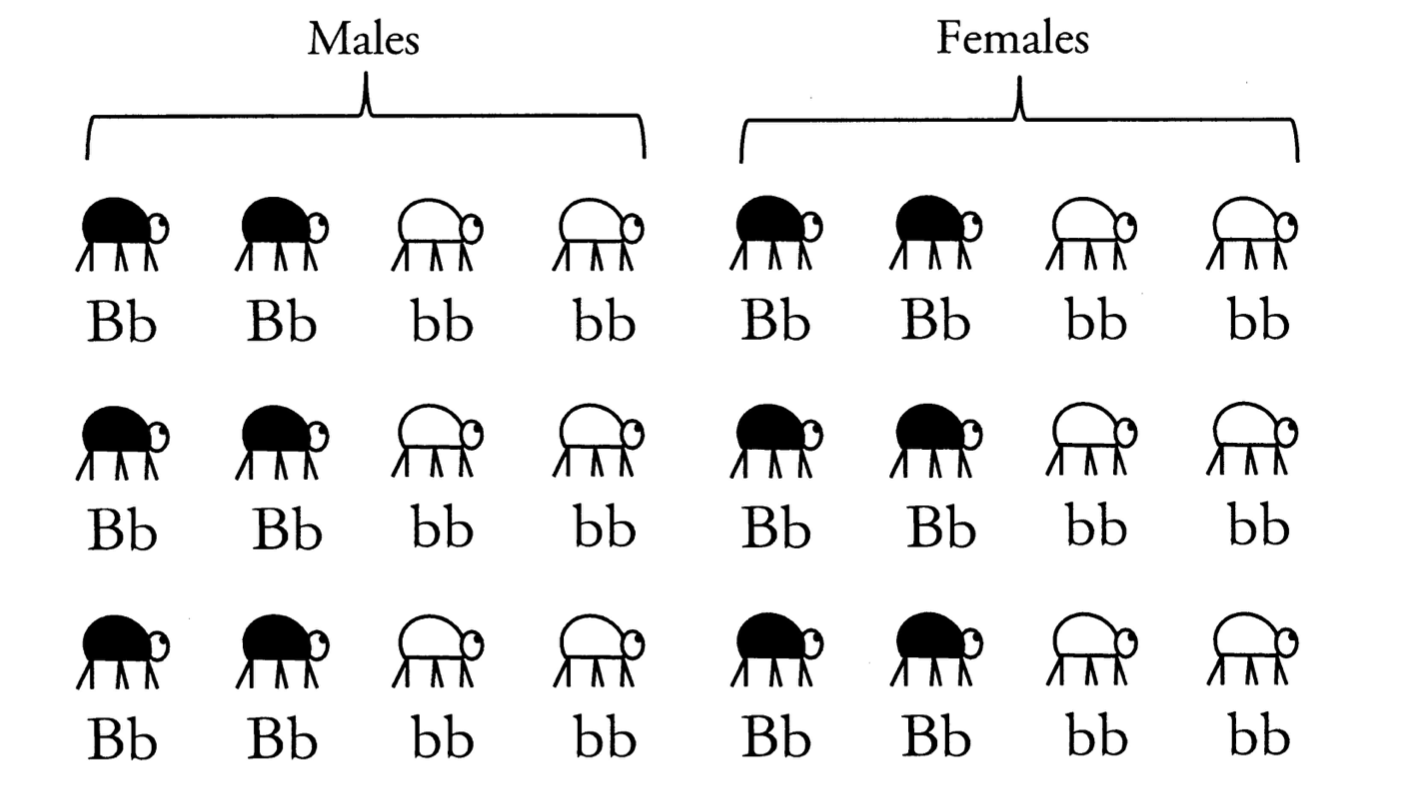
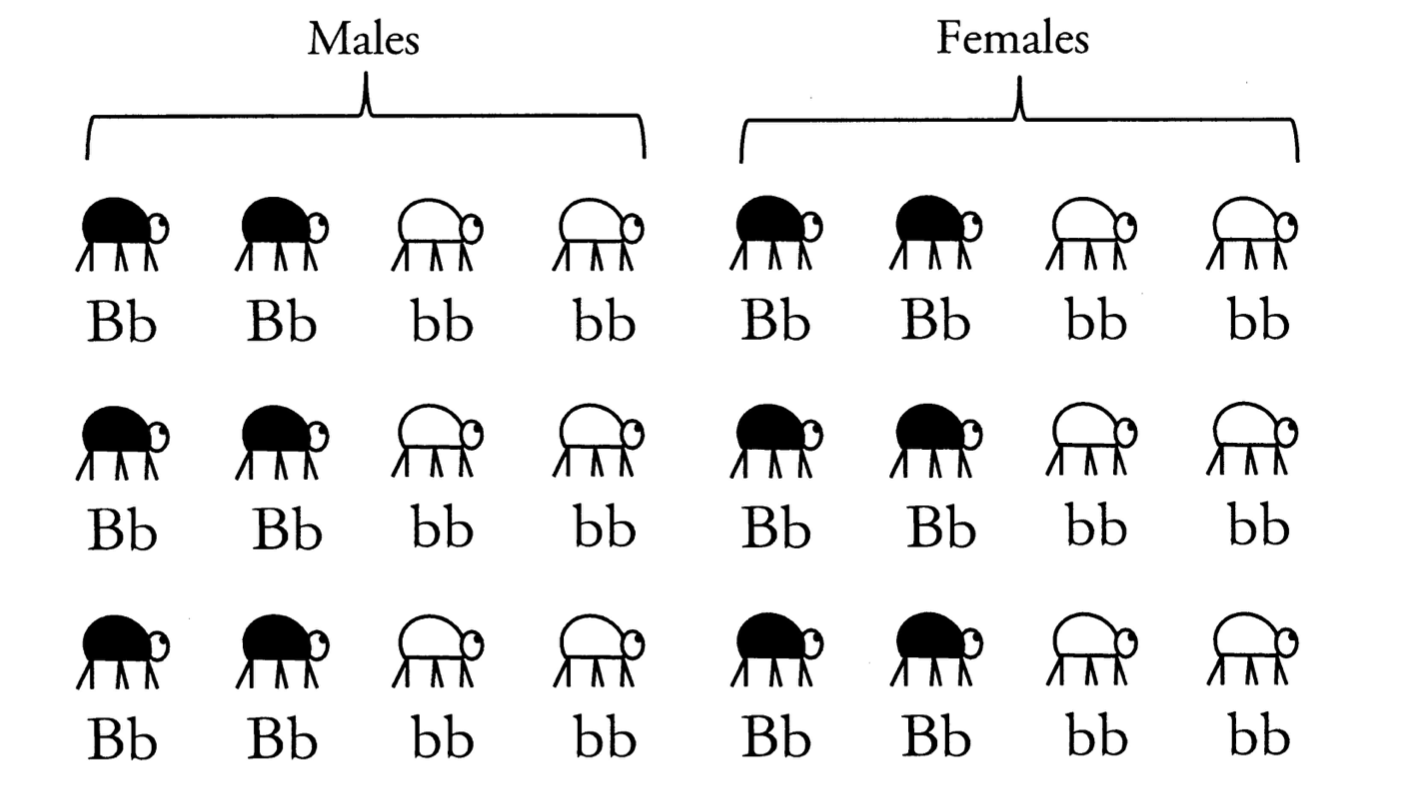
Total number of alleles in population =
Total number of alleles in population =
Total number of alleles in population =
Probability of dominant allele (decimal) =
Probability of recessive allele (decimal) =
Calculating Allele Frequencies - p + q = 1
| Draggable item | arrow_right_alt | Corresponding Item |
|---|---|---|
q = | arrow_right_alt | .25 |
p is the | arrow_right_alt | .75 |
p + q = 1 | arrow_right_alt | 1 |
q is the | arrow_right_alt | dominant allele |
p + q = | arrow_right_alt | recessive allele |
p = | arrow_right_alt | is used to figure out allele frequencies |
Calculating Genotypes Frequencies - p2 + 2pq + q2 = 1
| Draggable item | arrow_right_alt | Corresponding Item |
|---|---|---|
p2 = (percent) | arrow_right_alt | .0625 |
BB = (decimal) | arrow_right_alt | .563 |
p2 + 2pq + q2 = 1 is used to figure out... | arrow_right_alt | .376 |
q2 = (percent) | arrow_right_alt | 6.25% |
Bb = (decimal) | arrow_right_alt | 37.6% |
2pq = (percent) | arrow_right_alt | 56.3% |
bb = (decimal) | arrow_right_alt | genotype frequencies |
Hardy Weinberg Equilibrium - link - more help (Bozeman)
Sickle Cell Disease - starting population = total = 60 people; 15 homozygous dominant (HbA/HbA), 30 heterozygous (HbA/HbS), 15 homozygous recessive (HbS/HbS). Check the data table below to make sure you understand the data.
Go to https://www.biologysimulations.com/population-genetics. Set everything to what you see here... The red alleles is the A frequency and the Blue allele is the S frequency on the chart.
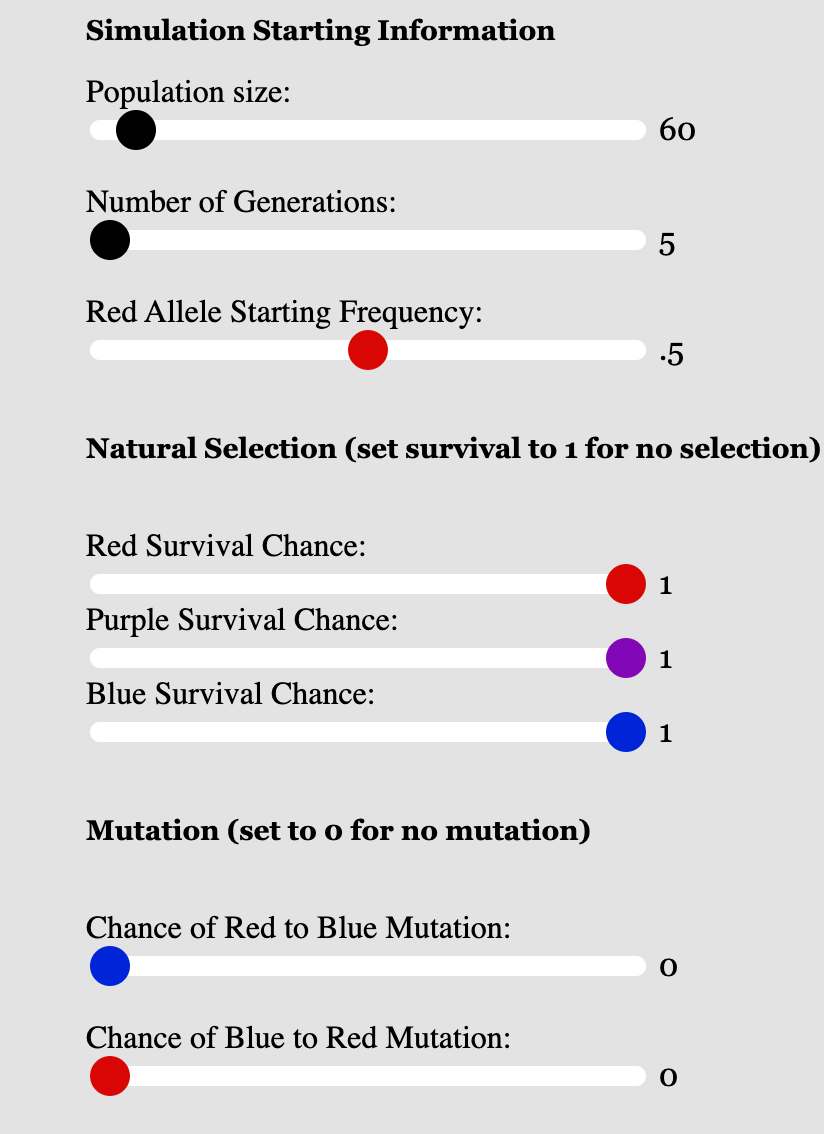
Simulation 1 - In this sim the allele frequencies are both .5, the starting population is as the data table above sets up and their is no selective advantage for any genotype. Run the sim 5x for 5 generations (the smallest possible), recording the final allele frequencies for each sim on your own separate data table. Take the mean of the 5 allele frequencies that you recorded and record in the 1.2 data table here
For simulation 1, is evolution occuring? How do you know? If so, which of the five fingers is acting to cause evolutionary change? What would you have to do to bring this population into Hardy Weinberg equilibrium?
Simulation 2 - 100% negative selection against sickle cell anemia - HbS/HbS - set up as you see below - then run the sim 5x for 5 generations (the smallest possible), recording the final allele frequencies for each sim on your own separate data table. Take the mean of the 5 allele frequencies that you recorded and record in the 2.1 data table here

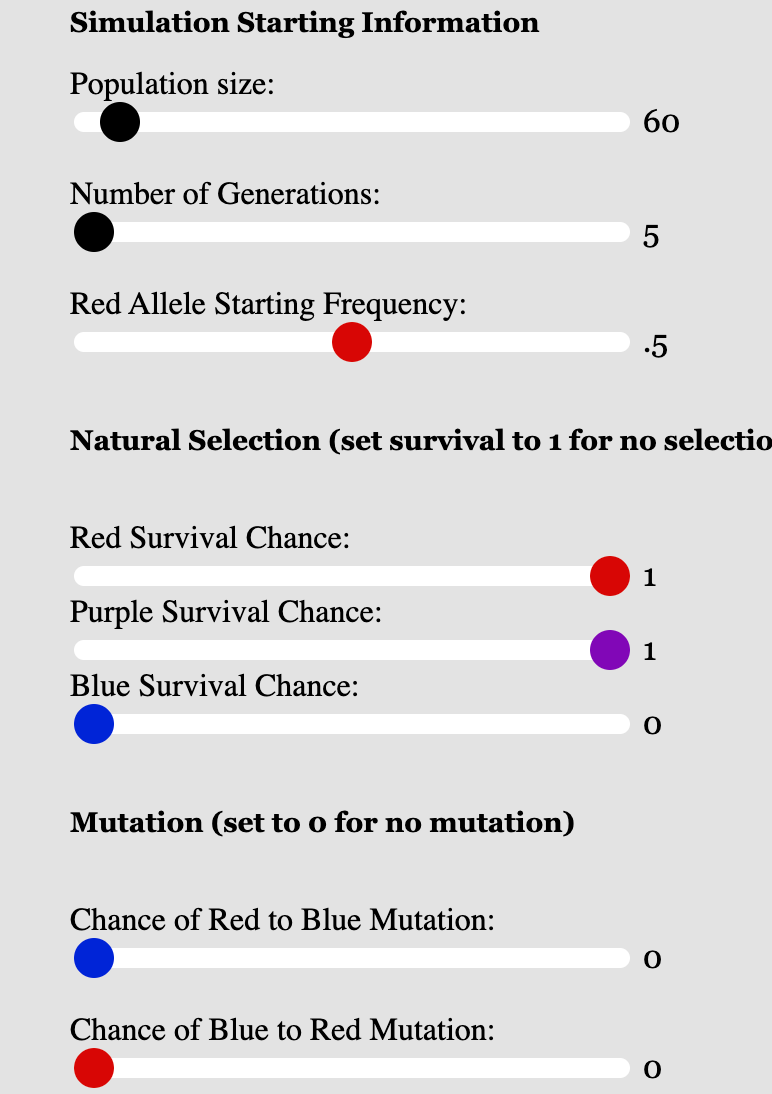
Sim 2 Generation 2 - Repeat the same 100% negative selection continuing from where you left off in table 2.1 - So type your 2.1 genotype frequencies into the sim and run the sim 5x for 5 generations (the smallest possible), recording the final allele frequencies for each sim on your own separate data table. Take the mean of the 5 allele frequencies that you recorded and record in the 2.2 data table here
For simulation 2 (both parts), is evolution occuring? How do you know? If so, which of the five fingers is acting to cause evolutionary change? What would you have to do to bring this population into Hardy Weinberg equilibrium?
Heterozygote Advantage - Sim 3 will model the heterozygote advantage - set the sim as you see below - run the sim 5x for 5 generations (the smallest possible), recording the final allele frequencies for each sim on your own separate data table. Take the mean of the 5 allele frequencies that you recorded and record in the 3.1 data table here
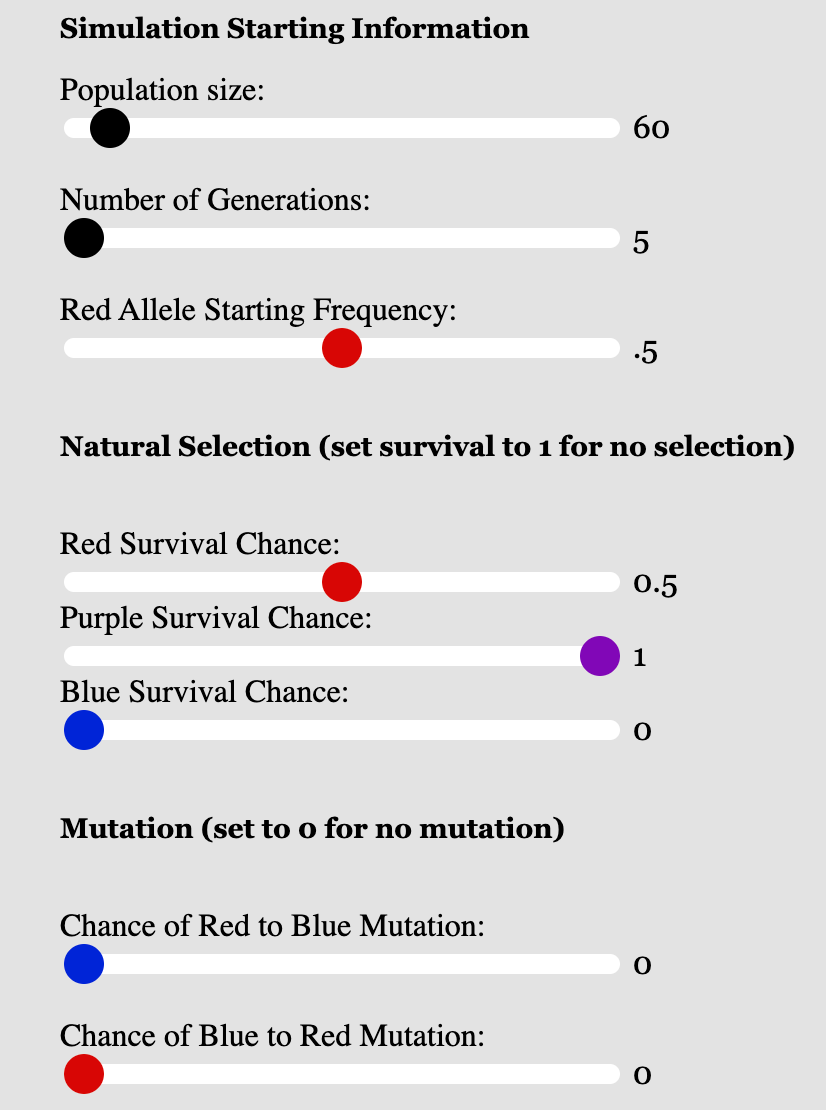
Sim 3 Generation 2 - Repeat the same 100% negative selection ALONG WITH the 50% selections AGAINST AA (heterozygote advantage) continuing from where you left off in table 3.1 - So type your 3.1 genotype frequencies into the sim and run the sim 5x for 5 generations (the smallest possible), recording the final allele frequencies for each sim on your own separate data table. Take the mean of the 5 allele frequencies that you recorded and record in the 3.2 data table here
For simulation 3 (both parts), is evolution occuring? How do you know? If so, which of the five fingers is acting to cause evolutionary change? What would you have to do to bring this population into Hardy Weinberg equilibrium?
What simulation might represent a population of people of African descent living in the Minnesota OR a population of Africans living in the DRY highlands of Africa? Explain!
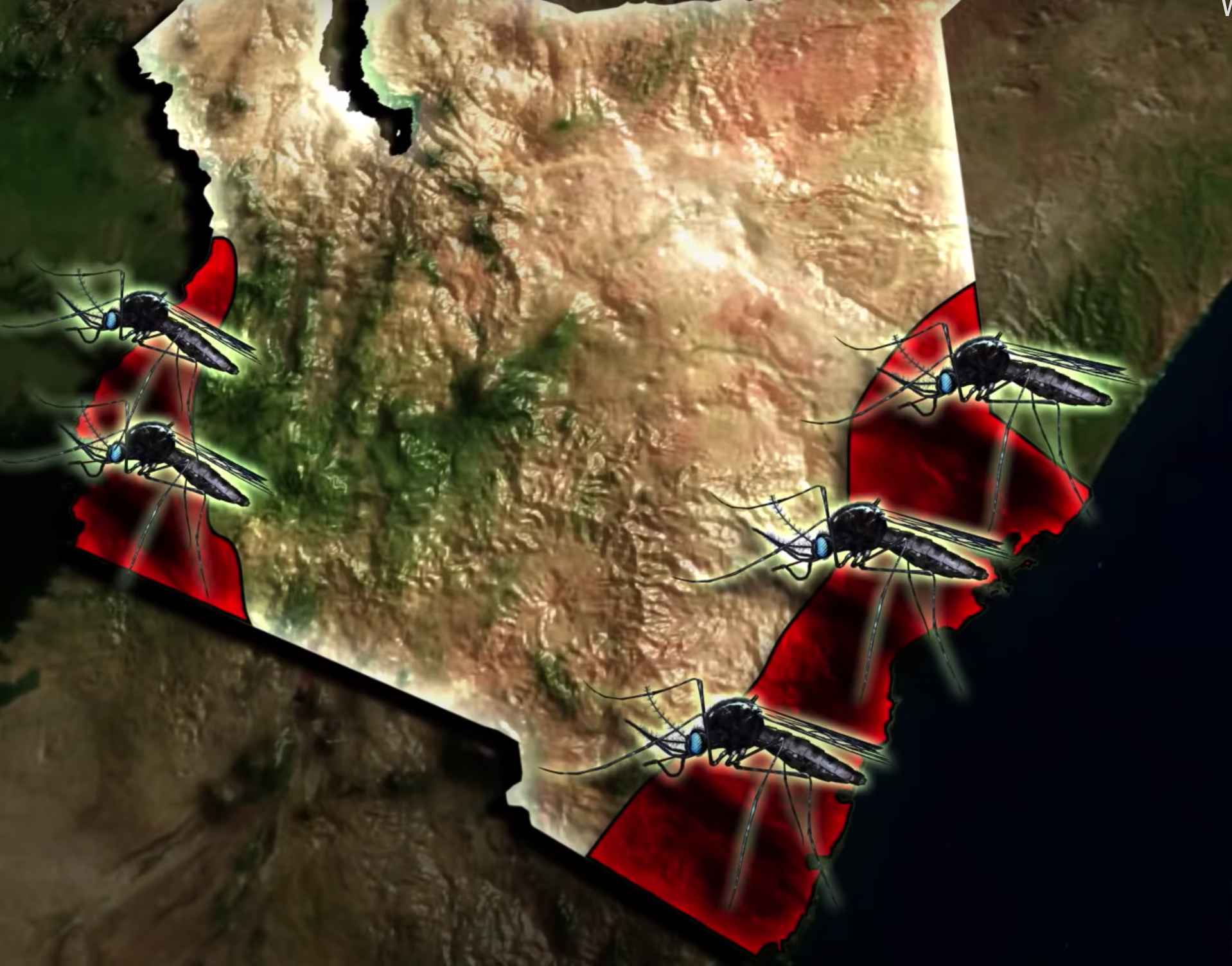
What simulation might represent a population of people living in the moist lowlands of East Africa? Explain!
Explain how CRISPR is being used to cure sickle cell anemia
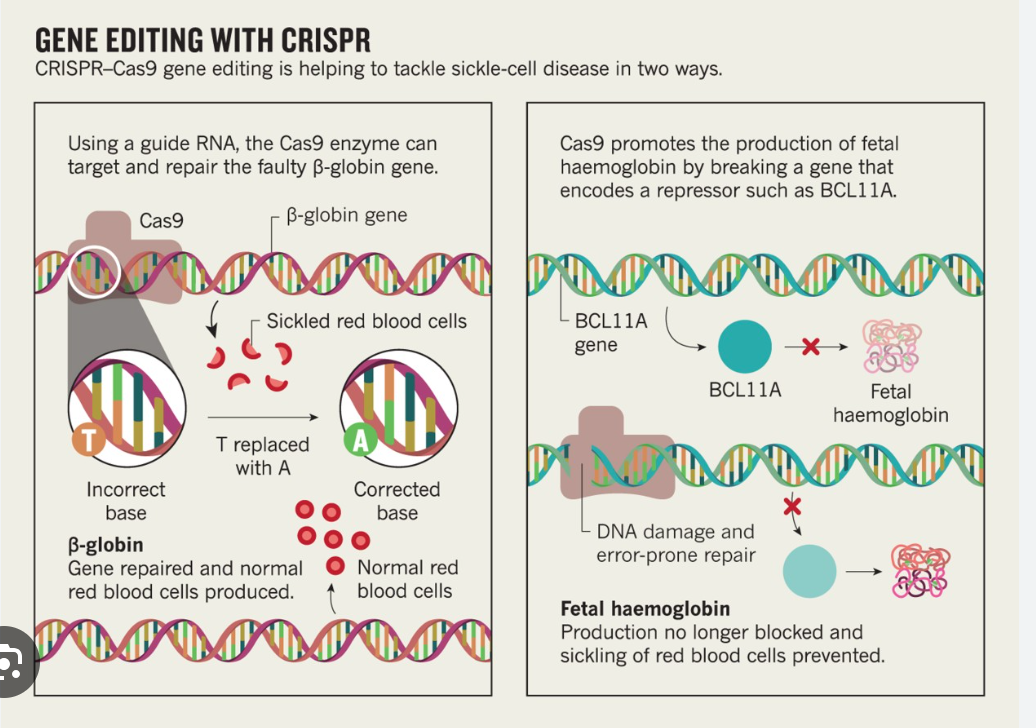
What is different about this new treatment for SCD?
The discovery of CRISPR - Cas9 sequences in bacterial DNA represented the discovery of a type of bacterial ....
If a bacterium survives a viral infection, it will ...
If a bacterium has a CRISPR sequence that matches a new infection, it will
What was different about this DNA cutting system?
Not only can this system cut DNA specifically, but ....
BCL11A is a gene that makes a transcription factor that ....
What is done to the BCL11A gene?
What were the results of this procedure?
What is different about CRISPR compared to earlier gene therapy procedures?