LNM1 Chapter 11: Dē Dīdōne Rēgīnā
star
star
star
star
star
Last updated almost 4 years ago
69 Nsɛmmisa
1
2
2
1
1
1
1
1
2
1
1
1
1
1
3
3
3
1
4
1
1
1
1
1
1
1
1
1
2
1
1
1
2
2
2
1
3
1
3
1
2
1
1
1
1
1
1
1
2
1
1
1
1
1
2
1
3
2
1
1
4
1
1
1
1
1
1
1
1
Identify the verb/s in the following sentence:
Identify the nominative noun/s in the following sentence:
Identify the ablative noun/s in the following sentence:
Translate the following sentence:
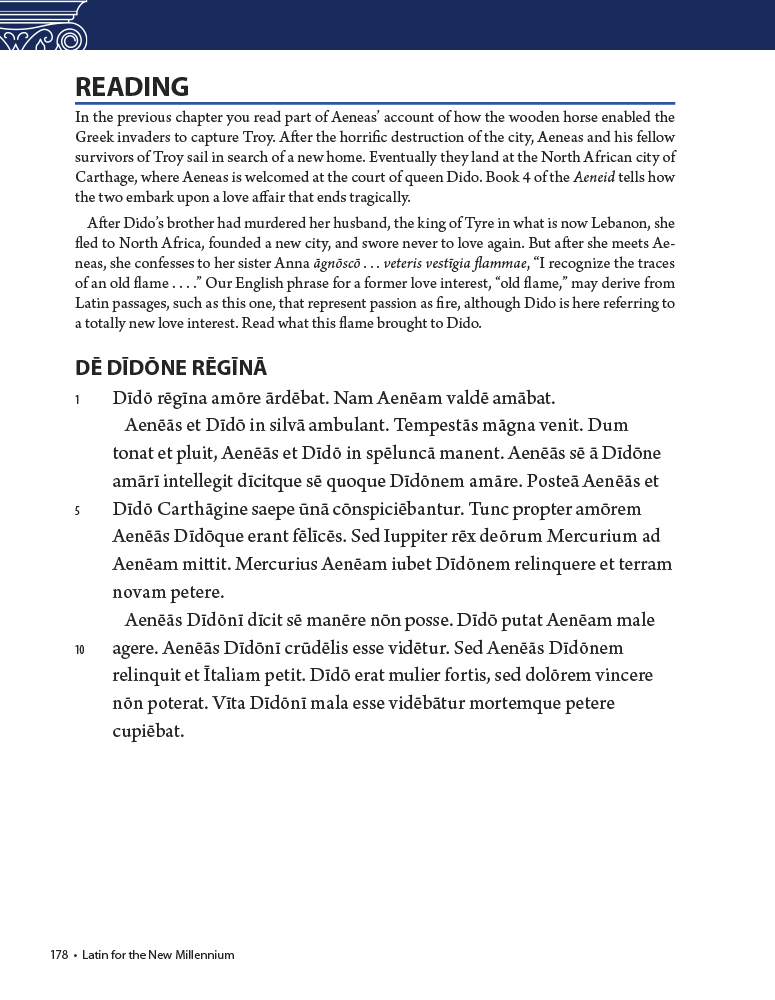
Dīdō rēgīna amōre ārdēbat.
Identify the verb/s in the following sentence:
Identify the accusative noun/s in the following sentence:
Translate the following sentence:
Nam Aenēam valdē amābat.
Identify the verb/s in the following sentence:
Identify the nominative noun/s in the following sentence:
Identify the ablative noun/s in the following sentence:
Translate the following sentence:
Aenēās et Dīdō in silvā ambulant.
Identify the verb/s in the following sentence:
Identify the nominative noun/s in the following sentence:
Translate the following sentence:
Tempestās māgna venit.
Identify the verb/s in the following sentence:
Identify the nominative noun/s in the following sentence:
Identify the ablative noun/s in the following sentence:
Translate the following sentence:
Dum tonat et pluit, Aenēās et Dīdō in spēluncā manent.
Identify the verb/s in the following sentence:
Identify the nominative noun/s in the following sentence:
Identify the accusative noun/s in the following sentence:
Identify the ablative noun/s in the following sentence:
Translate the following sentence:
Aenēās sē ā Dīdōne amārī intellegit dīcitque sē quoque Dīdōnem amāre.
Identify the verb/s in the following sentence:
Identify the nominative noun/s in the following sentence:
Identify the ablative noun/s in the following sentence:
Translate the following sentence:
Posteā Aenēās et Dīdō Carthāgine saepe ūnā cōnspiciēbantur.
Identify the verb/s in the following sentence:
Identify the nominative noun/s in the following sentence:
Identify the accusative noun/s in the following sentence:
Translate the following sentence:
Tunc propter amōrem Aenēās Dīdōque erant fēlīcēs.
Identify the verb/s in the following sentence:
Identify the nominative noun/s in the following sentence:
Identify the accusative noun/s in the following sentence:
Identify the genitive noun/s in the following sentence:
Translate the following sentence:
Sed Iuppiter rēx deōrum Mercurium ad Aenēam mittit.
Identify the verb/s in the following sentence:
Identify the nominative noun/s in the following sentence:
Identify the accusative noun/s in the following sentence:
Translate the following sentence:
Mercurius Aenēam iubet Dīdōnem relinquere et terram novam petere.
Identify the verb/s in the following sentence:
Identify the nominative noun/s in the following sentence:
Identify the dative noun/s in the following sentence:
Translate the following sentence:
Aenēās Dīdōnī dicit sē manēre nōn posse.
Identify the verb/s in the following sentence:
Identify the nominative noun/s in the following sentence:
Identify the accusative noun/s in the following sentence:
Translate the following sentence:
Dīdō putat Aenēam male agere.
Identify the verb/s in the following sentence:
Identify the nominative noun/s in the following sentence:
Identify the dative noun/s in the following sentence:
Translate the following sentence:
Aenēās Dīdōnī crūdēlis esse vidētur.
Identify the verb/s in the following sentence:
Identify the nominative noun/s in the following sentence:
Identify the accusative noun/s in the following sentence:
Translate the following sentence:
Sed Aenēās Dīdōnem relinquit et Ītaliam petit.
Identify the verb/s in the following sentence:
Identify the nominative noun/s in the following sentence:
Identify the accusative noun/s in the following sentence:
Translate the following sentence:
Dīdō erat mulier fortis, sed dolōrem vincere nōn poterat.
Identify the verb/s in the following sentence:
Identify the nominative noun/s in the following sentence:
Identify the accusative noun/s in the following sentence:
Identify the dative noun/s in the following sentence:
Translate the following sentence:
Vīta Dīdōnī mala esse vidēbātur mortemque petere cupiēbat.
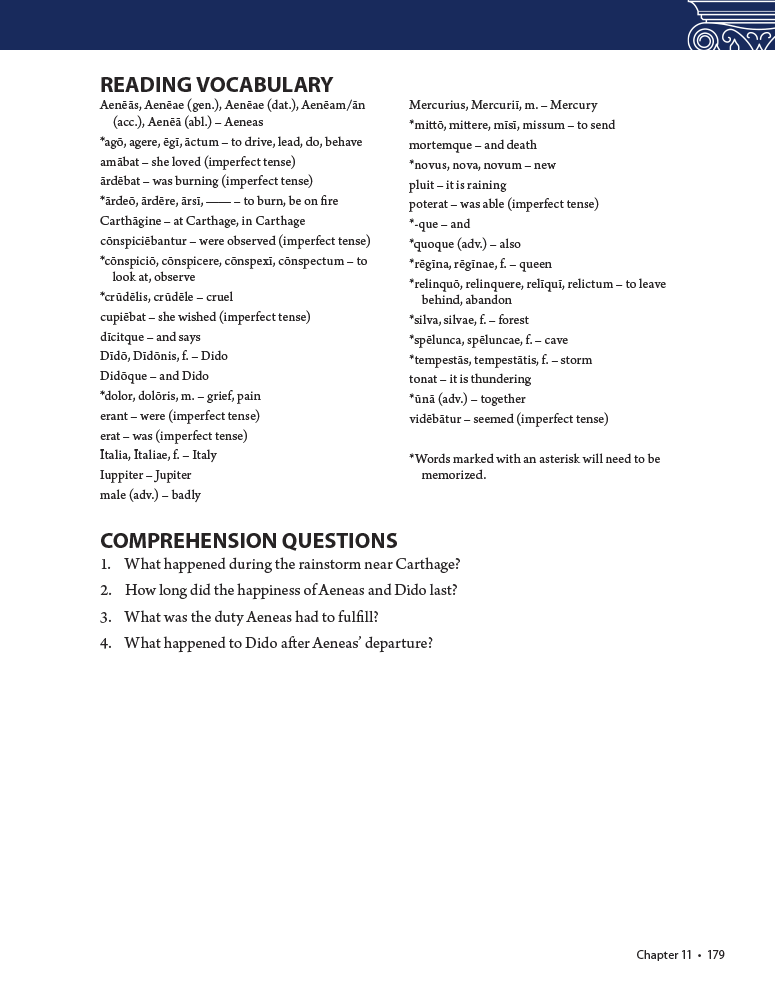
What happened during the rainstorm near Carthage?
How long did the happiness of Aeneas and Dido last?
What was the duty Aeneas had to fulfill?
What happened to Dido after Aeneas’ departure?