Log in
Sign up for FREE
arrow_back
Library
History in a Crisis — Lessons for Covid-19 by David S. Jones, M.D., Ph.D.
By Haiyen Truong
star
star
star
star
star
Share
share
Last updated over 1 year ago
11 questions
Add this activity
1
IIWD.01
1
IIWD.01
1
zoom_in
1
Question 1
1.
What lessons have
you
learned from COVID-19 this past year?
Question 2
2.
As used in line 1, "heady" most nearly means
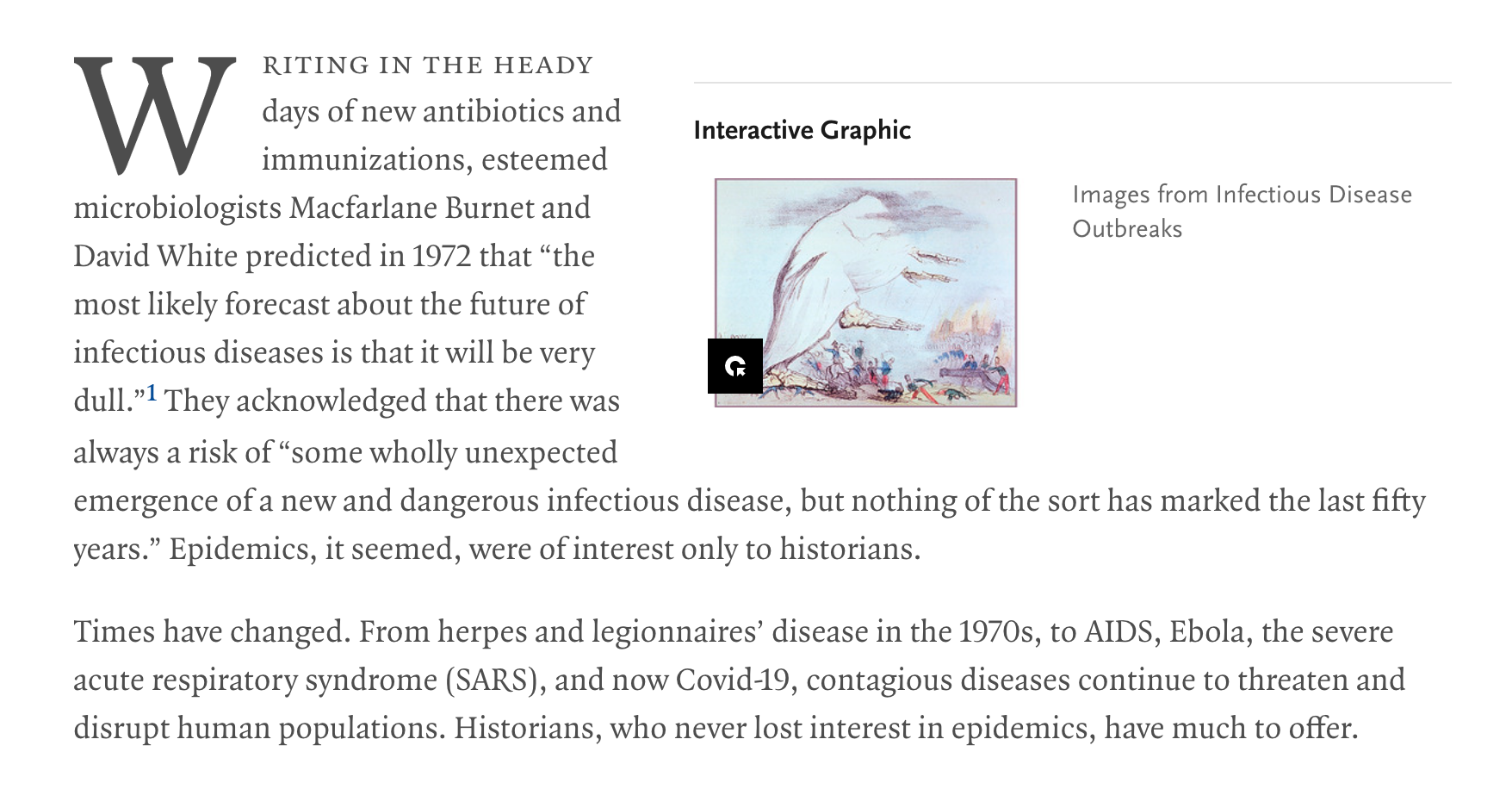
intellectual.
boring.
innovative.
potent.
visibility
View drawing
3
zoom_in
1
Question 3
3.
The quote from Burnet and White in the first paragraph primarily serves to
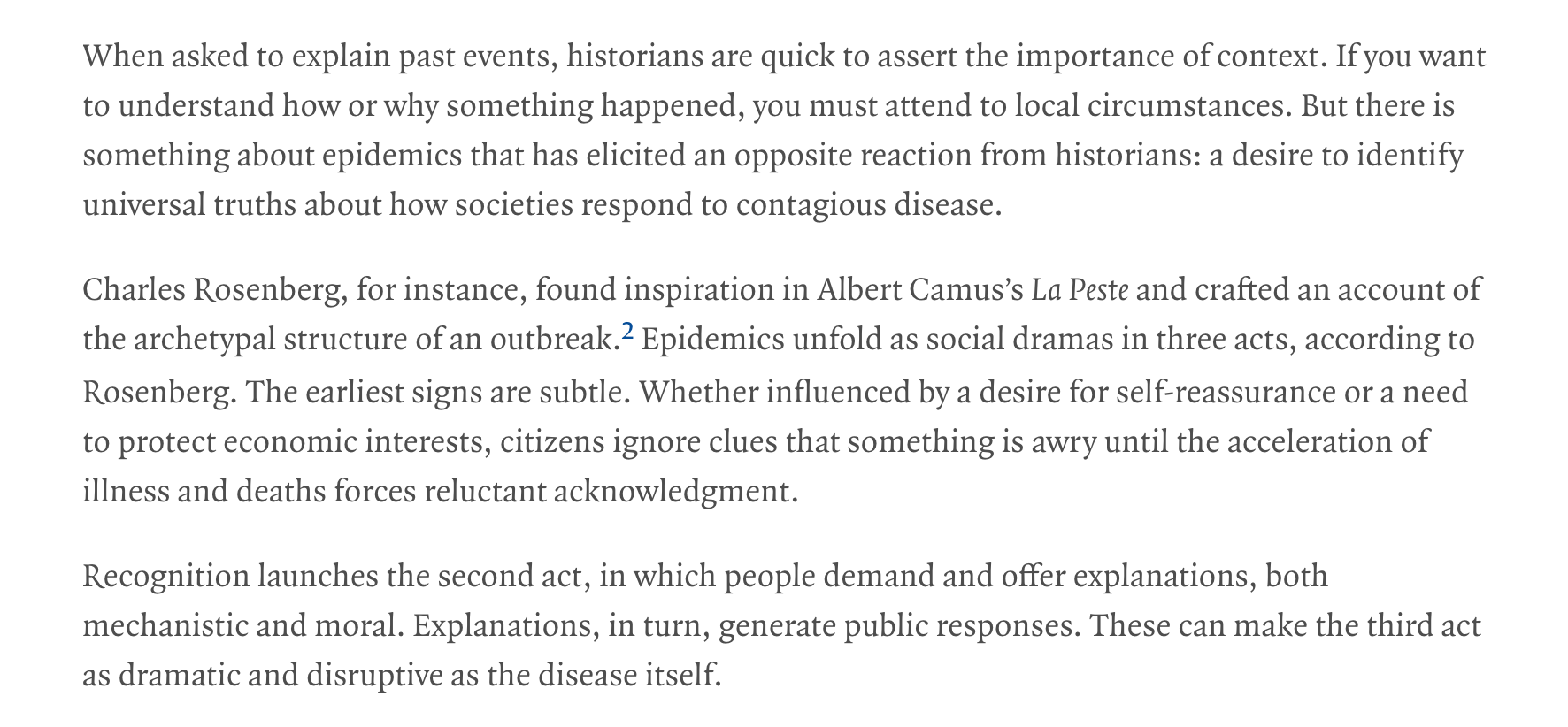
discredit outdated historical theories based on current events.
undermine the value of history as a well-respected scientific discipline.
contrast the perceived usefulness of studying history with modern day trends.
provide an example of what historians can contribute to epidemiological studies.
RTS.02
4
zoom_in
1
Question 4
4.
Rosenberg's three acts of an epidemic can be best described as
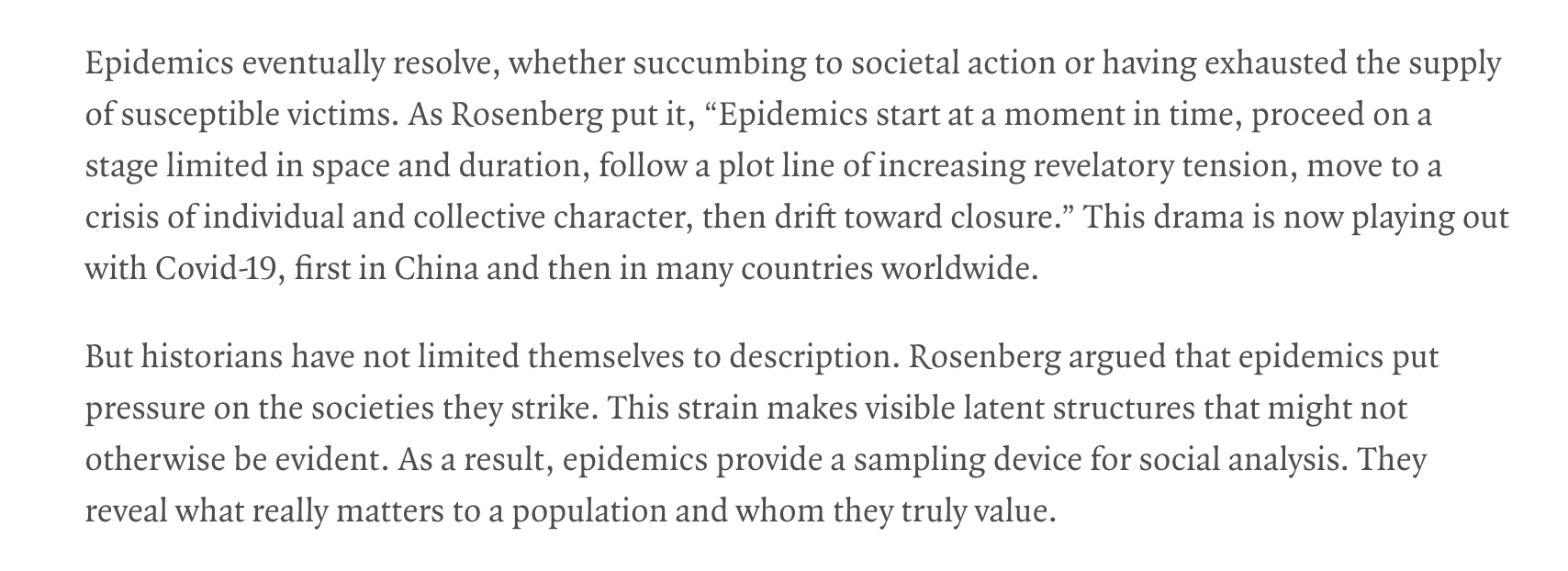
1st Quick Recognition, 2nd Demand Explanations, 3rd Offer Solutions
1st Ignorance, 2nd Recognition, 3rd Explanation
1st Slow Recognition, 2nd Explanation, 3rd Responses
1st Subtle Clues, 2nd Moral Explanation, 3rd Disruption
IIUR.01
5
zoom_in
1
Question 5
5.
The author would most likely agree with which of the following statements?
Covid-19 will affect all countries exactly the same way as past epidemics did.
Covid-19 will end when there are no more healthy people left to infect.
Societies need to plan for Covid-19 to become a permanent part of their lives.
Observing China may help other countries predict their own future.
RAG.01
Question 6
6.
As used in line 1 of the first paragraph above, "succumbing to" most nearly means...
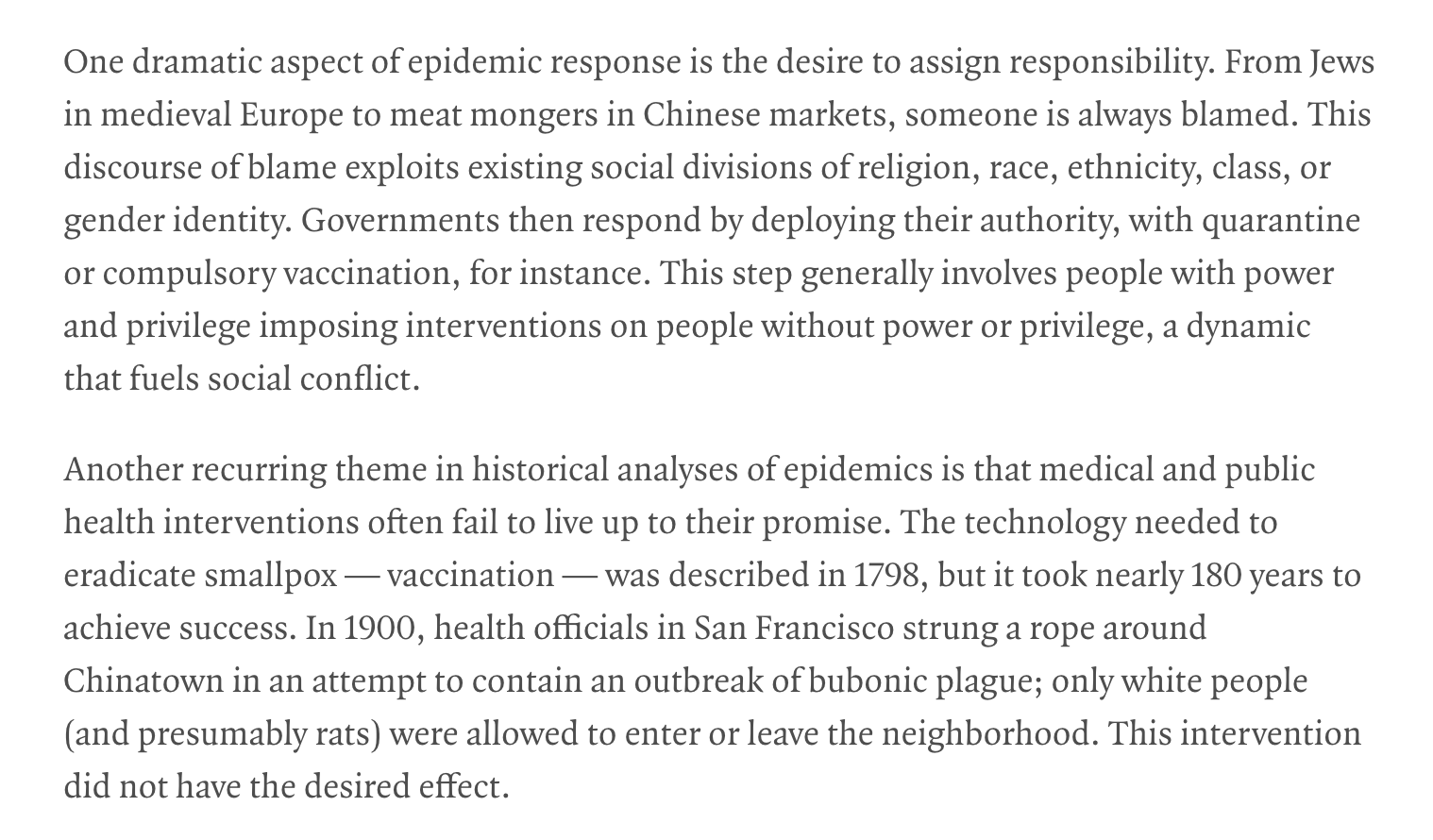
accepting of
rising to
giving into
resisting against
visibility
View drawing
7
zoom_in
1
Question 7
7.
Which of the following statements is supported by the text?
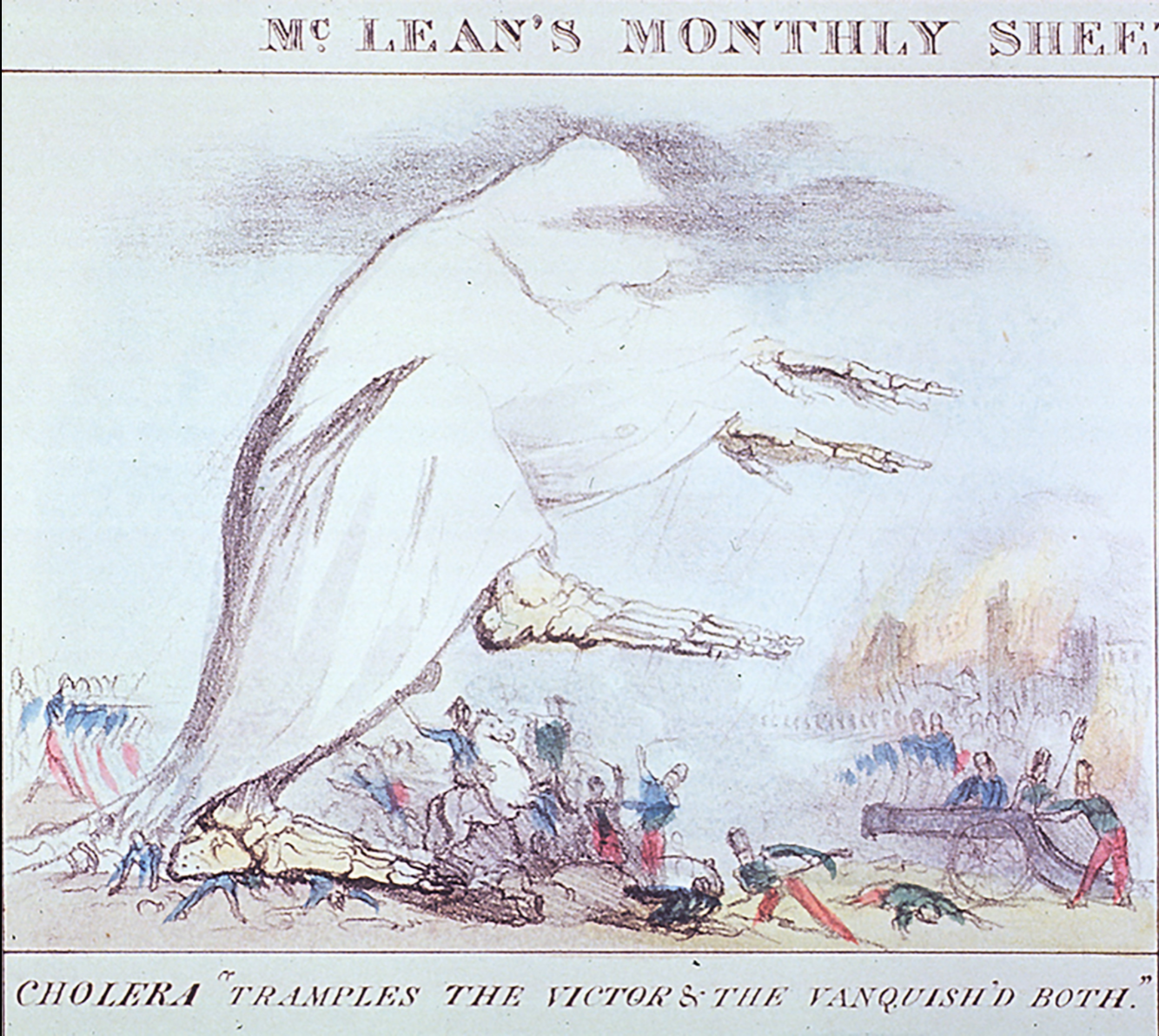
Epidemics enable the powerless to fight for increased social status.
Epidemics create new social divisions between those who are and are not infected.
Racial discrimination is a common but ineffective response by societies facing epidemics.
Societies are good at identifying which groups must be isolated to stop an epidemic.
IIRC.01
8
zoom_in
1
Question 8
8.
The author of the article would most likely react to this image with
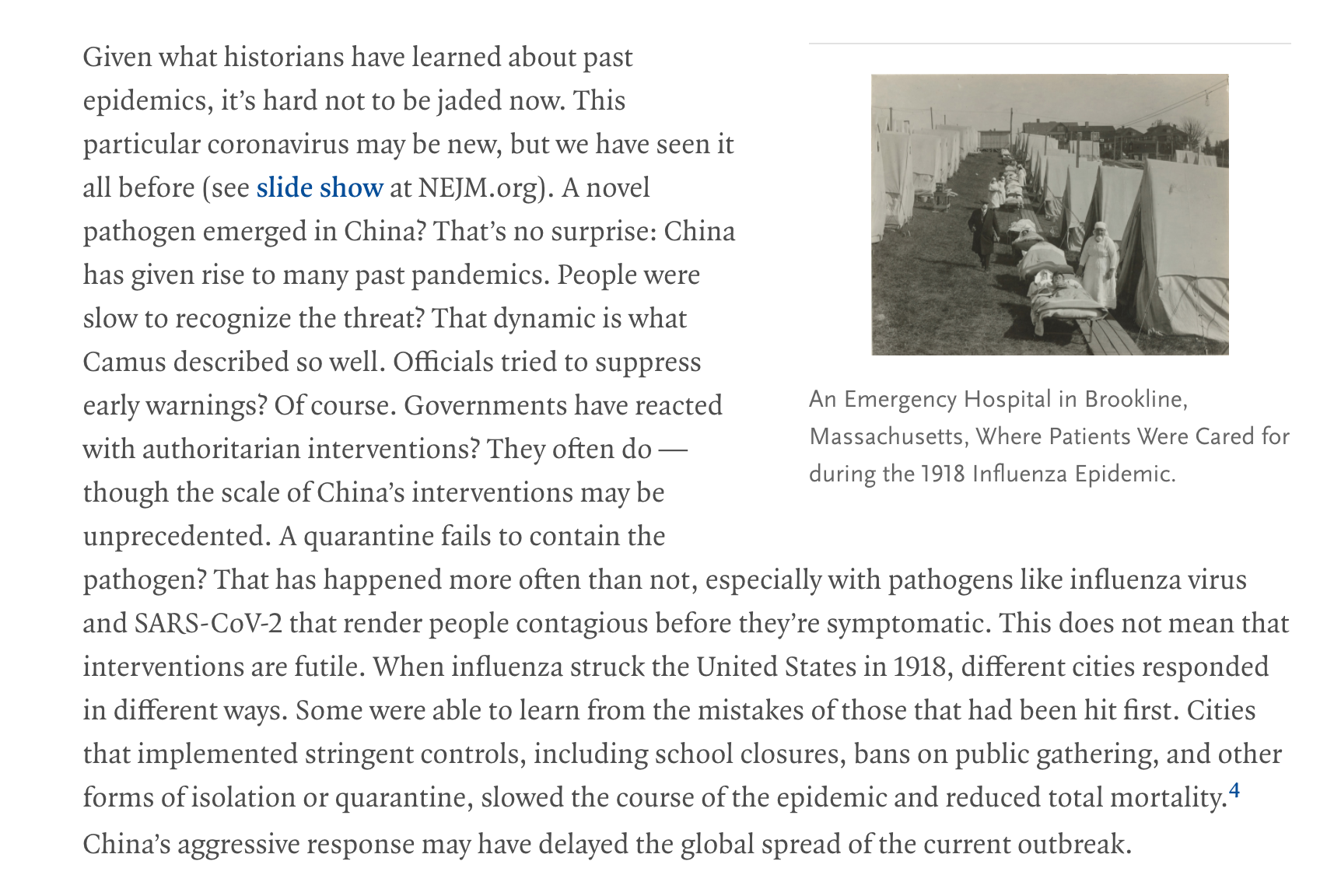
slight disagreement because epidemics impact marginalized groups differently than the powerful.
total disagreement because people overreacted to cholera, like many other epidemics throughout history.
strong agreement because epidemics impact everyone in society no matter their social standing.
enthusiasm because it relates to universal literary themes like those discussed by Edgar Allen Poe and Camus.
RAG.02
zoom_in
9
zoom_in
1
Question 9
9.
The main purpose of the second paragraph is to suggest that historians
can show us a range of possible outcomes, but cannot determine the most likely.
cannot help us predict future events based on historical trends.
can provide insights about the probability of possible outcomes during an epidemic.
should reassure people because Covid-19 is mild compared to past epidemics.
RPU.01
10
zoom_in
1
Question 10
10.
Which statement best expresses the central idea of the article?

The future of COVID-19 is easy to predict if you study history.
All epidemics are fundamentally the same.
Historians have valuable insights to help us understand epidemics.
Modern epidemics are less severe than past epidemics in history.
IICI.01
title
zoom_in
Do
NOT
proceed until we discuss in class.
0
Question 11
11.
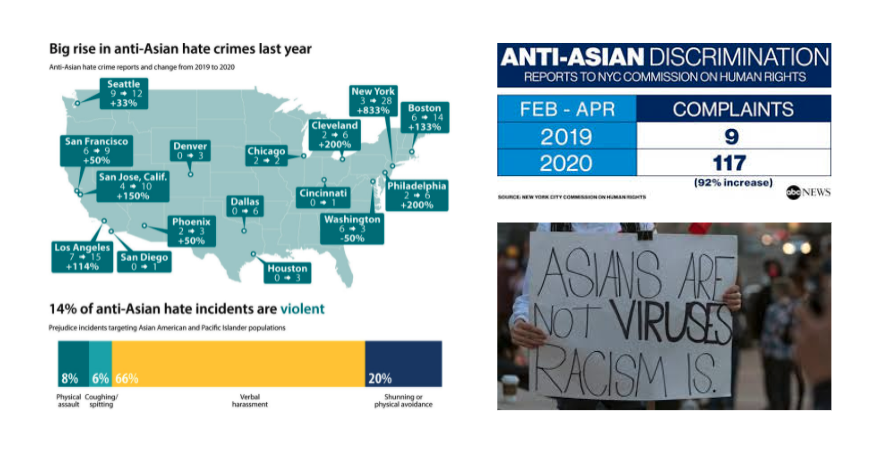
Compare and contrast the Spanish Flu of 1918 with the COVID-19 virus.
visibility
View drawing