Gr. 7- Planet Earth: 3.1 Continental Drift & 3.2 Plate Tectonics
star
star
star
star
star
Last updated over 5 years ago
12 Nsɛmmisa
1
1
1
2
8
1
1
1
1
1
6
10

Alfred Wegner determined that the continents at one time all fit together to form one large supercontinent, called Pangaea. Their interlocking shapes and other evidence helped him form the Theory of Continental Drift. The other evidence included all of the following, except ...
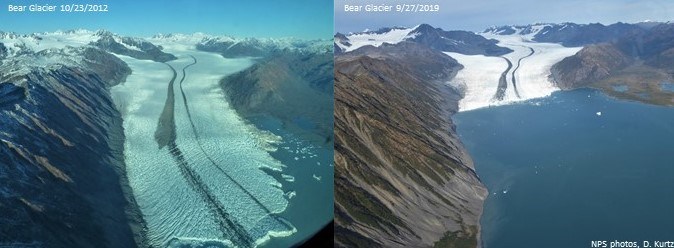
Glaciers once existed in the southern hemisphere. The evidence Wegener found to prove this was the ...
The science community rejected Wegener’s idea because they believed that mountains formed when the crust wrinkled like the skin of a dried-up ...
What was Wegener’s theory of continental drift? (pg. 393)
What were the four types of evidence Wegener used to support his theory? Provide deatils. (pg. 393)
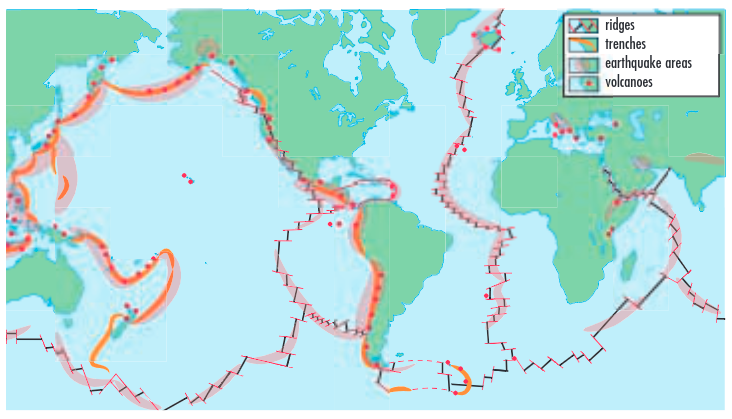
The ocean floor has been mapped out in detail and provided interesting patterns. Scientists noted that
volcanoes and earthquakes tended to occur in the ...
Mountain ranges were discovered along the ocean floor. These mountain ranges are called ...
Because rock is moving away from the mountain ranges found along the mid-Atlantic ridge, new rock is
being formed. This sea-floor spreading indicates that rock nearest the continents is ...
The place where tectonic plates meet is called a ...
A place where two tectonic plates slide past each other is called a ...
List the three types of plate boundaries and provide a detailed description of each one. (pg. 399 & 400)
What is subduction? Provide a diagram along with an explanation of how this process works.