Quiz Objective 19 cloned 5/18/2021

Last updated over 4 years ago
4 questions
Human Adaptation on the Tibetan Plateau
Tibet is a mountainous region in Asia. Archaeologists believe people currently living in Tibet moved there from lower elevations about 3,000 years ago. It is likely that when they first moved, they experienced the same changes to their bodies as people today do when they travel to the mountains: faster breathing and producing more blood cells to help them deliver more oxygen to their cells. Initially the population had great variety in blood vessel size.

Tibetans today have bigger blood vessels than people who live at lower elevations which allows their blood to circulate easier and deliver oxygen efficiently. Although human bodies can produce more red blood cells when we travel from low to high elevations, we can’t make our blood vessels bigger. In Tibet, babies born to mothers with bigger blood vessels are more likely to survive than babies born to mothers with smaller blood vessels.
4

Is the scenario presented microevolution or macroevolution? How do you know? Explain your reasoning and be very specific using multiple pieces evidence from the background information above.

Recent scientific studies have documented variation in the alleles of Tibetan women. The alleles being studied are indicated as A and B below and represent alternative versions of a trait that affects blood vessel size in women. Large blood vessels result in high oxygen content. High oxygen content in blood, is important for survival at high altitudes. For these purposes, lets say blood vessel size is a trait that follows a pattern of incomplete dominance. That means one allele is for large blood vessels, the other for small blood vessels, and in the heterozygous genotype, an individual would have medium sized blood vessels.

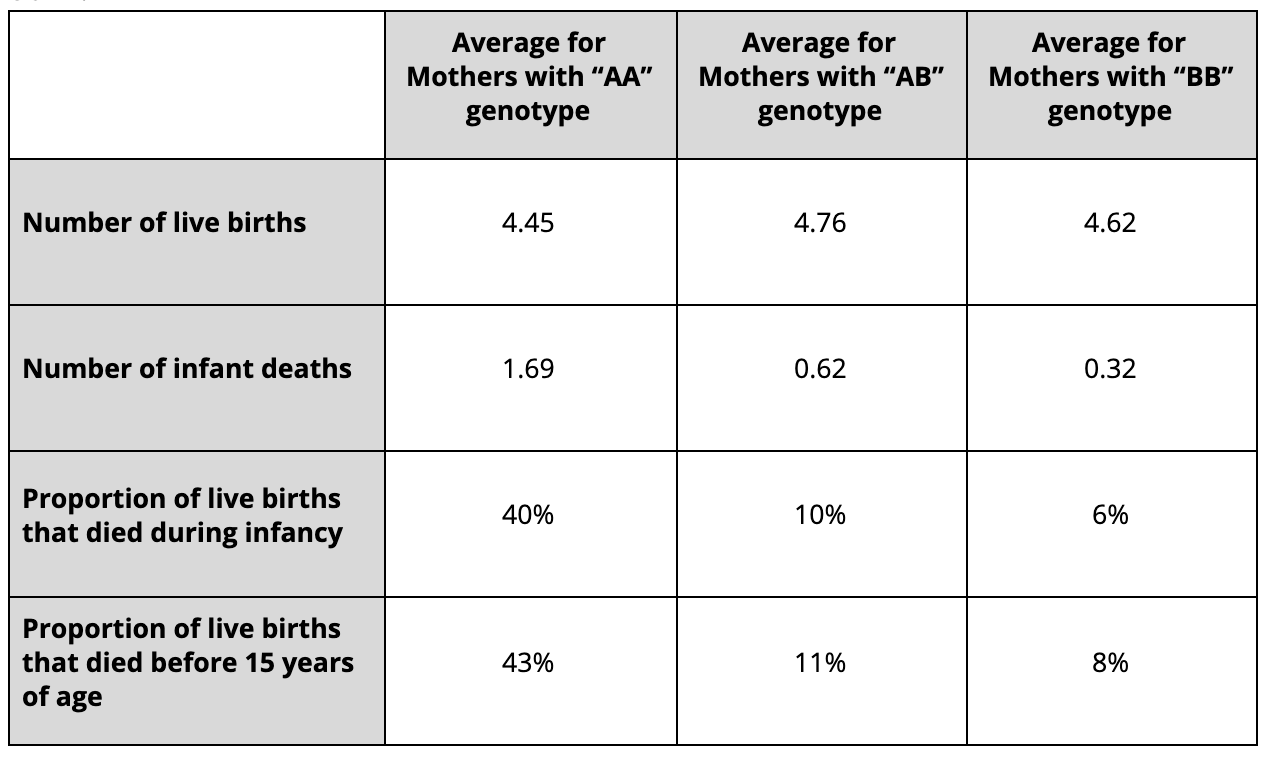
Use this chart to answer questions 2 and 3.

Figure 1. Survival of children with various genotypes for blood vessel size.
4

First: Select a claim to answer the question: Which allele contains the genetic code for large blood vessels?

4

Then: Use at least one piece of specific evidence from Figure 1 to support and EXPLAIN the claim you selected.

4

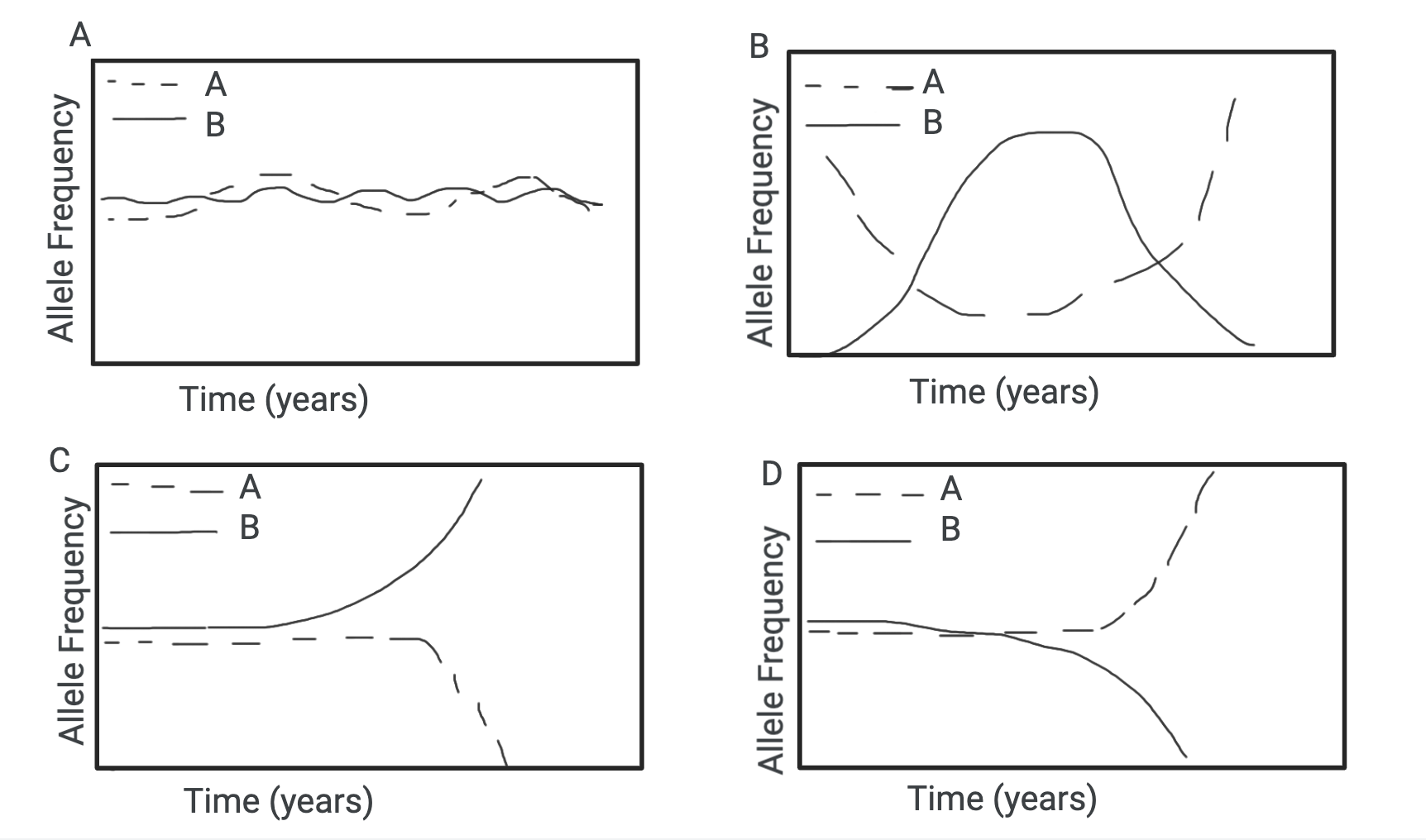
Which graph do you think best predicts what will happen to the relative frequency of Alleles A and B in the population of Tibetan women over many generations?


*****OPTIONAL- in the show your work tab type up an explanation for why you chose the graph you did....this alllows for you to potentially get partial credit even if you selected the incorrect model.