Log in
Sign up for FREE
arrow_back
Library

Unit 9 Intewar Years and WWII SHS Honors Test

star
star
star
star
star
Last updated over 4 years ago
30 questions
1
1
1
1
1
1
1
1
1
1
1
1
1
3
1
1
1
1
1
5
1
1
1
7
1
1
1
1
1
1
Question 1
1.

What did Germany, Italy, and the Soviet Union have in common during the World War II era?

Question 2
2.

What was the United States’ response to war erupting in Europe in 1939?

Question 3
3.

How did geographic conditions affect both Napoleon Bonaparte’s and Adolf Hitler’s plans?

Question 4
4.

Which of the following was a cause of Japanese expansion throughout the Pacific during the 1930s?

Question 5
5.

As Fascist leaders such as Mussolini and Hitler strengthened their rule in the 1930s, which of the following was true about most citizens of the United States?

Question 6
6.

Hitler said Germans needed more living space. Which of the following words did he use to describe this need?

Question 7
7.

The policy of _________ by democracies during the Great Depression allowed military governments to gain strength and gain territory.

Question 8
8.

What were the 5 year plans?

Question 9
9.

The Dawes Plan allowed

Question 10
10.

“The content of propaganda does not lie in the scientific training of the individual, but in calling the masses’ attention to certain facts, processes, necessities, etc., whose significance is thus for the first time placed within their field of vision.”
Adolph Hitler, Mein Kampf, 1925 and 1927

According to this passage, what is the purpose of propaganda?

Question 11
11.

Collectivization involved which of the following (there can be more than one answer)

Question 12
12.

Which of this is not a totalitarian tactic used by leaders in the 1930?

Question 13
13.

The New Deal involved attempts to stimulate the American economy by

Question 14
14.

Which of the following increased during the Great Depression (may be more than one)

Question 15
15.

Under Joseph Stalin’s command economy system, all economic decisions were made by

Question 16
16.

The blitzkrieg was the German strategy of

Question 17
17.

How did Japan treat conquered people?

Question 18
18.

Why did President Truman decide to use the atomic bomb?

Question 19
19.

Why were Navaho soldiers such a valuable part of the US war effort during WW2?

Question 20
20.

Event Match UP – Match the Event to its description

Draggable itemarrow_right_altCorresponding Item
Dunkirk
arrow_right_alt
Nov 10, 1938 Night of Broken Glass Nazi destruction of Jewish businesses, homes and synagogues
Pearl Harbor
arrow_right_alt
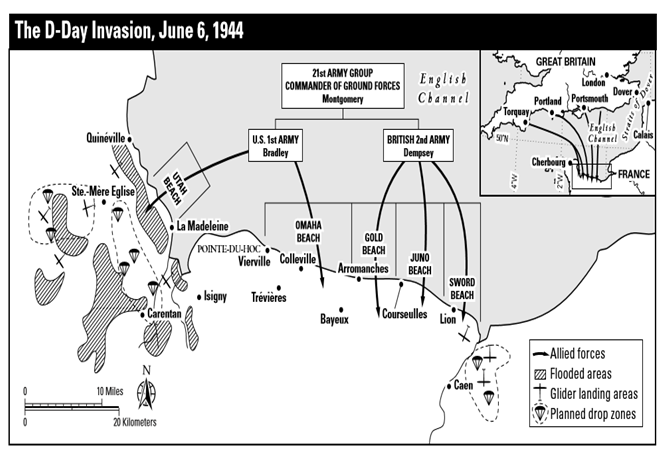
June 6, 1944 Allied troops landed on the beaches of Normandy France, first direct attack of German forces in mainland Europe during WW2
D-Day
arrow_right_alt
May 27 –June 4, 1940 massive evacuation of French and British troops under attack from German forces.
Kristallnacht
arrow_right_alt
August 6 and 9th, 1945 the USA used atomic bombs to force the surrender of Japan and end WW2.
Bombing of Hiroshima and Nagasaki
arrow_right_alt
Dec 7, 1941 Japanese attack on the US naval base in Hawaii, with the goal of eliminating US competition in Asia.
Question 21
21.

How did the Allied forces divert the attention of the Germans from the planned invasion of Normandy?

Question 22
22.

Which of the following best describes a major geographic weakness faced by Germany during World War I and World War II?

Question 23
23.
Draggable itemarrow_right_altCorresponding Item
Yalta Conference
arrow_right_alt
February, 1945 Stalin promised free elections in Eastern Europe; Allies agreed to divide Germany after the war
Potsdam Conference
arrow_right_alt
Stalin refused to allow free elections in Eastern Europe; sets the stage for the Cold War
Question 24
24.
  • USA
  • Germany
  • Soviet Union
  • England
  • Japan
  • Italy
  • France
  • Axis Powers
  • Allied Powers
Read the excerpt and answer the question that follows:

Last night, or rather early this morning, I met a distinguished member of Parliament in a bar. He had been dining with Anthony Eden and had told the Secretary for War that he wouldn’t walk through the streets with all that shrapnel falling about and as a good host Eden should send him home in a tank. Another man came in and reported, on good authority, that the Prime Minister had a siren suit, one of those blue woolen coverall affairs with a zipper. Someone said the Prime Minister must resemble a barrage balloon when attired in his siren suit. Things of that sort can still be said in this country. Edward R. Morrow, This Is London
Question 25
25.

In the passage above, what is Morrow’s message?

Use the map to answer the following questions.
Question 26
26.

Which of these towns were British troops most likely to reach first?

Question 27
27.

Which of the following was an area targeted by the U.S. First Army?

Question 28
28.

Which of the following officers did NOT command D-Day forces?

Question 29
29.

How many beaches were targeted landing sites for forces coming from the water?

Question 30
30.

Which of the following was NOT a departure point in Great Britain?