You are now on Step 2 of Section 1.
You need to do this part on Research Quest!

Directions: We are doing another Research Quest BUT GoFormative style!
Student Login URL: http://researchquests.org/student/
Student Access Code: 3vErMJsr
After you use the code to log in, go under Changes in the Uinta Mountains click the tab that says: What is the Future of a Forest Under Attack?
Then get started!
This will be worth 62 points and will count as a MAJOR grade!
What does the forest provide to all of the organisms living there? Click all that apply.
Why do scientists suspect the system is not stable?
What kind of model does Dr. Mitch show us in the video?
You are now on Step 2 of Section 1.
You need to do this part on Research Quest!
Move ahead to step 2! Click on the "i" that says explain the model to answer the following questions. The model we're working with here is called....
Energy pyramids model who is there and how much energy they are contributing to the ecosystem.
You should still be on step 2!!! Build an energy pyramid. Screenshot your COMPLETED energy pyramid and put in the question below.
Once the energy pyramid is placed in this question, apply the 10% rule and illustrate how most energy is lost.

_________ are all the plants in an ecosystem.
_____________ _____________ eat plants.
Think back to class! Why are decomposers important to ecosystems?
You should be on step 3 now! Watch the video to answer the questions!
Biotic factors are any living parts of an ecosystem, parts that influence other organisms or shape the ecosystem it lives in.
What is an abiotic factor?
Section 1 Gather: Step 4
You need to complete this step on Research Quest. Use this step to help you answer the questions.

You should be on step 4 now! Click: Biotic Change: Wolves Added. What happend to the cougar population?
You should be on step 4 now! Click: Biotic Change: Wolves Added. What happend to the moose population?
You should be on step 4 now! Click: Biotic Change: Wolves Added. What happend to the aspen population?
You should be on step 4 now! Click: Abiotic Change: Wildfire. What happend to the cooper's hawk population?
You should be on step 4 now! Click: Abiotic Change: Wildfire. What happend to the northern flying squirrel population?
You should be on step 4 now! Click: Abiotic Change: Extreme Drought. What happend to the Mountain Pine Beetle population?
You should be on step 4 now! Click: Abiotic Change: Extreme Drought. What happend to the Douglas Fir population?
You should be on step 4 now! Click: Abiotic Change: Extreme Drought. What happend to the coyote population?
Step 5. Which change had the largest affect on this ecosystem and why?
Step 5. Which change had the smallest affect on this ecosystem and why?
Step 5. Which type of change had the greatest effect on organisms’ populations?
Starting Section 2, the analyze section! Start by watching the video to answer the questions below. (this is step 6)
The definition for Limiting Factor is on the website.
Limiting factors are conditions that can limit the overall health and abundance of a population.
Limiting factors have to be biotic.
What are the 3 abitoic factors that scientists agree affect all organisms? Click all that apply!
The results of a biotic or abiotic change in an ecosystem is called a.....
Now you are on step 7 of Analyze! Read how each of these four organisms is affected by precipitation and temperature. Record your notes in your Research Assistant Notebook. Then, click "Next."
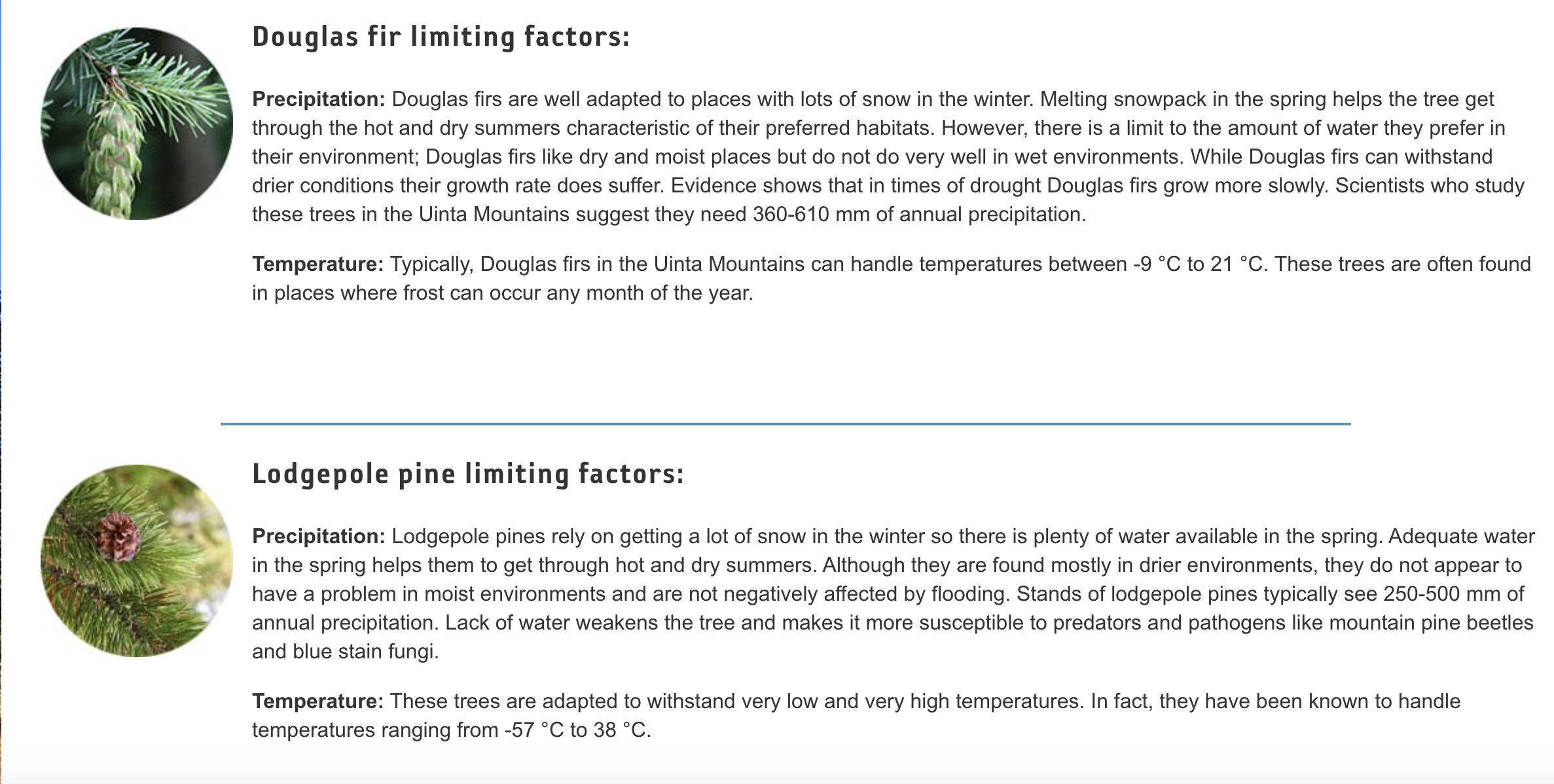
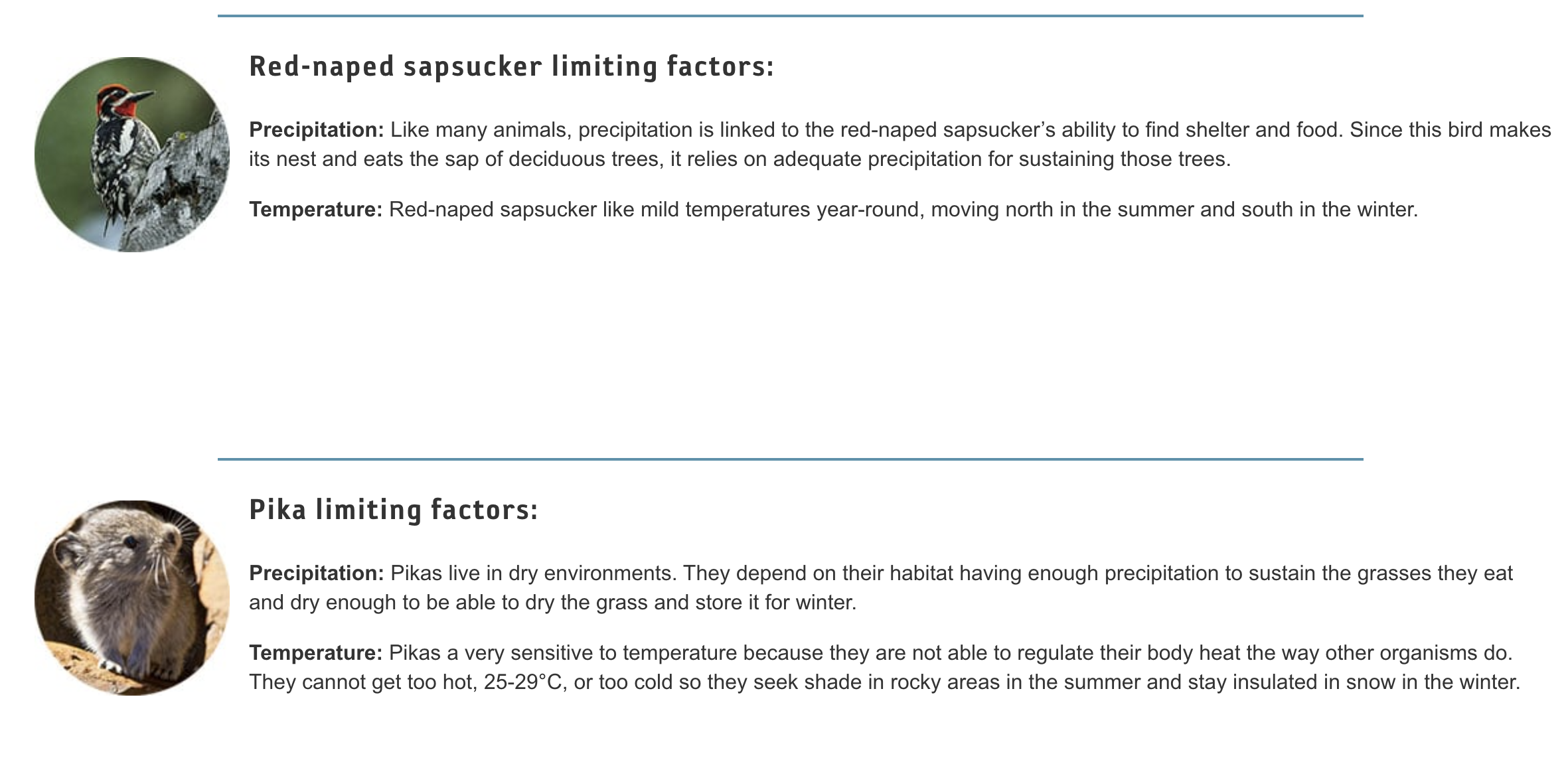
These are the pictures from the website!
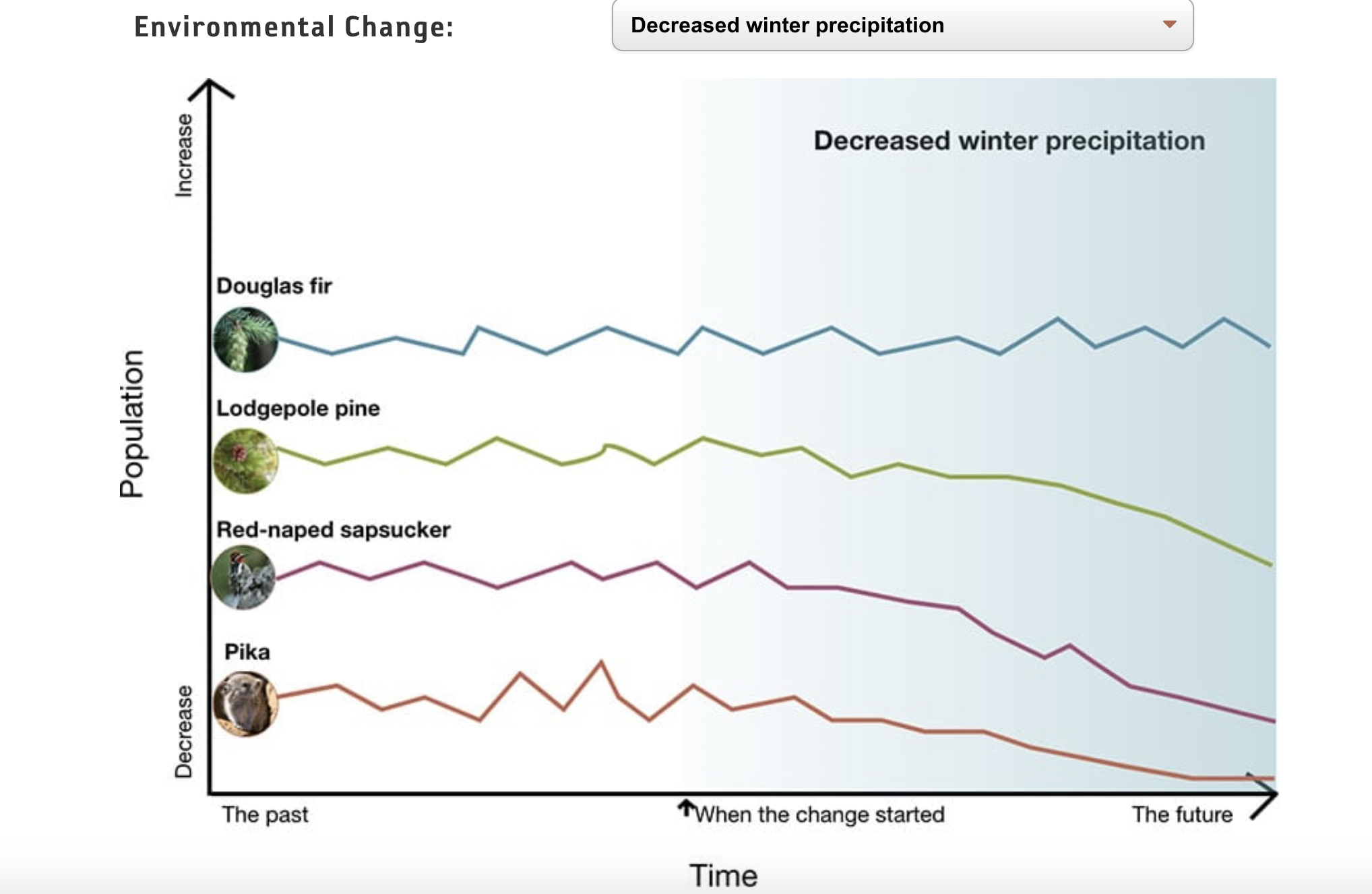
According to the graph, which population(s) decreased during this environmental change? List all that apply.
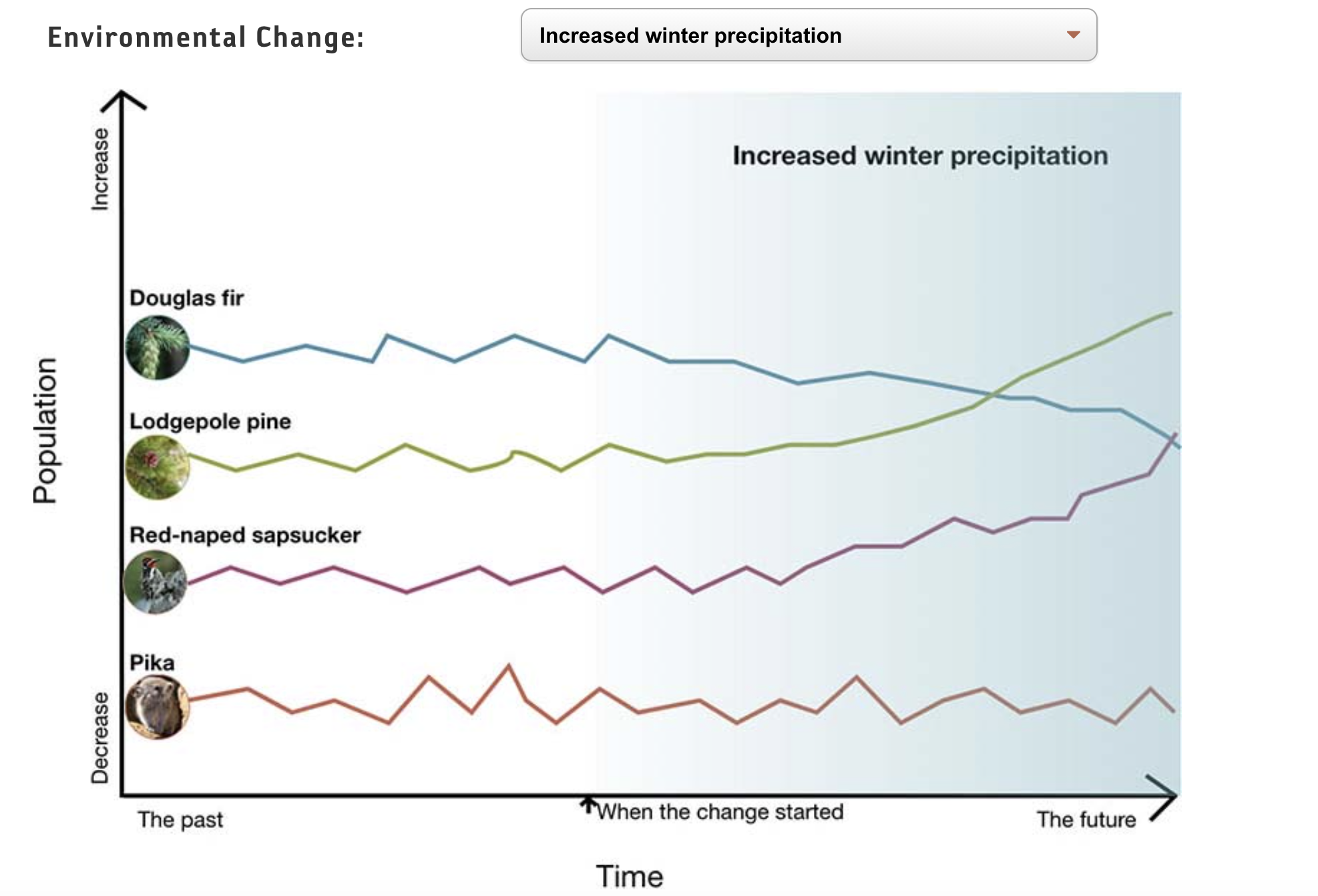
According to the graph, which population(s) increased during this environmental change? List all that apply.
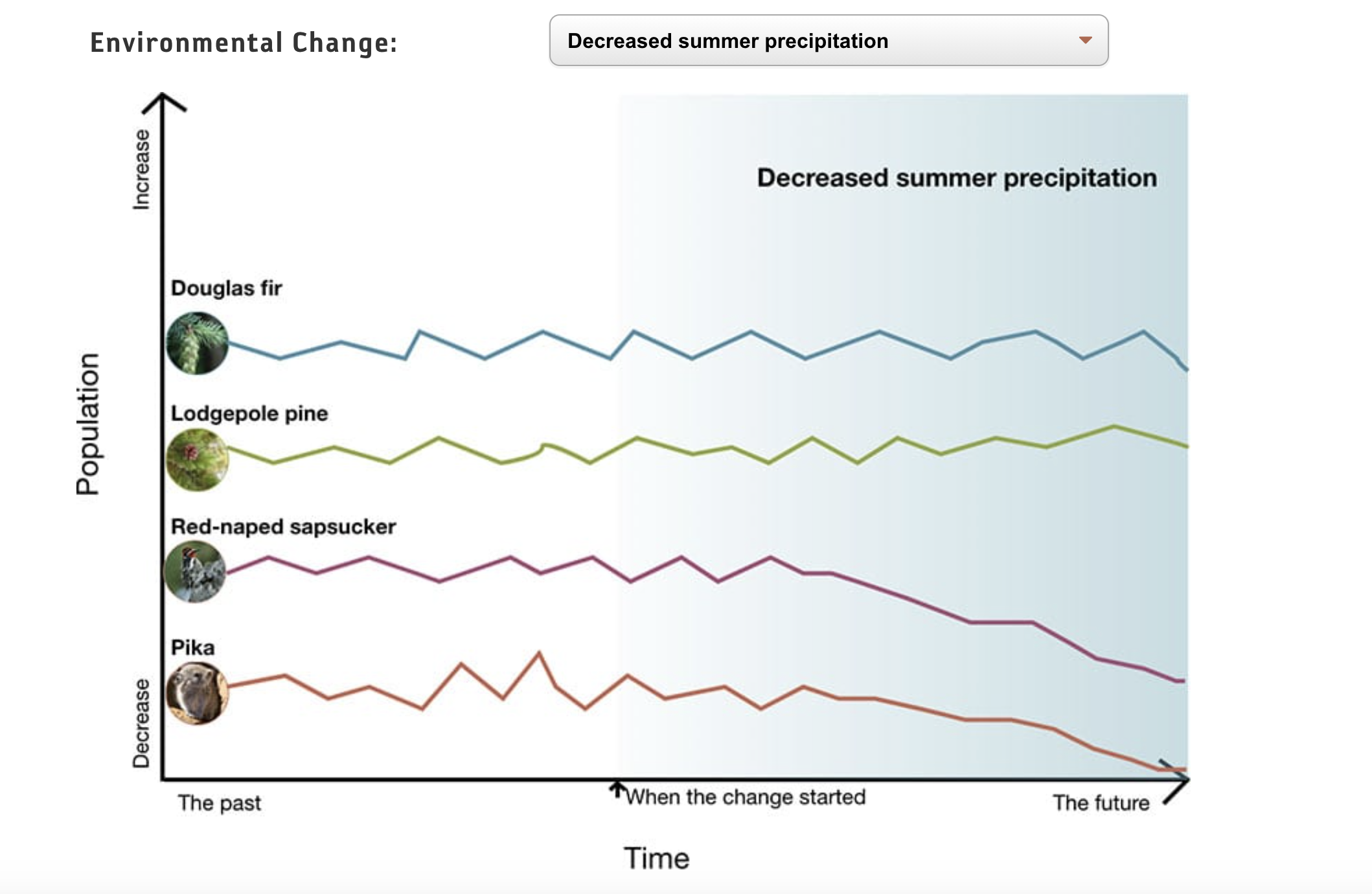
According to the graph, which population(s) decreased during this environmental change? List all that apply.
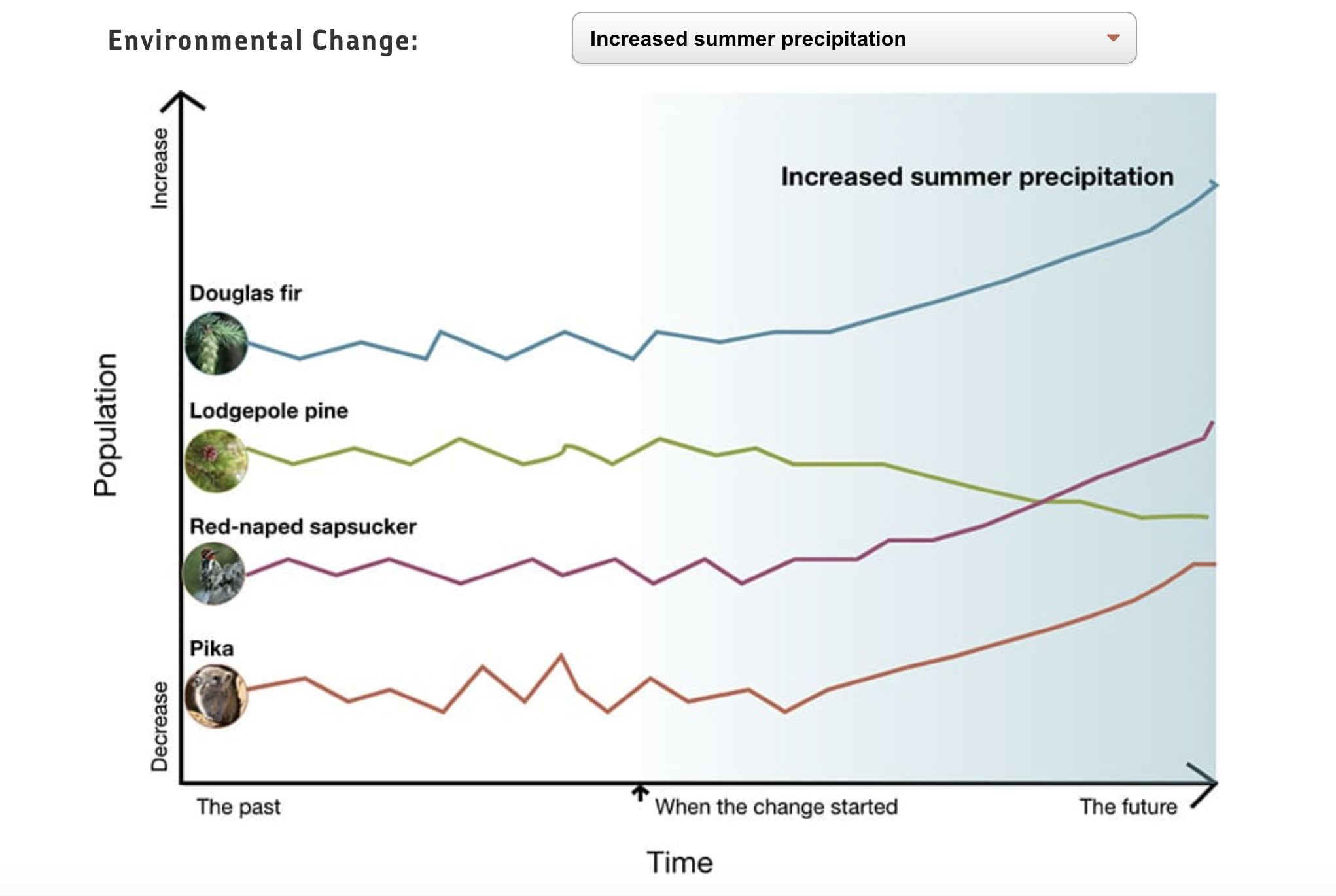
According to the graph, which population(s) increased during this environmental change? List all that apply.
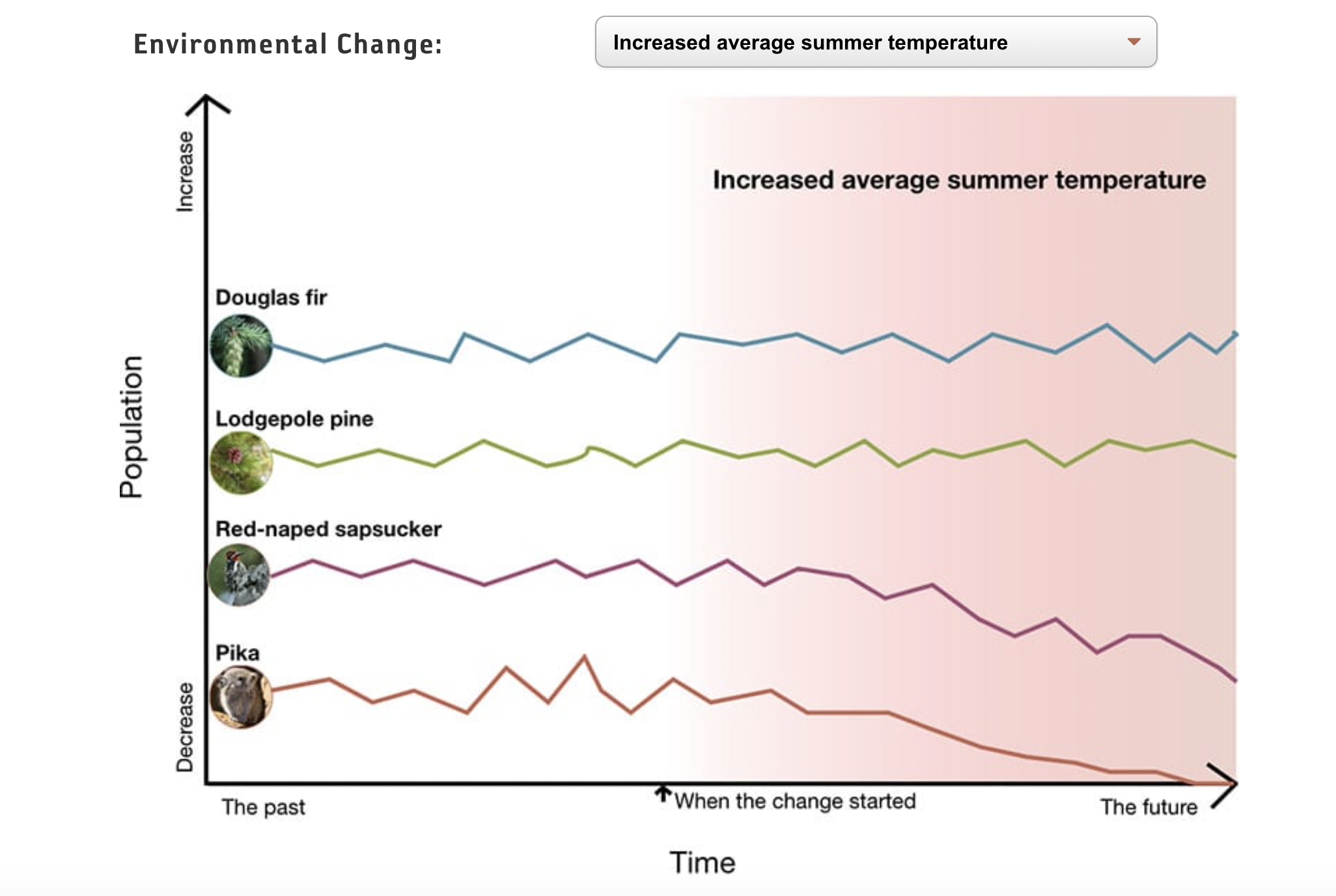
According to the graph, which population(s) decreased during this environmental change? List all that apply.
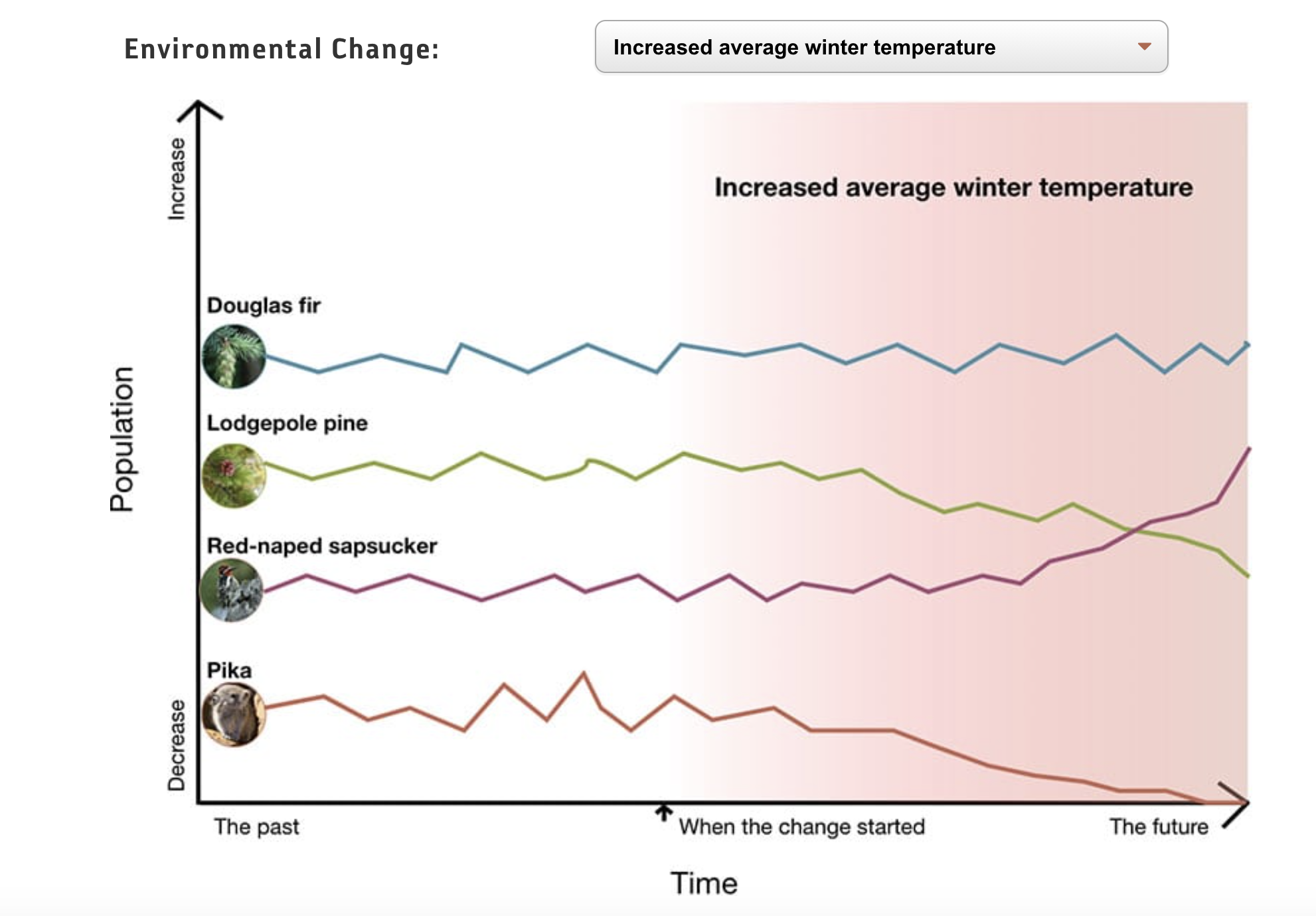
According to the graph, which population(s) had no overall change during this environmental change? List all that apply.
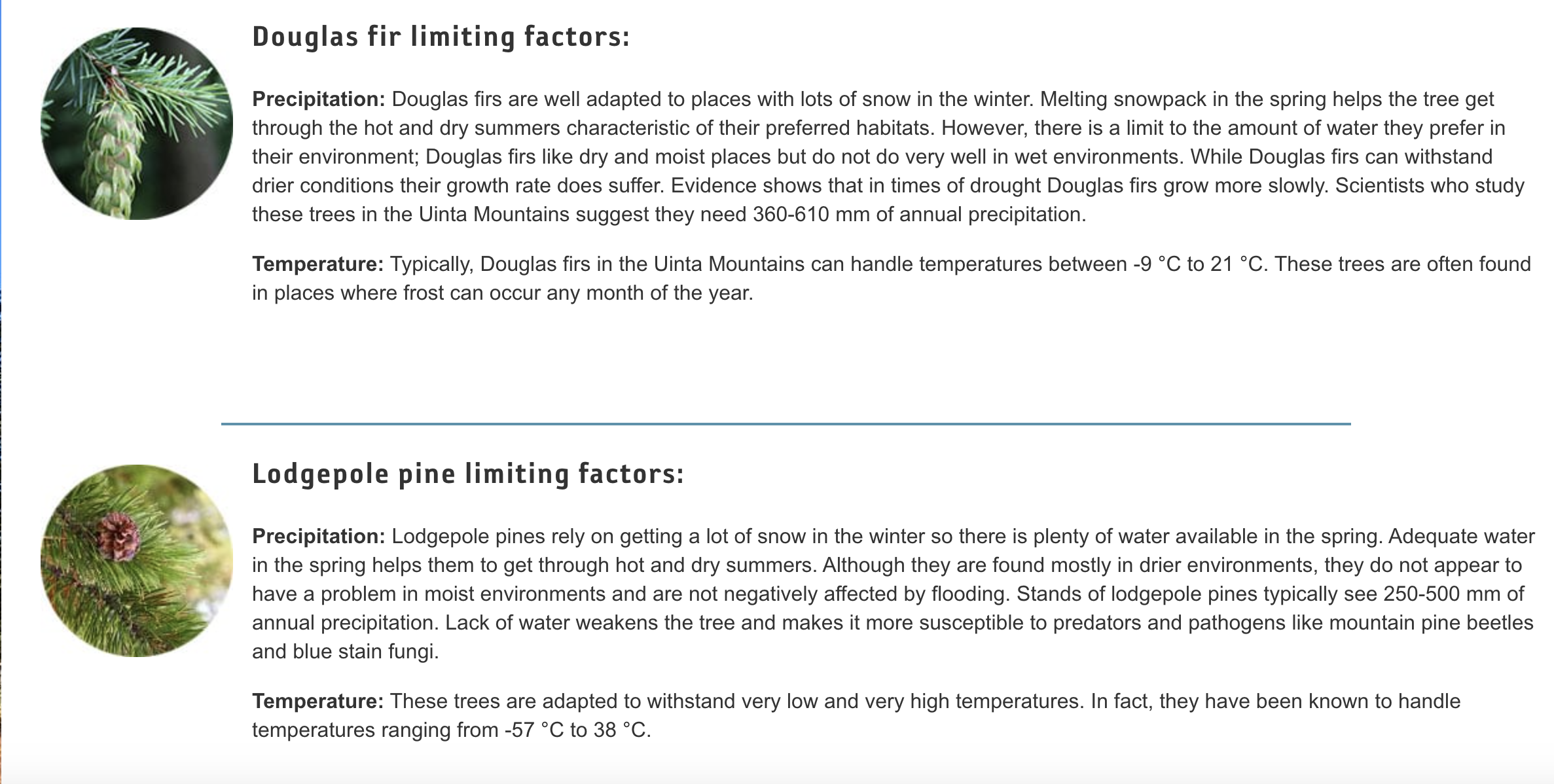
Use the and data from predictive models of temperature and precipitation (the graphs you were looking at) to develop an evidence-based argument to explain what the future may look like for populations of the Douglas Fir and the Lodgepole Pine. Use the limiting factors in the picture provided to support your argument.
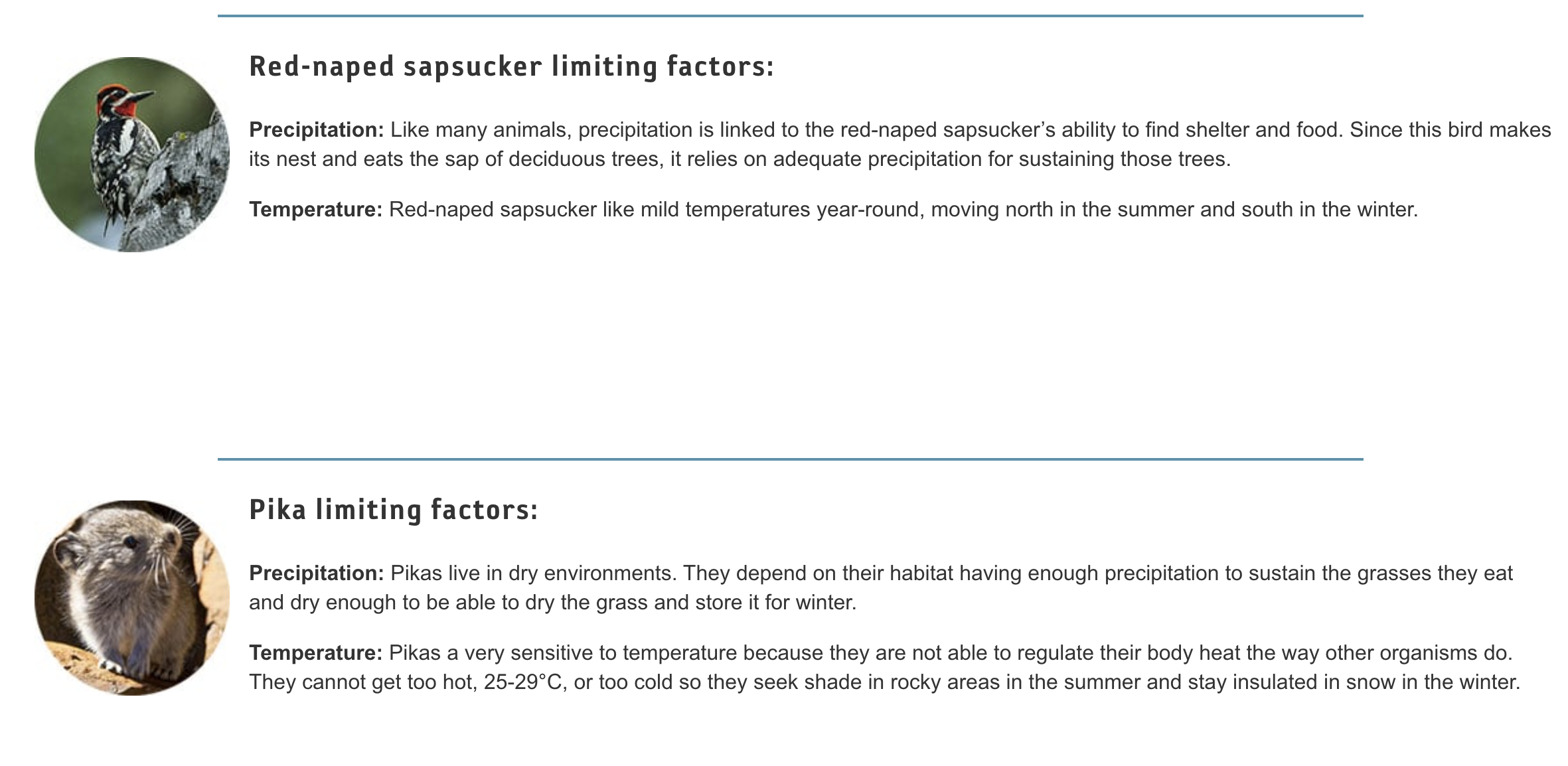
Use the and data from predictive models of temperature and precipitation (the graphs you were looking at) to develop an evidence-based argument to explain what the future may look like for populations of the Red-napped sapsucker and the Pika. Use the limiting factors in the picture provided to support your argument.
You are now on step 8 of the Analyze section! Watch the video to answer the questions. Scientists have been measuring temperature and percipitation for how long?
You are now on step 8 of the Analyze section! Watch the video to answer the questions. Tree ring records, allow scientists to reconstruct what?
What is going to happen to the pika? Why?
Ecosystems are always changing over time, it's ______ of change that is important
How can communities slow the rate of change?
What did you think of this activity?