Unit 5 Final Test - Waves --- Sanchez

Last updated over 2 years ago
14 questions
Respond to the questions and/or prompts below and do your best. Remember - don't leave anything blank! You may use the following on this test:
  • YOUR interactive notebook and/or paper notebook
  • blank scratch paper and pen or pencil
  • calculator
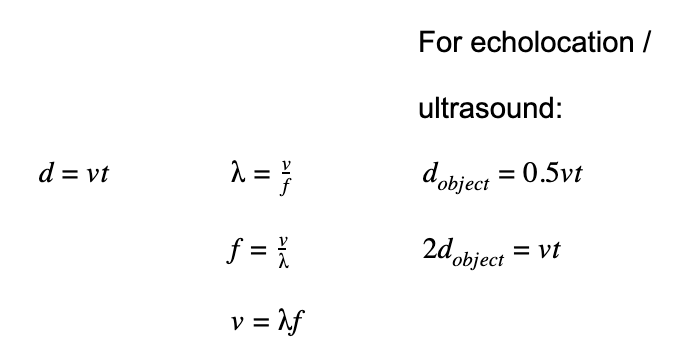
  • the mathematical models (equations) below
1

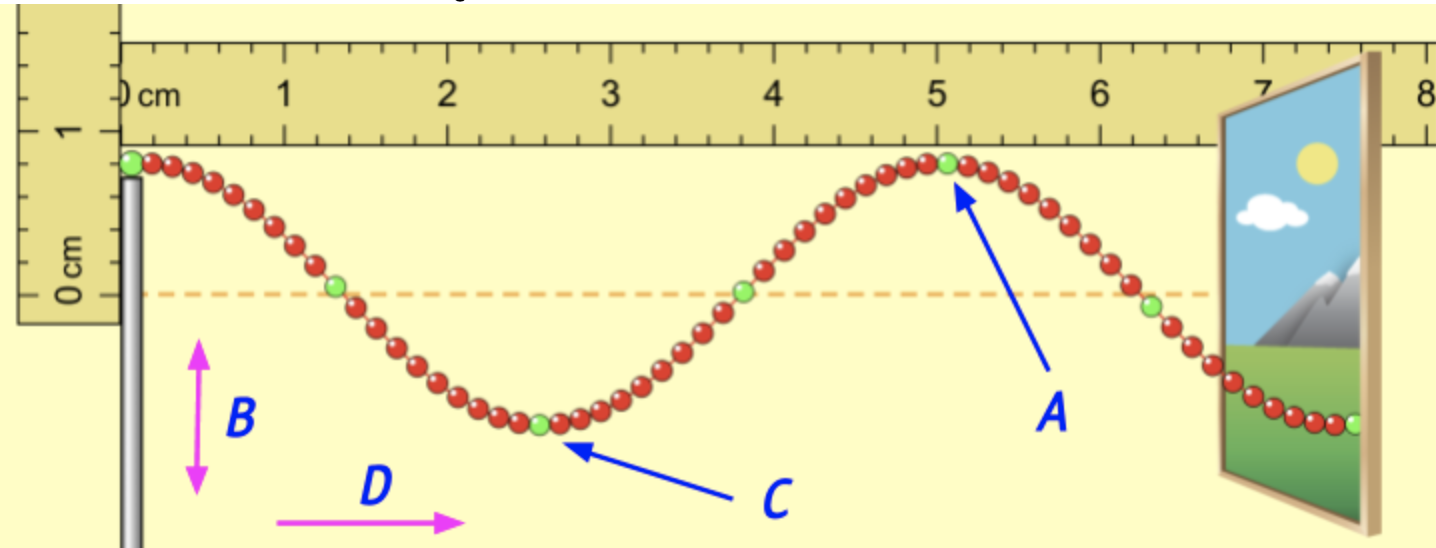
Match the wave examples or parts of the wave from the diagram below to the correct wave vocabulary terms. Make the best match - each term will only have one best match.

  • A
  • C
  • D
  • B
  • Crest
  • Direction of oscillation
  • Trough
  • Direction of wave travel
1

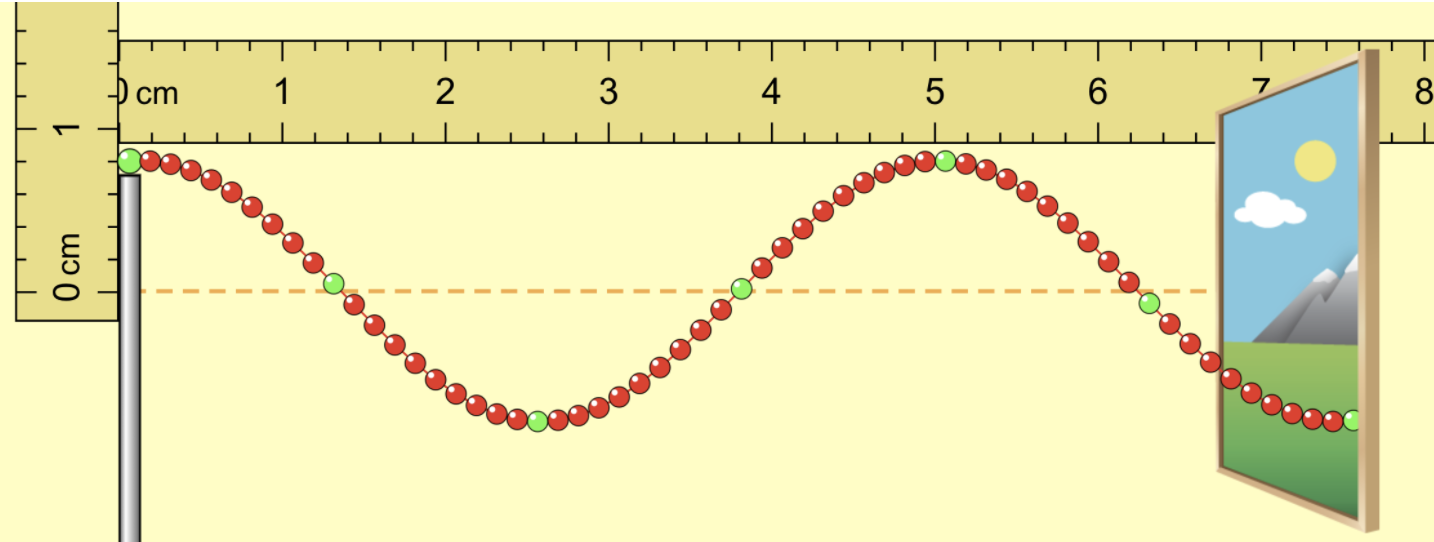
Measure and record the wavelength of the wave pictured below:

1

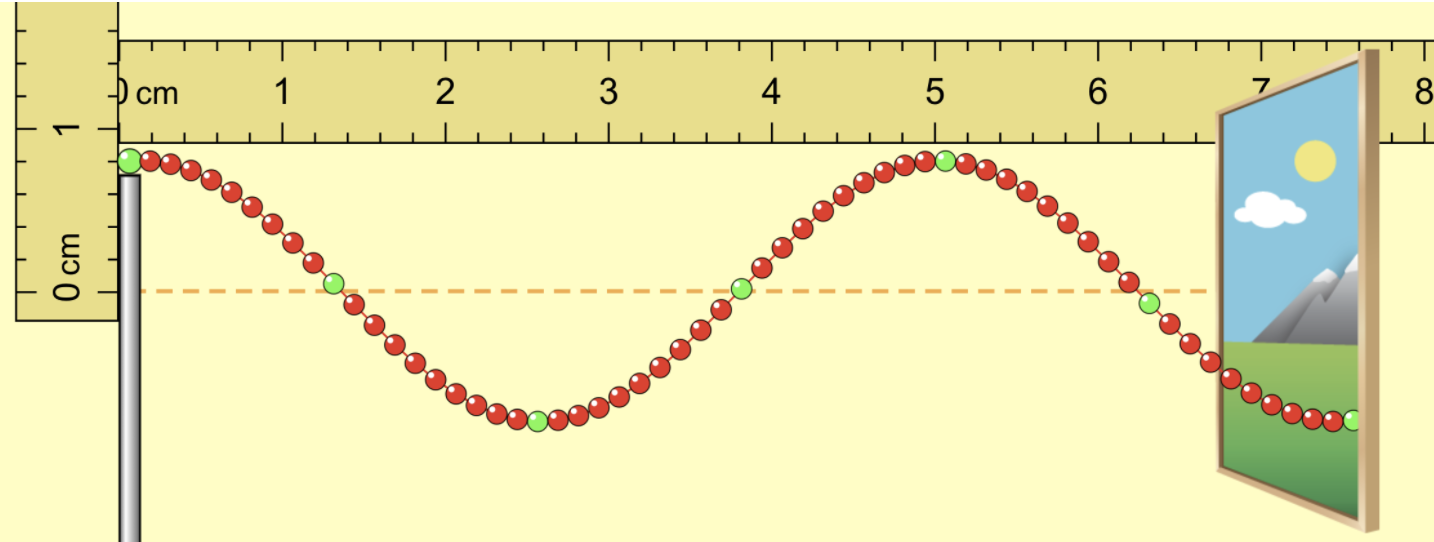
Measure and record the amplitude of the wave pictured below.

1

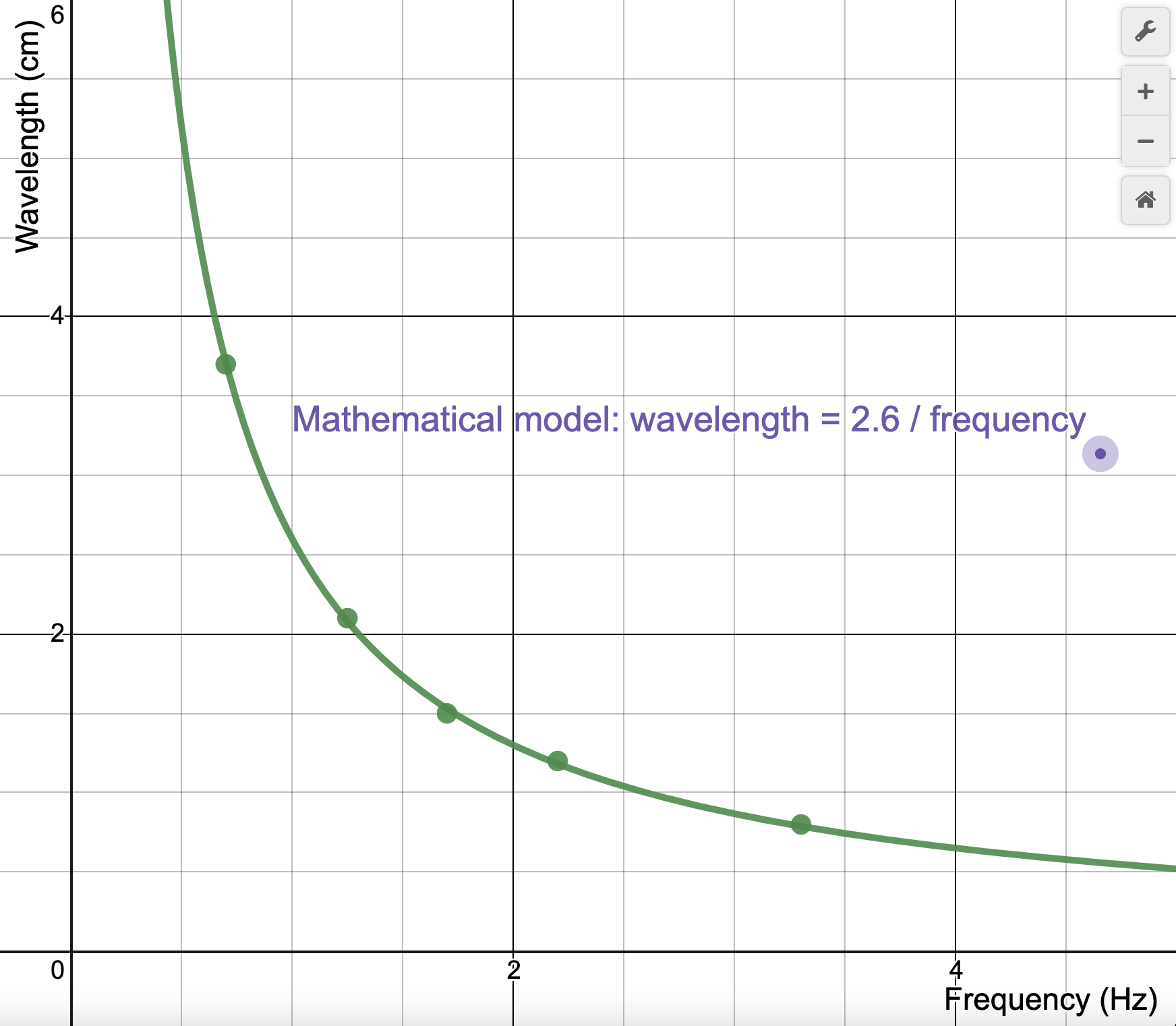
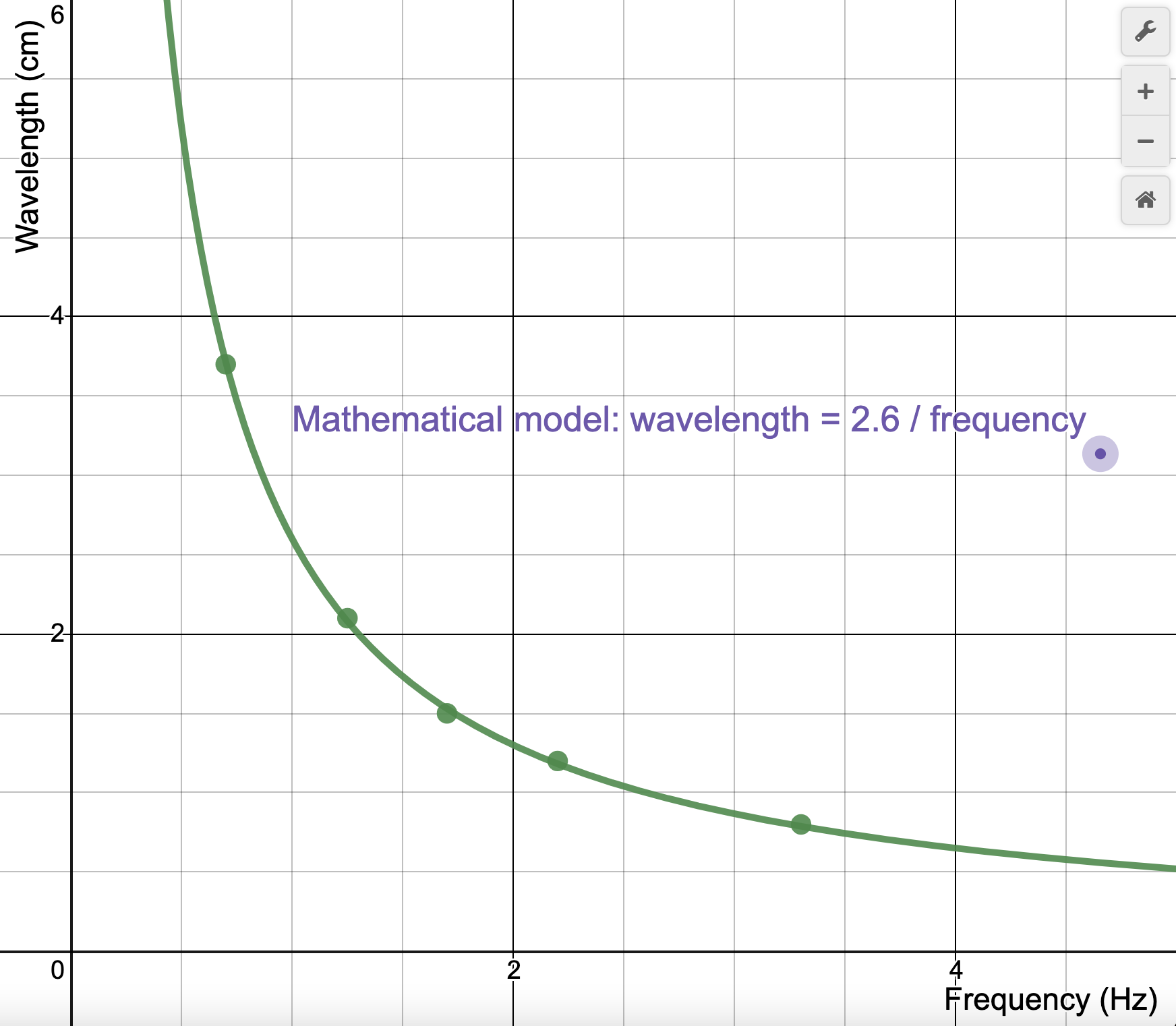
A graph about waves is shown below. Check all of the options that match the graph.

1

In this graph, which wave characteristic does the "2.6" represent?

1

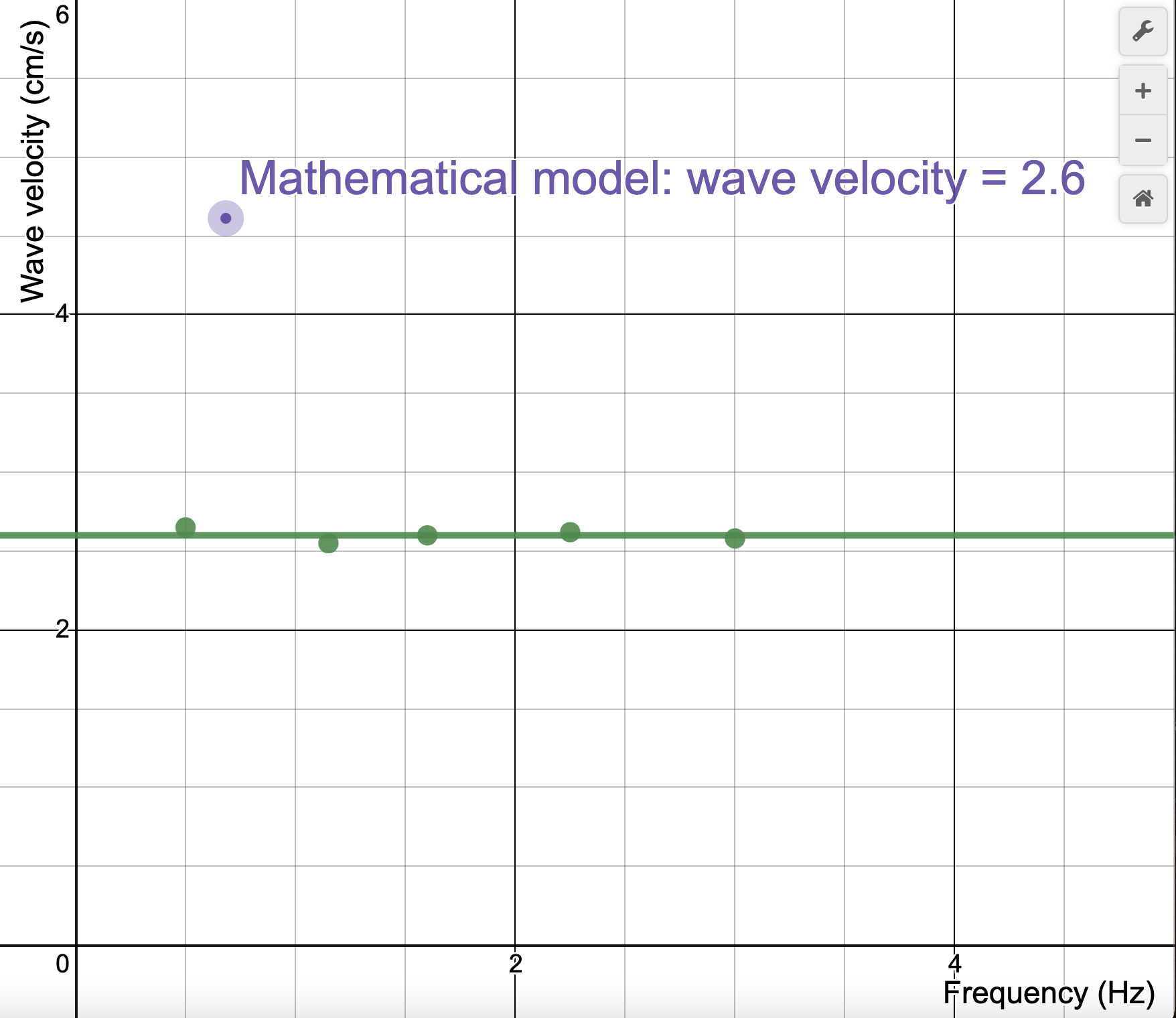
A graph about waves is shown below. Check all of the options that match the graph.

1

The "middle C" note on a piano is a common musician's reference point, and produces a sound wave with a frequency of 262 Hz. The speed of sound in air is 343 m/s. What is the wavelength of a middle C sound wave? Show your work for full credit.

1

A sound wave of 440 Hz in water has a wavelength of 3.25 m. Find the velocity of sound in water. Show your work for full credit.

1

Explain how a bat uses echolocation to find prey in the dark.

1

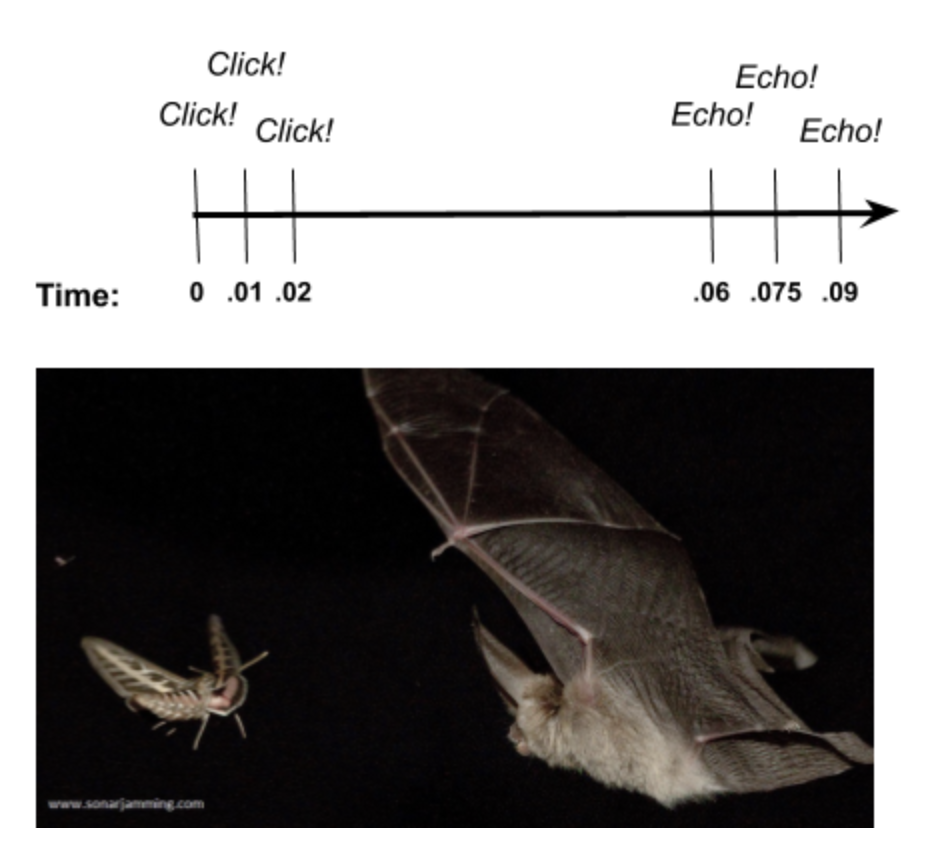
A bat is chasing a moth and it emits a sequence of clicks, 0.01 seconds apart. The bat hears the first echo 0.06 s after emitting the first click, the second echo at 0.075 s, and the third echo at 0.09 s, as shown in the diagram below. The velocity of sound in air is 350 m/s.

How far away is the moth when the second pulse is heard by the bat?

1

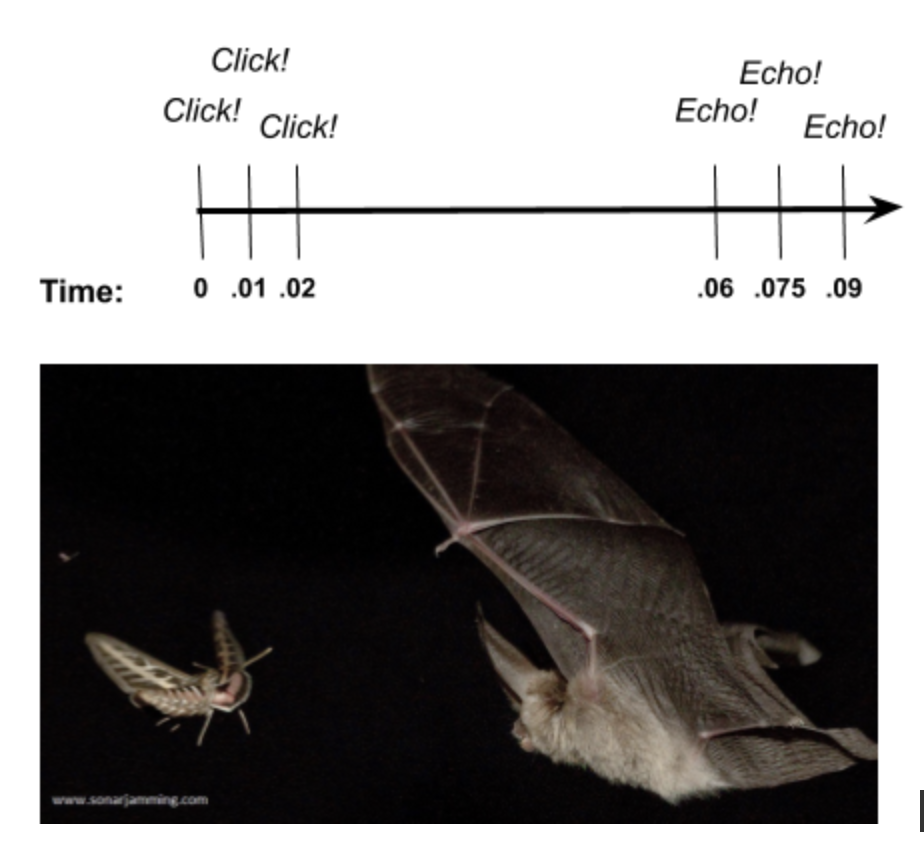
A bat is chasing a moth and it emits a sequence of clicks, 0.01 seconds apart. The bat hears the first echo 0.06 s after emitting the first click, the second echo at 0.075 s, and the third echo at 0.09 s, as shown in the diagram below. The velocity of sound in air is 350 m/s.

Is the moth getting closer to or further away from the bat? Explain using claim, evidence, reasoning.

1

An oceanic depth-sounding ship surveys the ocean bottom near the Mariana Trench, the deepest known location under the ocean. They use ultrasonic sound that travels at 1430 m/s in sea water. They find a 15.4 s delay of the echo to the ocean floor and back. What is the depth?

(Image credit: https://www.scientificamerican.com/article/the-mariana-trench-is-7-miles-deep-whats-down-there/)

1

Explain how ultrasound is used to find injuries (you may use the examples we investigated in class of knee injuries or kidney stones to help you).

1

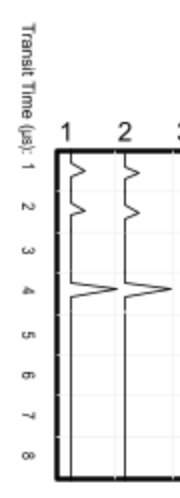
Explain why some ultrasound reflections are larger in amplitude than others (like the 3rd reflection in the two ultrasound lines shown below).