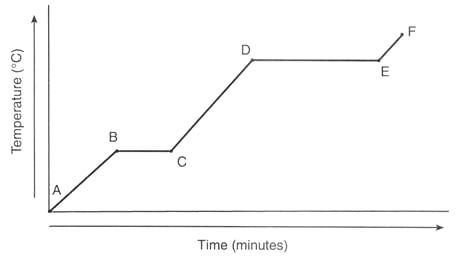
What is the melting point of the substance?
What is the melting point of the substance?
A sample of argon has a volume of 5 L and a pressure of 0.92 atm. If the final temperature is 200 °C, the final volume is 5.7 L, and the final pressure is 800 mmHg, what was the inital temperature of the argon?
State whether the pressure of a gas in a sealed container increases or decreases with each of the following changes:
a) The volume changes from 250 mL to 500 mL.
b) The temperature changes from 20 °C to –80 °C.
c) The moles of gas change from 1.00 mol to 1.50 mol.
The pressure is recorded as 738 mmHg. Convert this measurement to atmospheres (atm).
Le Chatelier's Principle states that if a chemical system at equilibrium is stressed,
When the system A + B ⇌ C + D is at equilibrium,
Consider the following reversible reaction. In a 3.00 liter container, the following amounts are found in equilibrium: 0.0420 mole N2, 0.516 mole H2 and 0.0357 mole NH3. Find the equilibrium constant Keq. N2 + 3H2 ⇌ 2NH3
How many moles of Ca(NO₃)₂ are there in 75 mL of 0.25 M solution?
Calcualte the pH of a solution that has a [3.0 x 10⁻⁶] of HSO4
Strong acids are closest to...
If you have 1.5 moles of copper (Cu), how many grams is that?
Using the following chemical equation, how many grams of phosphorus are needed to produce 25.3 grams of diphosphorus pentaoxide?
P + O2 → P2O5
2.7 x 1025 molecules of MnO equals how many moles?
Match the chemical reactions with their respective type
MgCl2 + Zn --> ZnCl2 + Mg
AB --> A + B
NaOH + HCl --> NaCl + H2O
A + B --> AB
H2 + I2 --> 2HI
A + BC --> AC + B
CxHy + O2 --> CO2 + H2O
2H2O --> 2H2 + O2
AB + CD --> AD + CB
C6H12O6 + 6O2 --> 6CO2 + 6 H2O
Synthesis
Decomposition
Single Replacement
Double Replacement
Combustion
Which of the following can be correctly said about 1.0 mole sample of Ag and 1.0 mole sample of Au? Select all that apply.
When 8 moles of aluminum react according to the reaction below, ______ moles of copper will be produced.
2Al + 3CuSO4 --> Al2(SO4)3 + 3Cu
On a hot day, a small, well-insulated building is significantly colder than the outside. A solid metal door leads to the outside, and a person placing their hand nearby but not touchng the door can feel warmth from the door. How does the heat from outside make it into the hand?
What is the melting point of the substance?
Match the following masses with the number of moles.
| Draggable item | arrow_right_alt | Corresponding Item |
|---|---|---|
16.0 g of O2 | arrow_right_alt | 1 mole |
23 g of Na | arrow_right_alt | 2 moles |
10.0 g of NaOH | arrow_right_alt | 0.5 moles |
4.04 g of H2 | arrow_right_alt | 0.25 moles |
Balancing the equation; make sure you show your work.
When heat is added to boiling water, the temperature of the boiling water
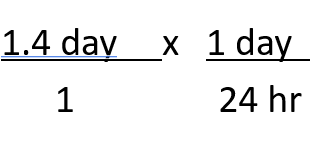
What is wrong with this set up?
Endothermic reactions result in: (Select all that apply)
Using the following chemical reaction, determine how many moles of Mg(OH)2 will be produced if you start with 12 moles of H2O.
Mg + H2O → Mg(OH)2 + H2
P4 + Cl2 → PCl3
Calculate how many grams of phosphorus that reacted if 250g of phosphorus trichloride, PCl3 is produced by the above reaction.
Two metals of equal mass but different specific heat capacities are subjected to the same amount of heat. Which will undergo the smallest change in temperature?
Identify the acid, base, conjugate acid and conjugate base for the following:
HClO4 + H2O ⇄ H3O + ClO4
Using the following reaction:
CaCO3 + SO2 + other reactants --> CaSO3 + other products (no need to balance)
In a particular experiment, 255 g of CaCO3 was exposed to 135 g of SO2 (limiting) in the presence of an excess amount of other chemicals required for the reaction. What is the theoretical yield of CaSO3? If only 198 g of CaSO3 were produced, what would be the percent yield of CaSO3 in this experiment?
Which of the following is true for temperature?
A hot metal sinker of mass 68.2 grams at 99.8°C is dropped into a cup containing 125 mL of water at 22.4°C. The final temperature in the cup is 31.0°C. What is the specific heat capacity of the metal? Submit/show your work.
Consider the following heating curve for water and answer the following questions:
a. Describe as fully as you can what is happening for each section of the curve (for example, what is going on between A and B, B and C, etc.
b. What is the temperature at point B?
c. What is the temperature at point E?