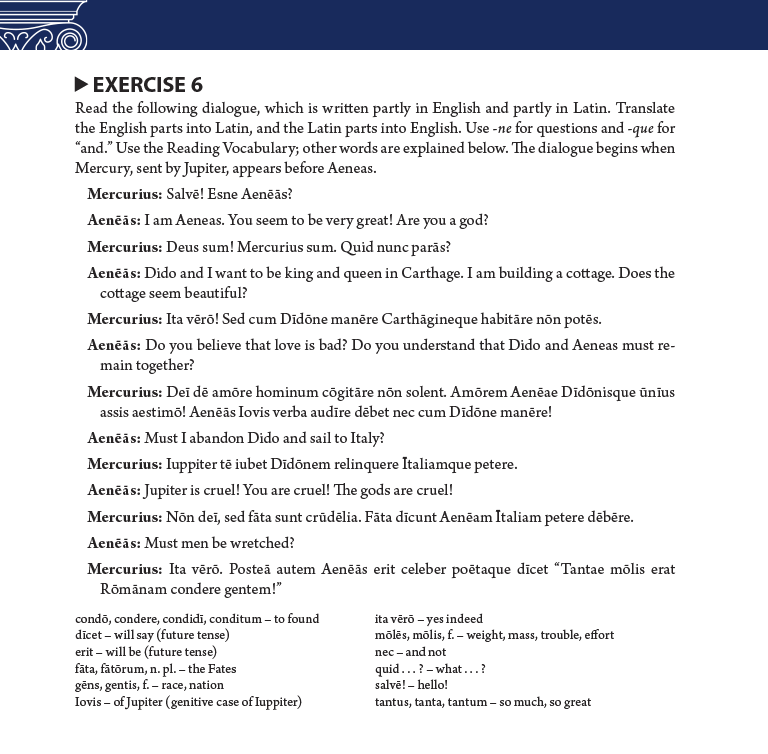
Read the following dialogue, which is written partly in English and partly in Latin.
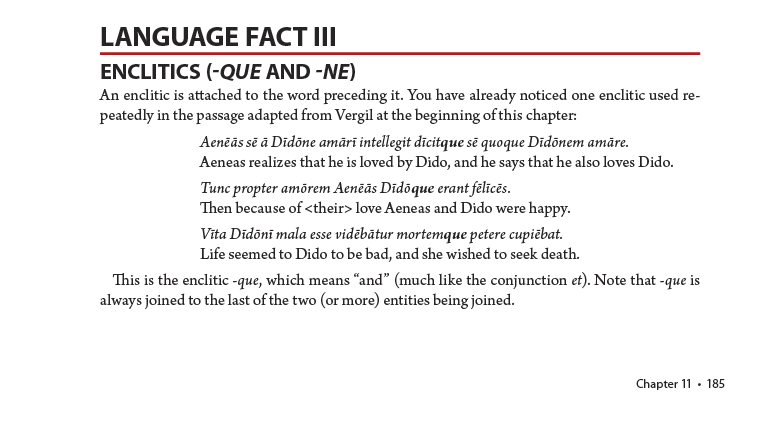
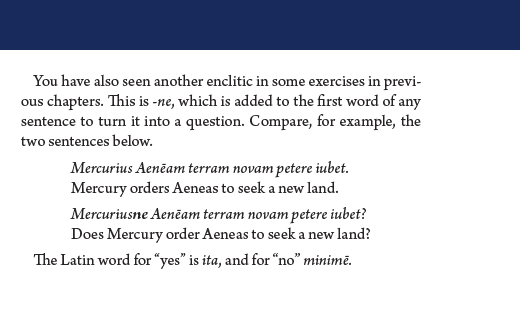
Translate the English parts into Latin, and the Latin parts into English. Use -ne for questions and -que for “and.”
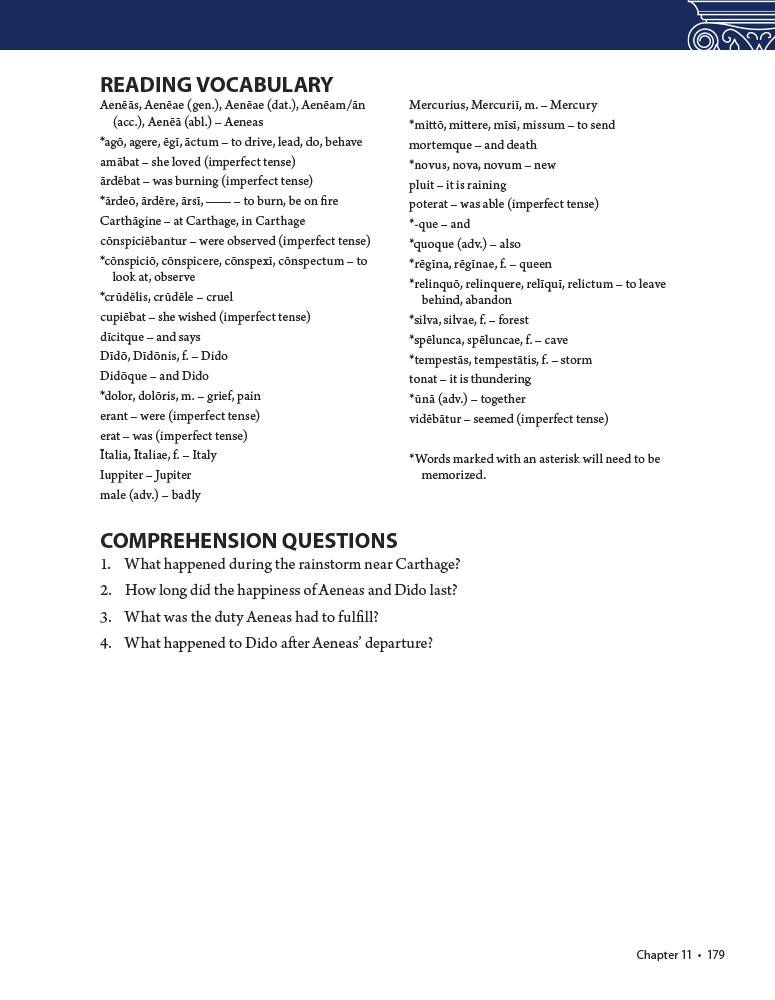
Use the Reading Vocabulary; other words are explained below.
The dialogue begins when Mercury, sent by Jupiter, appears before Aeneas.
Mercurius: Salvē! Esne Aenēās?
Aenēās: I am Aeneas. You seem to be very great! Are you a god?
Mercurius: Deus sum! Mercurius sum. Quid nunc parās?
Aenēās: Dido and I want to be king and queen in Carthage. I am building a cottage. Does the cottage seem beautiful?
Mercurius: Ita vērō! Sed cum Dīdōne manēre Carthāgineque habitāre nōn potēs.
Aenēās: Do you believe that love is bad? Do you understand that Dido and Aeneas must remain together?
Mercurius: Deī dē amōre hominum cōgitāre nōn solent. Amōrem Aenēae Dīdōnisque ūnīus assis aestimō!
Aenēās Iovis verba audīre dēbet nec cum Dīdōne manēre!
Aenēās: Must I abandon Dido and sail to Italy?
Mercurius: Iuppiter tē iubet Dīdōnem relinquere Ītaliamque petere.
Aenēās: Jupiter is cruel! You are cruel! The gods are cruel!
Mercurius: Nōn deī, sed fāta sunt crūdēlia. Fāta dīcunt Aenēam Ītaliam petere dēbēre.
Aenēās: Must men be wretched?
Mercurius: Ita vērō. Posteā autem Aenēās erit celeber poētaque dīcet “Tantae mōlis erat Rōmānam condere gentem!”