Complete the following table regarding the electrolysis of molten copper (II) bromide.

Complete the following table regarding the electrolysis of molten copper (II) bromide.
Complete the following table regarding the electrolysis of molten copper (II) bromide.
Which statement is correct?
a. Lead chloride is ionic so solid lead chloride will conduct electricity
b. When a molten ionic compound conducts electricity free ions move through the electrolyte
c. When liquid mercury conducts electricity mercury ions move towards the negative electrode
d. During the electrolysis of a molten salt reduction will always occur at the positive electrode
All ionic substances in any state will conduct electricity
In the electrolysis of molten sodium Chloride, Sodium forms at the cathode and Chlorine at the anode.
The negative electrode is called the anode


Which of the following ionic equation regarding displacement reaction will not happen?
a. Fe2+ + Zn -->Zn2++ Fe
b. Zn2+ + Fe -->Fe2++ Zn
c. Fe2+ + Ca -->Ca2++ Fe
d. Cu2+ + Mg -->Mg2++ Cu
Which of the following compounds is the most stable?
a. MgCO3
b. CuCO3
c. FeCO3
d. ZnCO3
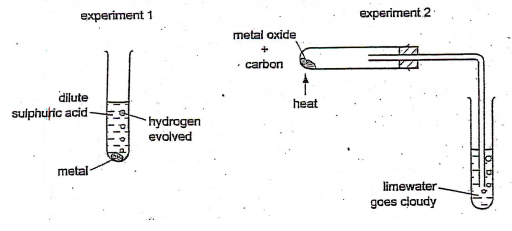
The diagrams show two experiments to investigate metal reactivity.
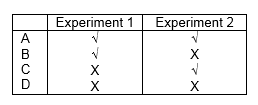
In which of these experiments could the metal be copper?
When Aluminum and copper (II) oxide are heated, a displacement reaction takes place
a. Write down the word equation for this reaction. (2 marks)
b. Name one metal that would remove the oxygen from aluminum oxide……………………………(1 mark)
Why alloys are stronger then pure metals?
Metals conduct electricity through movement of ions.
Alkali Metals do not react with oxygen
Name one type of reaction we have seen in this unit AND give an example
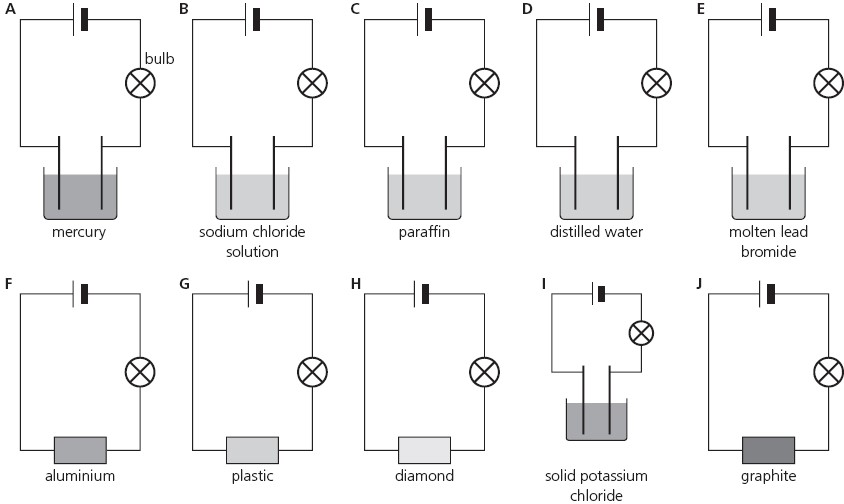
For A–J below, circle choose the letter if the bulb will light