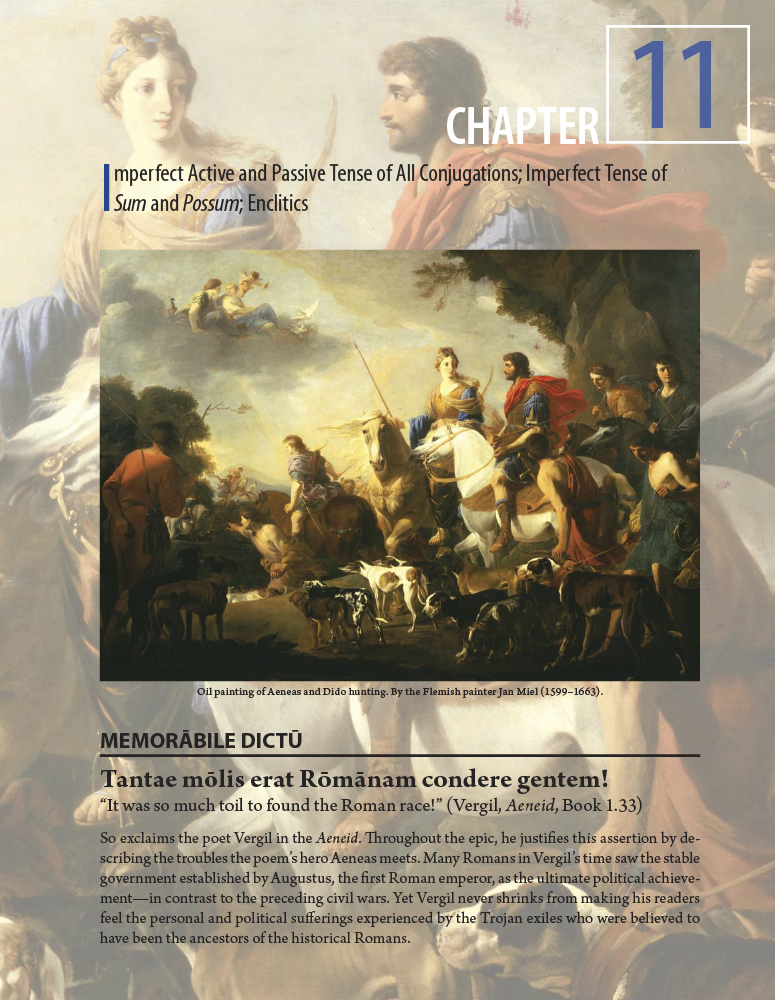
Tantae mōlis erat Rōmānam condere gentem! is from Homer’s Iliad
Augustus was the first Roman emperor.
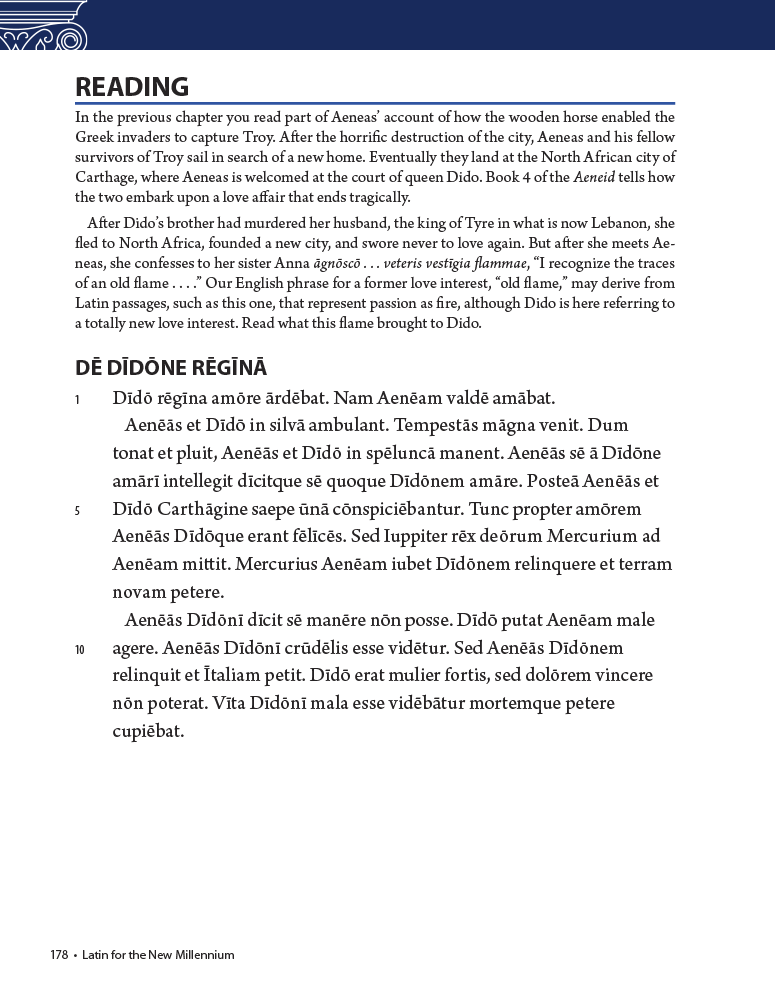
Dido was the queen of Cairo.
Carthage was a city in North Africa.
Complete the quotation: “Tantae mōlis erat ___________.”
Who is the author of the quotation which begins “Tantae mōlis erat”?
Identify the first emperor who is credited with bringing stability to Rome.
The mythical ancestors of the Romans were exiles from ____________.
In the Aeneid, Anna is
During a great storm Aeneas and Dido
According to the reading passage, Dido was not able to conquer her _____ and died.
Identify the terra nova Aeneas is ordered to seek.
Which of the following is in the accusative case?
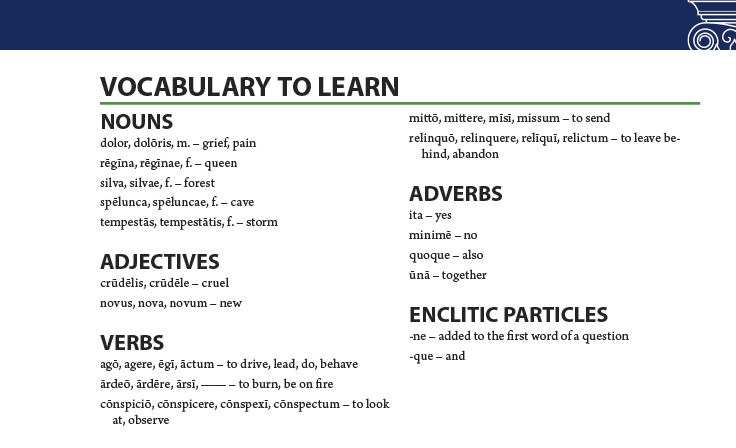
The noun dolor means “trick”.
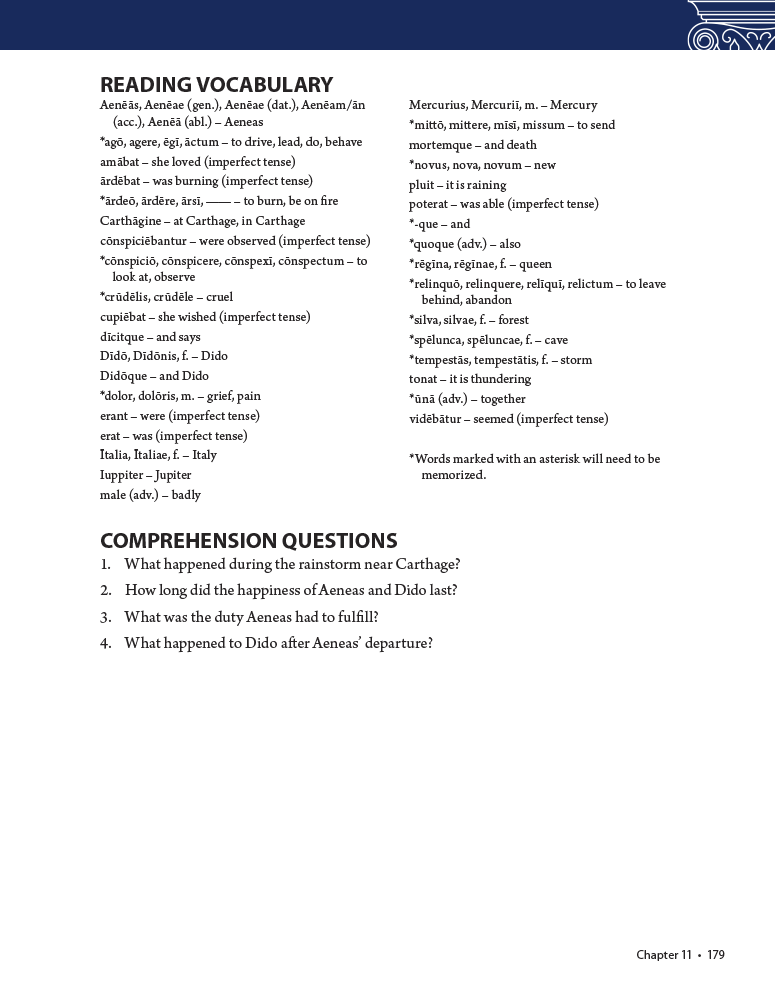
The verb mittō means “to send”.
The adverb quoque means “also”.
Match each Latin phrase to its English equivalent.
| Draggable item | arrow_right_alt | Corresponding Item |
|---|---|---|
poterāmus | arrow_right_alt | they were being observed |
Esne Aenēās? | arrow_right_alt | we were giving |
veniēbās | arrow_right_alt | you were |
intellegit dīcitque | arrow_right_alt | Are you Aeneas? |
vocābar | arrow_right_alt | in a cave |
erās | arrow_right_alt | he understands and says |
dabāmus | arrow_right_alt | we were able to |
cōnspiciēbantur | arrow_right_alt | a new land |
in spēluncā | arrow_right_alt | you were coming |
terram novam | arrow_right_alt | I was being called |
Which of the following nouns is NOT feminine?
The house was located in a sylvan glen.
I have a friend who is an avid spelunker.
He was a novice at soccer.
The word “arson” is derived from the Latin word meaning
Which of the following describes a relic?
The couple had a tempestuous relationship with their children.
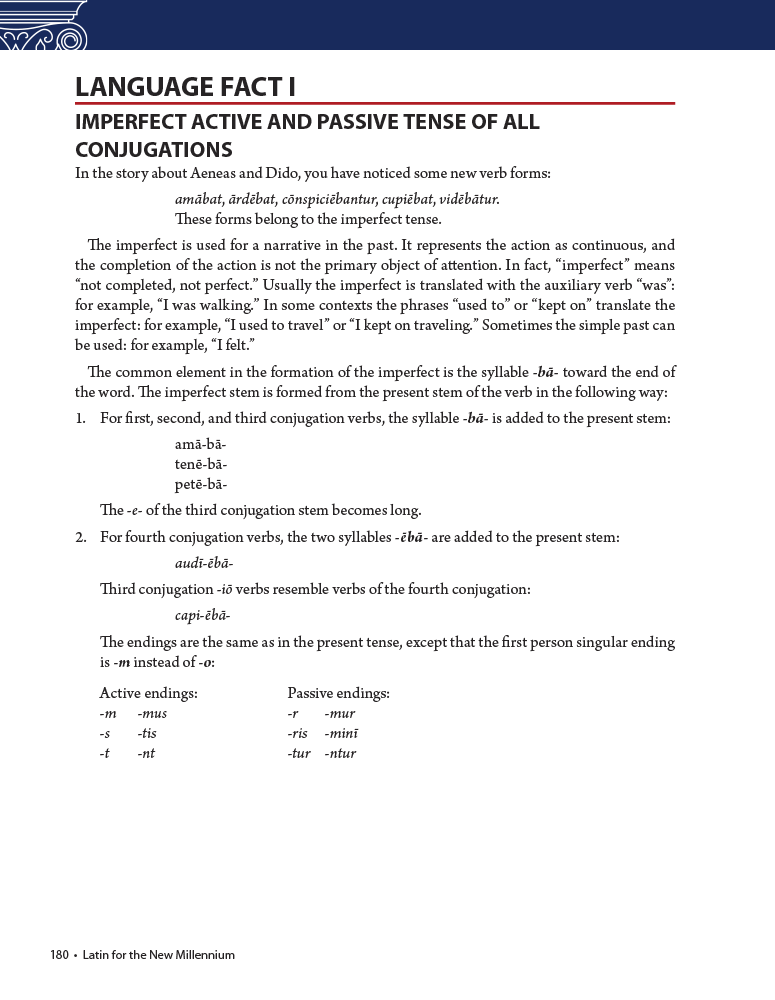
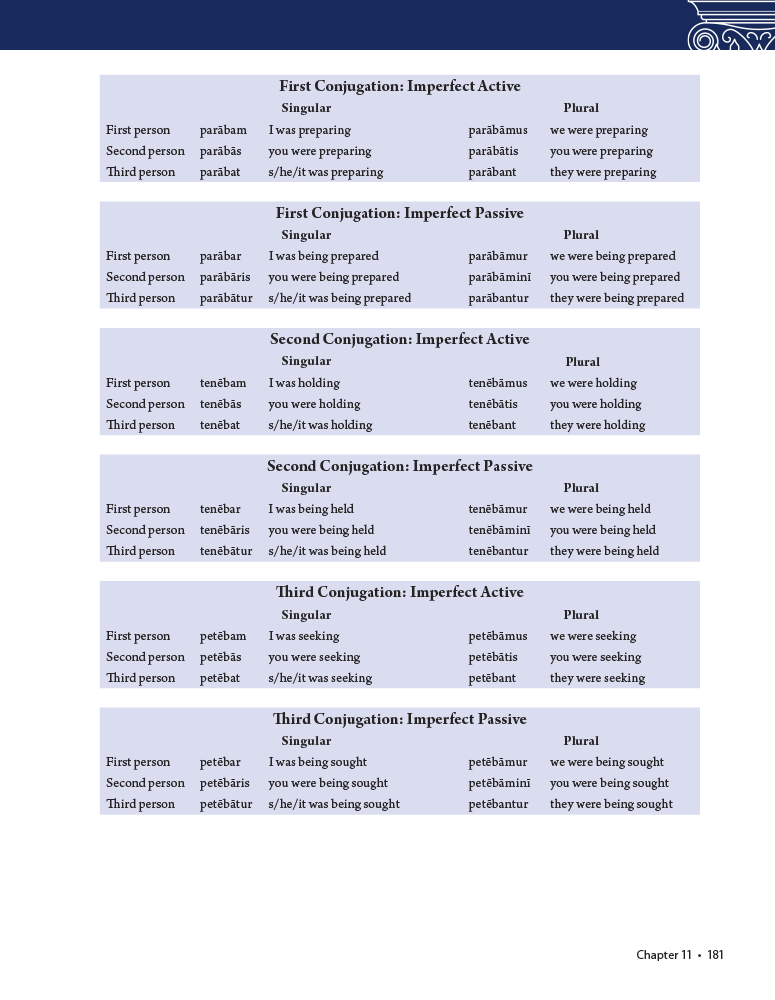
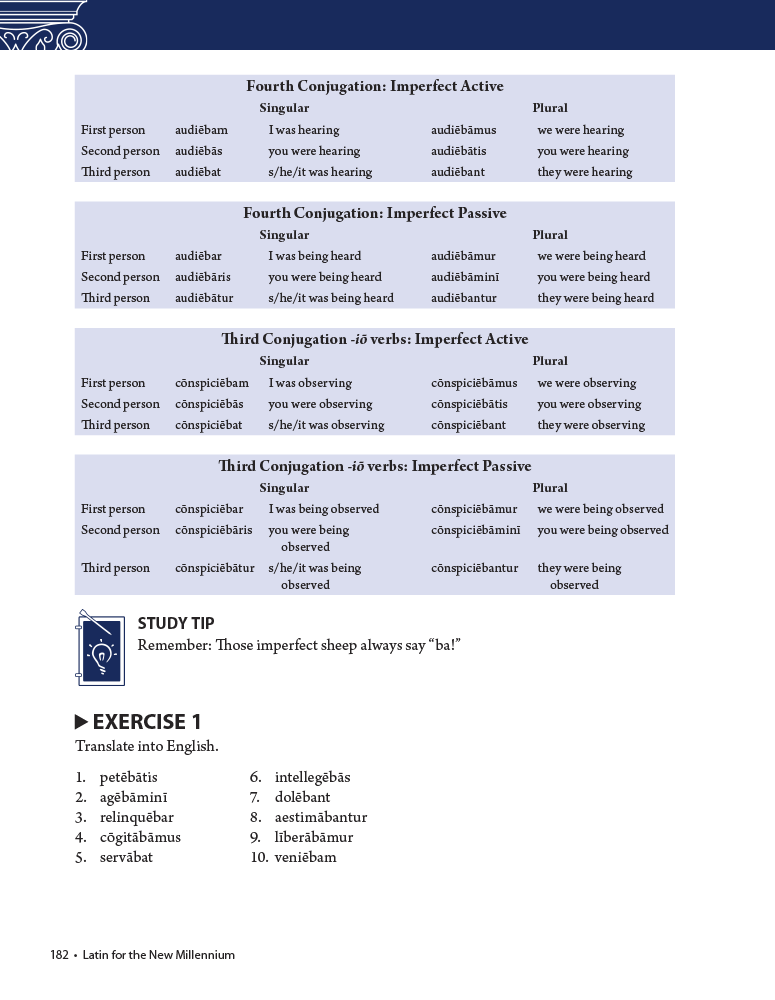
The imperfect tense indicates completed action in the past.
What is the sign of the imperfect in all four conjugations?
The imperfect tense indicates all of the following types of action in past time EXCEPT
What is the corresponding imperfect passive of cupis?
What is the corresponding imperfect passive plural of conspiceris?
All of the following translate mittēbam EXCEPT
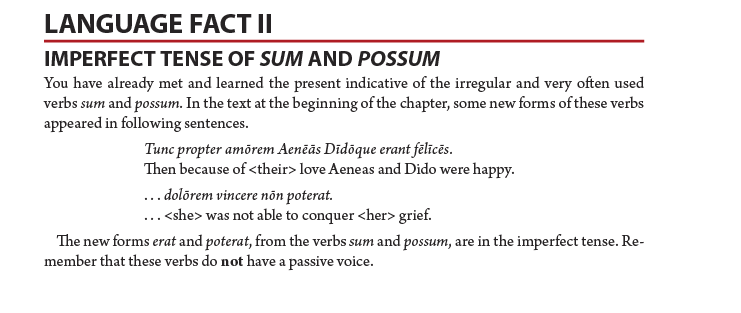
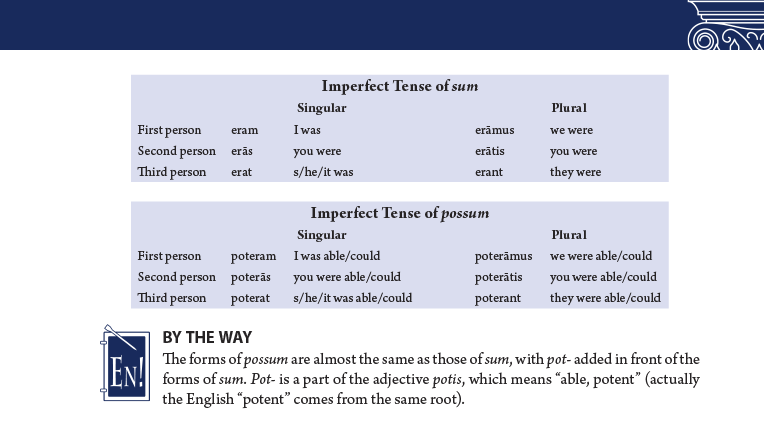
The third person singular imperfect form of sum is erat.
Which of the following is in the imperfect tense?
Which of the following does NOT form its imperfect with the same sign as the rest?
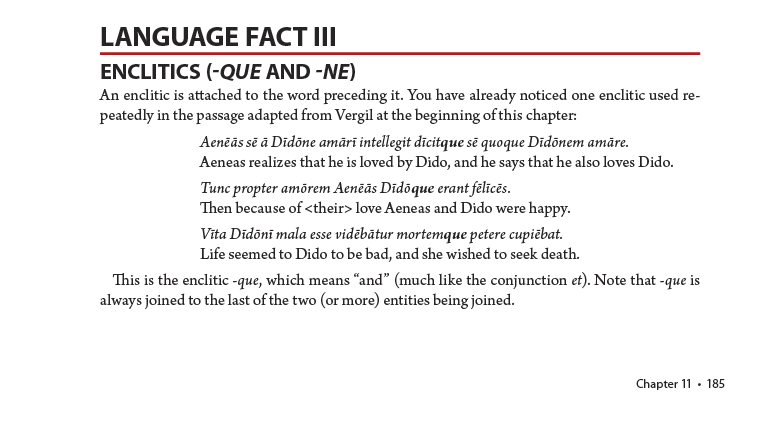
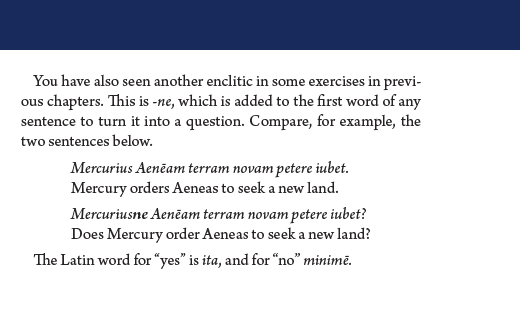
Enclitics, like –que and –ne, are particles that are attached to the end of a word.
Which of the following is NOT a conjunction?
Could the animals be driven to water?
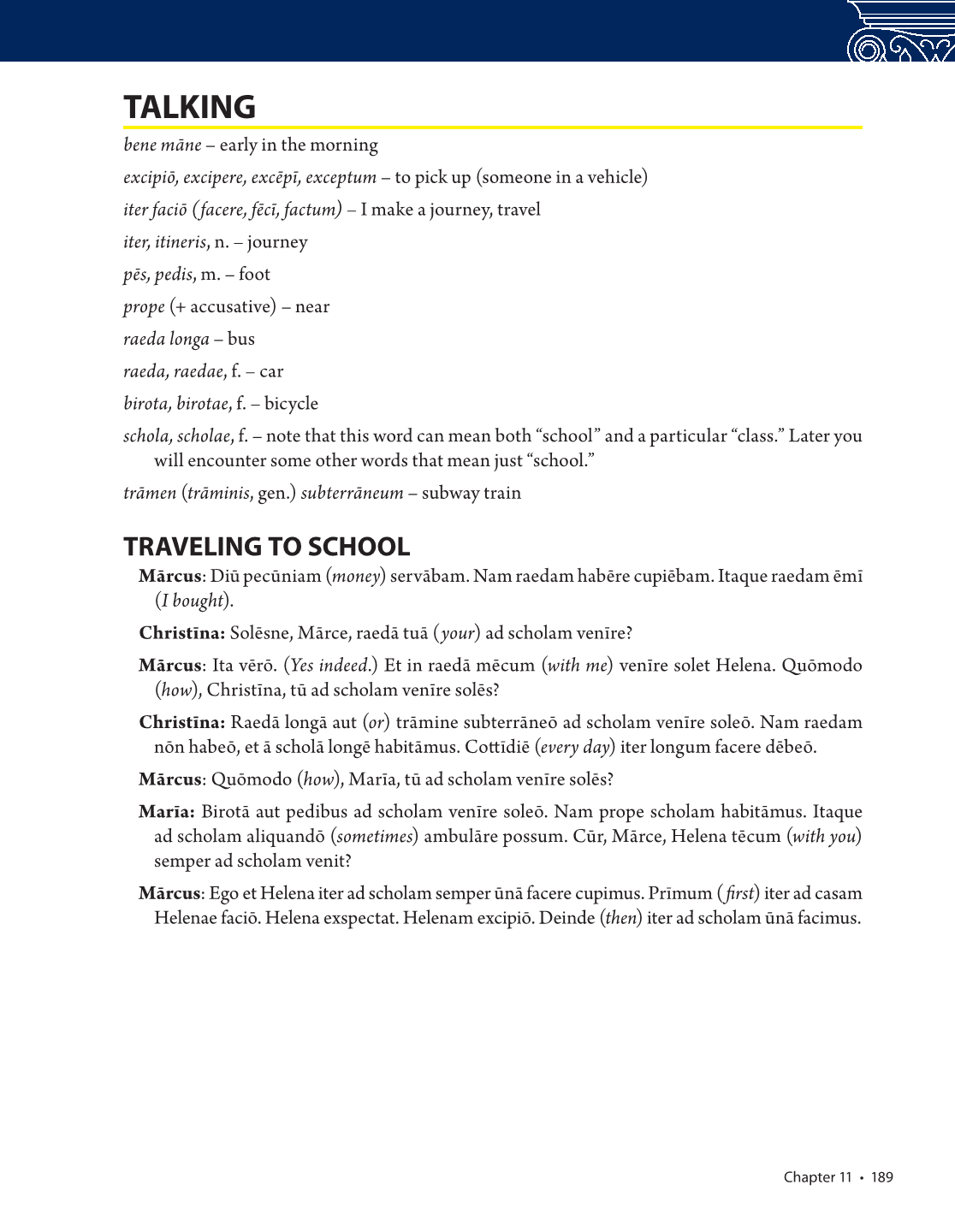
According to the conversation of the students on transportation, Christina rides a bus because
A quotidian publication comes out
Where does a tramen subterrāneum run?
Which of the following does NOT introduce a question?