Which combination of bonds is present in this molecule?

Which combination of bonds is present in this molecule?
Which combination of bonds is present in this molecule?
Which exception to the octet rule is shown by beryllium in this molecule?
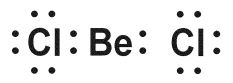
Which is NOT a diatomic molecule?
Which type of bond has one pair of electrons shared between atoms?
In the compound PCl3, how many total valence electrons are present?
Which type of bond has an electronegativity difference greater than 1.7?
How many pairs of bonding electrons are in a molecule that displays sp2 hybridization?
How many pairs of bonding electrons are present in a molecule that displays trigonal bipyramidal molecular shape?
What molecular shape does the compound CH4 have?
Which is the correct formula for the compound dinitrogen dioxide?
Which is the formula for the compound sulfur pentachloride?
How many pi bonds are there in a triple covalent bond?
How many bond pairs of electrons exist in a molecule of water?
Which of the following compounds is an exception to the octet rule?
Name the compound CS2
Name the compound S2F5
Name the compound P3S7
Name the compound N3O9
Name the compound S2N6
Give the formula for the covalent compound dinitrogen tetrafluoride.
For covalent compounds, the electrons are ______________ between the atoms.
What does the prefix nona- represent?
What suffix do all covalent compounds end with?
Give the number of bonded pairs.

Name the type of hybridization

This molecule has _____________ degrees between each bonded pair.
Name the type of molecular geometry

Give the number of bonded pairs.
This molecule has _____________ degrees between each bonded pair.

Name the type of hybridization

Name the type of molecular geometry
What do the pink paddles represent in the structure?
Unequal sharing of electrons between two bonded atoms always indicates
In what form do elements such as oxygen, hydrogen, nitrogen, chlorine, bromine, fluorine, and iodine normally occur?
How many sigma bonds in the molecule?
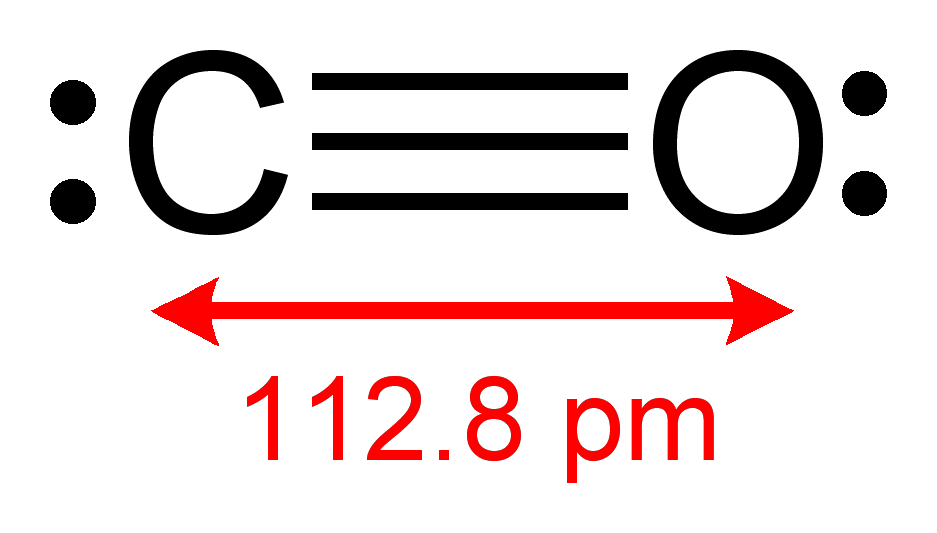
How many pi bonds in the molecule?
How many bonded pairs of electrons in the molecule?

How many lone pairs of electrons in the molecule?
How many sigma bonds in the molecule?
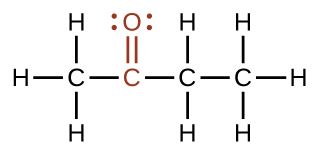
How many pi bonds in the molecule?
How many total valence electrons in the molecule?
Essay--Write the answer to one essay question in the space provided below.
FCA’s 1. Write in complete sentences and paragraph form.
2. Use Chapter 8 terminology to answer questions(example: hybridization, double bond, lone pairs, etc...).
3. Provide inferences, other thoughts, or personal experiences in your answer whenever possible.
#1 Explain why is PCl5 an exception to the octet rule, while PCl3 is not?
#2 Vanderwaal's forces, Dipole-Diple moment, and Hydrogen bonding are used to explain bonding between covalent compounds. Explain which is the strongest of the three bonding forces and how the molecules bond according to this force.