2.2 Model Earth

Last updated over 4 years ago
8 questions
Part 1. Make your model
The Earth is huge! Almost 13,000 km / 8,000 miles across. This makes it difficult to comprehend. Scale models are a tool scientists can use to get a better understanding of the natural world. Sometimes, models are used to scale up something small...
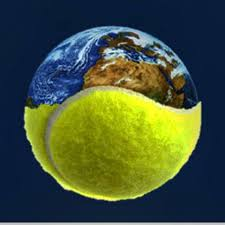
However, today we'll be scaling down the Earth to model its layers, then learning more about each layer. In our model, the Earth will be about the size of a tennis ball. That means 1 centimeter will = about 2,000 km (about the distance between Beaverton and El Paso, Texas).
1

Make a hypothesis:
Our model will show Earth’s four major layers—the crust, mantle, inner core and outer core. How thick do you think each layer might be? Make a guess by drawing the layers on the diagram below. Label your diagram with the name of each layer.

Time to get crafty!
Materials -
- 4 colors of clay (about a golf ball size): blue / red / yellow / green - or whatever you have!
- centimeter ruler: find one on the back cover of your ISB planner
- cutting tool - 1 foot of dental floss or a knife

Construction Procedures:
  1. Using your hands, shape a round ball of clay for each of the four layers. Line each ball up with your ruler and adjust until their diameter (widest part) matches the length below. Be as exact as you can! Remember, the colors are just a suggestion. Substitute the colors you have.
  2. Layer 1: Red - 1 cm diameter
  3. Layer 2: Orange - 2.75 cm diameter
  4. Layer 3: Yellow - 5 cm diameter
  5. Layer 4: Blue - 1.5 cm diameter
  6. Start with the red clay sphere. This will represent the first layer: the Inner Core.
  7. For Layer 2, take the orange clay. Carefully flatten & mold the orange clay evenly around the red Inner Core to represent the Outer Core. Gently roll into a smooth sphere.
  8. For Layer 3, take the yellow clay. Carefully flatten & mold the yellow clay evenly around the orange Outer Core to represent the Mantle. Gently roll this into a smooth sphere.
  9. Finally, take the blue clay. Carefully flatten & mold the blue clay to completely cover your Earth model with Crust. (This may be a challenge).
  10. Cut your model in half. To do this using dental floss, set your model on a table, and draw the floss down through your model with a back & forth motion. You may also use a sharp knife.
If you were not able to gather these materials (this was Wednesday's task), watch this video instead and draw a color diagram of the model on paper. This is not the same scale as the directions above. Or, help a member of your group and record their measurements.
1

Take a picture of your model and upload here. Was your hypothesis close, or way off? In the box, describe which layer(s) you were correct about, and which one(s) surprised you most.

1

Using your ruler, carefully measure the width of each layer in your model. Complete the table below by filling in columns 2 & 3.

1

What was the biggest challenge creating your earth model?

1

One challenge I experienced was forming the crust out of such a small layer of blue clay. What might this suggest about earth's crust?

PART 2. Great work! Leave the breakout room and open up your digital notebook from last week. As you read the article below, fill in page 4 of your notebooks. When you finish, you'll answer a few more questions below.
1

Check for understanding: Match the layer to the description.

  • Hottest layer
  • Most dense layer
  • Thickest layer
  • Creates the magnetic field
  • Thinnest layer
  • Liquid churning causes crust to shift
  • Where tectonic plates are
  • Coolest layer
  • Inner Core
  • Outer Core
  • Mantle
  • Crust
1

Now that you have completed the reading, what is one change that you would make to your model so that it was more realistic?

1

Based on your learning today, what is a question you have?

Nice work! Rejoin class for a discussion before we close today. Remember to submit this work for $10 Bones Bucks.