7.4 Lemonade Lab
star
star
star
star
star
Last updated almost 4 years ago
20 Nsɛmmisa
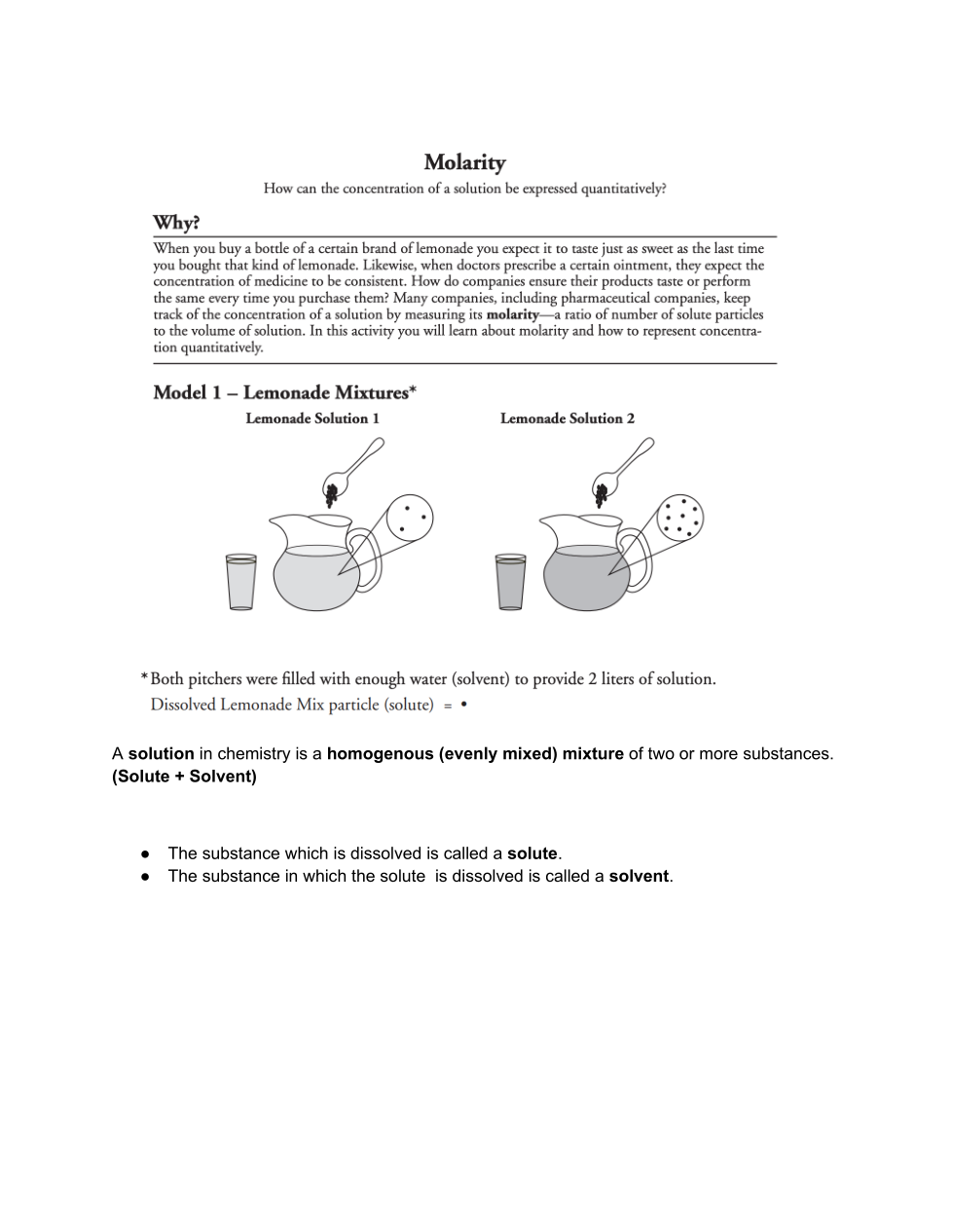
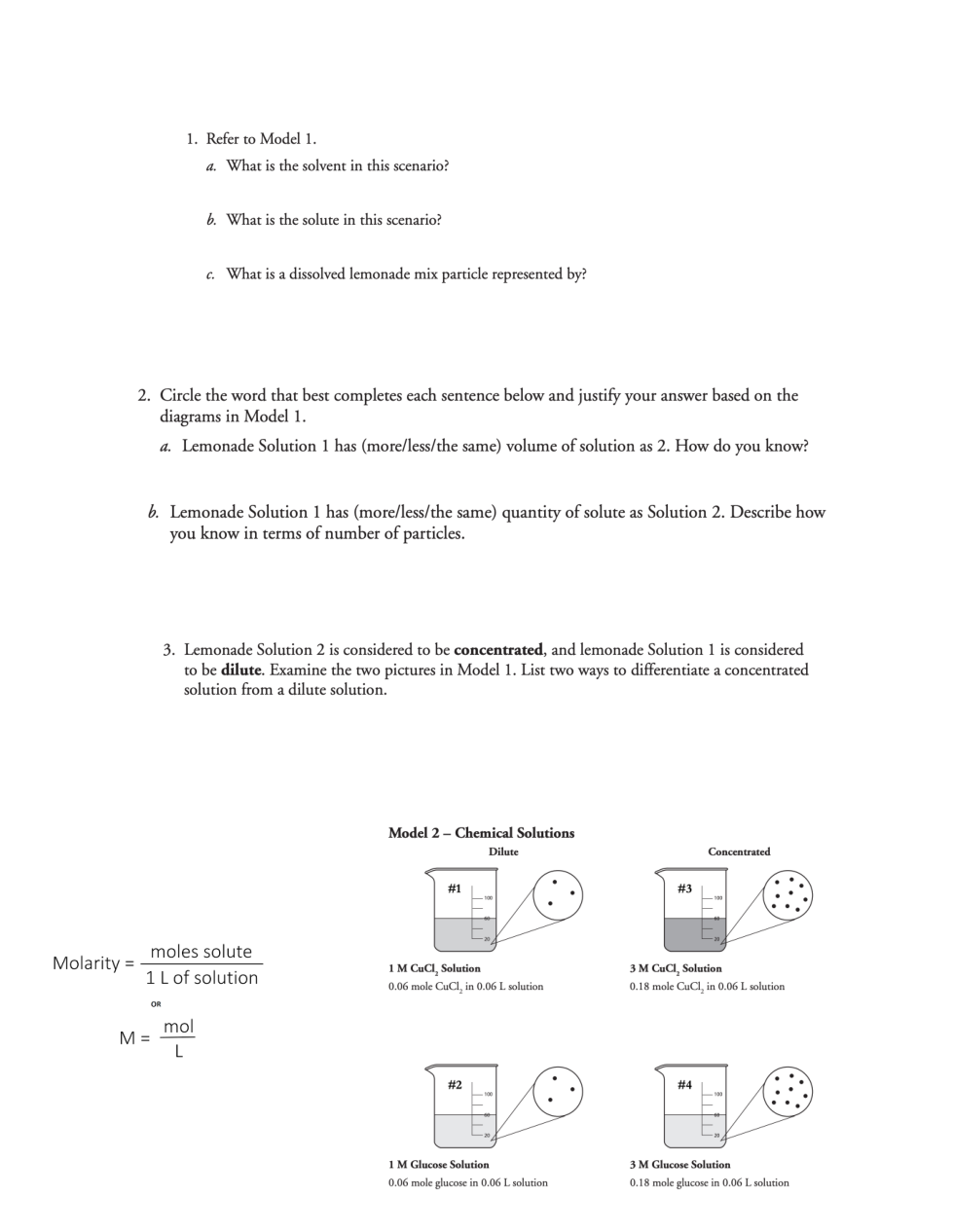
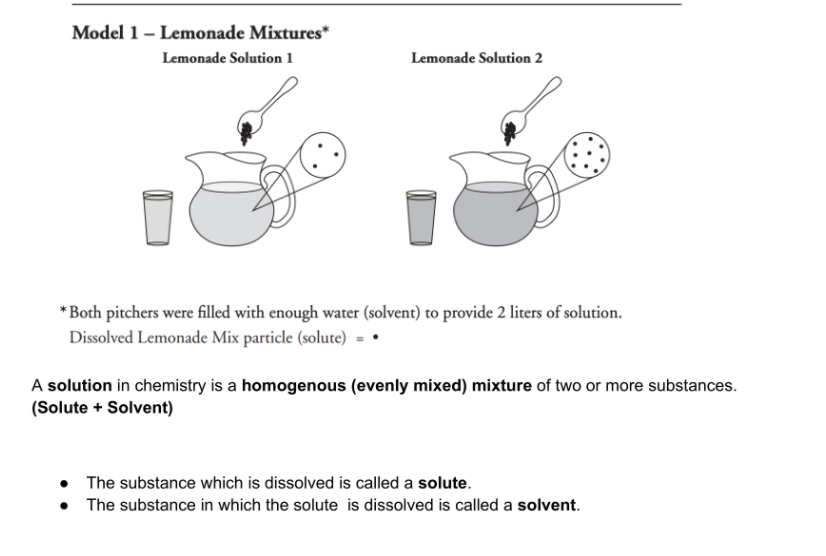
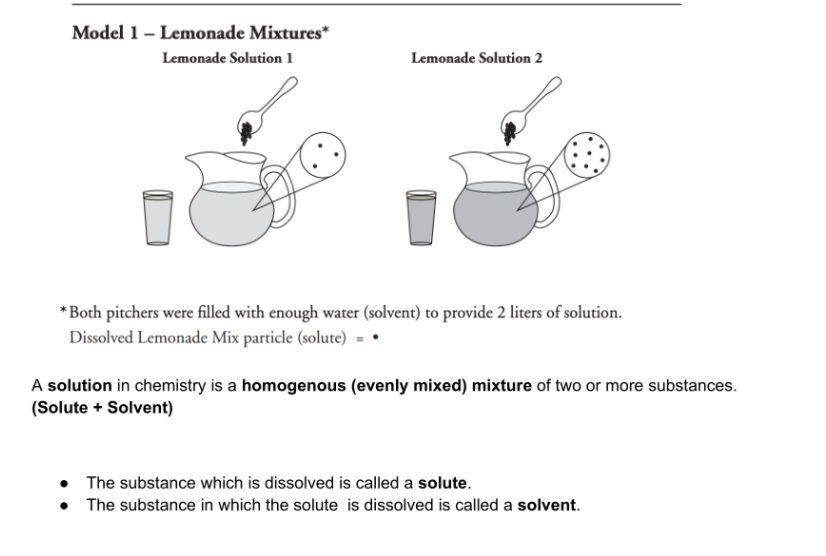
Refer to model 1 to match the following.
| Draggable item | arrow_right_alt | Corresponding Item |
|---|---|---|
Black Dot | arrow_right_alt | What is the solvent? |
Water | arrow_right_alt | What is the solute? |
Lemonade mix | arrow_right_alt | What is a dissolved lemonade mix particle represented by? |
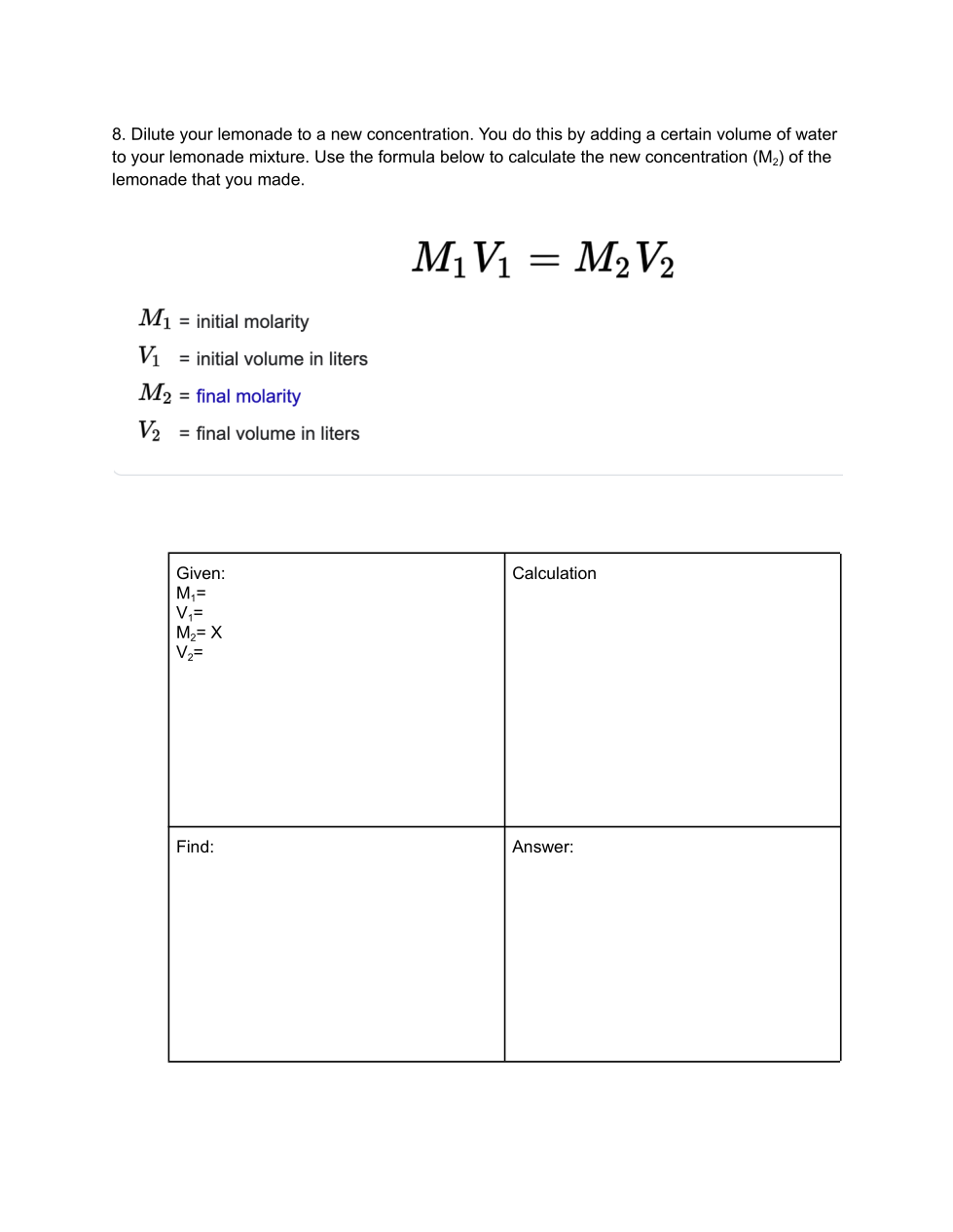
Click on Show your Work for question 9.
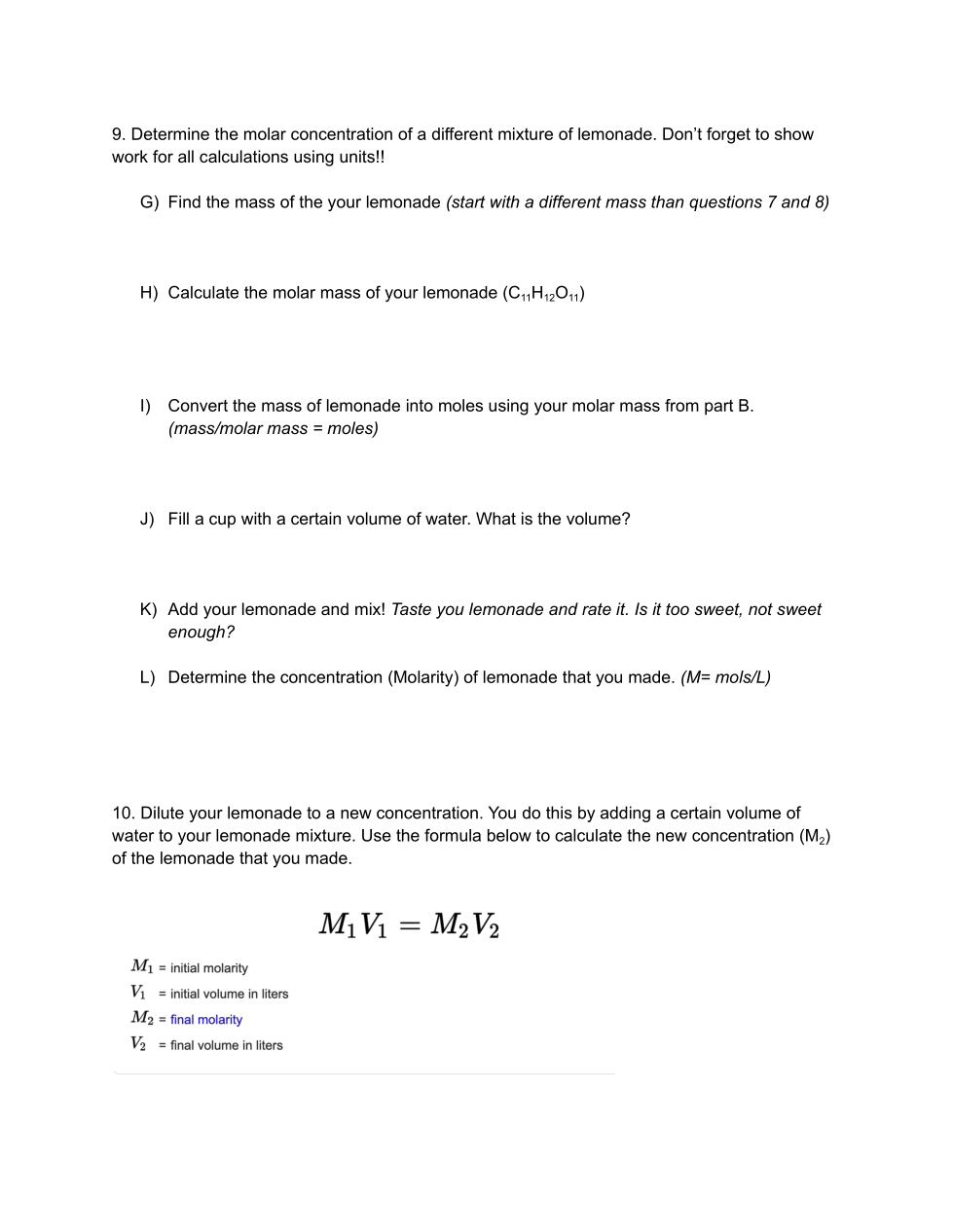
Click on Show your Work to answer question 10.
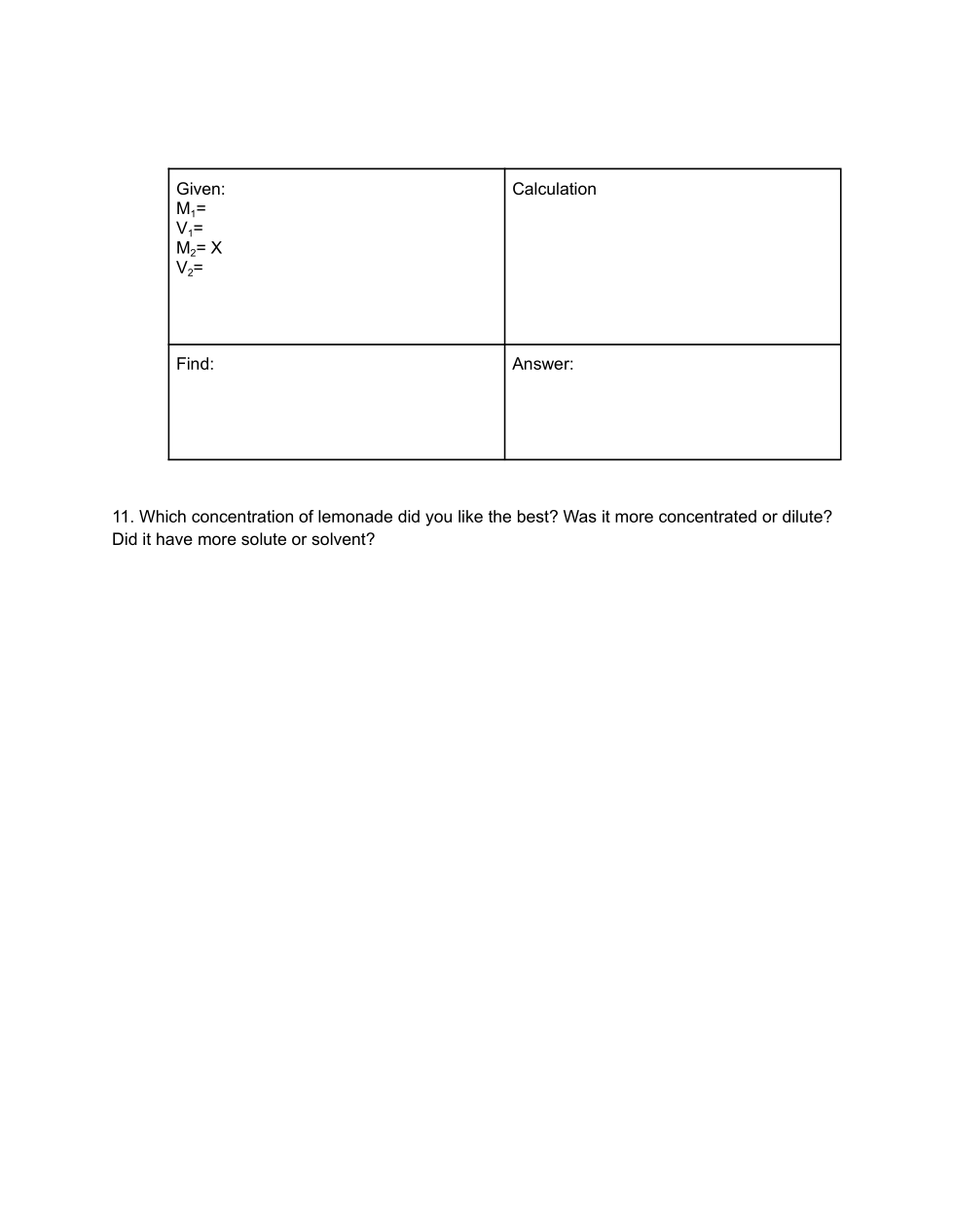
Click on Show Your Work to answer question 11.
Which concentration of lemonade did you like the best? Was it more concentrated or dilute? Did it have more solute or solvent?
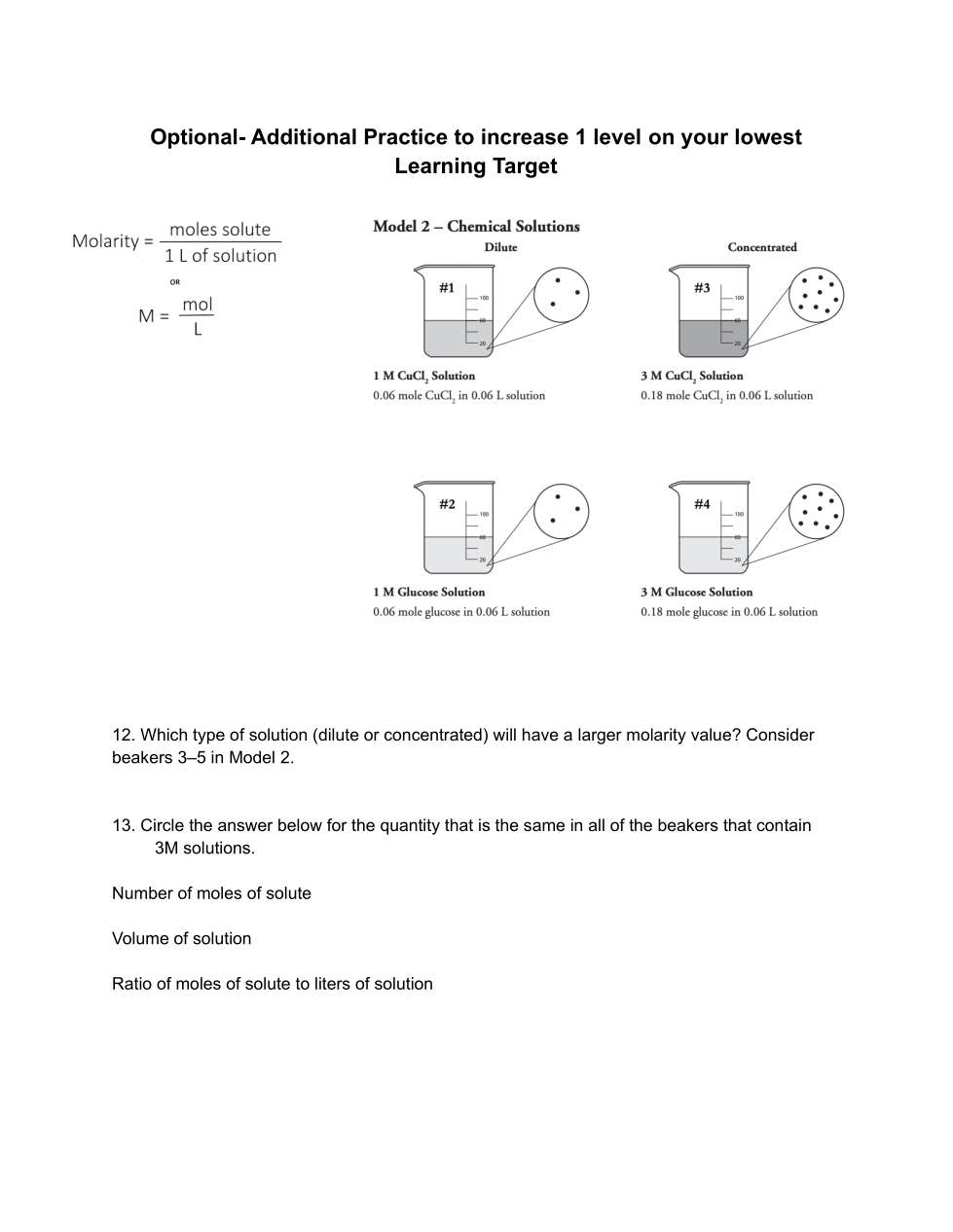
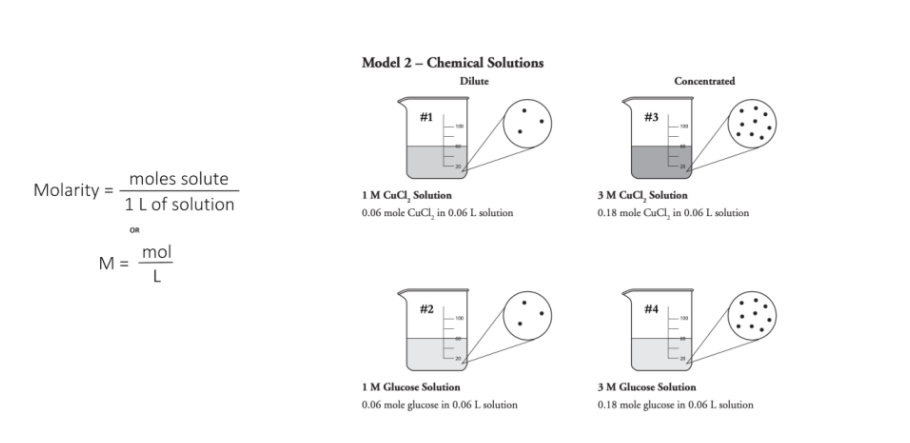
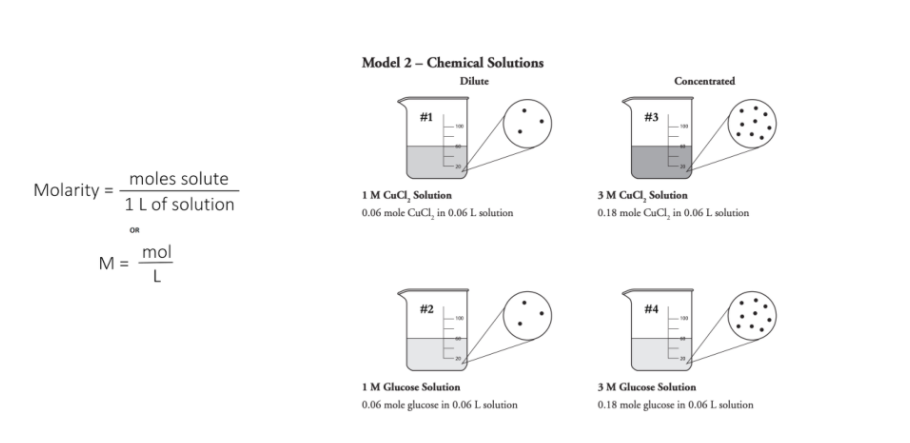
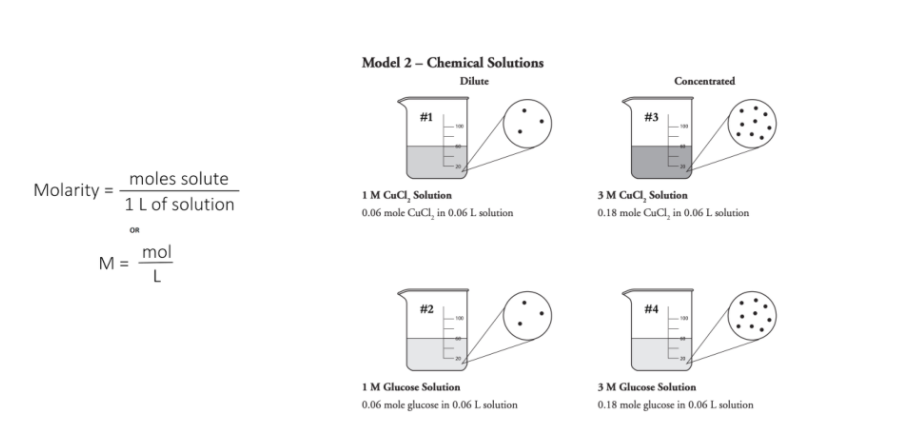
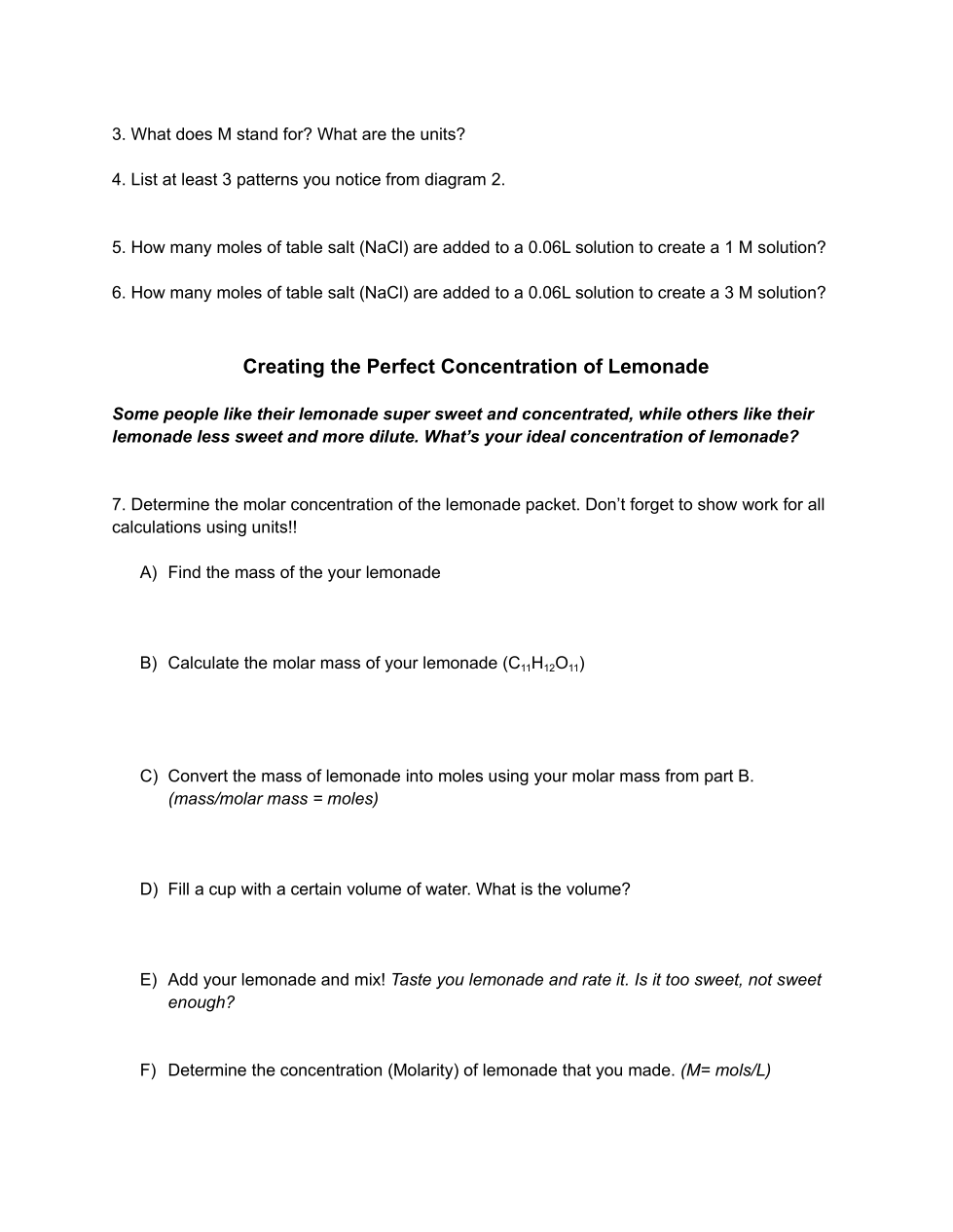
Which type of solution (dilute or concentrated) will have a larger molarity value? Consider beakers 3–5 in Model 2.
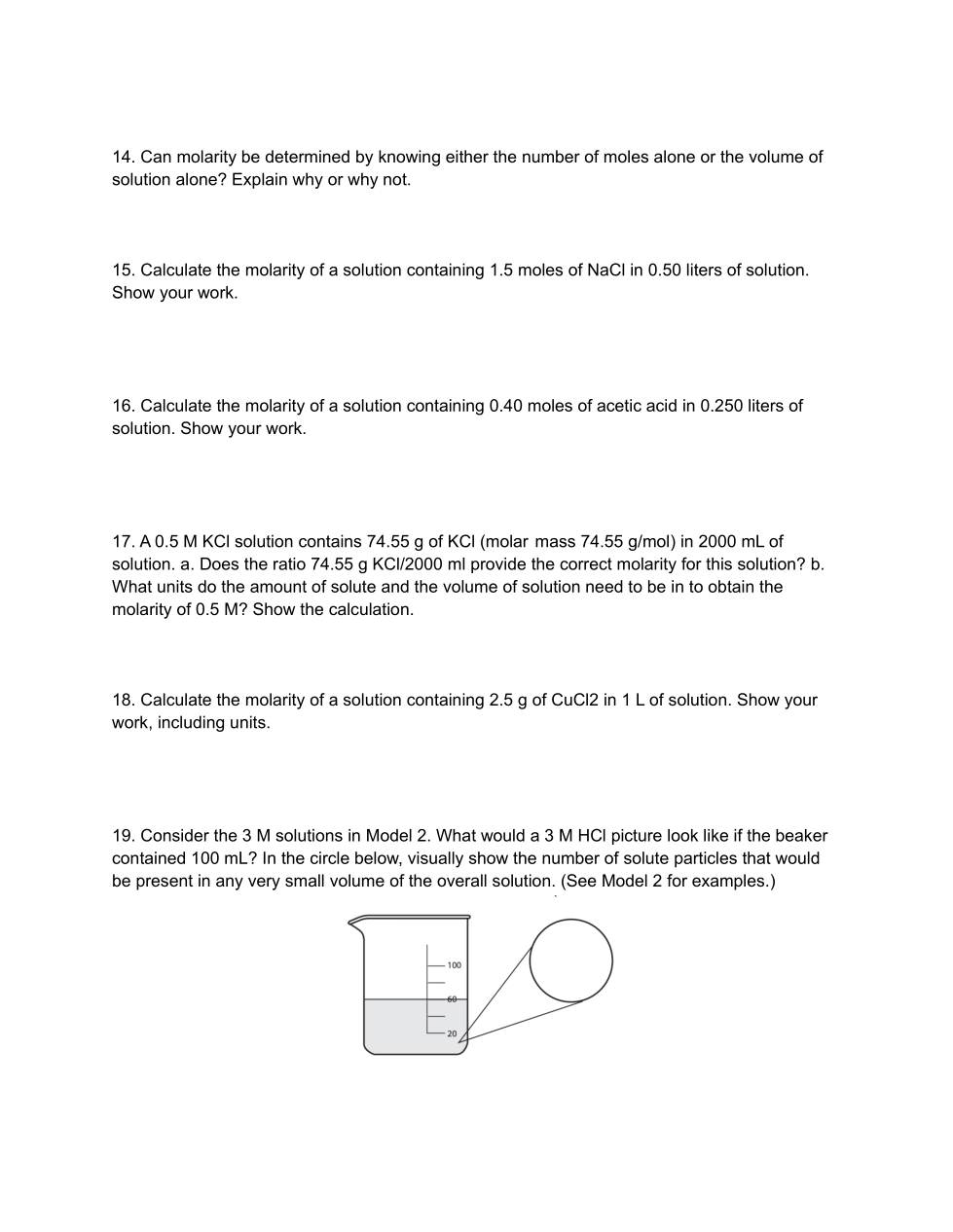
Can molarity be determined by knowing either the number of moles alone or the volume of solution alone? Explain why or why not.
Fill in the correct term in the blanks based on Model 1.
Lemonade Solution 1 has _________ volume of solution as 2.
Lemondade Solution 1 has __________ quantity of solute as Solution 2.
Solution 2 in model 1 is considered concentrated and Solution 1 is considered dilute. Look carefully at the 2 pictures in model 1 to explain TWO ways that a concentrated solution is different from a dilute solution.
What does M stand for? What are the units?
List at least 3 patterns you see in Model 2.
How many moles of table salt (NaCl) are added to a 0.06L solution to create a 1 M solution?
How many moles of table salt (NaCl) are added to a 0.06L solution to create a 3 M solution?
Note:
Lemonade packet = 15g
1 spoonful= 5g
1/2 platic cup= .1 L
4 oz cup= .1L
8 oz cup= .2L
Click on Show Work to Answer question 8
Which is true for a quantity that is the same in all of the beakers that contain 3M solutions.
Click on Show your Work to answer question 16.
Click on Show your Work to answer question 17.
Click on Show your Work to answer question 18.
Click on Show your Work to answer question 19.
Click on Show your Work to answer question 20.