L240 Final Exam Part I 2020-2021
star
star
star
star
star
Last updated over 1 year ago
57 questions

0.5
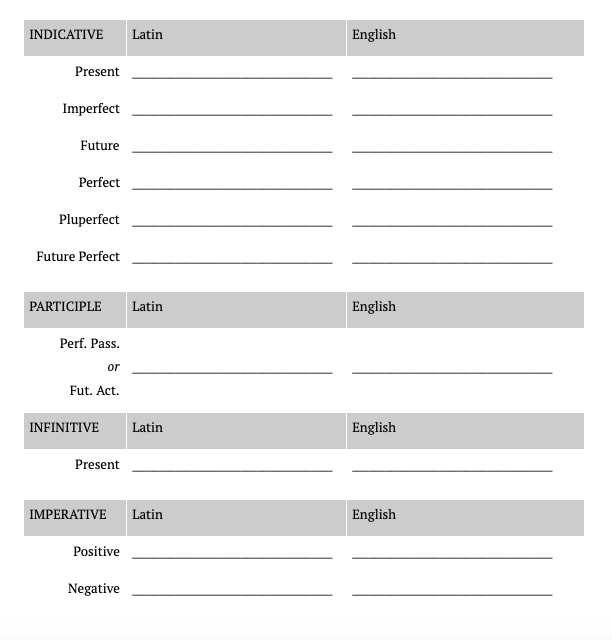
cupiō, cupere, cupīvī, cupītus: desireLATIN: PRESENT: 1st person singular
cupiō, cupere, cupīvī, cupītus: desire
LATIN: PRESENT: 1st person singular
0.25
cupiō, cupere, cupīvī, cupītus: desireENGLISH: PRESENT: 1st person sing
cupiō, cupere, cupīvī, cupītus: desire
ENGLISH: PRESENT: 1st person sing
0.5
cupiō, cupere, cupīvī, cupītus: desireLATIN: IMPERFECT: 1st person sing
cupiō, cupere, cupīvī, cupītus: desire
LATIN: IMPERFECT: 1st person sing
0.25
cupiō, cupere, cupīvī, cupītus: desireENGLISH: IMPERFECT: 1st person sing
cupiō, cupere, cupīvī, cupītus: desire
ENGLISH: IMPERFECT: 1st person sing
0.5
cupiō, cupere, cupīvī, cupītus: desireLATIN: FUTURE: 1st person sing
cupiō, cupere, cupīvī, cupītus: desire
LATIN: FUTURE: 1st person sing
0.25
cupiō, cupere, cupīvī, cupītus: desireENGLISH: FUTURE: 1st person sing
cupiō, cupere, cupīvī, cupītus: desire
ENGLISH: FUTURE: 1st person sing
0.5
cupiō, cupere, cupīvī, cupītus: desireLATIN: PERFECT: 1st person singular
cupiō, cupere, cupīvī, cupītus: desire
LATIN: PERFECT: 1st person singular
0.25
cupiō, cupere, cupīvī, cupītus: desireENGLISH: PERFECT: 1st person sing
cupiō, cupere, cupīvī, cupītus: desire
ENGLISH: PERFECT: 1st person sing
0.5
cupiō, cupere, cupīvī, cupītus: desireLATIN: PLUPERFECT: 1st person sing
cupiō, cupere, cupīvī, cupītus: desire
LATIN: PLUPERFECT: 1st person sing
0.25
cupiō, cupere, cupīvī, cupītus: desireENGLISH: PLUPERFECT: 1st pers sing
cupiō, cupere, cupīvī, cupītus: desire
ENGLISH: PLUPERFECT: 1st pers sing
0.5
cupiō, cupere, cupīvī, cupītus: desireLATIN: FUT PERFECT: 1st person sing
cupiō, cupere, cupīvī, cupītus: desire
LATIN: FUT PERFECT: 1st person sing
0.25
cupiō, cupere, cupīvī, cupītus: desireENGLISH: FUT PERFECT: 1st per sing
cupiō, cupere, cupīvī, cupītus: desire
ENGLISH: FUT PERFECT: 1st per sing
0.5
cupiō, cupere, cupīvī, cupītus: desireLATIN: PARTICIPLE
cupiō, cupere, cupīvī, cupītus: desire
LATIN: PARTICIPLE
0.25
cupiō, cupere, cupīvī, cupītus: desireENGLISH: PARTICIPLE
cupiō, cupere, cupīvī, cupītus: desire
ENGLISH: PARTICIPLE
0.5
cupiō, cupere, cupīvī, cupītus: desireLATIN: INFINITIVE
cupiō, cupere, cupīvī, cupītus: desire
LATIN: INFINITIVE
0.25
cupiō, cupere, cupīvī, cupītus: desireENGLISH: INFINITIVE
cupiō, cupere, cupīvī, cupītus: desire
ENGLISH: INFINITIVE
0.5
cupiō, cupere, cupīvī, cupītus: desireLATIN: POSITIVE IMPERATIVE: singular
cupiō, cupere, cupīvī, cupītus: desire
LATIN: POSITIVE IMPERATIVE: singular
0.25
cupiō, cupere, cupīvī, cupītus: desireENGLISH: POSITIVE IMPERATIVE
cupiō, cupere, cupīvī, cupītus: desire
ENGLISH: POSITIVE IMPERATIVE
0.5
cupiō, cupere, cupīvī, cupītus: desireLATIN: NEGATIVE IMPERATIVE: sing
cupiō, cupere, cupīvī, cupītus: desire
LATIN: NEGATIVE IMPERATIVE: sing
0.25
cupiō, cupere, cupīvī, cupītus: desireENGLISH: NEGATIVE IMPERATIVE
cupiō, cupere, cupīvī, cupītus: desire
ENGLISH: NEGATIVE IMPERATIVE

0.25
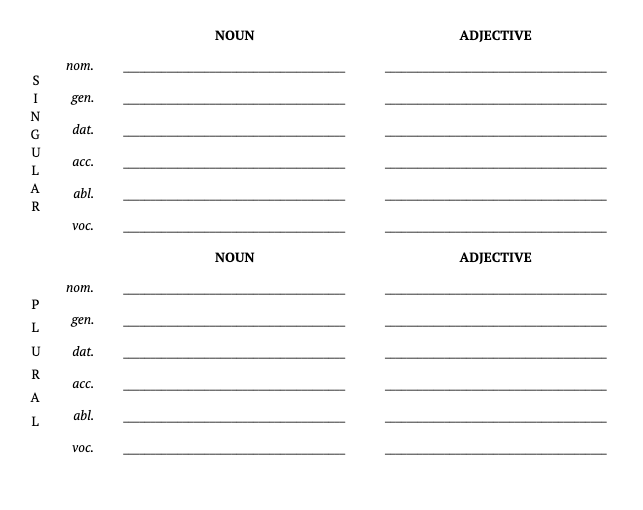
sonitus, sonitūs, m.: nominative sing
0.25
sonitus, sonitūs, m.: genitive sing
0.25
sonitus, sonitūs, m.: dative sing
0.25
sonitus, sonitūs, m.: accusative sing
0.25
sonitus, sonitūs, m.: ablative sing
0.25
sonitus, sonitūs, m.: vocative sing
0.25
sonitus, sonitūs, m.: nominative pl
0.25
sonitus, sonitūs, m.: genitive pl
0.25
sonitus, sonitūs, m.: dative pl
0.25
sonitus, sonitūs, m.: accusative pl
0.25
sonitus, sonitūs, m.: ablative pl
0.25
sonitus, sonitūs, m.: vocative pl
0.25
gravis, gravis, grave: nom sing
0.25
gravis, gravis, grave: gen sing
0.25
gravis, gravis, grave: dat sing
0.25
gravis, gravis, grave: acc sing
0.25
gravis, gravis, grave: abl sing
0.25
gravis, gravis, grave: voc sing
0.25
gravis, gravis, grave: nom pl
0.25
gravis, gravis, grave: gen pl
0.25
gravis, gravis, grave: dat pl
0.25
gravis, gravis, grave: acc pl
0.25
gravis, gravis, grave: abl pl
0.25
gravis, gravis, grave: voc pl
1
Choose the correct case and usage for the underlined noun.
Pater togās puerīs tradidit.- pater, patris, m.: father
- toga, togae, f.: toga
- puer, puerī, m.: boy
- tradō, tradere, tradidī, traditus: to hand over
Choose the correct case and usage for the underlined noun.
Pater togās puerīs tradidit.
- pater, patris, m.: father
- toga, togae, f.: toga
- puer, puerī, m.: boy
- tradō, tradere, tradidī, traditus: to hand over
1
Choose the correct case and usage for the underlined noun.
Ego lupum gladiō mīlitis repellō.- lupus, lupī, m.: wolf
- gladius, gladiī, m.: sword
- mīles, mīlitis, m.: soldier
- repellō, repellere, reppulī, repulsus: to drive off
Choose the correct case and usage for the underlined noun.
Ego lupum gladiō mīlitis repellō.
- lupus, lupī, m.: wolf
- gladius, gladiī, m.: sword
- mīles, mīlitis, m.: soldier
- repellō, repellere, reppulī, repulsus: to drive off
1
Choose the correct case and usage for the underlined noun.
Ego lupum gladiō mīlitis repellō.- lupus, lupī, m.: wolf
- gladius, gladiī, m.: sword
- mīles, mīlitis, m.: soldier
- repellō, repellere, reppulī, repulsus: to drive off
Choose the correct case and usage for the underlined noun.
Ego lupum gladiō mīlitis repellō.
- lupus, lupī, m.: wolf
- gladius, gladiī, m.: sword
- mīles, mīlitis, m.: soldier
- repellō, repellere, reppulī, repulsus: to drive off
1
Choose the correct case and usage for the underlined noun.
Bovēs onera ad urbe portābant.- bos, bovis, m./f.: ox
- onus, oneris, n.: load
- portō, portāre, portāvī, portātus: to carry
Choose the correct case and usage for the underlined noun.
Bovēs onera ad urbe portābant.
- bos, bovis, m./f.: ox
- onus, oneris, n.: load
- portō, portāre, portāvī, portātus: to carry
1
Choose the correct case and usage for the underlined noun.
Ego urbī appropinquābam.- urbs, urbis, f.: city
- appropinquō, appropinquāre, appropinquāvī, appropinquātus (+ dat.): to approach
Choose the correct case and usage for the underlined noun.
Ego urbī appropinquābam.
- urbs, urbis, f.: city
- appropinquō, appropinquāre, appropinquāvī, appropinquātus (+ dat.): to approach
1
Choose the most accurate Latin form to complete the sentence.
Līberī, _________________________ parēte!Children, obey (your) parents!- pāreō, pārēre, pāruī, paritus (+ dat.): obey
- parēns, parentis, m./f.: parent
Choose the most accurate Latin form to complete the sentence.
Līberī, _________________________ parēte!
Children, obey (your) parents!
- pāreō, pārēre, pāruī, paritus (+ dat.): obey
- parēns, parentis, m./f.: parent
1
Choose the most accurate Latin form to complete the sentence.
Licēbat _________________________ servōs habēre.It was allowed for an innkeeper to have slaves.- caupō, caupōnis, m.: innkeeper
Choose the most accurate Latin form to complete the sentence.
Licēbat _________________________ servōs habēre.
It was allowed for an innkeeper to have slaves.
- caupō, caupōnis, m.: innkeeper
1
Choose the most accurate Latin form to complete the sentence.
Nōs _________________________ audīvimusWe heard noises.- sonitus, sonitūs, m.: noise
Choose the most accurate Latin form to complete the sentence.
Nōs _________________________ audīvimus
We heard noises.
- sonitus, sonitūs, m.: noise
1
Choose the most accurate Latin form to complete the sentence.
Pater _________________________ in Asiā est.The girl's father is in Asia.
Choose the most accurate Latin form to complete the sentence.
Pater _________________________ in Asiā est.
The girl's father is in Asia.
1
Choose the adjective form that agrees with the underlined noun.
Līberī sonitūs _________________________ nōn amant.- līberī, līberōrum, m. pl.: children
- sonitus, sonitūs, m.: sound
- magnus, magna, magnum: great, loud
Choose the adjective form that agrees with the underlined noun.
Līberī sonitūs _________________________ nōn amant.
- līberī, līberōrum, m. pl.: children
- sonitus, sonitūs, m.: sound
- magnus, magna, magnum: great, loud
1
Choose the adjective form that agrees with the underlined noun.
Patrēs puerōrum _________________________ mox revenient.- pater, patris, m.: father
- puer, puerī, m.: boy
- trīstis, trīstis, trīste: sad
- mox: soon
- reveniō, revenīre, revēnī, reventus: to return
Choose the adjective form that agrees with the underlined noun.
Patrēs puerōrum _________________________ mox revenient.
- pater, patris, m.: father
- puer, puerī, m.: boy
- trīstis, trīstis, trīste: sad
- mox: soon
- reveniō, revenīre, revēnī, reventus: to return
1
Choose the adjective form that agrees with the underlined noun.
Puella mātrēs _________________________ reprehendit.- māter, mātris, f.: mother
- īrātus, īrāta, īrātum: angry
- reprehendō, -hendere, -hendī, -hēnsus: to scold
Choose the adjective form that agrees with the underlined noun.
Puella mātrēs _________________________ reprehendit.
- māter, mātris, f.: mother
- īrātus, īrāta, īrātum: angry
- reprehendō, -hendere, -hendī, -hēnsus: to scold
1
Choose the adjective form that agrees with the underlined noun.
Fīlia cum mātre _________________________ ambulābat.- māter, mātris, f.: mother
- īrātus, īrāta, īrātum: angry
Choose the adjective form that agrees with the underlined noun.
Fīlia cum mātre _________________________ ambulābat.
- māter, mātris, f.: mother
- īrātus, īrāta, īrātum: angry