#2 Atomic Structure, Part 2
star
star
star
star
star
Last updated about 5 years ago
7 Nsɛmmisa
1
1
1
1
1
1
1
All things are made of matter. Matter makes up everything. Scientists say that matter is anything that takes up space. Even if the space is too small to see, matter is still there.
But what is matter made of? No matter what, matter is made of tiny particles. They are called atoms. Atoms are the building blocks of everything. They are everywhere. They are the air you breathe. They are the food you eat, the things you touch, and the clothes you wear. They are every part of you.
______________________ is anything that has mass and takes up space
Name something made of matter than cannot be seen.
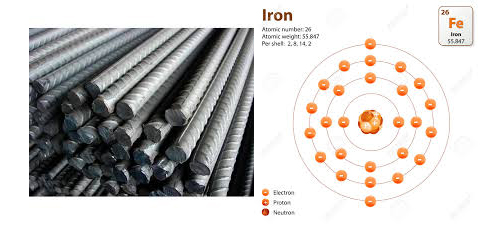
Objects get properties from the atoms they are made of. Iron atoms conduct electricity. An iron bar, then, also conducts electricity. Oxygen atoms combine with other atoms easily. Oxygen gas does the same thing.
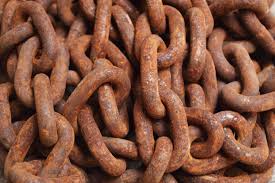
Some objects are made of more than one kind of atom. Rust is a combination of iron atoms and oxygen atoms. Because it is made when atoms come together, it has different properties.
What determines an object's properties?
Remembering class discussion, what is formed when atoms combine chemically?
Inside the Atom
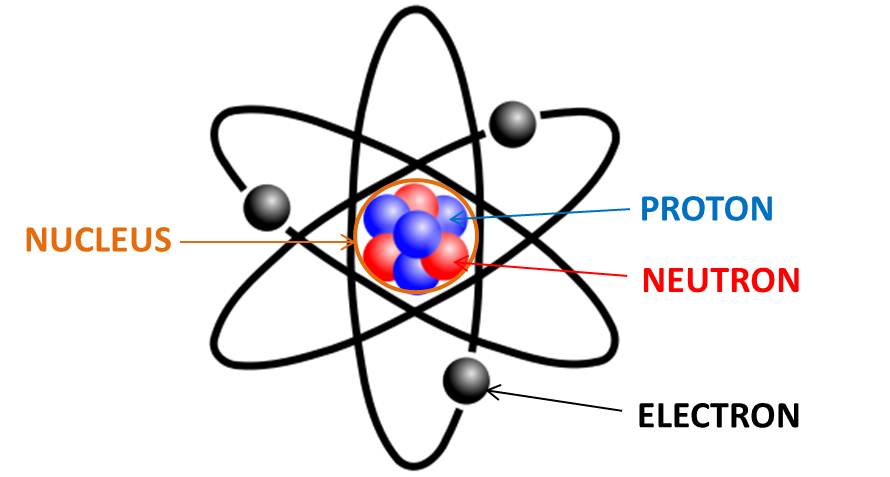
If you could peek inside an atom, you would see a lot going on. First you might notice its small, tightly-packed center. This is called the nucleus (NOO-klee-uhs). Inside the nucleus are even tinier particles. They are called protons (PROH-tons) and neutrons (NOO-trons). There are around the same number of protons and neutrons in an atom. Squeezed tightly together, they form the nucleus.
Look again, and you will see clouds of particles called electrons (uh-LEK-trons). They orbit around the nucleus. The same number of electrons and protons are in each atom.
Protons and electrons each have a charge. In protons, the charge is positive. In electrons, the charge is negative. Together, they balance the atom’s charge. The atom as a whole is neither positive nor negative.
For a long time, scientists thought they knew all the parts of an atom. Then they learned that there is more. Protons and neutrons are made of something even smaller. They are tiny particles called quarks (kwarks). Quarks are the smallest parts of an atom.
What subatomic particles are found in the nucleus?
Why is an atom's charge balanced?
What are the small particles recently found in protons and neutrons?