7.5 Equilibrium Lab
star
star
star
star
star
Last updated almost 4 years ago
10 Nsɛmmisa
1
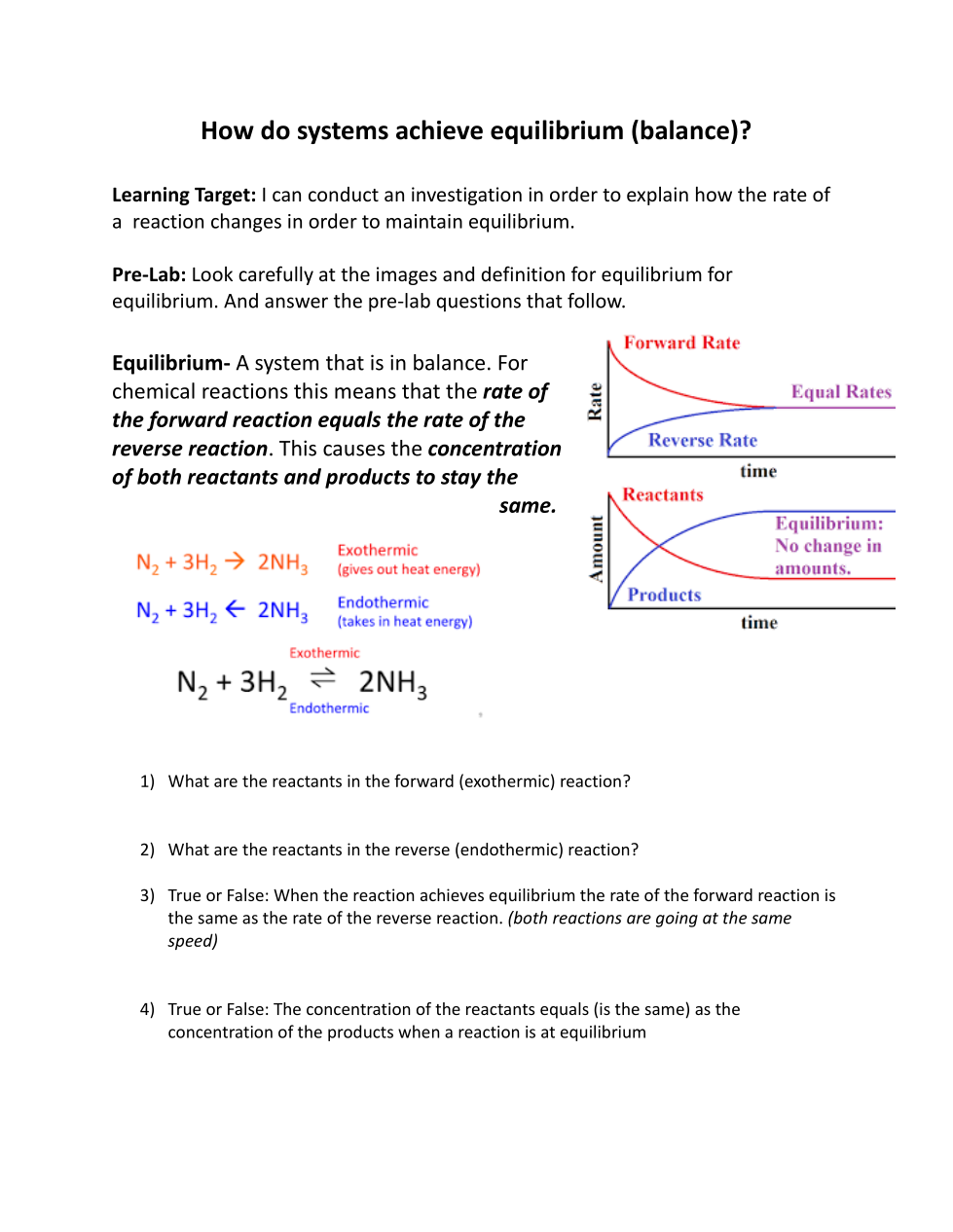
What are the reactants in the forward (exothermic) reaction?
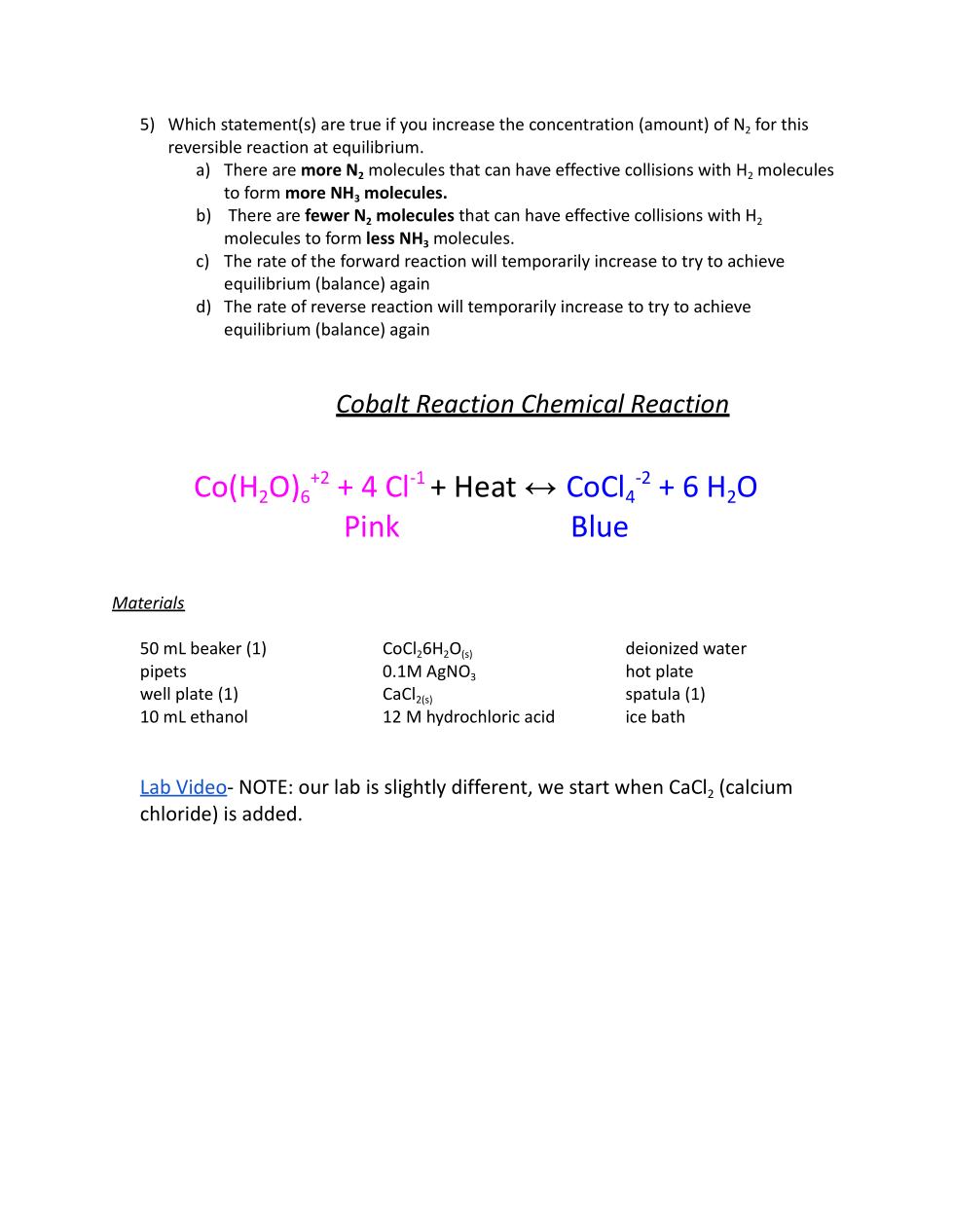
Which statement(s) are true if you increase the concentration (amount) of N2 for this reversible reaction at equilibrium. (Select all that apply)
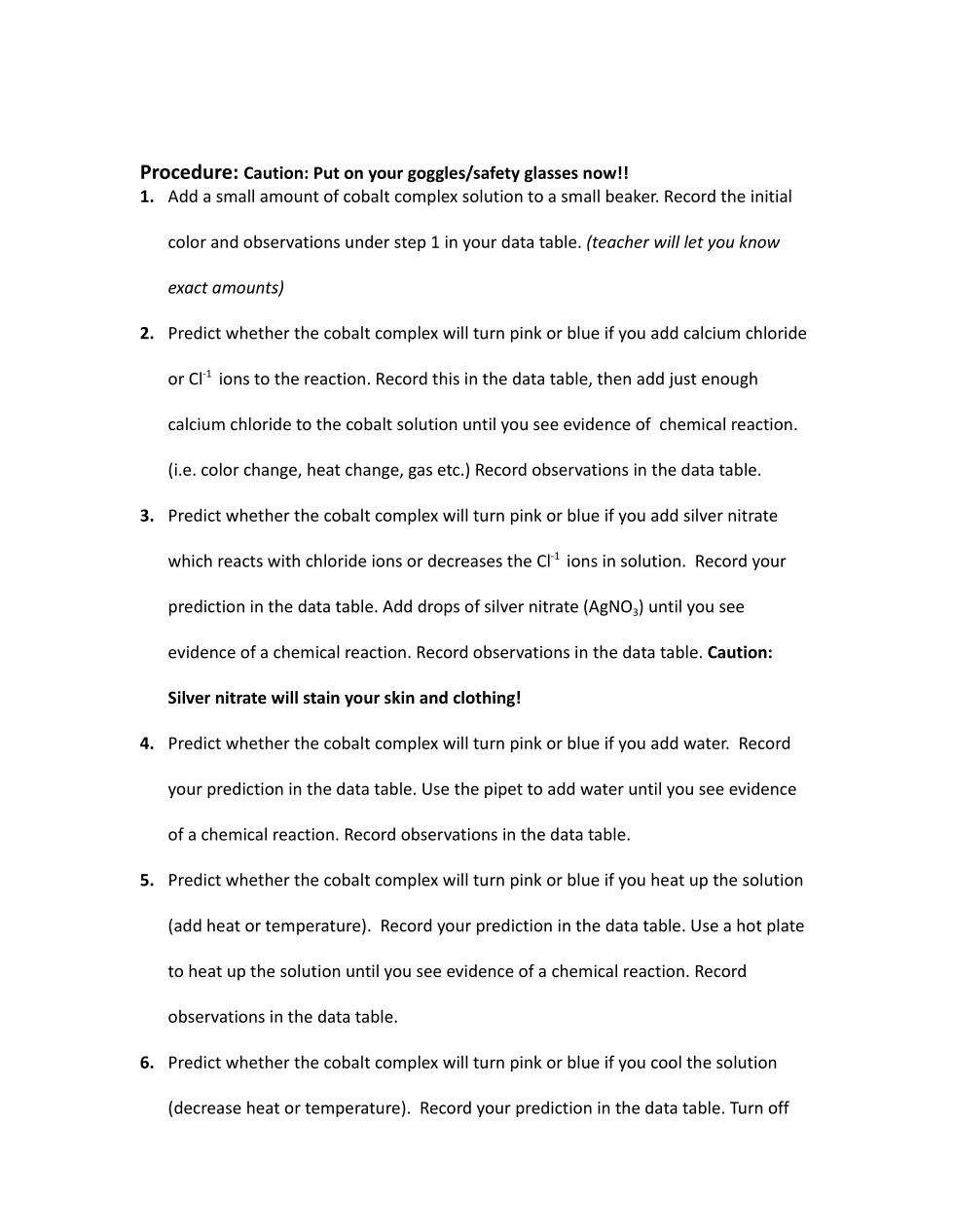
Record your data and observations by clicking on Show your Work
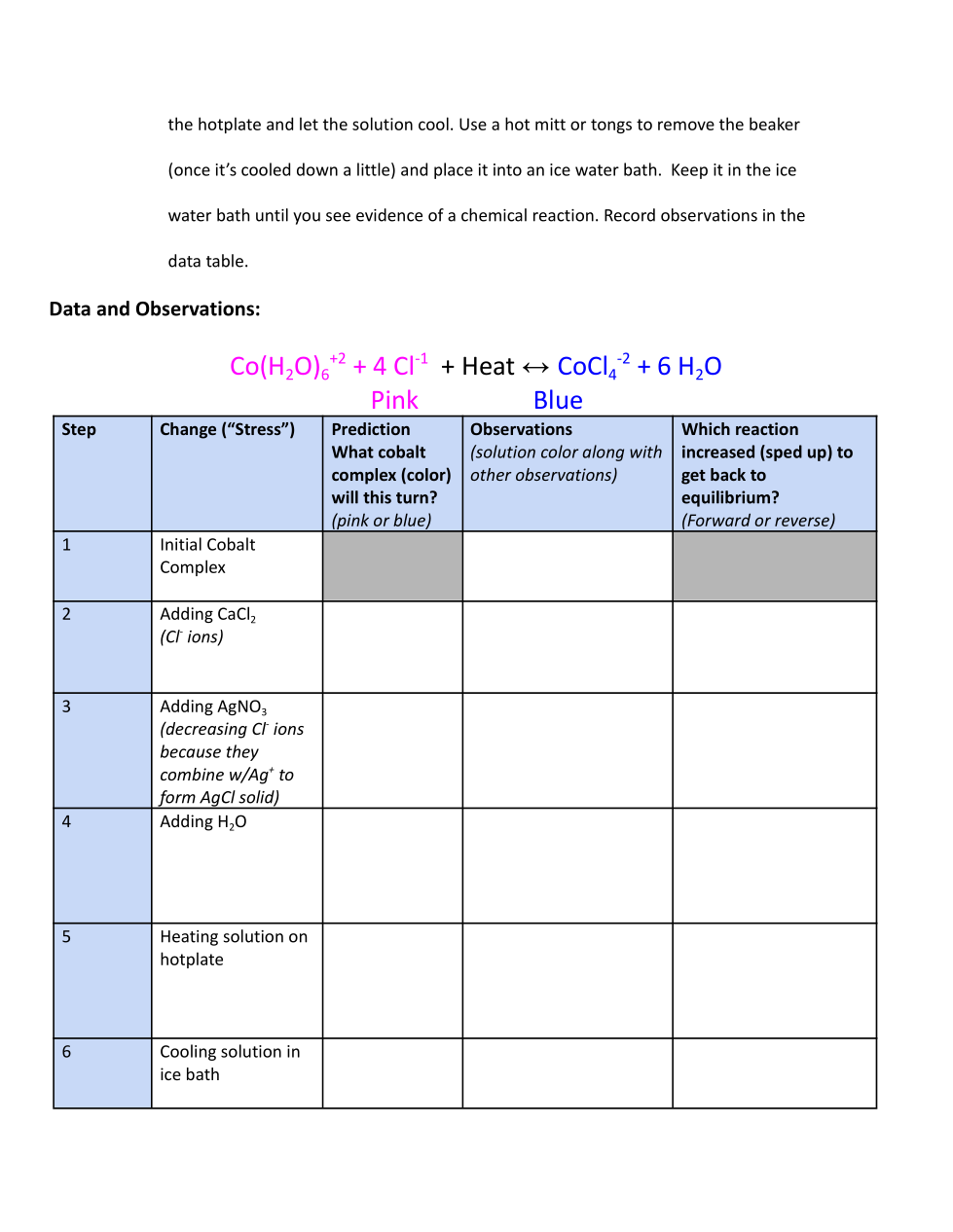
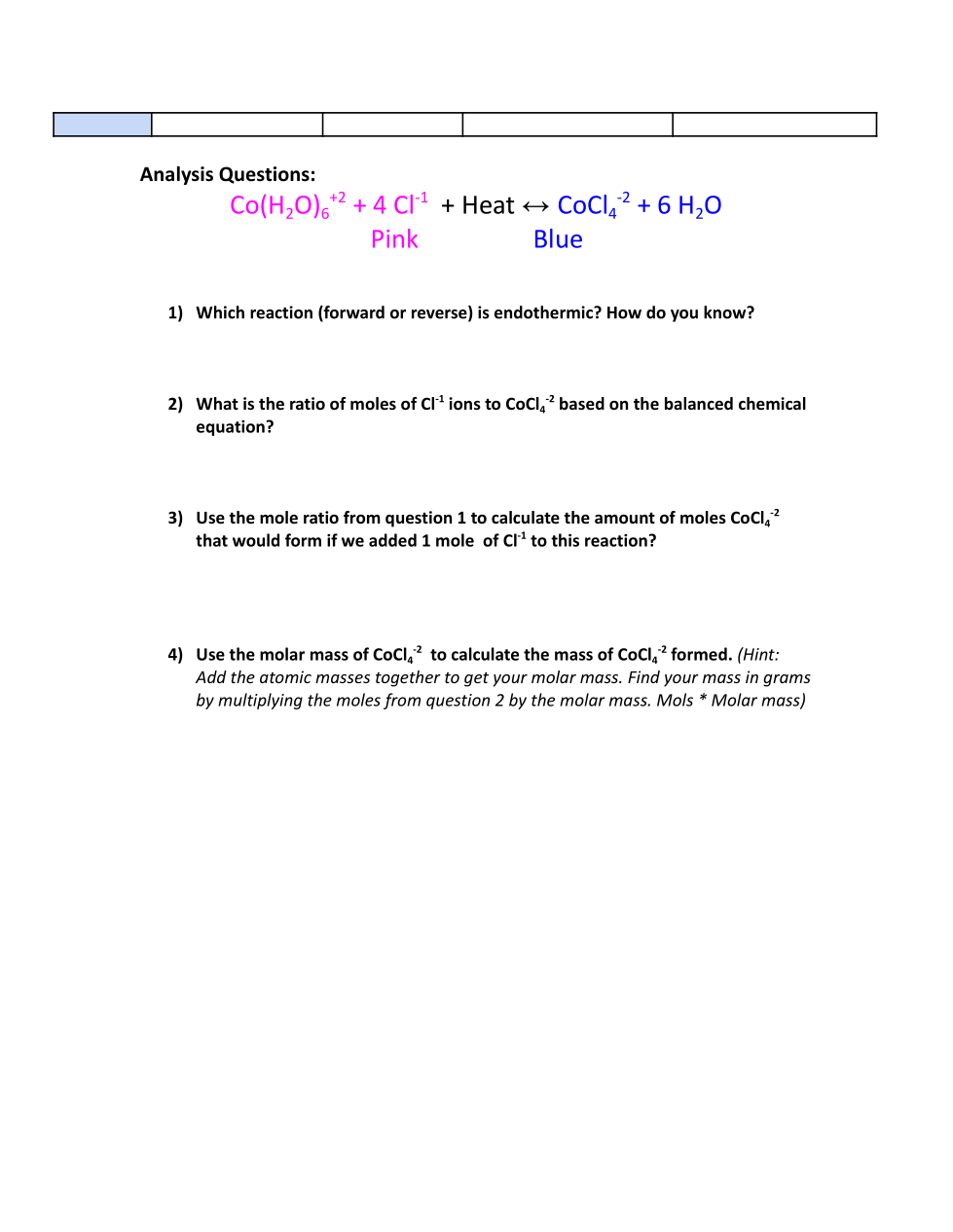
Which reaction (forward or reverse) is endothermic?
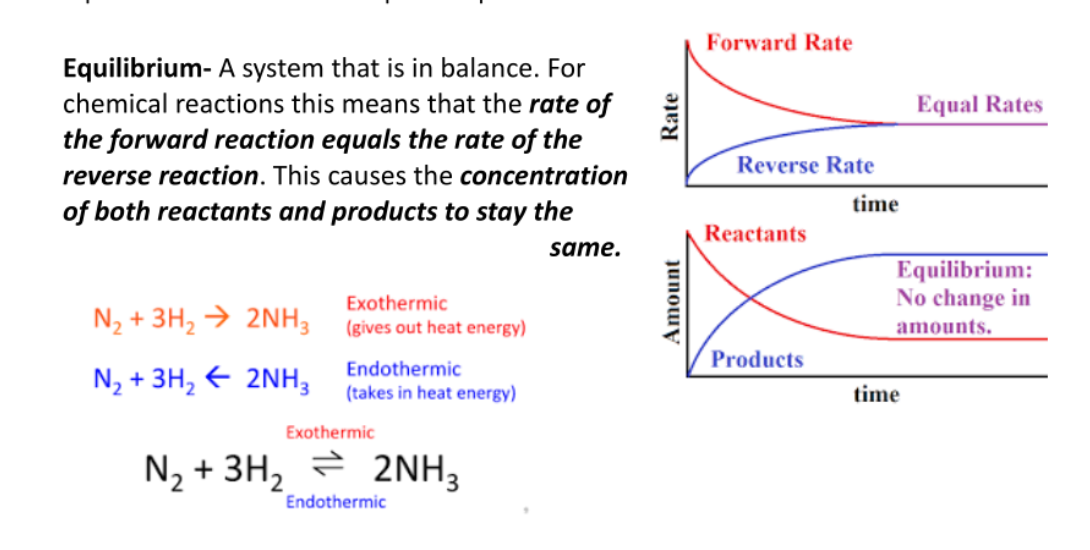
Use the mole ratio from question 1 to calculate the amount of moles CoCl4-2 that would form if we added 1 mole of Cl-1 to this reaction?
What are the reactants in the reverse (endothermic) reaction?
When the reaction achieves equilibrium the rate of the forward reaction is the same as the rate of the reverse reaction. (both reactions are going at the same speed)
The concentration of the reactants equals (is the same as) the concentration of the products when a reaction is at equilibrium
What is the ratio of moles of Cl-1 ions to CoCl4-2 based on the balanced chemical equation?
Use the molar mass of CoCl4-2 to calculate the mass of CoCl4-2 formed. (Hint: Add the atomic masses together to get your molar mass. Find your mass in grams by multiplying the moles from question 2 by the molar mass. Mols * Molar mass)