Changes in the genetic makeup of a population Topic Test 2021
star
star
star
star
star
Last updated about 5 years ago
14 Nsɛmmisa
Hyɛ no nsow a efi ɔkyerɛwfo no hɔ:
Unit 4 AOS 1 topic test VCE Biology
Unit 4 AOS 1 topic test VCE Biology
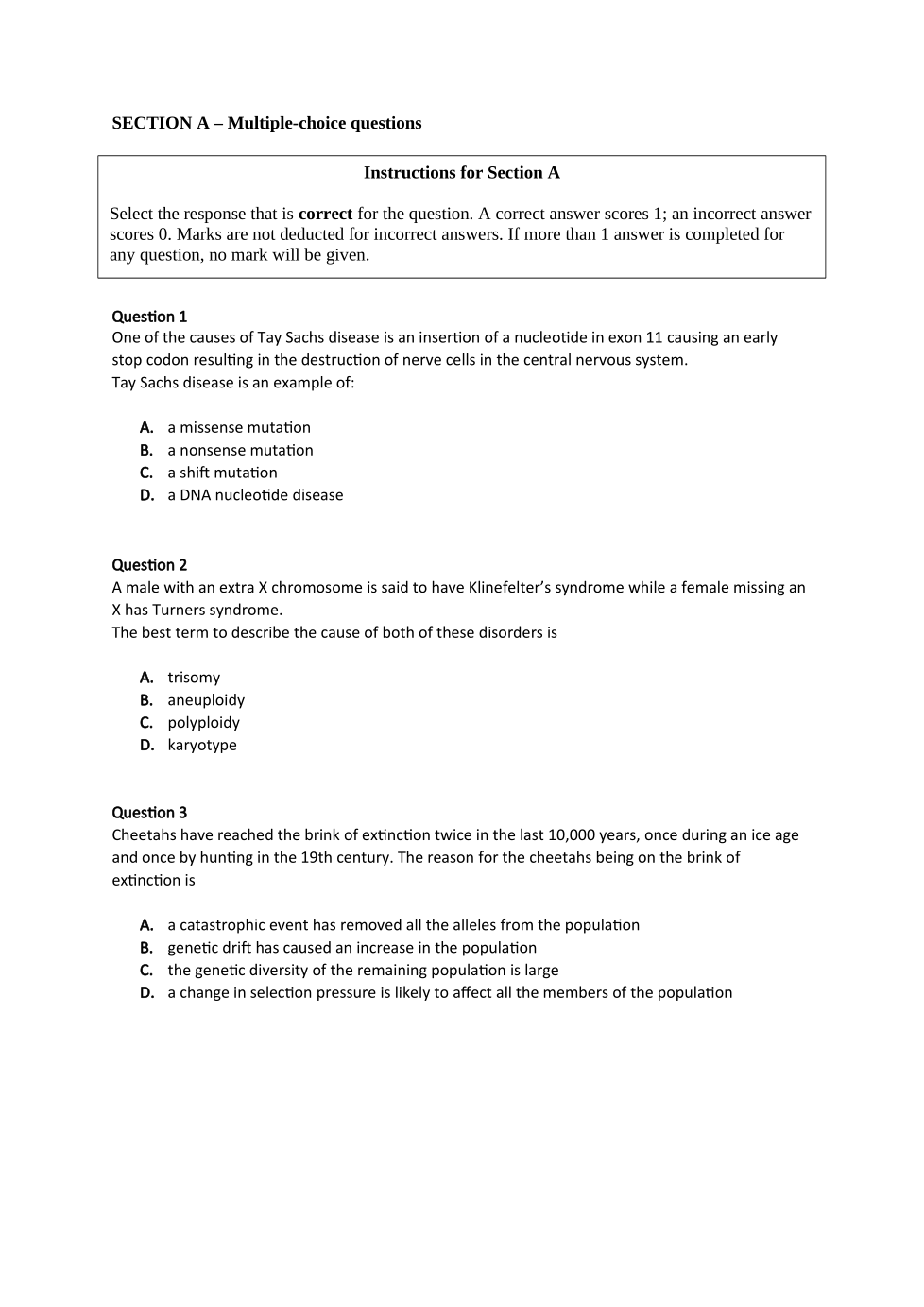
Question 1
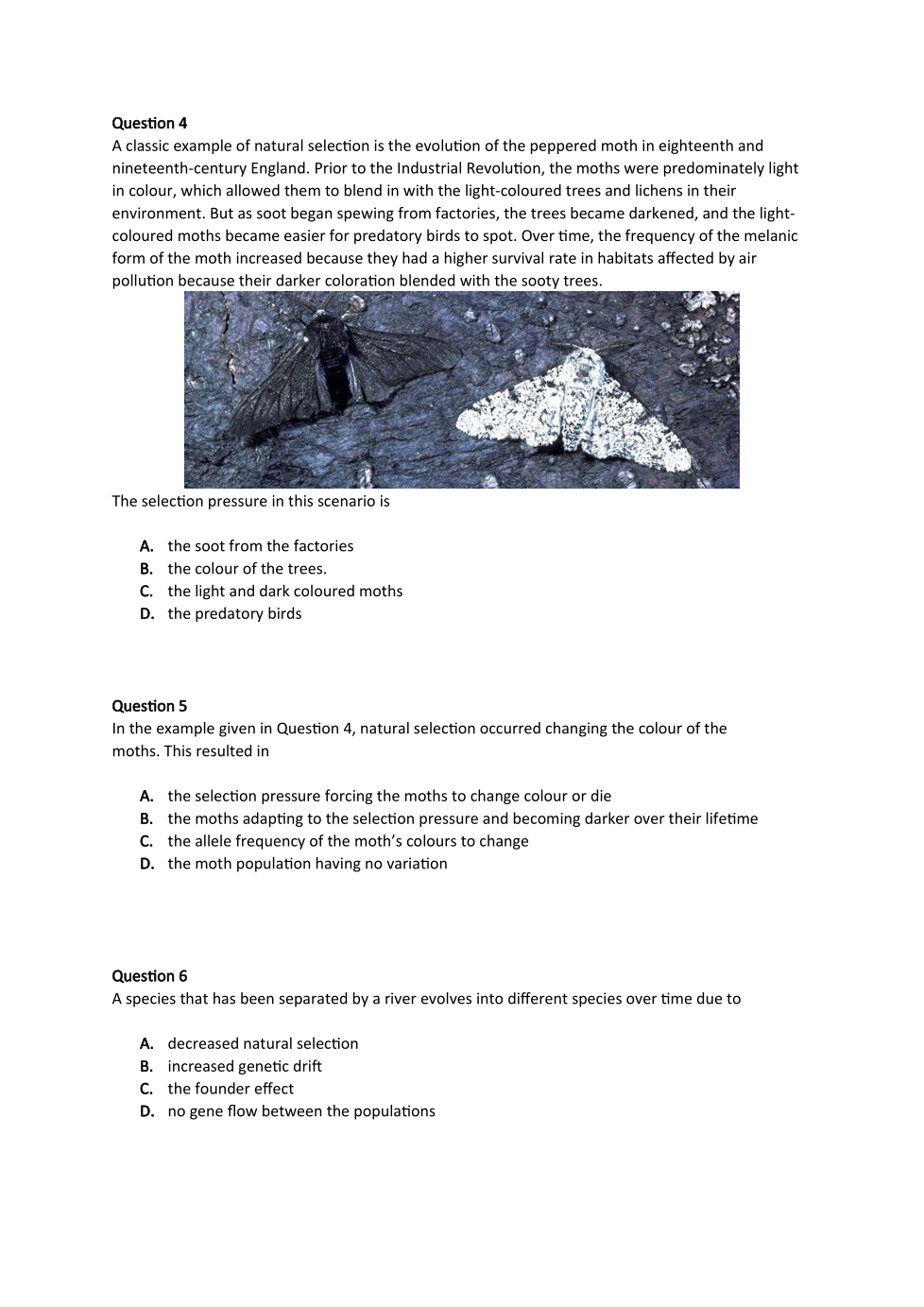
Question 4
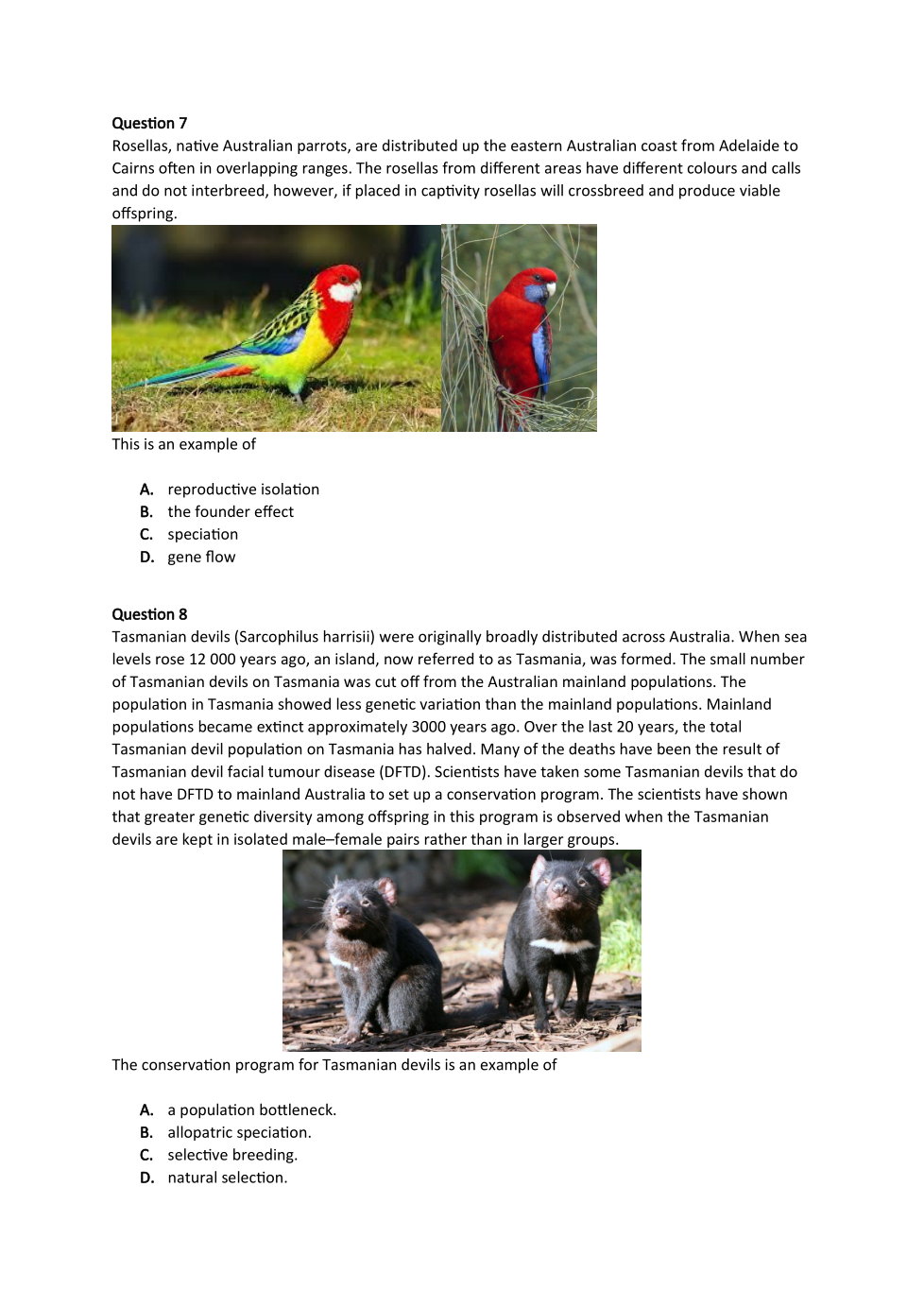
Question 7
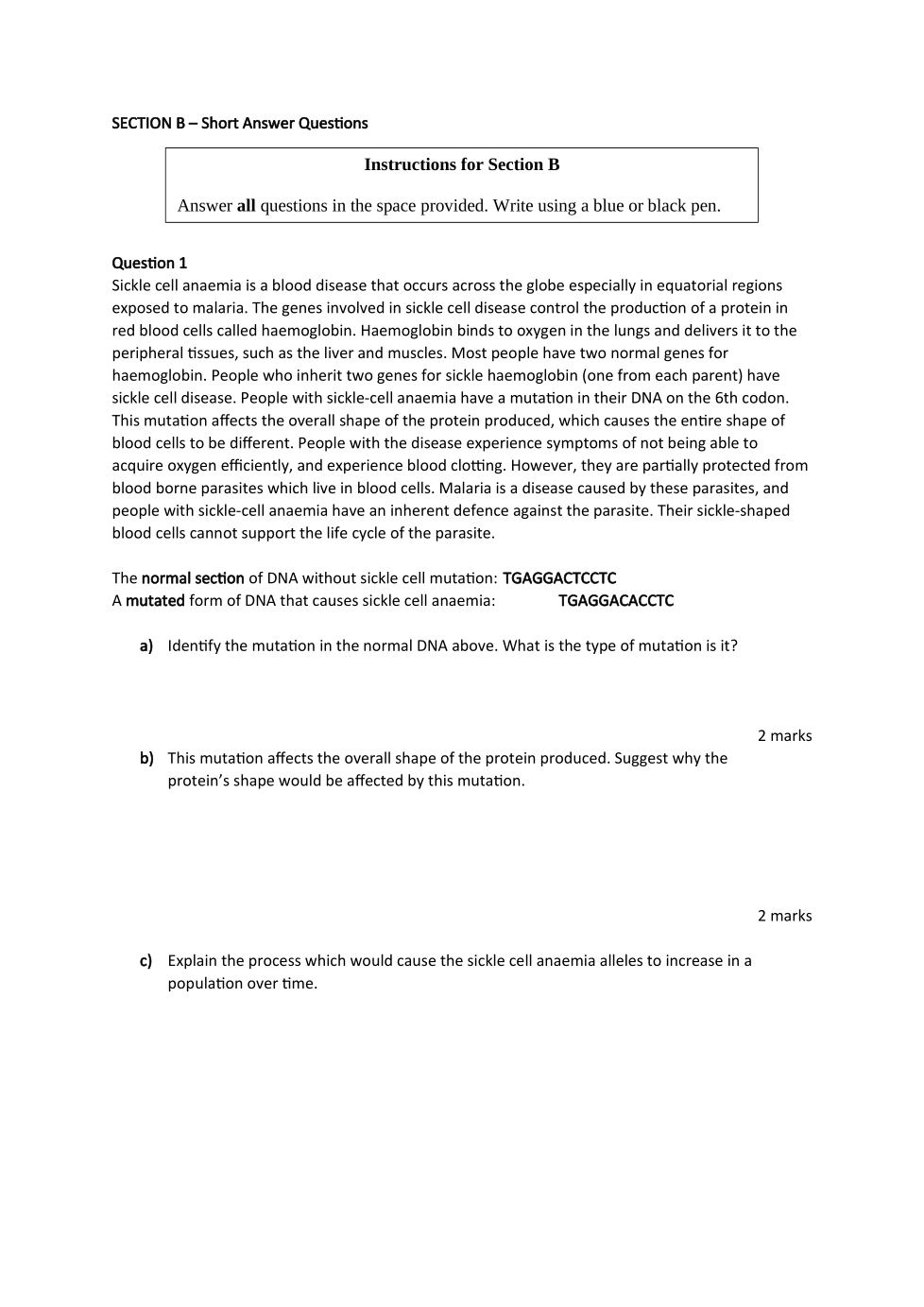
Question 1. a) identify the mutation from the original DNA sequence (describe what has changed). What type of mutation is this?
Question 1 b) This mutation affects how the protein folds. Suggest why the protein shape would be affected by this mutation.
Question 1. c) Explain the process which would cause the sickle cell anaemia alleles to increase in a population over time.
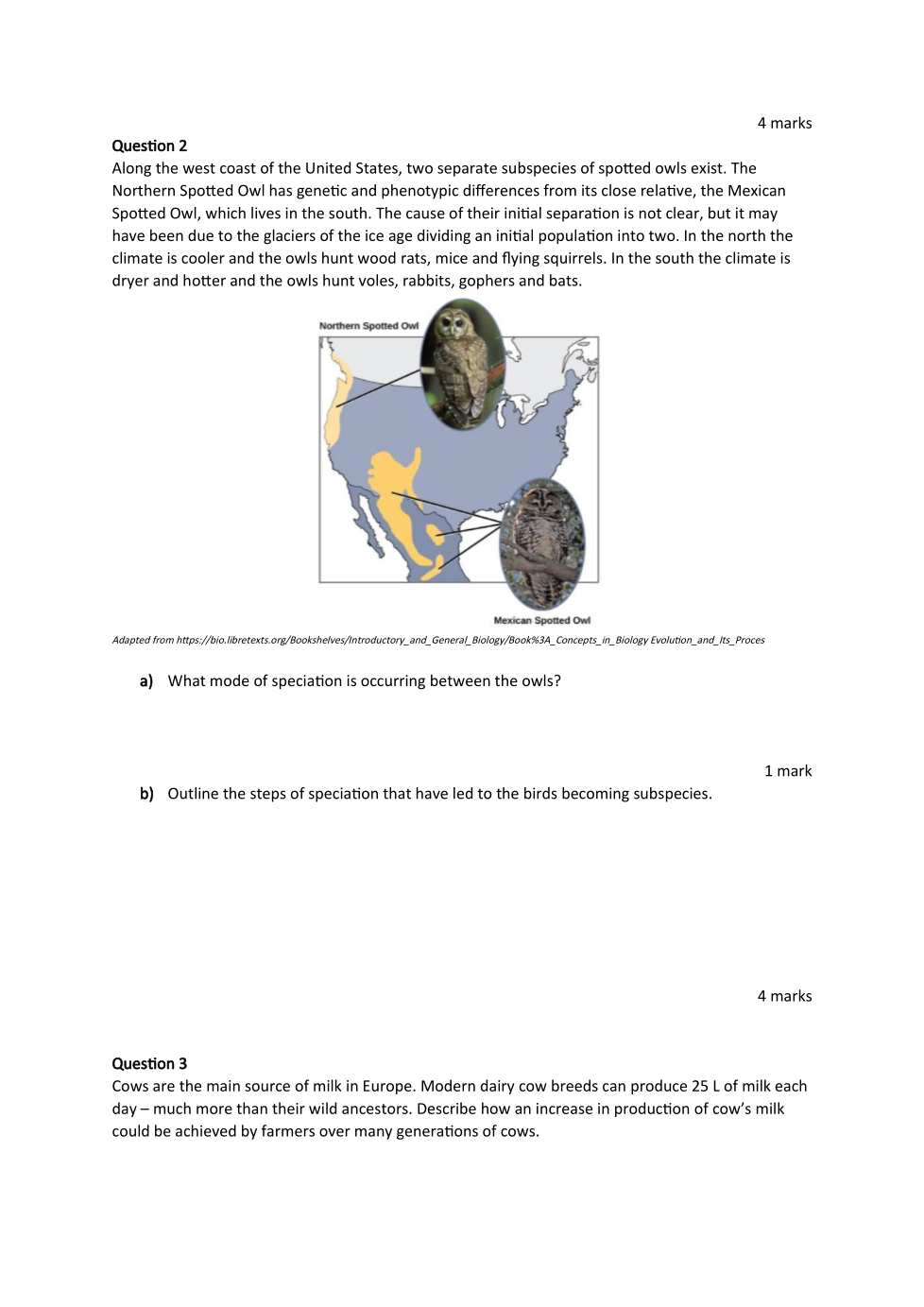
Question 2. a) What mode of speciation is occurring between the owls?
Question 2. b) Outline the steps of speciation that have led to the birds becoming subspecies.
Question 3. Cows are the main source of milk in Europe. Modern dairy cow breeds can produce 25 L of milk each day – much more than their wild ancestors. Describe how an increase in production of cow’s milk could be achieved by farmers over many generations of cows.
Question 2
Question 3
Question 5
Question 6
Question 8