Objectives:
Students will be able to determine the parts and their functions of a flower.
Students will learn about the types of pollinators and how they are able to pollinate.
Students will determine the similarties and differences between a male and female flower.
NGSS Standards:
SCI.LS1.A: Structure and Function
SCI.LS1.B: Growth and Development of Organisms
SCI.LS2.A: Interdependent Relationships in Ecosystems
SCI.LS3.B: Variation of Traits
MS-LS1-5; Construct a scientific explanation based on evidence for how environmental and genetic factors influence the growth of organisms.
Word Bank:
Pollen
Ovary
Style
Anther
Ovules
Filament
Sepal
Stigma
Petal
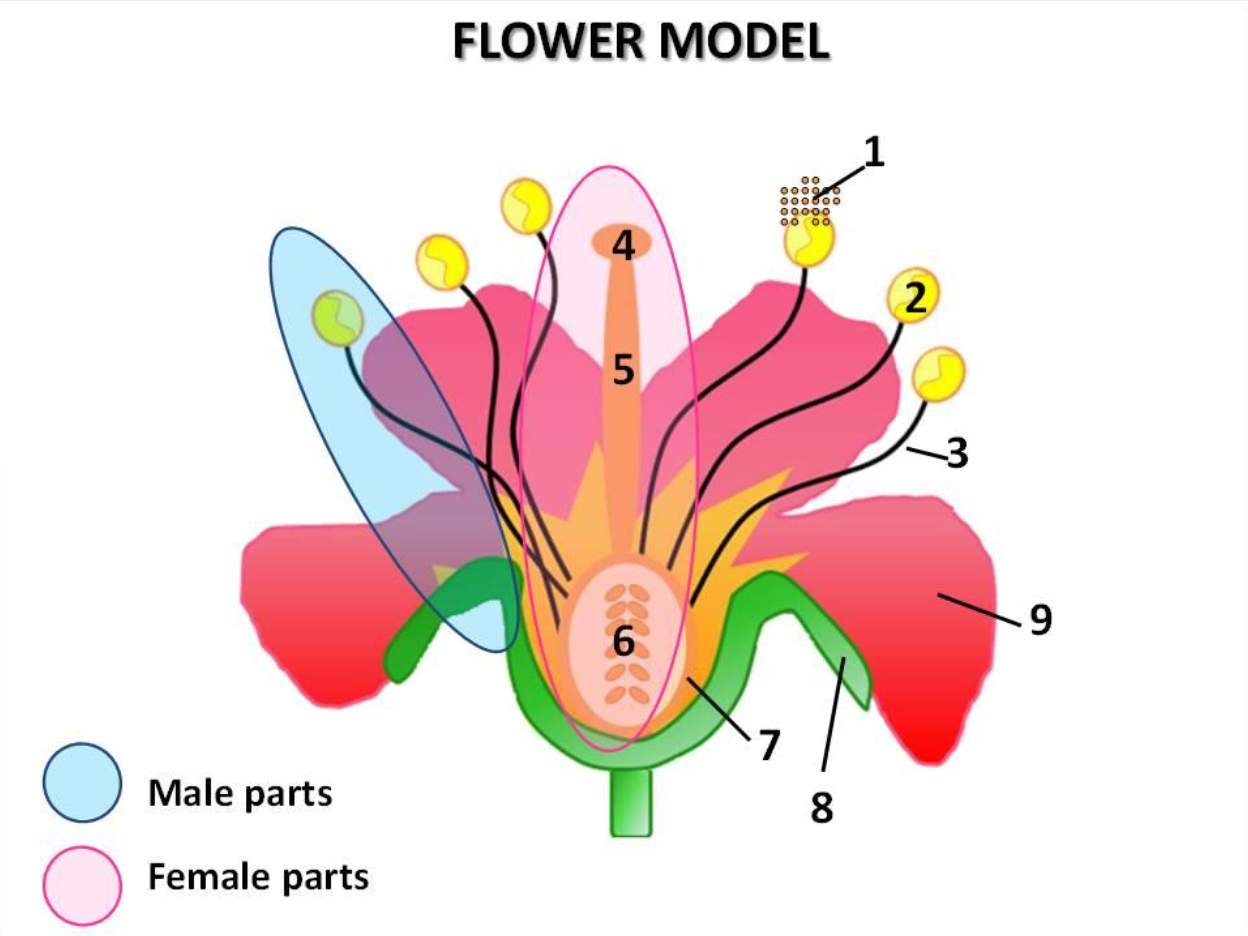
What is the flower part indicated by #4?
The petal of a flower, indicated by #9, attracts pollinators.
What is the purpose of the sepal, indicated by #8?
Which of the following parts belong to a FEMALE flower?
Which of the following parts belong to a MALE flower?
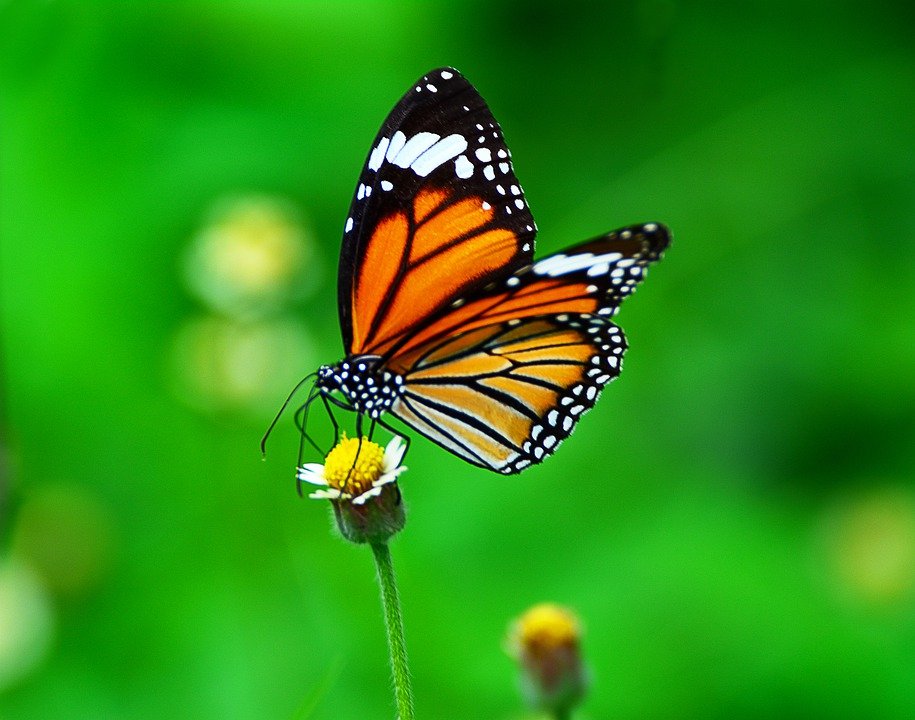
How is a butterfly able to pollinate a flower?