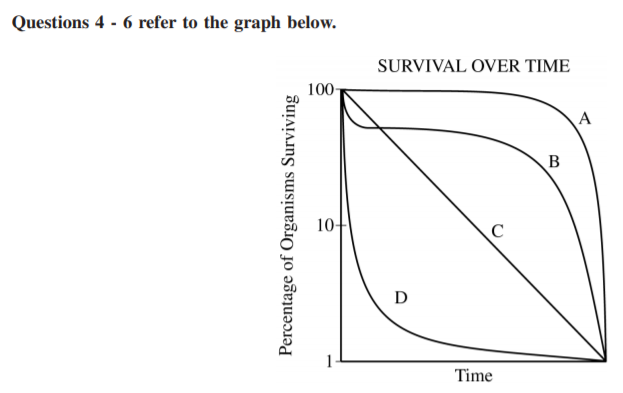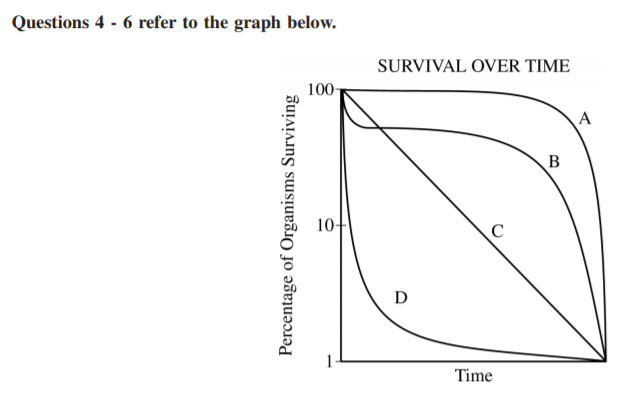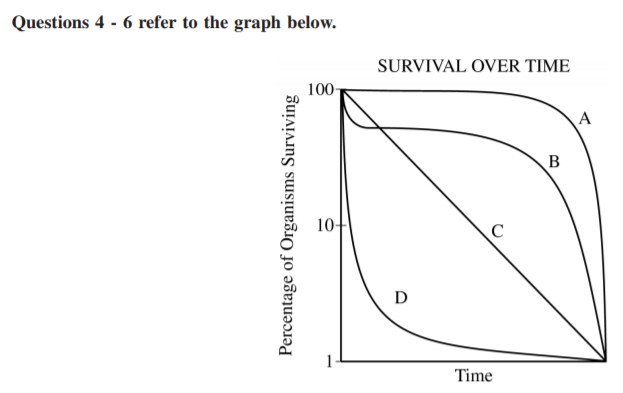
Which curve in the graph best represents a K-selected species?
Which curve in the graph best represents a K-selected species?
Directions: Each set of lettered choices below refers to the numbered questions or statements immediately following it. Select the one lettered choice that best answers each question or best fits each statement and then enter the letter in the corresponding space on the answer sheet. A choice may be used once, more than once, or not at all in each set
This type of energy is considered a nonrenewable energy source.
This type of energy utilizes heat that is stored beneath Earth’s surface to heat water and produce steam.
This energy source is used to generate electricity with photovoltaic (PV) cells.
Which curve in the graph best represents a K-selected species?
Dandelions grow quickly and produce many seeds, ensuring that at least some plants will survive and produce seeds themselves. Which curve best represents the survivorship of dandelions?
Certain lizards display a survivorship curve where the chance of survival is independent of age. Which line on the graph best depicts the survivorship of these lizards?
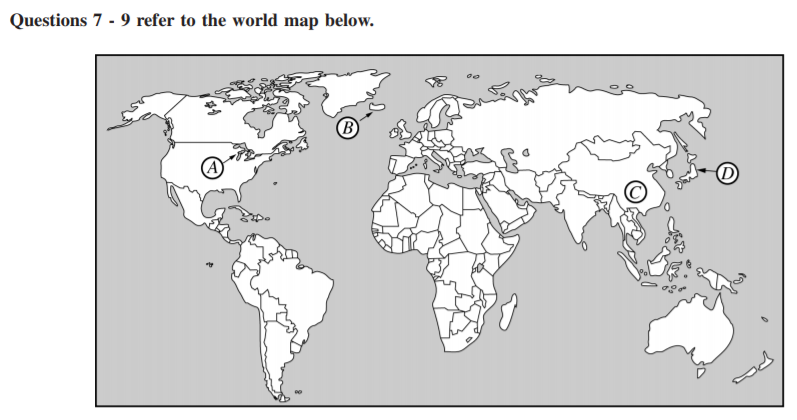
This is the location of the world’s largest hydroelectric dam, with a generating capacity of 22,500 MW.
At this site a 9.0 magnitude earthquake, which occurred at a nearby subduction zone, triggered one of the largest nuclear reactor disasters in history
Geothermal energy is the main energy source at this location because it is located on a large divergent boundary
This type of irrigation is often used by small-scale farming operations and it requires extensive labor to set up individual irrigation lines
This type of irrigation uses a large system of sprinklers that must be manually moved from field to field and has very large evaporative losses.
This type of irrigation, often used in orchards growing tree crops, distributes water to plants through small parallel channels between crop rows but often leads to increased soil erosion in the field.
Which of the following is the best example of a tragedy of the commons?
Which of the following correctly pairs a greenhouse gas with its primary anthropogenic source?
Which of the following best describes a disadvantage of using genetically engineered crops over crops that are not genetically modified?
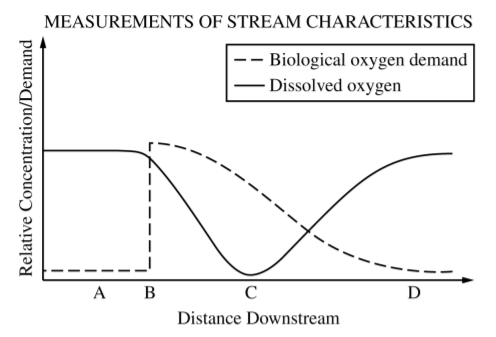
The graph shows how biological oxygen demand (BOD) and dissolved oxygen (DO) concentration change over the length of a stream. Points A–D indicate different locations within the stream.
At which of the following locations in the stream was there most likely a discharge of excess organic matter into the water?
How New York City Is Turning Its Thousands of Roofs Into Power Providers
New York City is home to thousands of acres of rooftop [and] some of the most expensive electricity in the country….
Yet New York has been slower than other big cities in tapping into one constant source of clean energy: the sun.
Now though… some of the biggest expanses of flat roof in New York are being turned into sources of cheap and green electricity.
This year, the corporate owner of Stuyvesant Town-Peter Cooper Village in Manhattan completed the installation of the country’s largest array of solar panels on an apartment complex. And soon, the Bronx could have an even larger one, at the massive Co-Op City complex. …
In June, the state said that it aimed for 70 percent of its power to be generated from renewable sources by 2030. Two months before, the New York City Council passed an ordinance that will require most new buildings to be topped with solar panels or roofs covered in grass or other vegetation. …
The project at StuyTown, as the complex is known, incorporated more than 9,000 solar panels onto 56 rooftops, making it by far the biggest in Manhattan. It effectively doubled the borough’s solar capacity, adding 3.9 megawatts, or enough to power more than 1,100 apartments…. …
The city and state have driven much of the investment in solar power by providing tax breaks and other incentives to homeowners and landlords. The state incentives began in 2014 with a goal of creating 3 gigawatts — 3,000 megawatts — of solar capacity statewide by 2023. …
Still, the projects illustrate the limitations so far of solar power, given that they would produce only a fraction of the electricity consumed on their own sites. …
But even though not enough energy is generated to power all of the [StuyTown] complex, the solar energy will take pressure off the power distribution network on hot summer days when demand from … customers is peaking…. …
New York now ranks sixth among American cities in the capacity of its installed solar panels, according to Environment America, an advocacy group. Still, its total of about 200 megawatts is less than half of the capacity in Los Angeles, which has the highest capacity of any city in the country.
Based on the article, which of the following best identifies the author’s claim?
How New York City Is Turning Its Thousands of Roofs Into Power Providers
New York City is home to thousands of acres of rooftop [and] some of the most expensive electricity in the country….
Yet New York has been slower than other big cities in tapping into one constant source of clean energy: the sun.
Now though… some of the biggest expanses of flat roof in New York are being turned into sources of cheap and green electricity.
This year, the corporate owner of Stuyvesant Town-Peter Cooper Village in Manhattan completed the installation of the country’s largest array of solar panels on an apartment complex. And soon, the Bronx could have an even larger one, at the massive Co-Op City complex. …
In June, the state said that it aimed for 70 percent of its power to be generated from renewable sources by 2030. Two months before, the New York City Council passed an ordinance that will require most new buildings to be topped with solar panels or roofs covered in grass or other vegetation. …
The project at StuyTown, as the complex is known, incorporated more than 9,000 solar panels onto 56 rooftops, making it by far the biggest in Manhattan. It effectively doubled the borough’s solar capacity, adding 3.9 megawatts, or enough to power more than 1,100 apartments…. …
The city and state have driven much of the investment in solar power by providing tax breaks and other incentives to homeowners and landlords. The state incentives began in 2014 with a goal of creating 3 gigawatts — 3,000 megawatts — of solar capacity statewide by 2023. …
Still, the projects illustrate the limitations so far of solar power, given that they would produce only a fraction of the electricity consumed on their own sites. …
But even though not enough energy is generated to power all of the [StuyTown] complex, the solar energy will take pressure off the power distribution network on hot summer days when demand from … customers is peaking…. …
New York now ranks sixth among American cities in the capacity of its installed solar panels, according to Environment America, an advocacy group. Still, its total of about 200 megawatts is less than half of the capacity in Los Angeles, which has the highest capacity of any city in the country.
Which of the following best describes the author’s perspective on the use of solar energy in New York City?
How New York City Is Turning Its Thousands of Roofs Into Power Providers
New York City is home to thousands of acres of rooftop [and] some of the most expensive electricity in the country….
Yet New York has been slower than other big cities in tapping into one constant source of clean energy: the sun.
Now though… some of the biggest expanses of flat roof in New York are being turned into sources of cheap and green electricity.
This year, the corporate owner of Stuyvesant Town-Peter Cooper Village in Manhattan completed the installation of the country’s largest array of solar panels on an apartment complex. And soon, the Bronx could have an even larger one, at the massive Co-Op City complex. …
In June, the state said that it aimed for 70 percent of its power to be generated from renewable sources by 2030. Two months before, the New York City Council passed an ordinance that will require most new buildings to be topped with solar panels or roofs covered in grass or other vegetation. …
The project at StuyTown, as the complex is known, incorporated more than 9,000 solar panels onto 56 rooftops, making it by far the biggest in Manhattan. It effectively doubled the borough’s solar capacity, adding 3.9 megawatts, or enough to power more than 1,100 apartments…. …
The city and state have driven much of the investment in solar power by providing tax breaks and other incentives to homeowners and landlords. The state incentives began in 2014 with a goal of creating 3 gigawatts — 3,000 megawatts — of solar capacity statewide by 2023. …
Still, the projects illustrate the limitations so far of solar power, given that they would produce only a fraction of the electricity consumed on their own sites. …
But even though not enough energy is generated to power all of the [StuyTown] complex, the solar energy will take pressure off the power distribution network on hot summer days when demand from … customers is peaking…. …
New York now ranks sixth among American cities in the capacity of its installed solar panels, according to Environment America, an advocacy group. Still, its total of about 200 megawatts is less than half of the capacity in Los Angeles, which has the highest capacity of any city in the country.
Which of the following pieces of evidence does the author use to support the claim that the solar panel installation on the StuyTown complex is the largest in Manhattan?
How New York City Is Turning Its Thousands of Roofs Into Power Providers
New York City is home to thousands of acres of rooftop [and] some of the most expensive electricity in the country….
Yet New York has been slower than other big cities in tapping into one constant source of clean energy: the sun.
Now though… some of the biggest expanses of flat roof in New York are being turned into sources of cheap and green electricity.
This year, the corporate owner of Stuyvesant Town-Peter Cooper Village in Manhattan completed the installation of the country’s largest array of solar panels on an apartment complex. And soon, the Bronx could have an even larger one, at the massive Co-Op City complex. …
In June, the state said that it aimed for 70 percent of its power to be generated from renewable sources by 2030. Two months before, the New York City Council passed an ordinance that will require most new buildings to be topped with solar panels or roofs covered in grass or other vegetation. …
The project at StuyTown, as the complex is known, incorporated more than 9,000 solar panels onto 56 rooftops, making it by far the biggest in Manhattan. It effectively doubled the borough’s solar capacity, adding 3.9 megawatts, or enough to power more than 1,100 apartments…. …
The city and state have driven much of the investment in solar power by providing tax breaks and other incentives to homeowners and landlords. The state incentives began in 2014 with a goal of creating 3 gigawatts — 3,000 megawatts — of solar capacity statewide by 2023. …
Still, the projects illustrate the limitations so far of solar power, given that they would produce only a fraction of the electricity consumed on their own sites. …
But even though not enough energy is generated to power all of the [StuyTown] complex, the solar energy will take pressure off the power distribution network on hot summer days when demand from … customers is peaking…. …
New York now ranks sixth among American cities in the capacity of its installed solar panels, according to Environment America, an advocacy group. Still, its total of about 200 megawatts is less than half of the capacity in Los Angeles, which has the highest capacity of any city in the country.
Currently, the rooftop solar panels produce only a fraction of the electricity used in the buildings on which they are installed. Which of following strategies would best combat the problem of insufficient electricity generation from the rooftop solar panels?
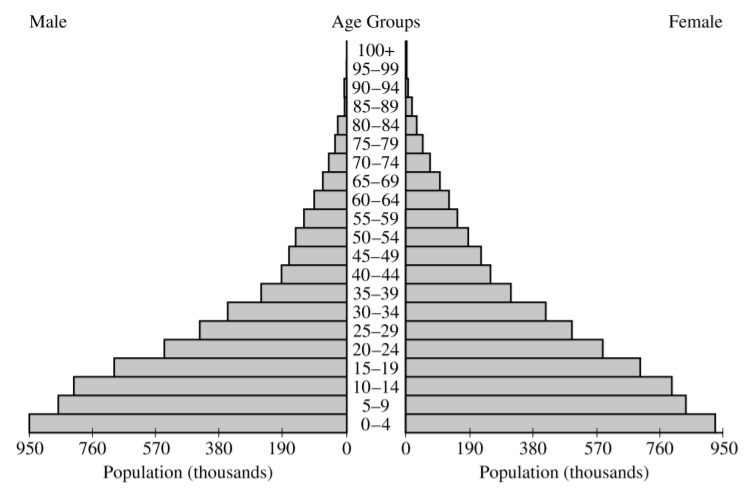
Based on the diagram, this country is likely experiencing?
Which of the following is a measure of the biodiversity of an ecosystem?
Which of the following is the most abundant gas by volume in the atmosphere?
Which of the following best describes a natural process that adds carbon dioxide to the atmosphere?
An ecologist examining several different ponds discovers that in one pond all the frogs are female. Which of the following most likely led to the all-female population of frogs?
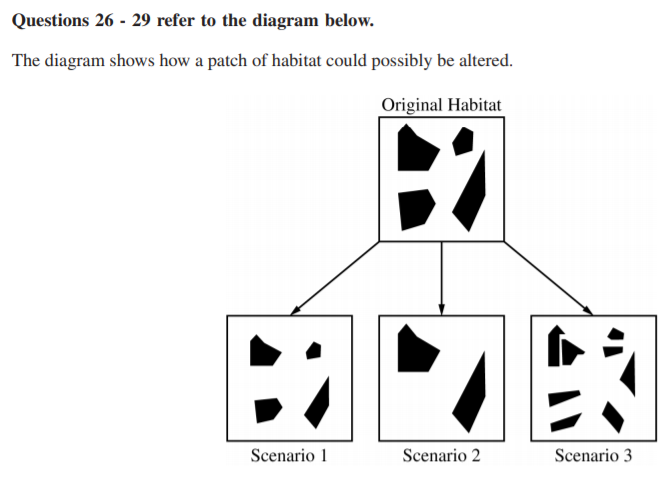
Which of the following correctly identifies the type of habitat change(s) shown within each potential scenario in the diagram?
Which of the following would be most likely to occur in the scenarios that have experienced habitat loss and/or fragmentation in the diagram?
Which of the following would be the most likely explanation for the changes shown in Scenario 3?
Which of the following is a possible effect of global climate change as illustrated in Scenario 1?
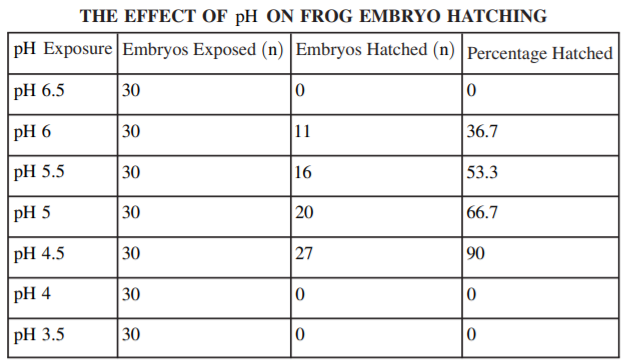
Which of the following best describes the frog species’ range of tolerance to acidic conditions?
Which of the following best describes a supporting ecological service provided by wetlands?
In which of the following atmospheric layers does most weather occur?
Buildings designed to partially heat rooms by passive solar heating rely on (A) (B) (C) (D)
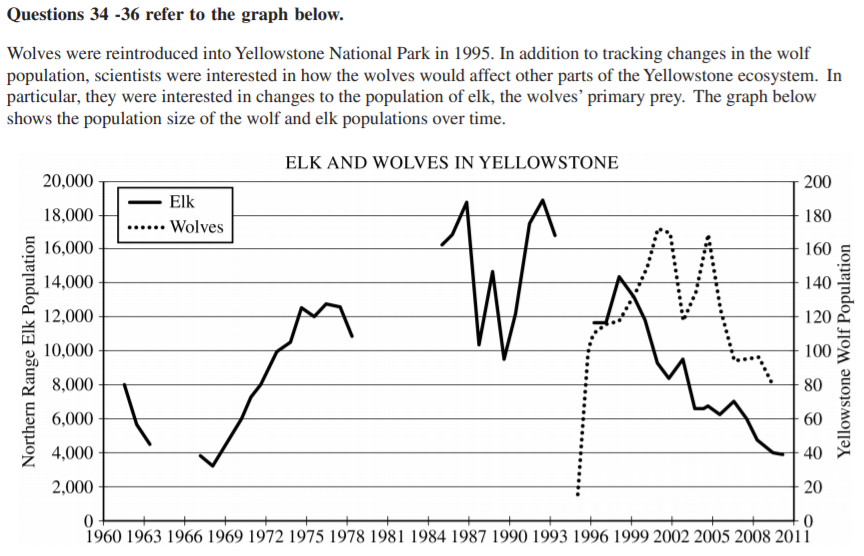
Based upon the data presented in the graph, which of the following best identifies the highest wolf population size?
Which of the following best describes the change in the elk population since the introduction of wolves into Yellowstone in 1995?
Which of the following is a potential disadvantage of reintroducing wolves to Yellowstone?
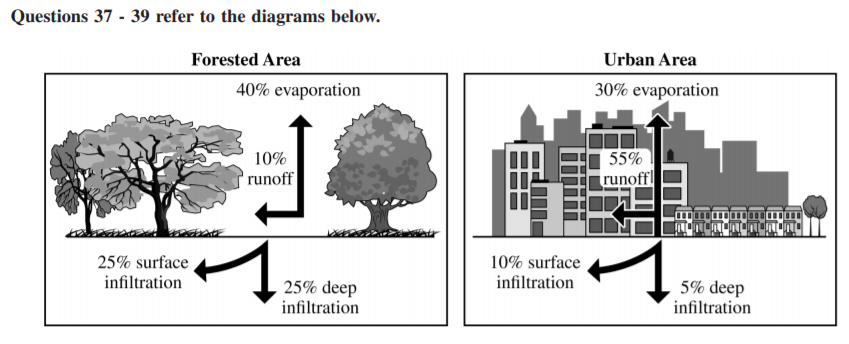
Based on the diagrams above, what is the percent change in the amount of runoff in urban areas compared to forested areas?
Based on the diagrams above, which of the following best explains how urban runoff could be decreased?
Which of the following processes shown in the diagram leads to precipitation?
The spotted lanternfly is a herbivorous insect that is native to Asia and feeds on over 70 species of plants. The feeding behavior of the spotted lanternfly damages plants, and the nymph and adult lanternflies secrete sticky residues that exacerbate the damage to native plant species by promoting mold growth. The spotted lanternfly reproduces once during its lifetime by laying between 30 and 50 eggs, and the eggs hatch after a short amount of time. The range of the spotted lanternfly is increasing because the insects are transported to new environments by the movements of animals and people, and it is now found in many parts of the United States. Which of the following best describes the spotted lanternfly in the United States?