La politesse- from HP
star
star
star
star
star
Last updated almost 5 years ago
15 Nsɛmmisa
1
1
1
1
1
1
1
1
1
1
1
1
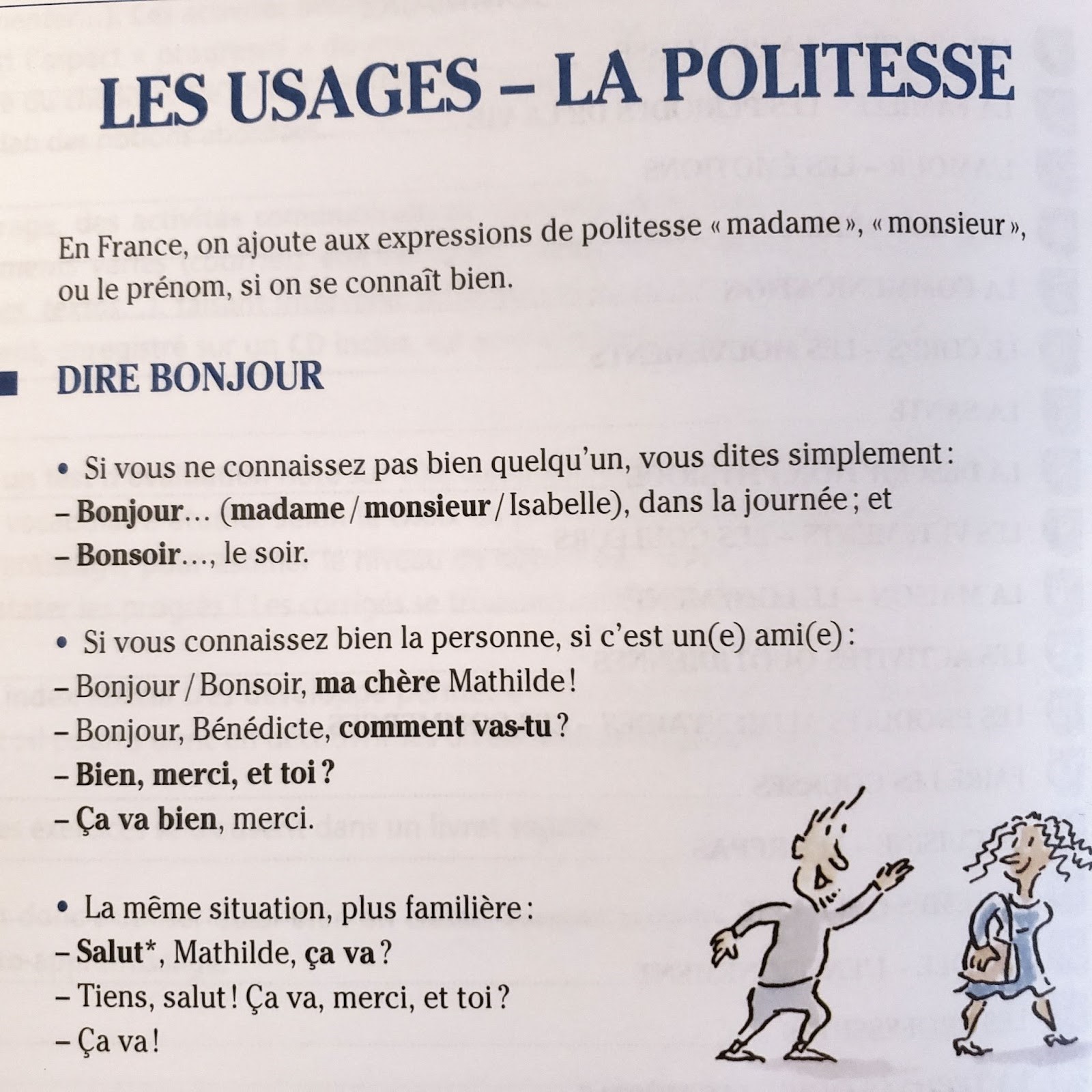
What does "la politesse" mean to you
What does "connaissez bien" and "connaissez pas bien" mean, en anglais?
To whom can you ask "Salut, ça va?
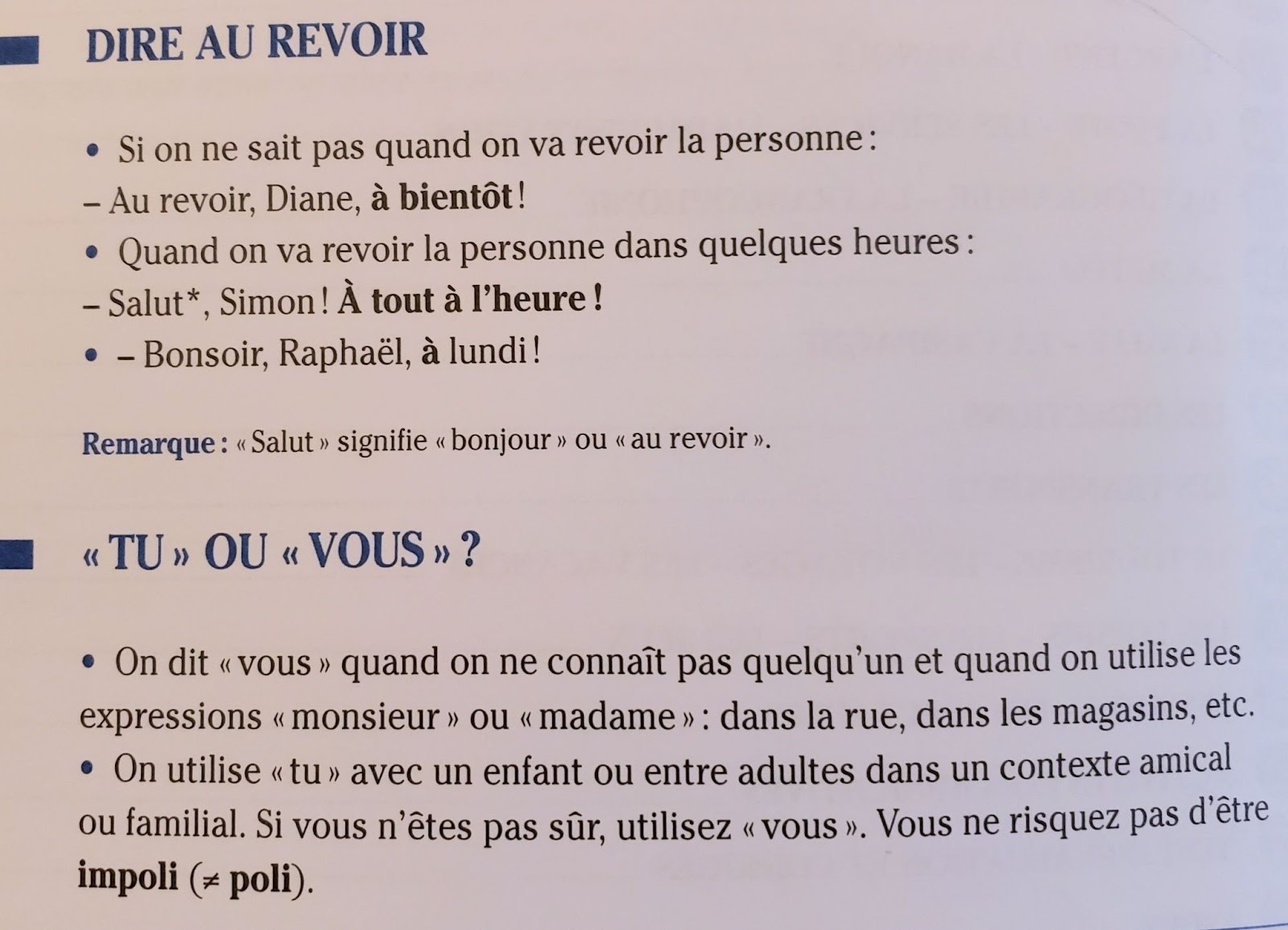
Pretend you have to go, but you will see the person again in a couple of hours. What would you say? Copy and paste the accents you want/need: ààâçéèêëîïôöœùûü€
You have to go and you don't know when you'll see the person next time. What do you say? Copy and paste the accents you want/need: ààâçéèêëîïôöœùûü€
Who would you use tu with and who would you use vous with?
your principal
your neighbor, old Mr. Jones
your doctor
a friend
a teacher
your classmate
a family member
Tu
Vous
Associez (match) pour constituer (put together) une phrase complète. (a complete sentence)
| Draggable item | arrow_right_alt | Corresponding Item |
|---|---|---|
Salut, | arrow_right_alt | comment allez-vous? |
Comment | arrow_right_alt | Anne! |
Bonsoir, | arrow_right_alt | à bientôt. |
Au revoir, Juliette et (see you sometime soon) | arrow_right_alt | ça va? |
Ciao! (you'll see this person in 3 hours) | arrow_right_alt | monsieur. |
Bonjour, madame, | arrow_right_alt | À tout à l'heure. |
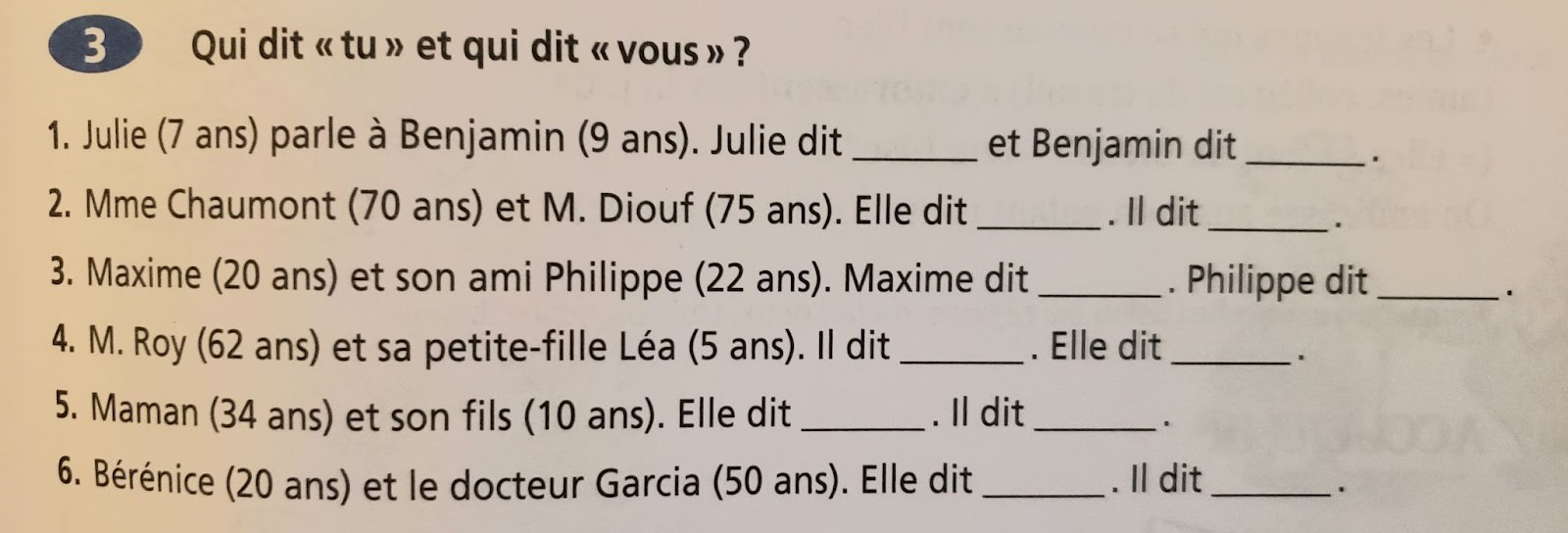
For 6. Berenice dit (says) _______.
1. Il est 21 heures (9pm), je dis: «Bonsoir, madame»
Leon va revoir (is going to see) Maxime dans une heure, il dit: « À bientôt! »
Sebastien rencontre (meets) son professeur de piano, il dit: « Salut! »
Florence dit: « Bonjour, madame » à son prof de mathématiques.
Michel voit (sees) son ami François, il dit: « tu »
For 6. Le docteur Garcia dit (says) _______.
For 1. Both Julie and Benjamin would say ______ because they are roughly the same age and know each other.