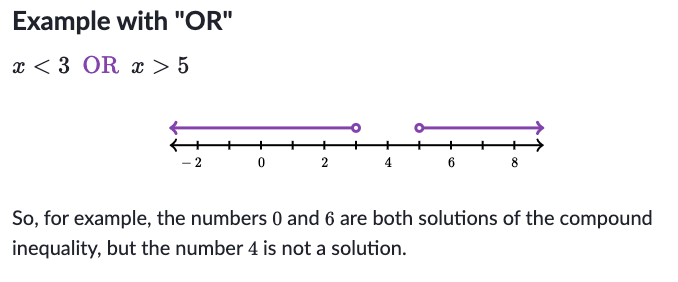
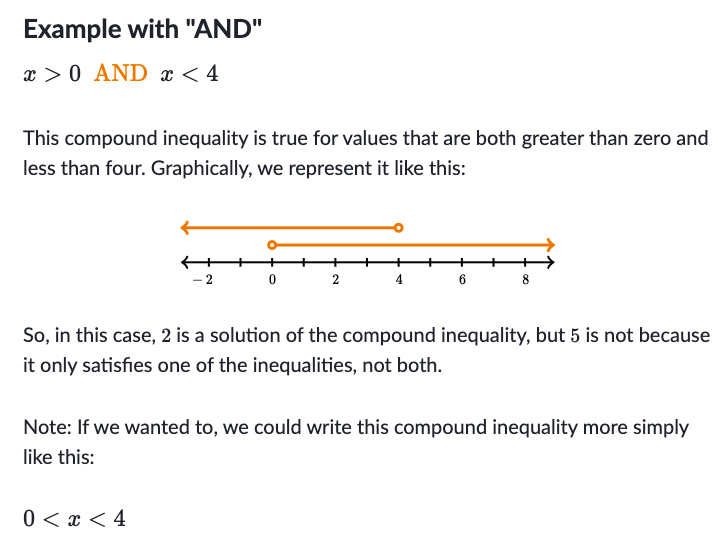
What is compound inequality?
A compound inequality is an inequality that combines two simple inequalities. Let's take a look at some examples.
Now try making a couple of compound inequalities of your own.
A compound inequality is an inequality that combines two simple inequalities. Let's take a look at some examples.
Now try making a couple of compound inequalities of your own.
But what if the inequality is complex like
-5 ≤ x-4 ≤ 13
How can I represent this on a number line when x is not alone?
Watch this video to figure it out!
How comfortable are you with solving compound inequalities?
What questions do you have regarding solving inequalities. If your answer to the previous question was that you don't understand anything at all then please make a list of all the SPECIFIC things that confused you. Please do not write you did not understand anything.
Graph the following:
The ideal temperature in a fridge is 38 degrees Fahrenheit. This can vary by up to 2 degrees. Write an inequality to show the range of possible temperatures, t. (Opt+, gives ≤ and Opt + . gives ≥)
Write the inequality shown on the graph:

Solve:
Solve:
Solve:
Solve:
As you've done before, once you submit the paper recheck your answers with the answer key. What did you get wrong? Where do you think you went wrong? Make a note of it so we can discuss it afterwards.