Chapter 1 Vocabulary Test B
star
star
star
star
star
Last updated over 3 years ago
39 questions
13
Match the terms on the left with their definitions on the right. NOT all terms will be used.
| Draggable item | arrow_right_alt | Corresponding Item |
|---|---|---|
Equiangular | arrow_right_alt | The sum of the measure of two angles is 90o |
Midpoint | arrow_right_alt | Points that lie on the same line |
Regular | arrow_right_alt | An angle that is between 90o and 180o |
Plane | arrow_right_alt | A segment, ray, line, or plane that intersects a segment at its midpoint |
Angle Bisector | arrow_right_alt | This geometric figure requires three points to name it and it extends forever in two dimensions |
Right | arrow_right_alt | A polygon with all sides and angles congruent |
Vertical Angles | arrow_right_alt | Consists of two different rays that have the same initial point |
Point | arrow_right_alt | The point that divides the segment into two congruent segments |
Angle | arrow_right_alt | The ray that divides an angle into two congruent angles |
Obtuse | arrow_right_alt | Two angles that share a common vertex and side |
Acute | arrow_right_alt | A polygon with all sides congruent |
Equilateral | arrow_right_alt | The sum of the measure of two angles is 180o |
Supplementary Angles | arrow_right_alt | An angle whose measure is exactly 90o |
Postulate | arrow_right_alt | |
Collinear | arrow_right_alt | |
Segment Bisector | arrow_right_alt | |
Complementary Angles | arrow_right_alt | |
Straight | arrow_right_alt | |
Adjacent Angles | arrow_right_alt | |
Line | arrow_right_alt |
Use the diagram below for the next 6 questions.
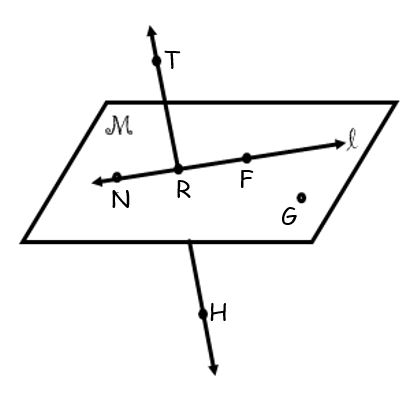
1
Name three collinear points
1
Name a point non-coplanar with Plane M
1
Name a pair of opposite rays. Separate your answers with a comma
1
Name line l another way.
1
Name \overrightarrow{NF} another way.
1
Name Plane M another way.
1
Using the workspace and points provided, sketch the following: \overrightarrow{BE}, \overleftrightarrow{CA}, and \overline{DA}
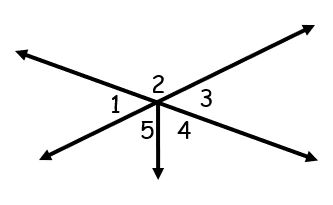
Use the diagram below for the next 3 questions.
1
What angle forms a linear pair with \angle{2}?
1
Name an angle vertical to \angle{1}?
1
Name an angle adjacent to \angle{5}?
1
If 2 angles are complementary, then they are adjacent.
1
If 2 angles are vertical angles, then they are adjacent.
1
If 2 angles are complementary, then they are both acute.
1
If 2 angles are a linear pair, then they are adjacent.
1
If 2 angles are supplementary, then they are both obtuse.
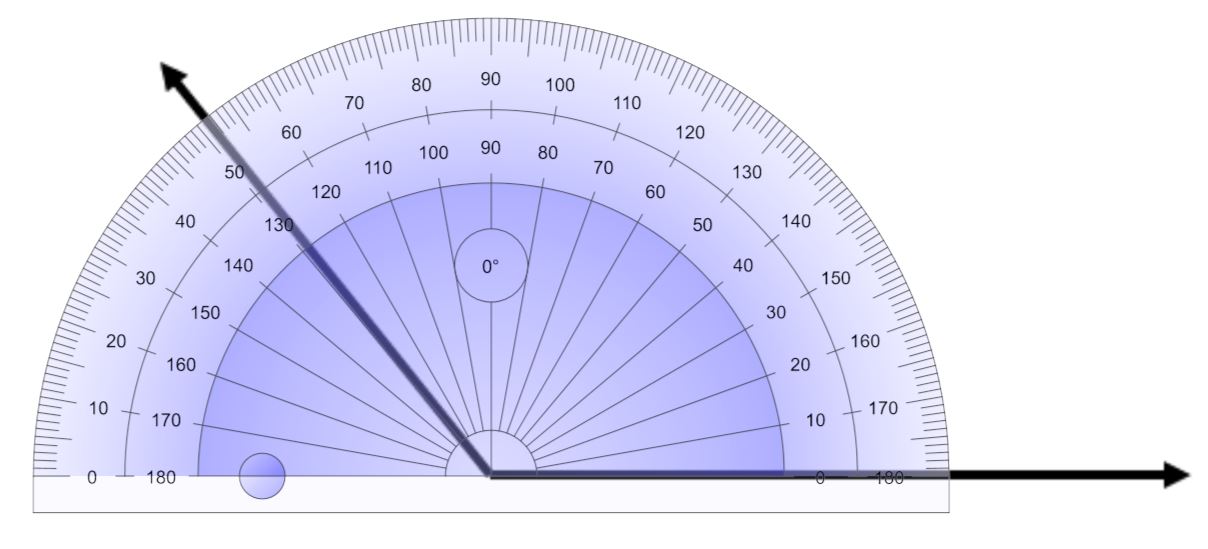
Use the angle below to measure and classify the angle.
1
What is the measure of the angle?
1
Classify the angle.
Classify the angle.
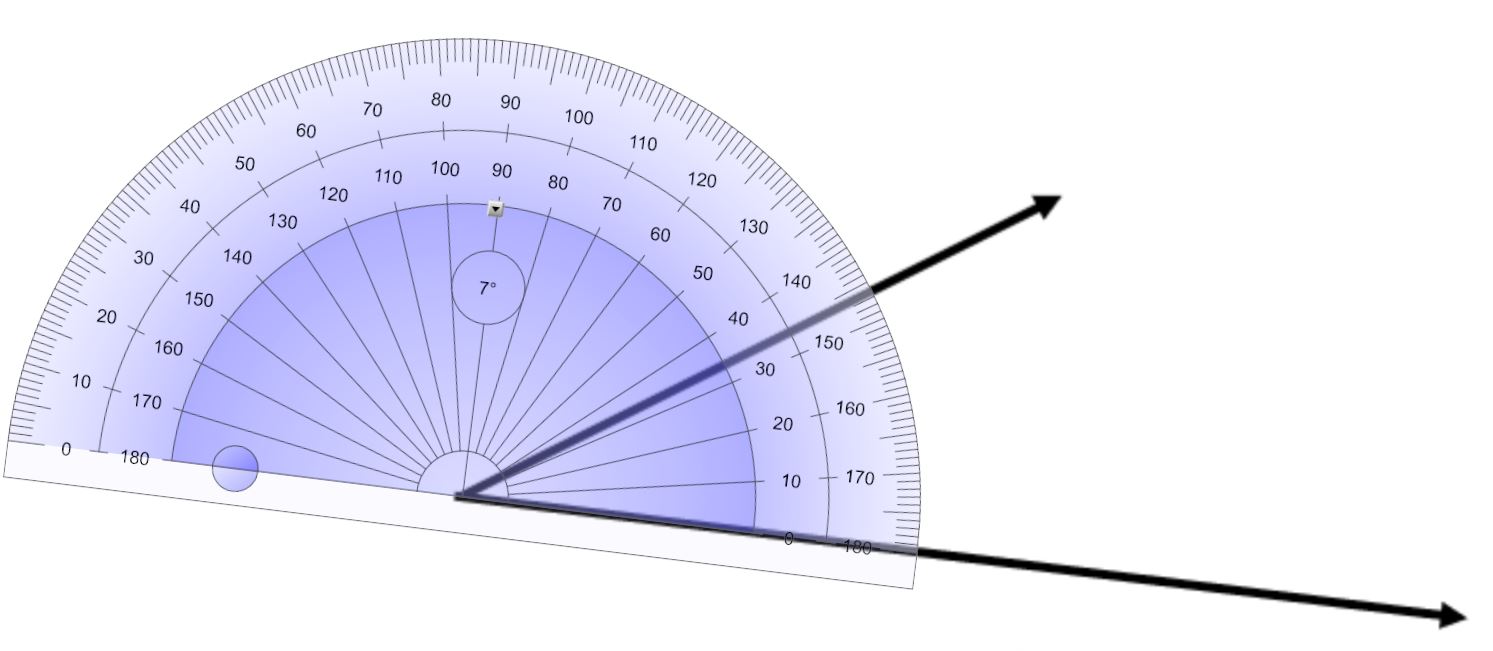
Use the angle below to measure and classify the angle.
1
What is the measure of the angle?
1
Classify the angle.
Classify the angle.
1
Determine if the figure is a polygon.
1
Determine if the figure is a polygon.
1
Determine if the figure is a polygon.
1
Determine if the figure is a polygon.
1
Name the polygon below, starting with vertex "T".
1
Determine if the following polygon is Convex, Concave, or Not a Polygon.
1
Determine if the following polygon is Convex, Concave, or Not a Polygon.
1
Determine if the following polygon is Convex, Concave, or Not a Polygon.
1
Determine if the following polygon is Convex, Concave, or Not a Polygon.
1
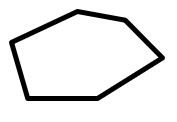
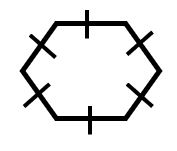
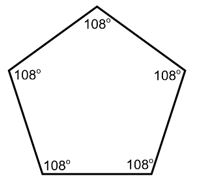
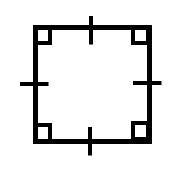
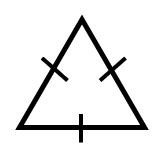
Determine if the following polygon is Equiangular, Equilateral, Regular, or None of the Above.
1
Determine if the following polygon is Equiangular, Equilateral, Regular, or None of the Above.
1
Determine if the following polygon is Equiangular, Equilateral, Regular, or None of the Above.
1
Determine if the following polygon is Equiangular, Equilateral, Regular, or None of the Above.
1
Classify a polygon with 3 sides.
1
Classify a polygon with 5 sides.
1
Classify a polygon with 7 sides.
1
Classify a polygon with 8 sides.
1
Classify a polygon with 10 sides.
1
Classify a polygon with 12 sides.