Using the reading to answer the questions below:
Energy flows from the sun into the earth, but nutrients, things organisms need to survive, like carbon and nitrogen, do not enter the earth from an outside source. That means that the same nutrients have been used to support life on earth for billions of years. When nutrients, like carbon are recycled, they are passed back and forth between the living and nonliving parts of an ecosystem in processes called biogeochemical cycles. If we are specifically talking about the recycling of carbon on earth – it is called the “Carbon Cycle”
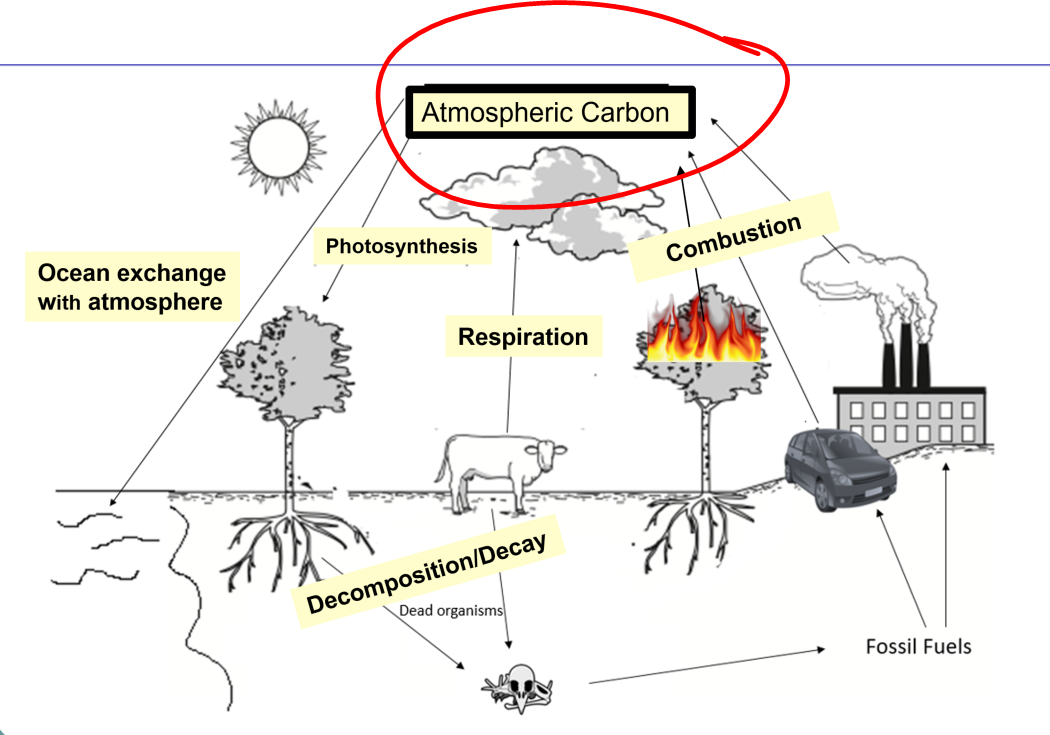
The carbon cycle begins with the atmosphere, which is Earth’s major reservoir (storage) of carbon, in the form of carbon dioxide (CO2). We call the carbon dioxide that surrounds our earth, atmospheric carbon.
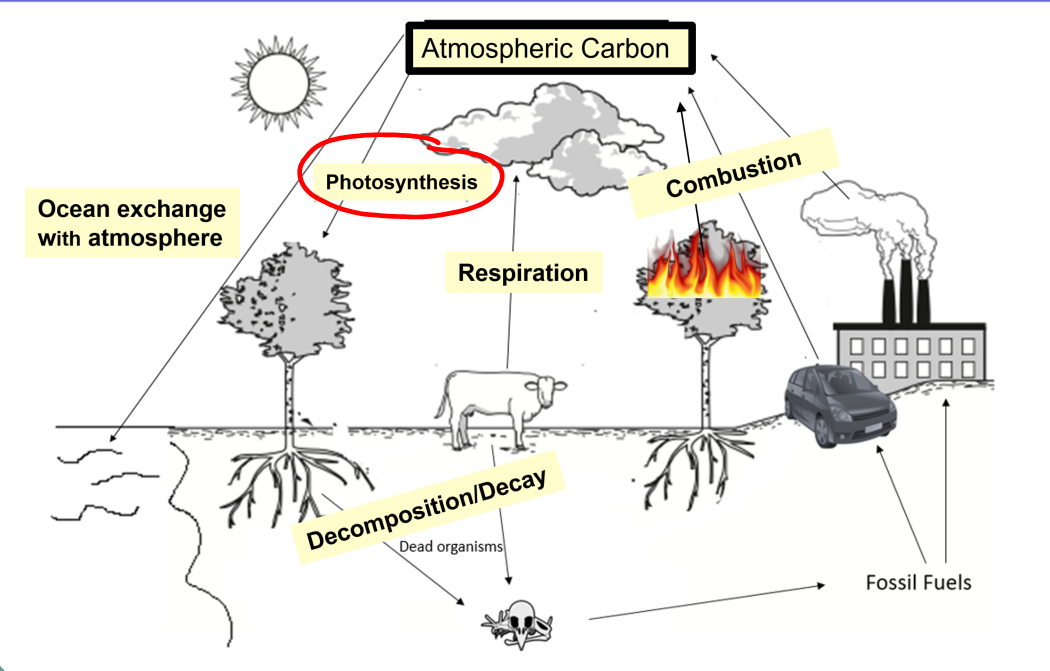
Carbon enters the biotic (living) part of the ecosystem through photosynthesis. During photosynthesis, producers, such as plants, take in carbon dioxide and sunlight to make the sugar they need to survive.
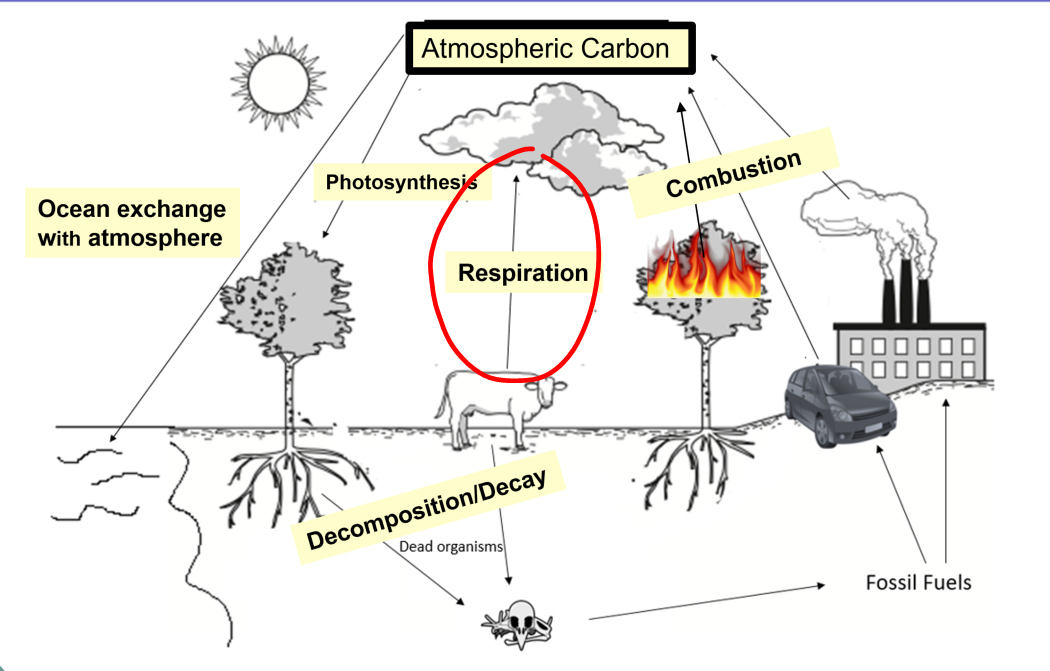
Next, consumers, such as animals and humans, eat the plants to get the carbon they need. When an animal eats a plant the carbon goes to the primary consumer (the animal). When an animal eats another animal consumption, (a primary consumer is eaten by the secondary consumer) carbon goes to a secondary consumer. When these same consumers breathe out during respiration, carbon dioxide is returned to the atmosphere.
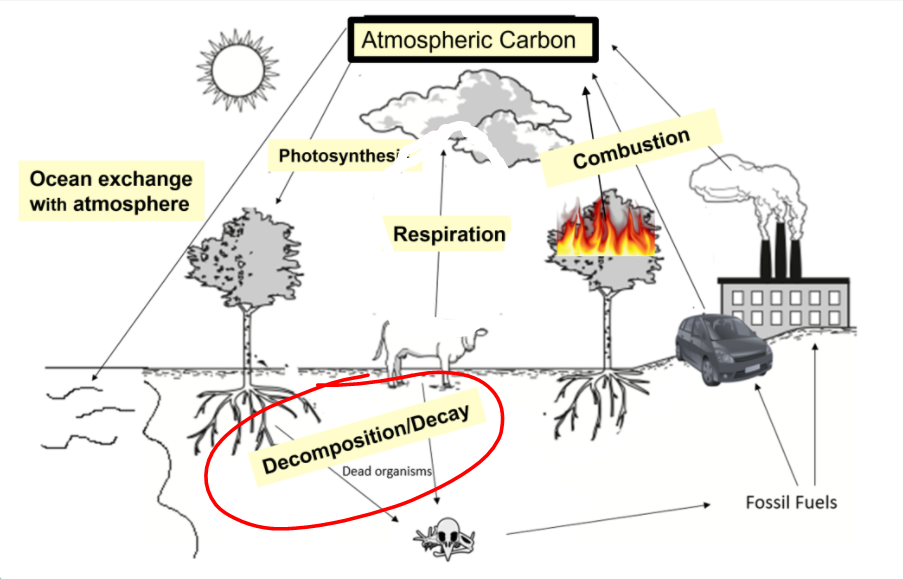
All living things eventually die- plants and animals included. When this happens, the dead organism is broken down and their nutrients are returned to the soil through the process of decomposition/decay. Important organisms such as decomposers or detritus feeders . Detritus feeders are small organisms that live on decaying matter such as fallen leaves, dead bodies, and animal waste – for example: earthworms, mites, centipedes, and insects.
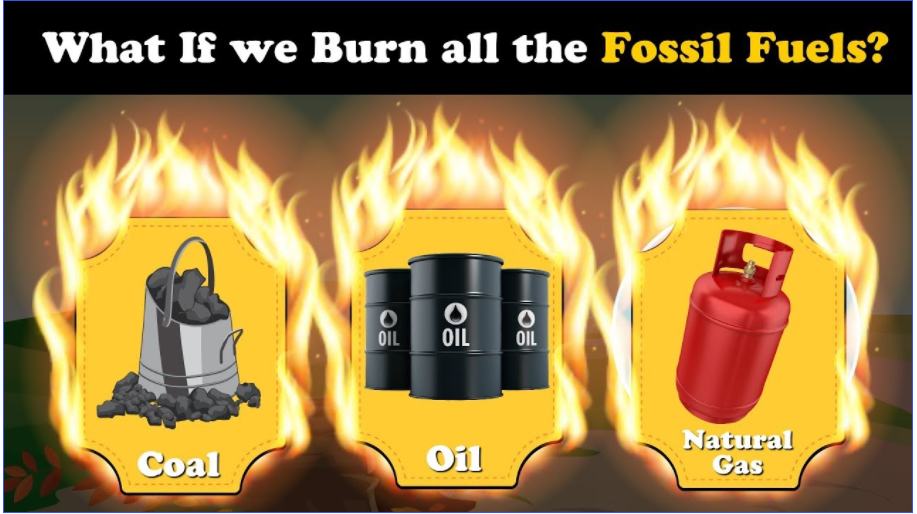
When fossil fuels are burned, such as when you drive a car, this is called combustion. Combustion releases carbon dioxide back into the atmosphere. Carbon can also be released from the combustion/burning of wood and plants that occurs during forest fires.
Sometimes the carbon that is found trapped below the earth’s surface is converted into fossil fuel, such as oil. High pressure and temperature transform carbon-containing organic matter into coal, oil, and natural gas. These fossil fuels are then used to power factories, generate electricity, and power cars that run on gasoline.
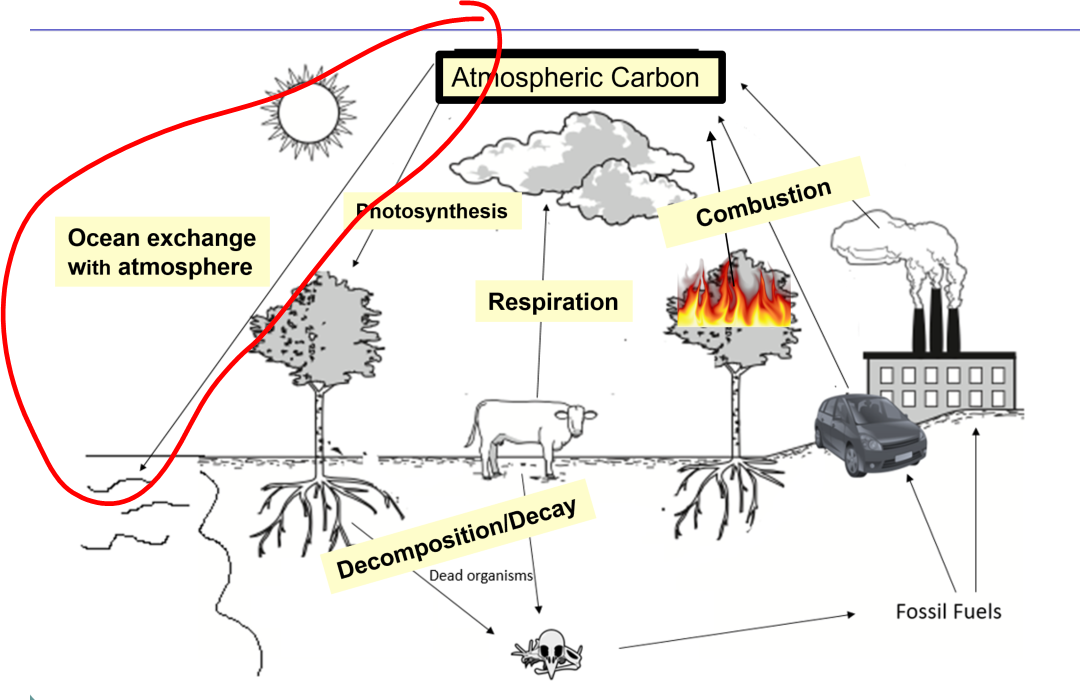
A final step of the carbon cycle is exchange with oceans. During ocean exchange, carbon dioxide from the air dissolves into the ocean which is then incorporated into the shells of mollusks and other sea creatures. When these shells decay, their carbon dissolves back into the water and can even return to the atmosphere.