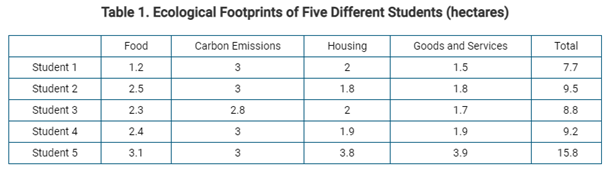
Which of the following is a limitation of using only the data in the table to complete an ecological footprint analysis of the different students?
The footprint is a static analysis and does not include all environmental impacts of an individual.
The footprint uses global hectares, rather than hectares, to determine the approximate proportion of Earth’s surface needed to support the activities of an individual.
The footprint uses a top-down approach to provide a complete picture of resource use for comparison between individuals.
The footprint for each individual is based on simple calculations to determine approximate resource use.
If Student 2 wanted to change his or her footprint to be more similar to that of Student 1, which of the following actions would he or she choose based on the data given in table 1?
Reducing the amount of meat in his or her diet
Upgrading his or her electronic devices, such as laptops and cell phones, more often
Moving into a smaller home or an apartment complex
Using mass transit options when available
After reviewing personal footprint data, Student 5 decides to take action to lower his or her overall footprint by reducing money spent on shoes and clothing. Land use in which of the following categories will be most affected by this change?
Housing
Goods and services
Carbon emissions
Food
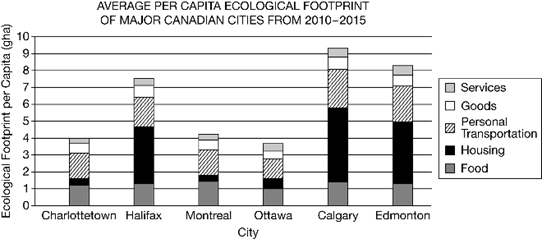
Based on the data in the graph, which of the following Canadian cities had the lowest average per capita ecological footprint?