Log in
Sign up for FREE
arrow_back
Library

Lesson 1: What Plant Structures Are Used for Support and Growth?

star
star
star
star
star
Last updated over 4 years ago
6 questions
1
LS1-A
1
LS1-A
1
LS1-A
1
LS1-A
1
LS1-A
1
LS1-A
Hi scientists! Please complete this Google Form in order to show what you know after observing our phenomen and participating in our investigation today. Please complete each question to your best ability. Do your best!

Here are the targets we are working on to master:
-I can observe shapes and structures of plant parts that serve functions.
-I can describe a plant system in terms of its components and structures.
Question 1
1.

Question 2
2.

Question 3
3.

Question 4
4.

Question 5
5.

Question 6
6.

There is an upcoming community event where you will be running a booth to teach people about plants. Visitors will get to take home a tomato plant from the event. Please write out four steps to help people care for their plants. Think about what a plant needs to stay alive and healthy.

Plants need sunlight, air, water, and nutrients to...
drop their leaves.
stay alive and healthy.
protect them against animals.
attract insects that help them.
One function of a stem is to...
produce food for the plant to use.
provide a place for insects to live.
take in water and nutrients from the soil.
hold up leaves so they can absorb sunlight.
Amelia claims that the plant shown in the picture takes up water close to the surface. Caleb claims that this plant takes up water deep in the ground. What evidence BEST supports Amelia's argument?
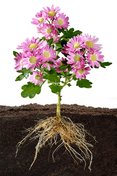
It has a thin stem.
It has fibrous roots.
It has colorful flowers.
It has small green leaves.
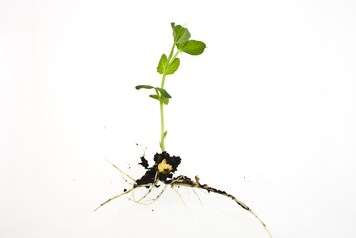
The image of a pea plant system shows its stem and roots. What function do both the stem and the roots have?
They both hold up the leaves of the plant.
They both take in water and nutrients from the soil.
They both use chlorophyll to capture light to make food.
They both provide support to keep the plant from falling over.
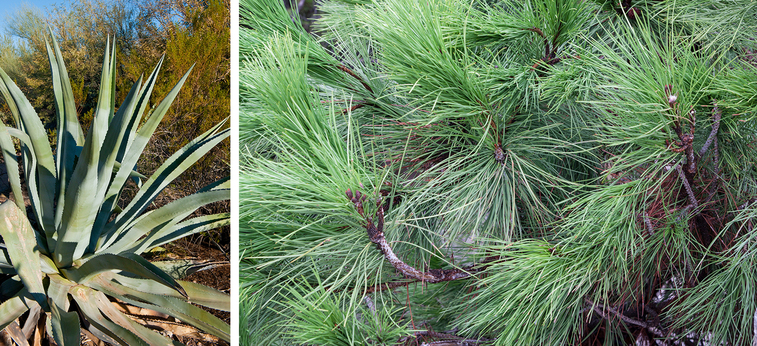
David uses these pictures as evidence to construct an argument about plants. The pictures show the leaves from two different plants.
Both have waxy leaves to prevent water loss
Both contain chlorophyll in leaves to make food.
Both have thick and fleshy leaves to store water.
Both have thin and sharp leaves to prevent water loss.