Match the term to its definition.
| Draggable item | arrow_right_alt | Corresponding Item |
|---|---|---|
agreement | arrow_right_alt | the “to” form of a verb |
macron | arrow_right_alt | the term for “singular” or “plural” |
subject | arrow_right_alt | the term describing the subject as a speaker |
person | arrow_right_alt | a group of verbs operating in the same way |
derivative | arrow_right_alt | the long mark over a vowel |
tense | arrow_right_alt | the “doer” of the action of a verb |
number | arrow_right_alt | how subjects and verbs fit together |
conjugation | arrow_right_alt | an English word formed from Latin |
principal parts | arrow_right_alt | the “time” of a verb |
infinitive | arrow_right_alt | the pieces of a Latin verb |
The nominative case derives its name from the Latin word
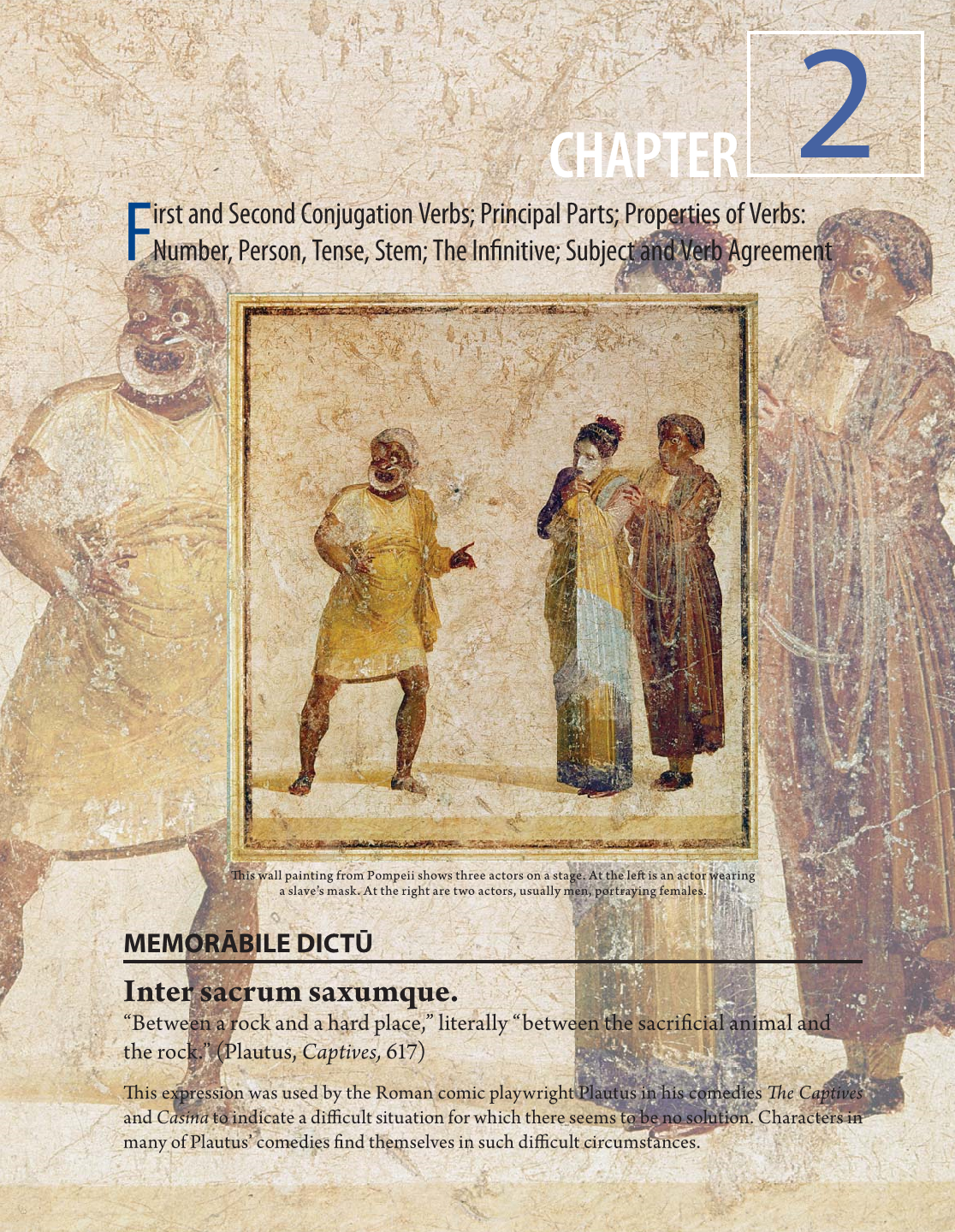
Inter sacrum saxumque is a phrase used to indicate
Plautus lived in the 1st century bce.
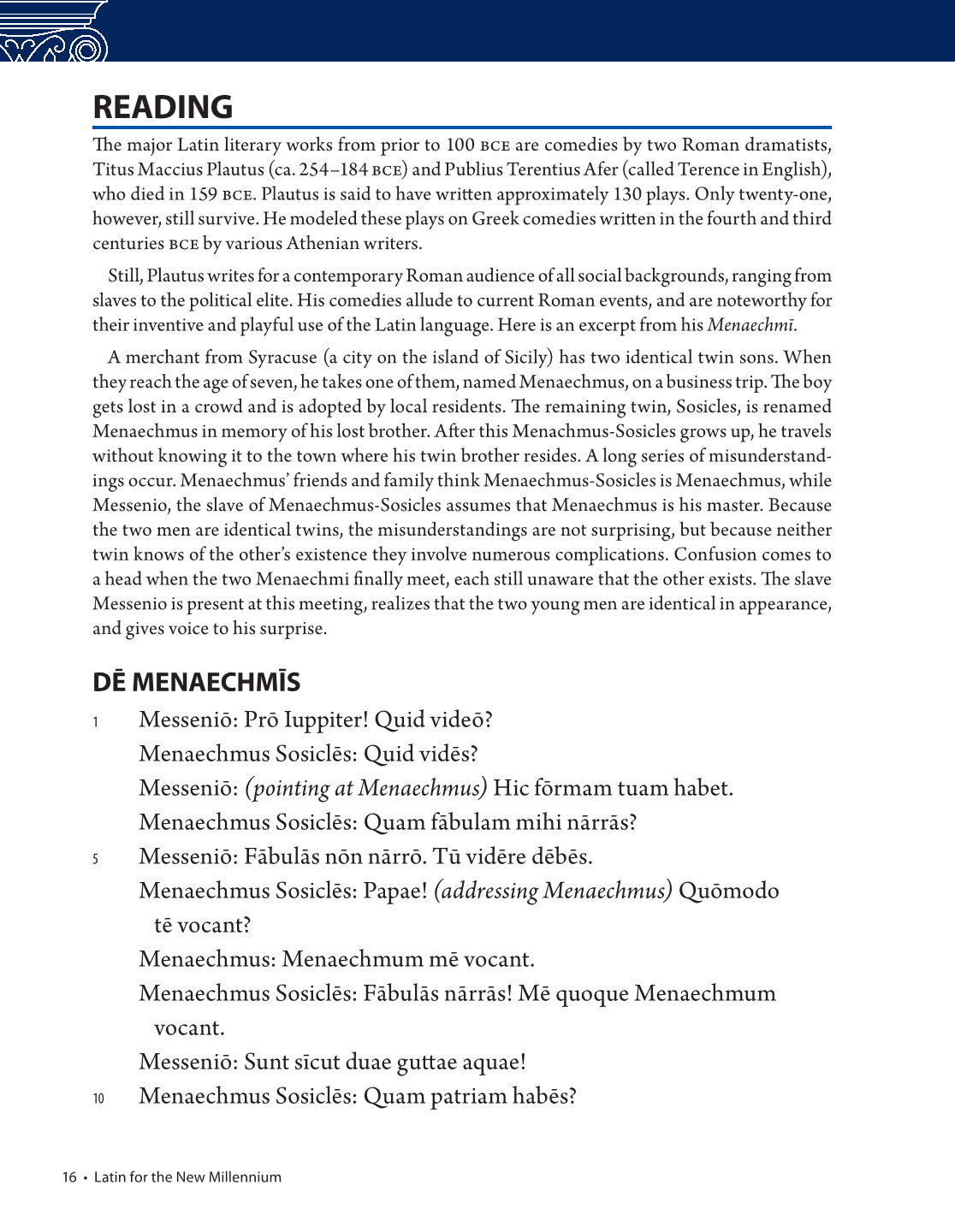
Both Plautus and Terence wrote comedies.
Plautus’s comedies are not so much original, as adaptations.
Plautus sets his plays in _____ environments.
More than one hundred of Plautus’s comedies have been handed down to us.
How many plays of Plautus survive today?
MENAECHMI is a comedy about mistaken identity.
Plautus’s works are written in the form of essays.
MENAECHMI takes place just outside of Rome.
The twins are originally from the town of Syracuse.
MENAECHMUS and MENAECHMUS SOSICLES are really the same person.
MESSENIO is Menaechmus’s father.
According to the story, who is the slave?
What gives rise to the confusion in the play “Menaechmi”?
When Messenio says “Prō Iuppiter!” he is expressing

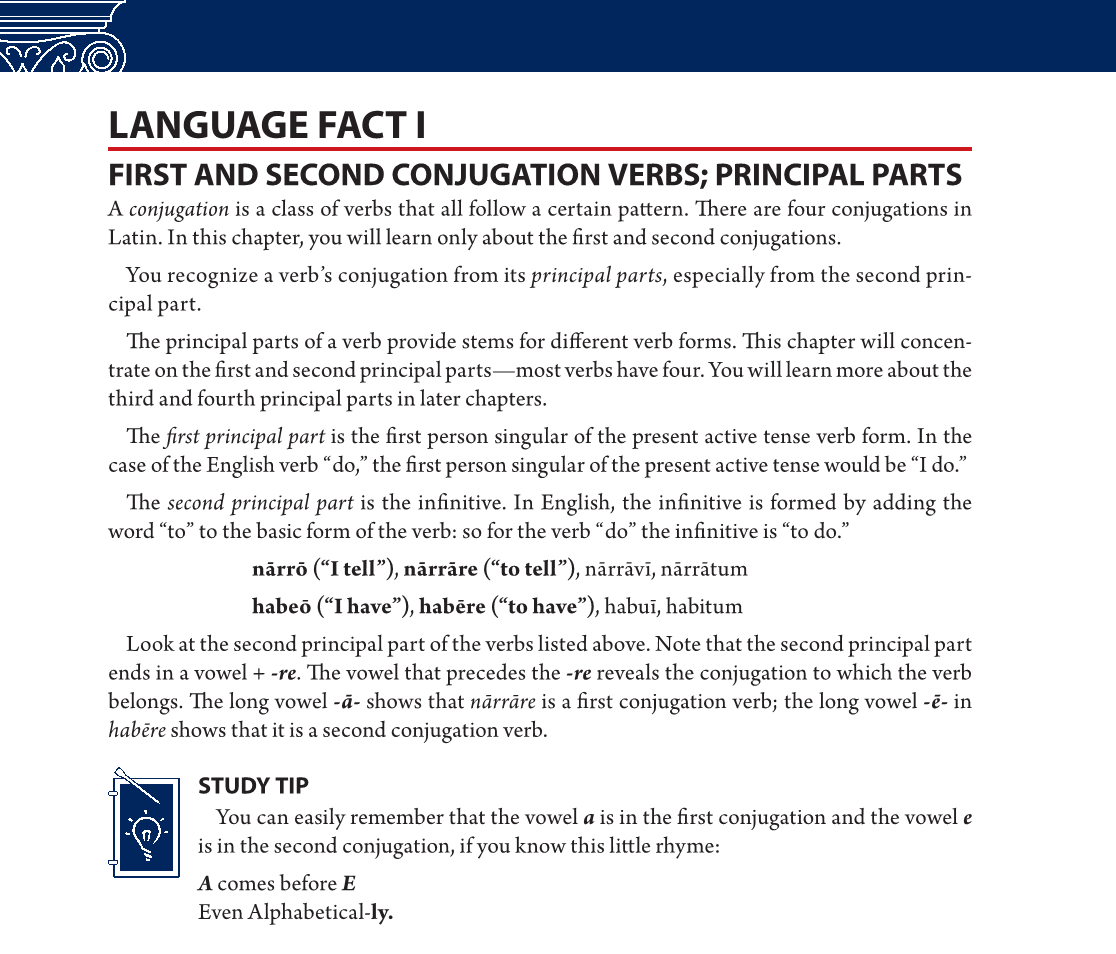
How many conjugations are there in Latin?
In which principal part do we find the stem for the present tense?
The third principal part of a verb always ends in
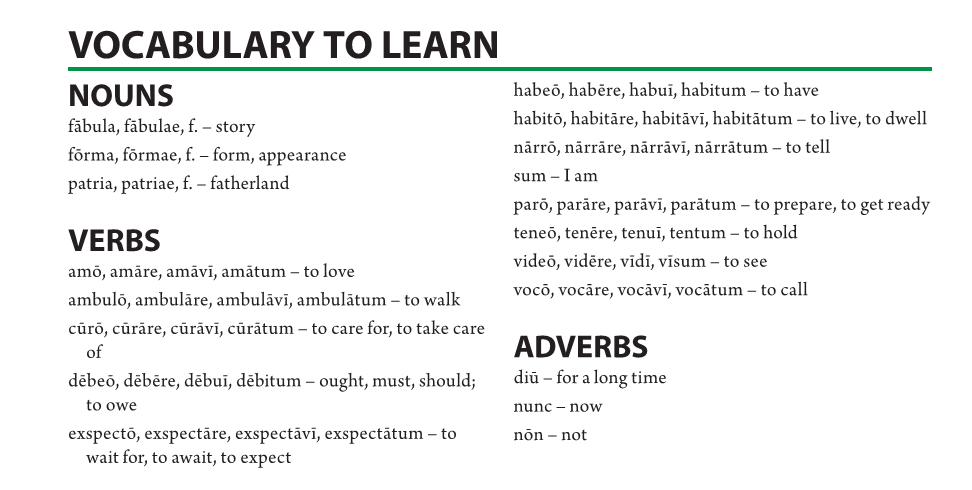
Which verb does NOT belong by conjugation?
Which Latin word means “for a long time”?
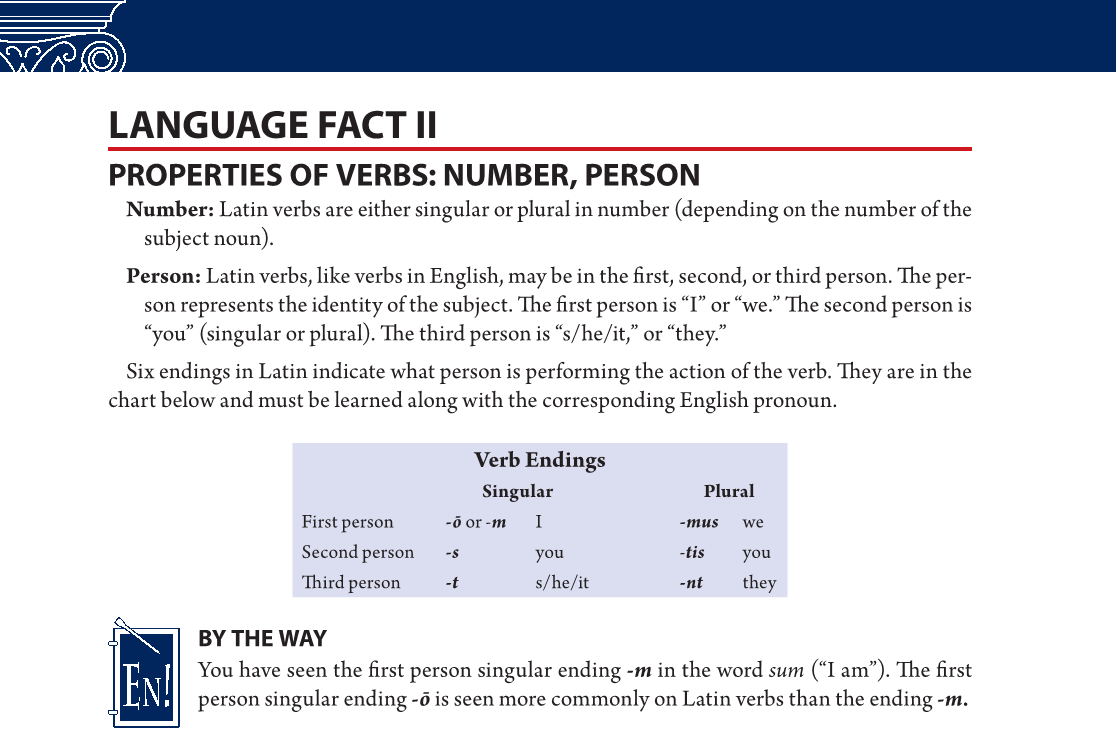
Which verb does NOT belong by person
Which of the following verbs is in the plural?
Most verbs in the first person singular end in ō. What other ending is sometimes used?
Agricolae terram _____.
You and I are waiting for the teacher.
I have the appearance of my mother.
Tell me, Brittany, in what country do you live?
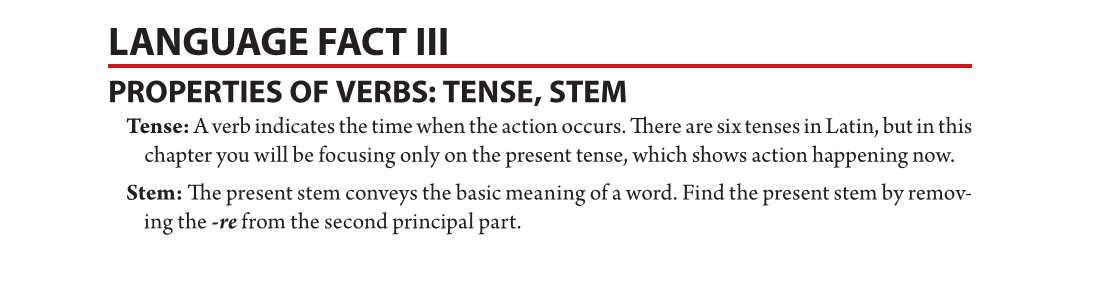
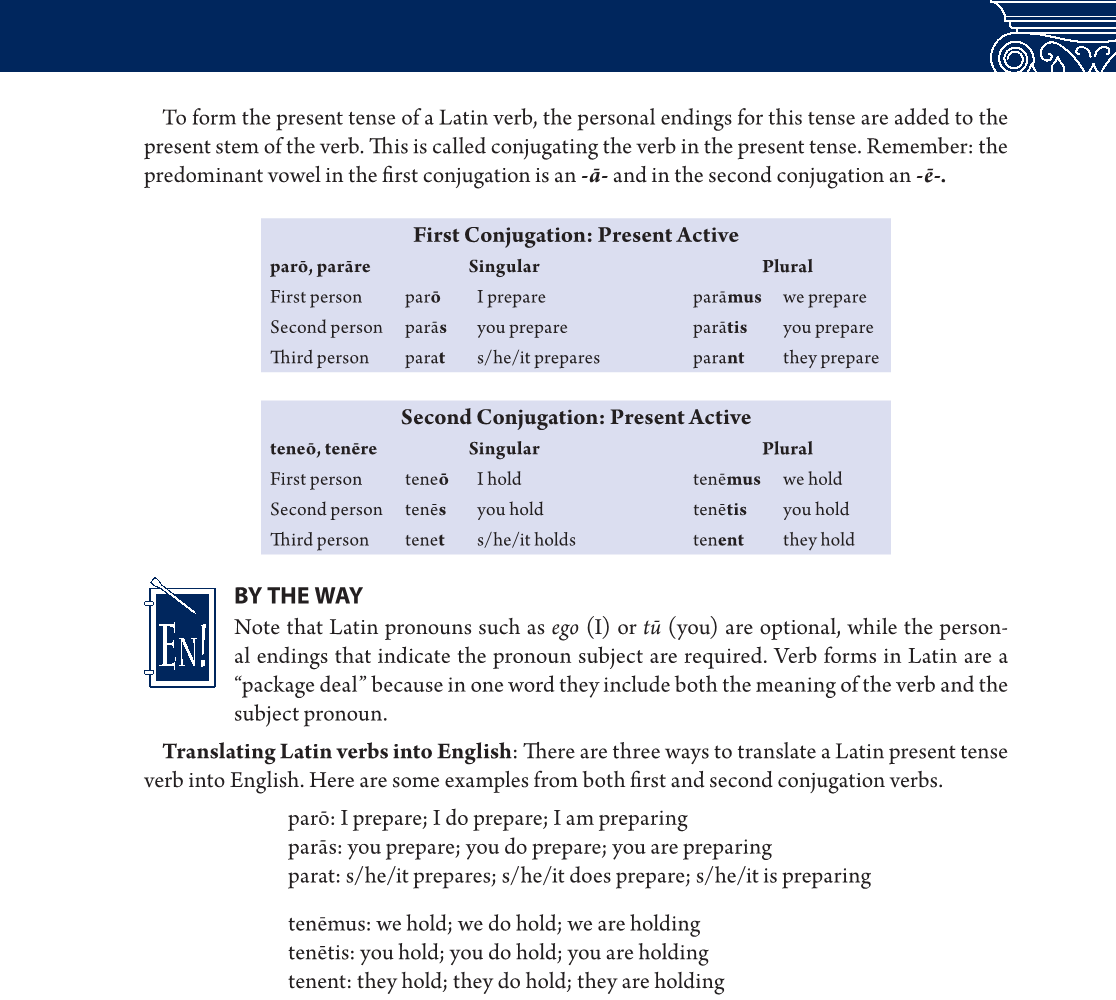
The grammatical term used to indicate the time in which an action is taking place:
Which of the following does NOT translate habēmus?
I am telling a story.
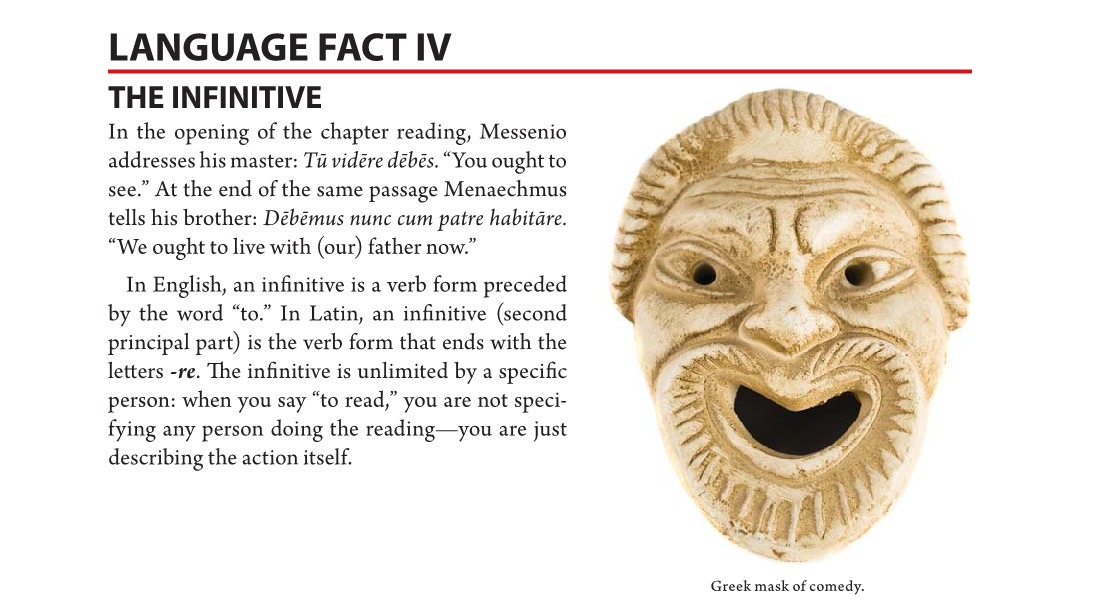
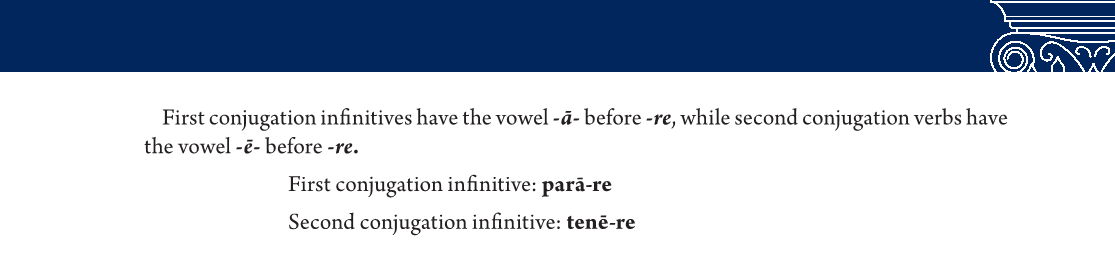
The translation of an infinitive is preceded by the word
Patriam _____ dēbēs.
The sailor is preparing to tell a story.
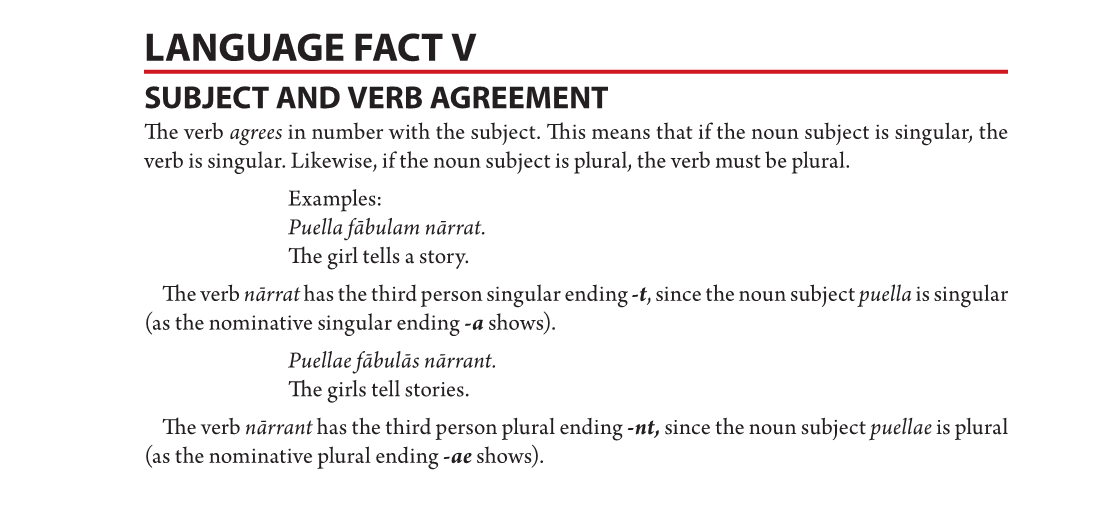
Both nouns and verbs have
Both the sailor and the poet tell stories.
She loves a good story.
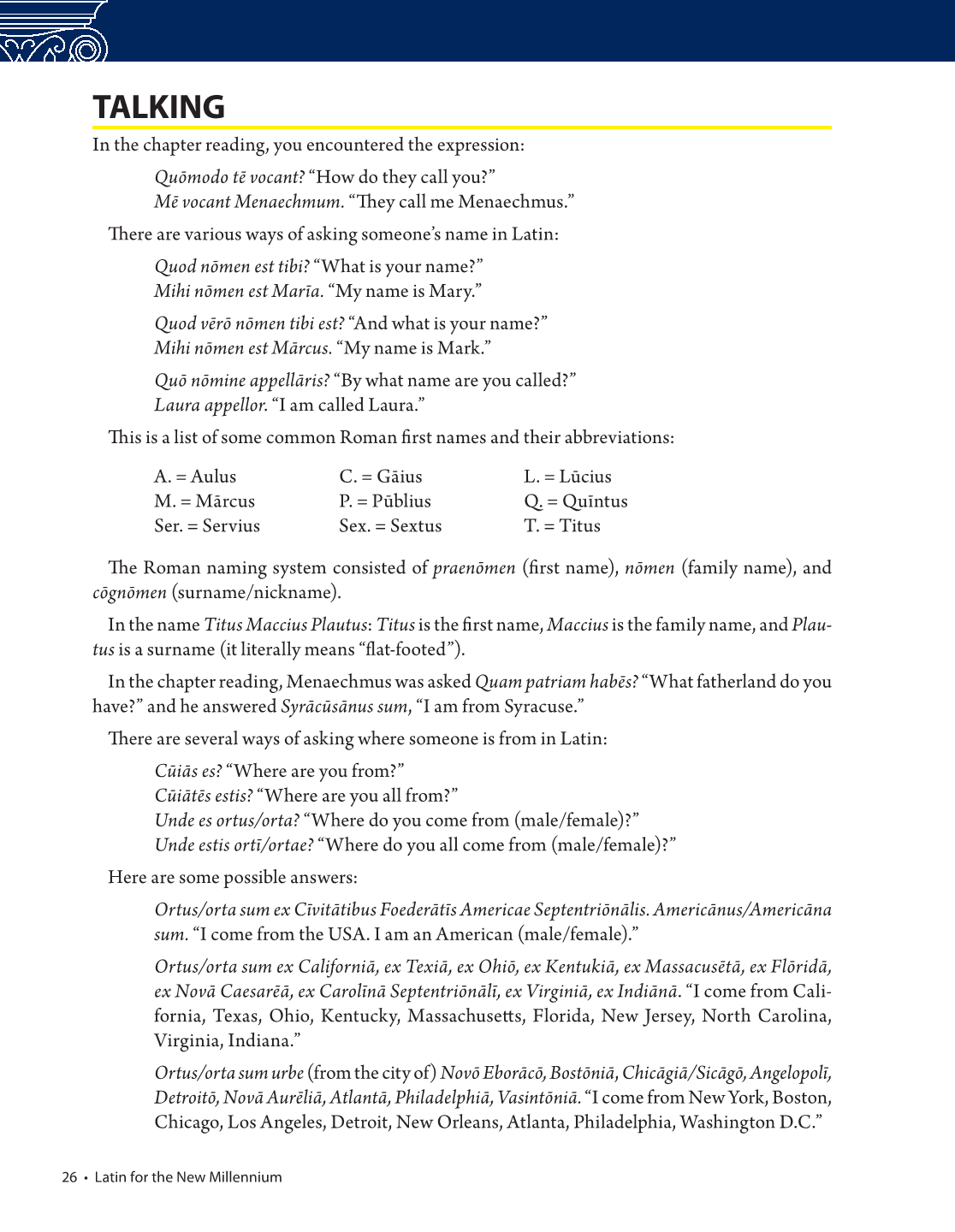
Which of the following is the Latin name for New York?
What is the meaning of the Latin word quōmodo?